
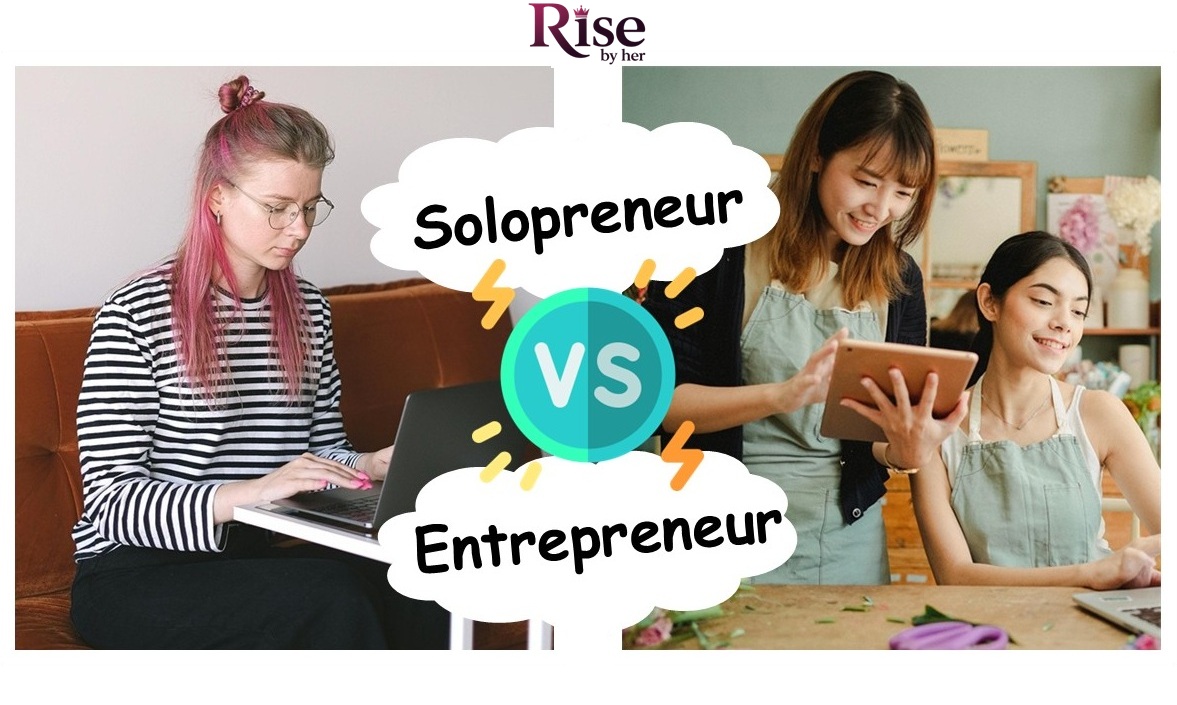
Choosing between solopreneurship and entrepreneurship is not just a business decision, it is a lifestyle choice that shapes how you earn, grow, and live. One path gives you full independence and simplicity, the other opens the door to scaling, teams, and bigger financial potential.
If you are building a business in 2026, understanding the real difference between these two paths can help you avoid costly mistakes and choose the one that actually fits your goals, personality, and life stage.
1. What Is a Solopreneur and Why Many Women Choose This Independent Path
A solopreneur is essentially a one-person business owner who builds and runs an entire business independently, using skills, digital tools, and often freelancers when needed. This model has become especially popular among women because it offers control, flexibility, and a direct path to income without needing a large team or outside investors.
What Defines a Solopreneur in Today’s Digital Economy
A solopreneur is a business owner who operates independently, without co-founders or a permanent team. Unlike traditional entrepreneurs who focus on scaling through hiring and external investment, solopreneurs build and run most parts of the business themselves.
In the modern digital economy, this model has evolved significantly. Solopreneurs now use online platforms, automation tools, and digital products to build profitable businesses without needing a large infrastructure.
A solopreneur is typically characterized by:
- Full ownership of business decisions and direction
- Independent execution of most tasks (marketing, sales, delivery)
- Use of freelancers or tools only when necessary
- Focus on agility rather than large-scale expansion
- Strong reliance on personal brand or expertise
This model is especially powerful today because technology has reduced the need for teams while increasing access to global markets
Common Industries Where Women Solopreneurs Thrive
Women solopreneurs are concentrated in industries where expertise, creativity, and communication skills directly translate into income.
The most common fields include:
- Digital marketing (social media management, SEO, content strategy)
- Coaching and consulting (business, career, life, wellness coaching)
- Freelance services (writing, design, virtual assistance)
- Online education (courses, workshops, tutoring)
- E-commerce and digital products (templates, ebooks, printables)
These industries are attractive because they:
- Require low startup capital
- Allow remote and flexible work
- Scale through skills rather than hiring
- Can be built around personal expertise or experience
As a result, they remain some of the fastest-growing entry points into independent business for women.
Why More Women Are Choosing Solopreneurship in 2026
In 2026, solopreneurship is becoming a mainstream career choice rather than a niche path.
Several key shifts are driving this trend:
- Flexibility is now a priority
Many women prefer designing work around their lifestyle, not the other way around. - Technology has simplified business operations
AI tools, automation platforms, and no-code systems reduce the need for teams. - Lower financial risk compared to traditional startups
Solopreneurship can often be started with minimal investment. - Growth of personal branding
Individuals can now build audiences and monetize expertise directly. - Shift toward remote and independent work culture
Working independently is now socially and professionally accepted.
2. What Does It Mean to Be an Entrepreneur in 2026
Being an entrepreneur in 2026 goes far beyond starting a traditional company or raising funding. Today, it is about identifying opportunities, building systems that create value at scale, and often leading people, products, or services that extend beyond what one person alone can deliver. Entrepreneurs are no longer defined only by startups, but by their ability to grow ideas into structured, scalable businesses.
Modern Definition of an Entrepreneur Beyond Startups
An entrepreneur is someone who builds and grows a business by solving a specific problem in the market, with the intention of scaling impact, revenue, or both. In 2026, this definition has expanded significantly due to digital transformation and new business models.
Unlike older views that focused heavily on venture capital and fast scaling, modern entrepreneurship can include:
- Bootstrapped businesses built from personal capital
- Digital-first companies operating globally from day one
- Service-based agencies and productized service businesses
- Creator-led businesses and personal brands with teams
- Hybrid models combining online and offline operations
What defines an entrepreneur today is not the size of the company at launch, but the intention to build systems that can grow beyond the founder’s individual capacity.
Key Traits and Mindset of Successful Entrepreneurs
Successful entrepreneurs share a set of mindset patterns and behavioral traits that allow them to operate in uncertainty while building scalable outcomes.
Core traits include:
- Vision-driven thinking with a focus on long-term growth
- High tolerance for risk and uncertainty
- Strong problem-solving and decision-making skills
- Ability to delegate and build systems, not just do the work
- Resilience in the face of failure or slow progress
In addition, modern entrepreneurs often develop:
- Strategic thinking (how to scale beyond time-for-money models)
- Financial awareness (cash flow, profit margins, reinvestment)
- Leadership capability (managing people, not just tasks)
- Adaptability to technology and market changes
This combination of mindset and skillset is what separates small business owners from scalable entrepreneurs.
Main Types of Entrepreneurs Women Are Building Today
Entrepreneurship today is highly diverse, and women are building businesses across multiple models depending on their goals, resources, and lifestyle preferences.
The most common types include:
- Startup founders
Building scalable companies often backed by investors, focused on rapid growth and market disruption. - Online business entrepreneurs
Running digital-first companies such as e-commerce brands, SaaS tools, or subscription platforms. - Agency founders
Building service-based teams that deliver marketing, design, or consulting services at scale. - Creator entrepreneurs
Monetizing content through personal brands, sponsorships, courses, and communities. - Hybrid entrepreneurs
Combining multiple income streams such as services, digital products, and coaching under one brand.
Each type reflects a different balance between control, scale, and lifestyle, which is why entrepreneurship today is no longer a single fixed path, but a flexible spectrum of business-building approaches.
3. Solopreneur vs Entrepreneur: Key Differences You Need to Know
The difference between a solopreneur and an entrepreneur is not just about business size, it is about structure, scalability, responsibility, and long-term growth strategy. Understanding these differences clearly helps you choose a path that aligns with your goals, energy, and lifestyle.
How Solopreneur and Entrepreneur Business Models Actually Work
A solopreneur builds and runs a business independently, often relying on personal skills, expertise, or content to generate income. The business is closely tied to the individual, even when supported by tools or freelancers.
An entrepreneur builds a system-based business designed to grow beyond one person. This usually involves delegation, structured processes, and sometimes a team.
Solopreneur model:
- One-person operation
- Direct delivery of services or products
- Heavy reliance on personal time and input
- Flexible and lightweight structure
Entrepreneur model:
- System and team-based structure
- Focus on delegation and scalability
- Business can operate without constant founder involvement
- Designed for expansion and long-term growth
Income Potential: Why Entrepreneurs Scale Faster Than Solopreneurs
Income potential depends heavily on scalability and leverage.
Solopreneurs usually earn based on:
- Time spent working
- Number of clients or projects handled
- Personal output capacity
- Skill-based pricing or digital product sales
Entrepreneurs earn through:
- Scalable systems and processes
- Team-driven execution
- Multiple revenue streams
- Reinvestment into growth and expansion
Time Freedom vs Team Management: What Changes When You Scale
Time is experienced very differently in each path.
Solopreneurs often enjoy:
- Full control over schedule
- Ability to choose when and where to work
- Immediate decision-making without coordination
- Direct connection to all business activities
Entrepreneurs experience:
- Less direct control over daily tasks
- Time spent managing people and systems
- More meetings, coordination, and planning
- Eventually more freedom once systems are stable
Risk and Investment: What You Need to Know Before Choosing a Path
The level of financial and operational risk varies significantly.
Solopreneurship usually involves:
- Low startup costs
- Minimal financial risk
- Low overhead and simple operations
- Easier pivoting or adjustments
Entrepreneurship typically involves:
- Higher financial investment (team, tools, infrastructure)
- Ongoing operational expenses
- Greater responsibility for cash flow and sustainability
- Higher risk but higher growth potential
Work-Life Balance: Flexibility vs Responsibility in Each Path
Work-life balance depends on how you define freedom.
Solopreneurs often experience:
- Flexible and self-designed schedules
- Ability to integrate work into daily life
- Location independence
- Risk of overworking due to lack of boundaries
Entrepreneurs often experience:
- Structured but demanding workloads
- Responsibility for team performance and business growth
- Less flexibility in early stages
- Greater freedom later if systems are well built
4. Solopreneur vs Entrepreneur Comparison Table (Quick Decision Overview)
When considering the difference between solopreneur and entrepreneur, it’s important to recognize the varying business structures, growth models, and risks involved. While both paths involve building a business, they differ significantly in terms of scale, responsibility, and approach.
Let’s break down these key differences with a simple comparison:
| Aspect | Solopreneur | Entrepreneur |
| Team Size | Solely responsible for all tasks | Often builds and manages a team |
| Growth Model | Limited by personal capacity, often starting small | Focused on scaling through teams, systems, and investment |
| Risk Level | Lower financial risk, as costs are usually minimal | Higher financial risk, often requiring funding and resources |
| Workload | Handles every aspect of the business alone | Delegates tasks and manages operational complexity |
| Investment | Usually it starts with minimal investment, self-funded | Often seeks investment or external funding to scale |
| Lifestyle | More flexibility, but time-intensive | It can be demanding but offers opportunities for more freedom and expansion |
Key Takeaways:
- Solopreneurs typically prefer the independence of running their own business but may face limitations in terms of scalability and workload.
- Entrepreneurs, on the other hand, aim for growth, often involving larger teams, external funding, and a more expansive business vision.
- The solopreneur vs entrepreneur comparison highlights how each path caters to different goals, risk tolerance, and business aspirations.
Choosing between these two paths depends on personal preferences, goals, and resources. Whether you want to remain in full control of a smaller operation or aim to build a larger enterprise, each path offers unique challenges and rewards.
5. Which One Makes More Money? Income Potential Explained
Income potential is one of the biggest factors women consider when choosing between solopreneurship and entrepreneurship. While both paths can generate strong earnings, the way money is made, and how far it can scale, is fundamentally different.
Solopreneur Income Limits and Growth Patterns
Solopreneurs earn income directly from their own time, skills, or digital assets. This creates a strong opportunity for financial independence, but also introduces natural limits.
Typical solopreneur income is driven by:
- Client-based work (freelancing, coaching, consulting)
- Service packages or retainers
- Digital products (courses, templates, ebooks)
- Content monetization (audiences, affiliates, sponsorships)
Growth pattern:
- Income increases linearly with effort and expertise
- Higher rates come from positioning and specialization
- Digital products can create partial scalability
- Time remains a key limiting factor unless systems are built
Entrepreneur Income Potential and Scaling Power
Entrepreneurs build income systems that are not limited to their own time. This is where scalability becomes the defining advantage.
Entrepreneur income is typically driven by:
- Team-based service delivery (agencies, firms)
- Scalable digital products or platforms
- Multiple revenue streams under one business structure
- Reinvestment into marketing, hiring, and expansion
Growth pattern:
- Income can scale exponentially rather than linearly
- Revenue is decoupled from individual working hours
- Systems and teams multiply output capacity
- Business can grow even without the founder doing all the work
Realistic Earnings Expectations for Both Paths
Understanding realistic outcomes is important to avoid unrealistic expectations.
For solopreneurs:
- Early stage: often low to moderate income while building skills and clients
- Mid stage: stable income with potential for high-earning months
- Advanced stage: strong income possible, but still tied to personal involvement
For entrepreneurs:
- Early stage: often unstable income due to investment and scaling costs
- Growth stage: increasing revenue as systems and teams develop
- Mature stage: high and scalable income potential with reduced founder dependency
Key takeaway:
- Solopreneurs often reach income stability faster
- Entrepreneurs often reach higher income ceilings over time
6. The Advantages and Challenges of the Solopreneur Lifestyle
If you’re weighing the pros and cons of being a solopreneur or wondering is solopreneurship right for me, it’s important to look at both the benefits and challenges of this business model. Being a solopreneur offers unique opportunities but also comes with certain limitations. Let’s dive into both sides to help you make a more informed decision.
Pros of Being a Solopreneur (Freedom, Flexibility, Fast Start)
- Flexibility: As a solopreneur, you have the ultimate flexibility in how and when you work. Whether you’re a mom balancing family life or someone who values the ability to set your own schedule, solopreneurship allows you to work on your own terms.
- Full Control Over Your Business: You have the freedom to make decisions quickly and follow your vision without needing approval from others. From branding to strategy, everything is in your hands, enabling you to shape your business exactly how you see fit.
- Lower Overhead: Operating a solo business means you typically have lower overhead costs. You don’t need to worry about payroll, office space, or extensive infrastructure. This makes it easier to keep costs low and maintain higher profit margins.
- Creative Freedom: With no partners or external pressures, you can explore and execute creative ideas that align with your passions. This can lead to a deeper sense of fulfillment in your work.
Cons of Being a Solopreneur (Burnout, Limited Scaling, Solo Pressure)
- Scalability Limitations: One of the biggest challenges for solopreneurs is scalability. Without a team, your growth potential is often limited by the number of hours in a day. As demand increases, it can be difficult to keep up.
- Heavy Workload: As a solopreneur, you’re responsible for every aspect of your business, from marketing to finances to customer service. This can lead to burnout, especially when trying to juggle multiple roles at once.
- Isolation: Operating alone can be isolating. Without a team, you miss out on the collaboration, feedback, and emotional support that comes from working with others. Many solopreneurs experience loneliness or a sense of being overwhelmed without a support network.
- Limited Resources: Since you’re the only one in charge, you may lack the time and expertise to handle specialized tasks, such as advanced marketing strategies or complex financial analysis. This can make it difficult to compete with larger businesses that have dedicated teams.
Who Thrives Most as a Solopreneur
Solopreneurship is not for everyone, but it is highly effective for certain personalities and life situations.
It tends to work best for women who:
- Prefer independence and self-direction over team management
- Have strong discipline and self-motivation
- Enjoy skill-based work such as writing, coaching, design, or consulting
- Want to start a business with minimal financial risk
- Value flexibility due to family, travel, or lifestyle priorities
- Are comfortable growing gradually rather than scaling quickly
7. The Rewards and Realities of Being an Entrepreneur
Entrepreneurship offers one of the highest potential paths for wealth creation and business growth, but it also comes with increased responsibility, complexity, and pressure. Unlike solopreneurship, where the focus is independence, entrepreneurship is centered on building systems that scale beyond one person.
Pros of Being an Entrepreneur (Scaling, Wealth Building, Team Growth)
- Delegation and Team Building: As an entrepreneur, you have the ability to delegate tasks to a team, allowing you to focus on the larger strategic aspects of your business. This not only enhances productivity but also lets you leverage the skills of others to achieve growth.
- Scalability and Growth Potential: One of the main advantages of being an entrepreneur is the ability to scale your business. With a solid plan and the right resources, you can expand your business into new markets, develop additional products, and hire employees to handle increased demand.
- Brand Expansion and Market Reach: Entrepreneurs have the ability to build a brand that reaches a larger audience. Through effective marketing, partnerships, and collaborations, you can position your business to achieve a broad, lasting impact on your target market.
- Potential for High Revenue: With scalable growth and expansion, entrepreneurs often have the potential for much higher revenue than solopreneurs. By reaching a wider audience and creating multiple income streams, you can increase profitability over time.
Cons of Being an Entrepreneur (Risk, Complexity, Leadership Pressure)
- Financial Risk: One of the major downsides to being an entrepreneur is the financial risk. Entrepreneurs often need to invest a significant amount of money into the business to get it off the ground, and may seek funding from investors or take on debt to finance growth. If the business doesn’t succeed, the financial repercussions can be severe.
- Leadership Pressure and Responsibility: As a business owner with a team, you’re responsible for every decision that affects the company. This includes managing employees, meeting deadlines, ensuring customer satisfaction, and keeping the business running smoothly. The pressure can be overwhelming, especially in the early stages.
- Complexity in Operations: Running a larger business with employees, multiple departments, and diverse operations introduces a level of complexity. Managing all these moving parts requires strong leadership, organizational skills, and attention to detail.
- Time Commitment: While solopreneurs often have control over their work schedules, entrepreneurs may find themselves spending more time managing the business due to its larger scope. Business owners often work long hours to ensure everything is running smoothly.
Real-Life Examples of Women Entrepreneurs Building Scalable Businesses
- Sara Blakely, founder of Spanx, grew her business from a small, solo operation into a multi-million-dollar empire by building a strong team and expanding her brand into new markets.
- Sophia Amoruso, founder of Nasty Gal and author of #GIRLBOSS, scaled her online business into a global brand while navigating the challenges of leadership and risk management.
Being an entrepreneur offers incredible potential for growth and success, but it’s not without its challenges. If you’re someone who thrives under pressure, enjoys leadership, and is prepared to invest time and resources into growing your business, entrepreneurship may be the right path for you.
8. Can You Start as a Solopreneur and Become an Entrepreneur Later?
Yes, in most cases solopreneurship is not a final destination but a starting point. Many successful entrepreneurs begin as solopreneurs, validate their ideas independently, and then gradually evolve into building systems, teams, and scalable businesses once demand grows. The transition is less about changing identity and more about expanding capacity.
The Most Common Growth Path for Women in Business
For many women, business growth follows a natural progression from independent work to structured entrepreneurship.
A typical path looks like this:
- Starting as a solopreneur offering services or expertise
- Building consistent income through clients or digital products
- Developing systems to reduce manual workload
- Outsourcing specific tasks to freelancers
- Eventually hiring a team or building scalable operations
This progression is common because it allows low-risk entry into business while keeping flexibility in the early stages. Over time, as income and demand increase, the need for structure and delegation naturally grows.
When to Transition From Solopreneur to Entrepreneur
The transition usually happens when the business outgrows the individual’s available time and capacity.
Common indicators include:
- You are consistently fully booked or overwhelmed with demand
- Income is limited by how many hours you can personally work
- You are turning away opportunities due to lack of capacity
- You are spending more time managing tasks than delivering value
- Clients or audience demand is increasing beyond what you can handle alone
At this stage, continuing as a solopreneur can actually limit growth, making it necessary to introduce systems, support, or a team.
Signs You’re Ready to Scale Beyond Solo Work
Scaling beyond solopreneurship requires both operational readiness and mindset shift.
Key signs include:
- You have a proven offer or business model that consistently generates income
- You understand which tasks can be delegated without losing quality
- You are ready to invest in support, tools, or hiring help
- You want to focus more on strategy than day-to-day execution
- Your business income can support additional operational costs
- You are thinking in systems, not just tasks
When these signs appear together, it usually indicates that the business is ready to evolve into a more structured entrepreneurial model rather than remaining a solo operation.
9. Solopreneur or Entrepreneur: How to Choose the Right Path for Your Life
Choosing between solopreneurship and entrepreneurship is less about picking a title and more about aligning your business model with your personality, income goals, lifestyle needs, and risk tolerance. The right choice depends on how you want to work, grow, and live over the long term.
Self-Assessment Checklist: Find Your Best Fit Path
Before choosing a direction, it helps to honestly evaluate how you prefer to work and what you want your business to achieve.
Ask yourself:
- Do I prefer working independently or leading a team?
- Do I want flexibility or scalable growth?
- Am I comfortable handling all tasks myself in the beginning?
- Do I want fast income or long-term scaling potential?
- How much risk am I willing to take financially?
- Do I enjoy execution, or do I prefer strategy and leadership?
If most answers lean toward independence and flexibility → solopreneurship fits better.
If most answers lean toward growth and systems → entrepreneurship fits better.
Best Path Based on Lifestyle (Professionals, Moms, Creatives, Career Switchers)
Different life situations often make one path more practical than the other.
- Working professionals transitioning into business
Solopreneurship is often the safer entry point due to lower risk and flexible time commitment. - Moms or caregivers
Solopreneurship usually fits better because it allows schedule control and home-based work. - Creatives (designers, writers, content creators)
Both paths work, but solopreneurship is ideal for monetizing skills quickly without scaling pressure. - Career switchers entering business for the first time
Starting as a solopreneur helps build experience before moving into larger-scale entrepreneurship.
Each path can evolve over time, so the goal is not to lock yourself in, but to start where your current life situation supports you best.
Income Goals, Time Availability, and Risk Tolerance Guide
Your practical constraints often matter more than motivation when choosing a path.
- Income goals:
Lower to moderate, stable income targets often align with solopreneurship, while high-scale wealth goals align with entrepreneurship. - Time availability:
Limited time favors solopreneurship. Full-time availability allows room for entrepreneurial scaling and team building. - Risk tolerance:
Low risk tolerance supports solopreneurship. Higher tolerance for uncertainty supports entrepreneurship.
A simple rule: the more limited your time and financial cushion, the more a solopreneur model makes sense at the beginning.
Decision Framework: Step-by-Step Path Selection
To make a clear decision, follow a simple structured approach:
- Define your primary goal (freedom, income, or scale)
- Assess your current time and financial situation
- Decide how much risk you are willing to take
- Choose whether you want solo control or team-based growth
- Start with the model that matches your current reality
- Reassess after 6–12 months of real experience
The most important insight is that this is not a permanent decision. Many women start as solopreneurs, validate their skills and income potential, then evolve into entrepreneurs when growth demands it.
FAQ: Solopreneur vs Entrepreneur
Is a solopreneur the same as an entrepreneur?
No, they are not the same, although they are closely related. A solopreneur is a type of entrepreneur who runs a business independently without a co-founder or permanent team. An entrepreneur is a broader term that includes anyone who builds and grows a business, whether alone or with a team. In simple terms, all solopreneurs are entrepreneurs, but not all entrepreneurs are solopreneurs.
Which is better for beginners, solopreneur or entrepreneur?
For most beginners, solopreneurship is usually the better starting point. It requires lower financial investment, has less complexity, and allows you to learn business skills quickly without managing a team. Entrepreneurship can be more suitable later, once you have a proven idea, stable income, and experience with systems and growth.
Can a solopreneur become an entrepreneur?
Yes, and this is actually a very common path. Many entrepreneurs start as solopreneurs, validate their business idea, build consistent income, and then gradually scale by outsourcing work, hiring freelancers, or building a team. The transition usually happens when demand exceeds what one person can handle alone.
Do entrepreneurs always have employees?
No, entrepreneurs do not always have employees. Some operate solo or rely on contractors, freelancers, and automation tools instead of full-time staff. However, as a business scales, many entrepreneurs eventually build teams to support growth, improve efficiency, and expand operations.
What is more risky, solopreneurship or entrepreneurship?
Entrepreneurship is generally more risky because it often involves higher financial investment, operational costs, and responsibility for a team or business infrastructure. Solopreneurship typically has lower startup costs and lower financial risk, but it can carry personal risk in terms of workload, burnout, and income instability if not managed properly.
Final Thoughts
Choosing between becoming a solopreneur or entrepreneur isn’t about picking the “better” path; it’s about choosing the one that aligns with your goals, lifestyle, and values. Solopreneurs often value independence, flexibility, and simplicity. Entrepreneurs are typically driven by growth, teamwork, and scalability. Both paths come with unique rewards and challenges.
If you’re a woman considering starting your own business, ask yourself what kind of life and impact you want to create. Whether you’re building a personal brand from home or scaling a business with a team, success starts with clarity and intention.
Explore Bold & Powerful Habits of Women Solopreneurs Who Win
Ready to Take the Next Step?
Subscribe to our newsletter for weekly insights on women’s career growth, leadership, and entrepreneurship.
By Aveline Lowell
Founder & Editor-in-Chief, RiseByHer
Aveline Lowell writes research-driven content covering women’s finance, entrepreneurship, STEM, technology, and career growth. Her work focuses on practical, well-researched information that helps women make informed decisions.
Editorial & Disclaimer: RiseByHer aims to provide accurate, well-researched, and up-to-date information. Articles are reviewed and updated when necessary and are intended for general informational and educational purposes, not personalized financial, legal, tax, or professional advice.