

Introduction: Why Women Need Multiple Income Streams in 2026
Why relying on a single income is riskier than ever in 2026
Depending on just one income source is becoming increasingly risky. Rising inflation, higher living costs, and unpredictable job markets mean that even stable careers are no longer fully secure. Layoffs and industry changes can happen unexpectedly, making financial stability harder to guarantee with a single paycheck.
How financial independence is changing for women today
Financial independence today is not just about earning money, but about having freedom and control. More women want flexibility in how they work, the ability to make choices without financial pressure, and the option to build income on their own terms rather than relying on one employer.
Why multiple income streams accelerate wealth building
Multiple income streams create stability and faster wealth growth. While one income covers daily needs, additional streams can be saved, invested, or reinvested to grow further. In simple terms, one income pays the bills, but multiple incomes build long-term wealth and security.
How to Choose the Right Income Stream for Your Lifestyle
Choosing the right income stream is less about “what is trending” and more about what fits your time, skills, and financial situation. The goal is not to do everything, but to start with one realistic path you can actually sustain.
Best options for beginners with no experience
If you are starting from zero, the priority is simplicity and low risk. You want income streams that allow you to learn while you earn, not ones that overwhelm you.
Good beginner-friendly options include:
- Affiliate marketing through a blog or social media
- Selling simple digital products (templates, planners, ebooks)
- Print-on-demand (design once, sell repeatedly)
- Basic freelancing services (writing, design, admin tasks)
In the beginning, consistency matters more than complexity. The fastest progress comes from picking one model and sticking to it long enough to improve.
Best options for busy women with limited time
If your schedule is already full, the wrong choice is anything that requires daily active work. Instead, focus on systems that grow quietly in the background.
Better low-time options include:
- Dividend investing (long-term passive growth)
- High-yield savings accounts (low effort, stable returns)
- Automated digital products (once created, they sell repeatedly)
- Content that compounds over time (YouTube or blogs, but slower start)
The key here is leverage. You want your time invested once to keep producing returns later.
Best high-income potential streams vs low-risk streams
Not all income streams are equal, and understanding this trade-off is essential before you start.
High-income potential (higher effort or risk):
- YouTube channel growth and monetization
- Real estate investing or REIT strategies
- Scalable online businesses (ecommerce, digital brands)
Low-risk, stable growth options:
- High-yield savings accounts
- Dividend stocks
- Peer-to-peer lending (with caution and diversification)
A smart strategy is not choosing one side, but combining both:
- Stability from low-risk streams
- Growth from higher-income potential streams
This balance is what actually builds long-term financial security, not chasing one “perfect” idea.
1. Start a Blog and Earn Through Affiliate Marketing
Blogging combined with affiliate marketing is one of the most accessible ways to build an online income stream. It requires low startup costs, and once content starts ranking, it can generate income passively over time. The key is not speed, but consistency and targeting the right audience.
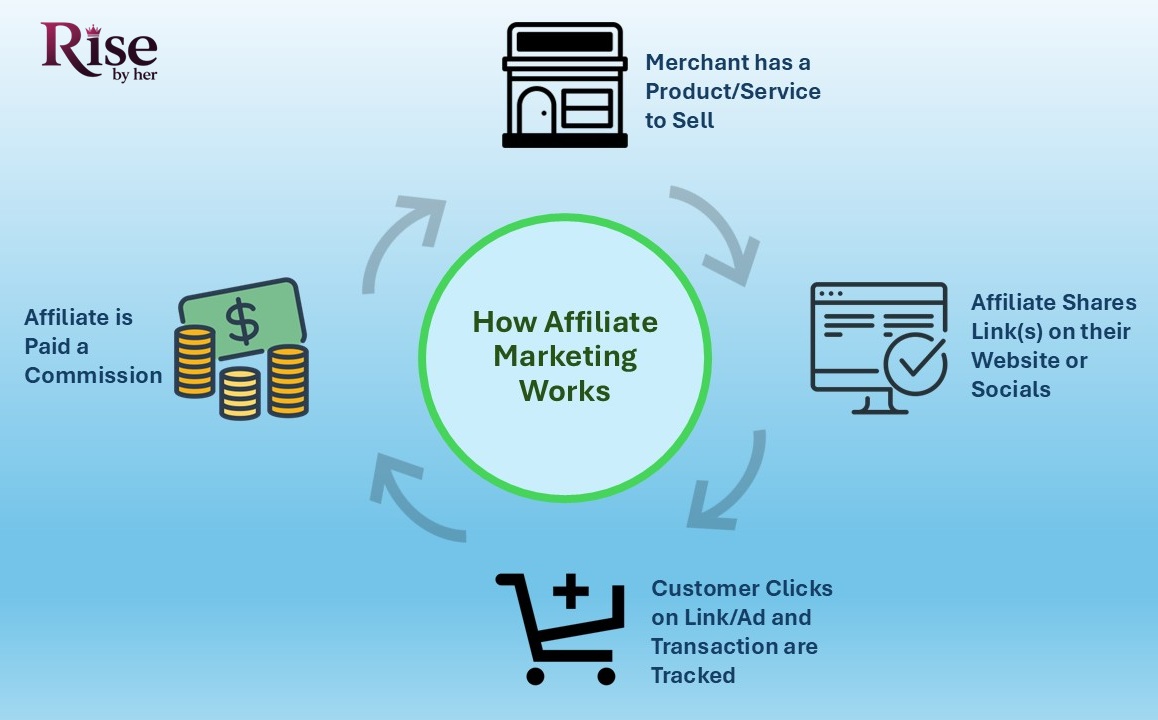
How affiliate marketing works
Affiliate marketing is a simple concept: you recommend products or services, and when someone buys through your unique link, you earn a commission.
In practice, it works like this:
- You create helpful content (blog posts, guides, reviews)
- You include affiliate links to relevant tools or products
- A reader clicks your link and makes a purchase
- You earn a percentage of that sale
This works best when your content focuses on solving real problems, not just promoting products. Trust and usefulness drive conversions more than volume.
How long it takes to earn your first income
Affiliate income is not instant. For most beginners, it typically takes a few months of consistent content creation before seeing meaningful results.
A realistic timeline looks like this:
- First 1–3 months: setting up content and publishing regularly
- 3–6 months: early traffic starts from search engines
- 6–12 months: first consistent affiliate income begins
The biggest factor is not luck, but SEO and content quality. Posts that answer specific search questions tend to perform best over time.
Best niches for women in 2026
Choosing the right niche is one of the most important decisions in blogging. The goal is to pick a topic with both demand and monetization potential.
Strong niches in 2026 include:
- Personal finance and wealth building (budgeting, investing, side income)
- Online business and passive income ideas
- Career growth and remote work opportunities
- Lifestyle productivity (organization, time management, routines)
- Health and wellness for busy professionals
The most profitable niches usually sit at the intersection of:
- High search demand
- Problem-solving content
- Products or services people are already willing to buy
For women starting a dropshipping business in 2026, 10 Best Dropshipping Niches for Women in 2026 (and 3 to Avoid) helps you choose profitable niches and avoid common mistakes.
2. Build Passive Income with Dividend Stocks
Dividend investing is one of the most straightforward ways to build long-term passive income, especially for beginners who prefer a stable and structured approach to investing. It focuses more on patience than timing the market.
What dividend investing means in simple terms
Dividend investing means buying shares of companies that regularly share a portion of their profits with investors. These payments are called dividends, and they are usually paid quarterly or annually.
In simple terms:
- You invest in a company by buying its stock
- The company earns profits
- A portion of those profits is paid back to you as income
Over time, this creates a stream of income that can grow as you reinvest dividends or add more investments. It is one of the most classic forms of long-term passive income.
How women can start investing with small amounts
One of the biggest misconceptions about investing is that you need a large amount of money to begin. In reality, you can start small and build gradually over time.
Simple ways to get started:
- Start with low-cost index funds or dividend-focused ETFs
- Invest small monthly amounts consistently instead of large one-time investments
- Use beginner-friendly investing apps that allow fractional shares
- Reinvest dividends to accelerate long-term growth
The key is consistency, not the size of your first investment. Even small contributions can grow significantly over time through compounding.
Risks and long-term benefits
Like any investment, dividend stocks come with both advantages and risks. Understanding both is essential before getting started.
Long-term benefits:
- Regular passive income from dividends
- Potential for capital growth over time
- Compounding effect when dividends are reinvested
- More stability compared to many high-risk investments
Risks to be aware of:
- Stock market fluctuations can affect value
- Dividends are not guaranteed and can be reduced
- Requires patience and a long-term mindset
Dividend investing is not a fast-income strategy. It works best for those who are willing to stay consistent and think in terms of years, not months.
Want to dig deeper? Read my full post:
How Do Dividend Stocks Work? A 2026 Investing Guide for Women in Finance
3. Generate Real Estate Income with REITs or Short-Term Rentals
Real estate is one of the most reliable long-term wealth-building assets, but it no longer requires buying physical property. Today, there are easier entry points like REITs and short-term rentals that allow you to earn income from real estate with very different levels of capital and involvement.

REITs vs rental properties explained
Real estate income generally comes in two main forms: investing through REITs or owning rental properties.
REITs (Real Estate Investment Trusts):
- You invest in a company that owns and manages real estate
- You earn dividends from rental income and property profits
- No need to manage tenants or properties
- Highly passive and easy to start with small amounts
Rental properties (including short-term rentals):
- You directly own physical property
- You earn income from tenants or short-term guests
- Higher control and potentially higher returns
- Requires active management, maintenance, and higher capital
In simple terms, REITs are hands-off, while rental properties are hands-on but more control-heavy.
Best option for beginners with low capital
For most beginners, REITs are the more realistic starting point. They allow you to invest in real estate without needing large upfront capital or dealing with property management.
Beginner-friendly approach:
- Start with REITs through stock investment platforms
- Focus on diversified real estate funds instead of single properties
- Learn how real estate cycles work before committing large capital
Short-term rentals can become an option later, but they usually require more experience, time, and financial stability.
Expected returns overview
Returns in real estate vary depending on the strategy, location, and risk level, so expectations should stay realistic.
General overview:
- REITs: typically offer moderate, steady returns through dividends plus long-term growth
- Rental properties: can generate higher income but come with higher costs and variability
- Short-term rentals: potentially higher income, but more sensitive to market demand and management effort
Real estate is best viewed as a long-term wealth-building strategy rather than a quick-income method. Consistency and time in the market matter more than timing.
For long-term wealth building, How to Use Real Estate and Investing to Create Generational Wealth shows how to combine property and investing strategies to grow lasting financial security.
4. Create and Sell Profitable Digital Products
Digital products are one of the most scalable income streams because you create them once and can sell them repeatedly without inventory or shipping. This makes them ideal for building semi-passive income online, especially for women looking for flexible work.
Examples (ebooks, templates, courses)
Digital products come in many forms, and the best choice depends on your skills and audience.
Popular digital product ideas include:
- Ebooks (guides, how-to manuals, niche knowledge)
- Templates (budget planners, business trackers, social media templates)
- Online courses (teaching a skill or process you already know)
- Printables (checklists, journals, worksheets)
The key is not complexity, but usefulness. Simple, problem-solving products often sell better than overly complicated ones.
Where to sell digital products
You don’t need a website to start selling digital products. There are several beginner-friendly platforms that handle payments and delivery automatically.
Common selling platforms:
- Etsy (great for printables and templates)
- Gumroad (simple digital product sales)
- Shopify (for building a full brand)
- Payhip or similar platforms (easy setup, low barriers)
You can also sell directly through social media or a blog once you build an audience.
How to validate your product idea
Before creating a digital product, it’s important to confirm that people actually want it. Validation reduces wasted effort and increases your chances of making sales.
Simple validation steps:
- Check if people are searching for the problem online
- Look at similar products and see if they are selling well
- Read comments, forums, or social media discussions in your niche
- Pre-sell or test interest before fully building the product
A good rule: if people are already looking for a solution, your product is much more likely to sell.
For motivation in your career journey, 25 Inspiring Success Stories of Women in Digital Marketing highlights real examples of women building success in the digital space.
5. Launch a Print-on-Demand or Dropshipping Business
Print-on-demand and dropshipping are two popular ways to start an online business without holding inventory. Both models allow you to sell products online while a third party handles production, storage, and shipping. However, they work differently and suit different types of beginners.
Difference between POD and dropshipping
Although they are often grouped together, print-on-demand (POD) and dropshipping are not the same.
Print-on-demand (POD):
- You design custom products (t-shirts, mugs, tote bags, etc.)
- Products are only created after a customer places an order
- Highly focused on branding and creativity
Dropshipping:
- You sell existing products from suppliers
- The supplier ships directly to the customer
- More focused on product selection and marketing
In short: POD is design-driven, while dropshipping is product-driven.
For stay-at-home moms who want to earn online, 7 Profitable Dropshipping Business Ideas for Stay-at-Home Moms provides practical ideas to start a flexible home-based business.
Startup costs and profitability
Both models are low-cost compared to traditional businesses, but they still require some investment in tools and marketing.
Typical startup costs include:
- Website or platform fees (Shopify, Etsy, etc.)
- Marketing and ads (optional but often necessary for growth)
- Design tools or product testing
Profitability depends on:
- Your ability to attract traffic
- Product quality and niche selection
- Marketing strategy (organic or paid)
For women in STEM aiming to start a business, Top 5 STEM Accelerators Helping Women Launch Successful Startups highlights programs that support turning ideas into successful startups.
Common beginner mistakes
Many beginners struggle not because the model is bad, but because of avoidable mistakes.
Most common mistakes include:
- Choosing overly saturated or generic products
- Expecting fast profits without testing
- Relying only on paid ads without learning organic traffic
- Not building a clear brand or niche focus
- Giving up too early before finding winning products
Success in both POD and dropshipping comes from testing, patience, and continuous improvement rather than quick wins.
6. Grow Income with a YouTube Channel or Podcast
YouTube and podcasting are powerful long-term income streams because they build audience trust and compound over time. Unlike short-term strategies, content platforms reward consistency, not instant results. The growth can be slow at the beginning, but the long-term earning potential is significant once momentum builds.

Monetization methods (ads, sponsorships, affiliates)
There are several ways to earn money from content once you start building an audience.
Main monetization methods include:
- Ad revenue (YouTube ads or podcast platform monetization)
- Sponsorships from brands in your niche
- Affiliate marketing through product recommendations
- Selling your own products or services (courses, ebooks, coaching)
Most creators don’t rely on just one method. The strongest income comes from combining multiple streams as your audience grows.
How long growth realistically takes
One of the biggest misconceptions is expecting fast results. In reality, content growth is gradual and depends heavily on consistency and niche selection.
Realistic timeline:
- First 1–3 months: slow growth, learning phase
- 3–6 months: improving content and gaining initial traction
- 6–12 months: steady audience growth if consistent
- 12+ months: stronger monetization potential
The key is persistence. Most successful creators only see meaningful income after building a consistent content library.
Content ideas for beginners
Starting is often the hardest part, but beginners don’t need complex ideas. Simple, helpful content performs best, especially in finance and lifestyle niches.
Beginner-friendly content ideas:
- “How I started saving money as a beginner”
- “Simple ways to make extra income from home”
- “Beginner guide to budgeting or investing”
- “My routine for managing money and productivity”
- “Mistakes I made when trying to earn online”
Focus on solving small, relatable problems. Over time, these videos or episodes build authority and attract a loyal audience.
7. Earn Steady Returns with Peer-to-Peer Lending or High-Yield Savings
Peer-to-peer lending and high-yield savings accounts are often considered “low-effort” income options. They are designed more for stability and predictable returns than high growth, making them suitable for conservative investors or beginners who want to reduce risk while still earning some income.
What P2P lending is and how it works
Peer-to-peer (P2P) lending is a system where you lend money to individuals or small businesses through an online platform. In return, you earn interest on the money you lend.
How it works in simple terms:
- You deposit money into a P2P lending platform
- The platform connects you with borrowers
- Borrowers repay loans with interest over time
- You earn a share of that interest as returns
It can be an attractive option for generating passive income, but it depends heavily on borrower reliability and platform risk management.
Risk level vs return comparison
Like any investment, these options come with a trade-off between safety and returns.
P2P lending:
- Higher potential returns than savings accounts
- Higher risk due to possible loan defaults
- Returns are not guaranteed
High-yield savings accounts:
- Very low risk (often bank-backed or insured depending on country)
- Lower but stable returns
- Ideal for capital preservation rather than growth
In general, higher returns usually come with higher risk, especially in lending-based platforms.
Safer alternatives for beginners
For beginners, safety and simplicity often matter more than maximizing returns. There are several lower-risk alternatives that still help grow money gradually.
Safer options include:
- High-yield savings accounts
- Government bonds or treasury products (depending on availability)
- Diversified index funds
- Dividend-focused ETFs for long-term stability
A common strategy is to start with safer options first, then gradually explore higher-risk investments once you understand how each system works.
Which Income Stream Is Best for You? (Beginner Guide)
The best income stream is not the most popular one, but the one that matches your current situation. Your budget, available time, and goals will determine what makes sense to start with. Instead of trying everything, focus on what you can realistically stick to for at least a few months.
If you have $0–$100 to start
If your budget is very limited, your focus should be low-cost, skill-building income streams that don’t require upfront investment.
Best options in this range:
- Blogging with affiliate marketing (very low startup cost)
- Free social media content creation (YouTube, TikTok, Pinterest)
- Simple digital products like templates or ebooks
- Learning-based freelancing skills (writing, design, virtual assistance)
At this stage, the goal is not fast income, but building a foundation you can grow over time.
If you have time but no money
If you have time but little or no capital, your biggest advantage is consistency. Time can replace money when you focus on effort-based income streams.
Strong options here include:
- Content creation (blog, YouTube, podcast)
- Freelancing services to generate first income
- Building an audience before monetizing
- Learning high-income skills online (SEO, copywriting, design)
This path is slower at the start, but it builds long-term earning potential without financial risk.
If you want passive income only
If your main goal is passive income, focus on systems that either compound or require minimal ongoing work after setup.
Best passive-focused options:
- Dividend investing and ETFs
- High-yield savings accounts
- Digital products (once created, they sell repeatedly)
- Affiliate blogs with evergreen content
It’s important to be realistic here: true passive income usually requires upfront effort or capital. The “passive” part comes later, not immediately.
To build long-term income streams, 15 Passive Income Ideas for Women to Build Wealth in 2026 explores practical ways women can earn money with less daily effort.
Conclusion: Take the First Step Toward Financial Freedom
Building multiple income streams is not about doing everything at once. It is about starting with one realistic path, staying consistent, and gradually expanding as your skills and confidence grow. Whether you choose blogging, investing, digital products, or content creation, progress comes from action, not overthinking.
The most important step is simply to begin. Even small efforts today can grow into meaningful income over time when they are built with patience and consistency. Financial freedom is not achieved overnight, but it is built through steady decisions made every day.
By Aveline Lowell
Founder & Editor-in-Chief, RiseByHer
Aveline Lowell writes research-driven content covering women’s finance, entrepreneurship, STEM, technology, and career growth. Her work focuses on practical, well-researched information that helps women make informed decisions.
Editorial & Disclaimer: RiseByHer aims to provide accurate, well-researched, and up-to-date information. Articles are reviewed and updated when necessary and are intended for general informational and educational purposes, not personalized financial, legal, tax, or professional advice.