
Starting a business is exciting, but navigating legal requirements is crucial for long-term success. For women entrepreneurs, understanding business registration, licenses, tax obligations, and funding regulations is key to avoiding legal pitfalls.
In 2026, laws continue to evolve to support women-owned businesses, offering grants, certifications, and funding opportunities. Whether launching a startup or scaling an existing business, knowing these legal essentials will help you stay compliant and thrive.
Let’s break down the key legal requirements every woman entrepreneur must know!
How to Choose the Right Business Structure as a Woman Entrepreneur
Choosing the right business structure is one of the first legal decisions that impacts your taxes, personal liability, business credibility, and even your ability to qualify for funding. The best structure depends on your risk level, income goals, and whether you plan to scale in 2026.
1. Types of Business Structures Explained (LLC, Sole Proprietorship, Corporation)
| Business Structure | Pros | Cons |
| Sole Proprietorship | – Simple to set up – Complete control – Easy tax filing | – Unlimited personal liability – Harder to raise capital – Less business credibility |
| Limited Liability Company (LLC) | – Protects personal assets – Flexible tax options – Easier to raise capital | – More paperwork than a sole proprietorship – Some state fees |
| Corporation | – Strongest liability protection – Easier to attract investors – Perpetual existence | – Complex to set up – Double taxation (C-corp) – High operating costs |
| Partnership | – Shared responsibilities – Easy to form – Combined expertise | – Shared liability – Potential conflicts – More complex tax filings |
2. Tax and Liability Differences You Need to Know
Your business structure affects two major things: personal risk and how you pay taxes.
Liability Protection (Most Important Difference)
- Sole Proprietorship: you are personally responsible for business debts and lawsuits
- LLC: your personal assets (home, savings) are generally protected
- Corporation: offers strong liability protection but requires more formal rules
Tax Differences (What Changes in 2026)
Most small businesses fall under pass-through taxation, meaning profits pass to your personal tax return.
- Sole Proprietorship: taxed as personal income
- LLC: taxed like a sole proprietorship by default, but can choose S-Corp taxation
- S-Corp (tax election): can reduce self-employment taxes once profits increase
- C-Corp: taxed separately from the owner (often not ideal for beginners)
If your business is making consistent profit (example: $40K+ yearly), an LLC with S-Corp election may reduce taxes, depending on your country/state rules.
3. How to Register Your Business Structure in 2026
Registering your business structure is not just a formality. It officially makes your business legal, allows you to pay taxes correctly, and helps you open business bank accounts, apply for grants, and protect your personal assets. In 2026, many governments and platforms also require legal registration for payment processing and business verification.
Here’s the step-by-step process most women entrepreneurs follow.
Step 1: Choose a Business Name (And Make It Legally Safe)
Before you register anything, confirm your business name is available and legally usable.
You should check:
- Business name availability in your state/country database
- Domain name availability (especially if you plan to sell online)
- Trademark conflicts (to avoid lawsuits or forced rebranding)
Step 2: Pick the Right Business Structure (Based on Risk + Income)
Your structure determines how much legal protection you have.
- Sole proprietorship is fast and simple, but offers zero personal liability protection.
- LLC is the most common option for women entrepreneurs because it protects your personal assets and increases credibility.
- Corporation is best for businesses planning to scale aggressively, hire teams, or attract investors.
Step 3: Register Your Business with the Correct Authority
This is the official legal registration step.
Depending on your structure, you may file:
- Articles of Organization (for LLC)
- Articles of Incorporation (for corporation)
This filing usually includes:
- your business name
- business address
- owner or manager name
- registered agent (if required)
- type of business activity
Step 4: Apply for an EIN (Employer Identification Number)
An EIN is like a Social Security number for your business. Even if you don’t plan to hire employees, you’ll likely need it.
An EIN helps you:
- open a business bank account
- file taxes properly
- apply for business credit cards
- work with platforms that require business verification
Step 5: Open a Business Bank Account (Non-Negotiable for Compliance)
A business bank account is one of the easiest ways to stay legally compliant.
It helps you:
- separate business income from personal spending
- track taxes and expenses correctly
- prove your income when applying for funding
- protect your liability shield (especially for LLCs)
Step 6: Register for Taxes and Sales Requirements
In 2026, many businesses must register for tax accounts beyond just filing annual taxes.
Depending on your business model, you may need:
- Sales tax permit (if you sell products or taxable services)
- VAT registration (in many countries)
- Payroll tax account (if you hire employees)
- Self-employment tax registration (for independent business owners)
Step 7: Obtain the Licenses and Permits Required for Your Industry
Licenses vary widely based on location and industry. Some businesses need no license, while others require multiple permits.
Common licenses include:
- home business permit
- professional license (beauty, fitness, wellness, consulting)
- food or health permits (if you sell food products)
- zoning permits (if you operate from a physical space)
Step 8: Set Up Legal Protection Before You Start Selling
Once your business is registered, you need legal systems in place before working with clients or customers.
At minimum, set up:
- client contracts or service agreements
- refund and cancellation policy
- privacy policy and terms (for online businesses)
- basic bookkeeping system (QuickBooks, Wave, Xero, etc.)
For a complete step-by-step breakdown, check out The Ultimate 2026 Guide to Business Structures for Women Entrepreneurs, where the full guide is explained in detail.
How to Register Your Business and Obtain the Required Licenses
Registering your business is one of the most important steps to become legally compliant in 2026. It allows you to operate officially, pay taxes correctly, access business banking, apply for grants, and avoid penalties. Depending on your location and industry, you may need both registration and licenses before you can legally start selling.
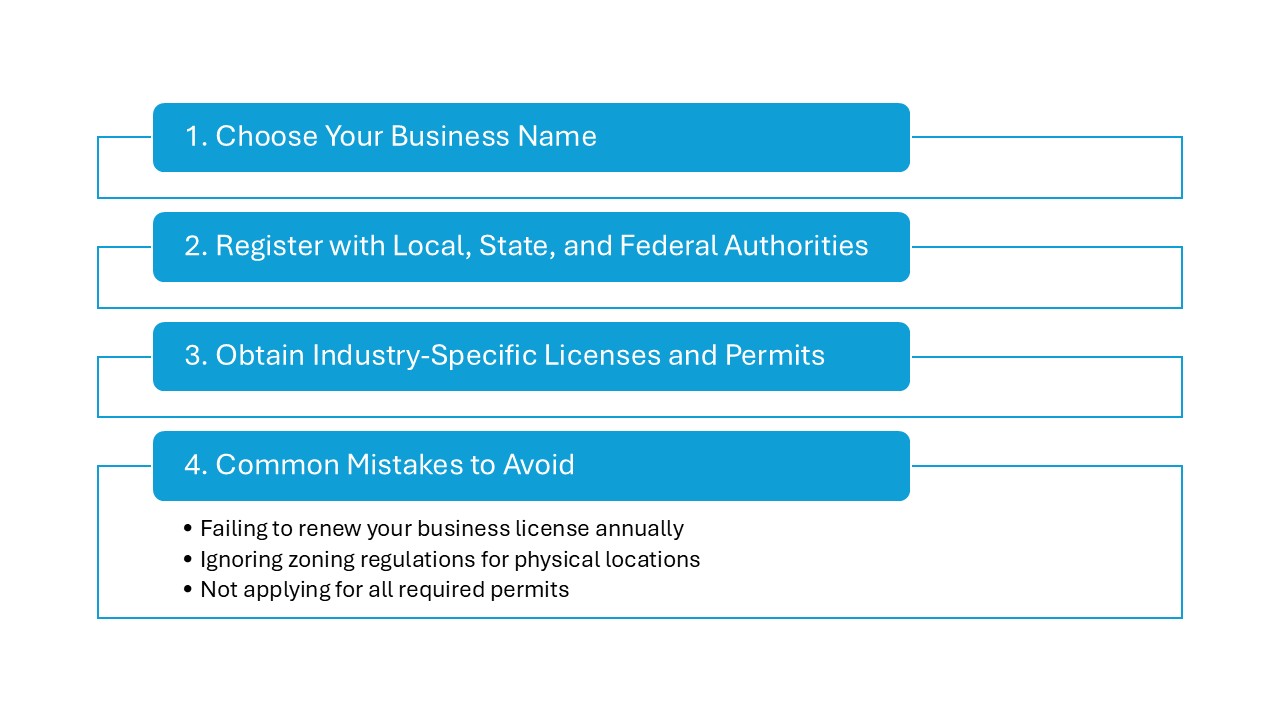
1. Step-by-Step Business Name Registration Process
Your business name is not just branding. It’s also a legal identity, and choosing the wrong name can cause trademark issues, registration rejection, or future rebranding costs.
Here’s how to register it correctly:
- Search business name availability
- Check trademark conflicts
- Secure the domain and social media handles
- Decide whether you need a DBA (“Doing Business As”)
- Register the name with the correct authority
2. Registering with Local, State, and Federal Authorities
Business registration usually happens at multiple levels depending on your country and structure.
Local level (city or municipality):
- Business operating permit or license
- Zoning approval for home-based businesses (if applicable)
State level:
- Formation of your business entity (LLC, corporation, etc.)
- Filing documents such as Articles of Organization or Incorporation
- Appointment of a registered agent if required
Federal level:
- Apply for an Employer Identification Number (EIN)
- Register for federal tax obligations when applicable
- Set up payroll accounts if hiring employees
3. Industry-Specific Licenses and Permits You May Need
Not all businesses require the same licenses. Your industry determines what legal permissions you need to operate.
- Professional services (coaching, beauty, consulting, finance): may require professional certification or licensing
- E-commerce businesses: may need sales tax permits or reseller certificates
- Food and product businesses: often require health inspections and safety approvals
- Home-based businesses: may require home occupation permits or local approval
4. Common Registration Mistakes to Avoid
Many entrepreneurs delay growth or face legal issues because of avoidable mistakes during setup.
- Choosing a business name without checking trademark availability
- Starting to sell before completing proper registration or licensing
- Mixing personal and business finances, especially without a separate bank account
- Choosing a simple structure (like sole proprietorship) without considering liability risks
- Ignoring renewal dates, annual reports, or ongoing compliance requirements
What Legal Documents Every Woman Entrepreneur Needs to Start a Business
Having the right legal documents in place is essential to operate legally, protect your assets, and build credibility with clients, banks, and partners in 2026. These documents form the legal foundation of your business and reduce future risks.
1. Essential Business Formation Documents (EIN, Articles, Agreements)
These are the core documents required to officially establish your business:
- Articles of Organization (LLC) or Articles of Incorporation (Corporation)
- This is your official registration document that legally creates your business entity.
- Employer Identification Number (EIN)
- A federal tax ID used to open bank accounts, file taxes, and hire employees if needed.
- Operating Agreement (for LLCs)
- Defines ownership structure, roles, responsibilities, and how profits are shared.
- Business Registration Certificate (if applicable in your country)
- Proof that your business is legally registered with government authorities.
2. Contracts You Must Have Before Working with Clients or Partners
Contracts protect you from disputes, misunderstandings, and unpaid work. Every woman entrepreneur should use clear written agreements before starting any business relationship.
- Client Service Agreement: Defines scope of work, payment terms, deadlines, and deliverables.
- Partnership Agreement: Used when working with co-founders or business partners to define roles and profit sharing.
- Independent Contractor Agreement: Used when hiring freelancers or outsourcing work.
- Terms and Conditions (for online businesses): Sets rules for using your website, products, or services.
3. Optional Legal Documents for Extra Protection
These documents are not always required but are highly recommended as your business grows.
- Privacy Policy (required if you collect customer data online)
- Refund and Cancellation Policy (important for service or product businesses)
- Non-Disclosure Agreement (NDA) to protect sensitive business information
- Intellectual Property Assignment Agreement to secure ownership of work created for your business
- Disclaimer Statements for coaching, consulting, or educational content
What Tax Obligations and Financial Compliance Rules Should You Know?
Taxes and financial compliance are key responsibilities for every entrepreneur. In 2026, governments are tightening digital reporting systems, so keeping accurate financial records and understanding your tax obligations is essential to avoid penalties and stay legally compliant.

1. Federal, State, and Local Tax Requirements
Most businesses are required to comply with taxes at multiple levels depending on their structure and location.
Federal tax obligations:
- Report all business income on your annual tax return
- Pay self-employment tax if you operate as a sole proprietor or single-member LLC
- Make quarterly estimated tax payments if you expect to owe taxes above a certain threshold
- File corporate tax returns if you operate as a corporation (C-Corp or S-Corp structure)
State tax obligations:
- State income tax (varies depending on jurisdiction)
- Sales tax collection and remittance for taxable goods or services
- Annual business registration renewals or franchise taxes (in some regions)
Local tax obligations:
- City or municipal business taxes
- Local licensing fees or occupational taxes
- Zoning-related or home-based business compliance fees
2. Tax Deductions and Benefits for Women-Owned Businesses
Understanding deductions can significantly reduce your taxable income and improve cash flow.
Common deductible business expenses include:
- Office supplies, equipment, and business software
- Website hosting, domains, and digital tools
- Marketing, ads, and content creation costs
- Professional services (legal, accounting, consulting)
- Business travel, transport, and communication expenses
- Home office deduction (if you meet eligibility requirements)
Strategic advantage: Many women entrepreneurs also benefit from business support programs, grants, and certification opportunities that can improve access to funding and contracts.
3. Bookkeeping and Accounting Tools for Compliance
Proper bookkeeping is not just for taxes—it’s a core part of running a sustainable and scalable business.
Why bookkeeping matters:
- Ensures accurate tax reporting and reduces audit risk
- Helps you understand profitability and cash flow
- Makes it easier to apply for loans, grants, or investors
- Keeps your business legally compliant year-round
Basic bookkeeping rules every entrepreneur should follow:
- Separate business and personal bank accounts
- Record all income and expenses consistently (weekly or monthly)
- Reconcile bank statements regularly
- Store financial documents securely (cloud or accounting system)
Popular tools in 2026:
- QuickBooks (advanced accounting and tax reporting)
- Xero (automation and scaling businesses)
- Wave (free option for beginners)
- Excel or Google Sheets (simple tracking system for early stages)
For a complete breakdown of commonly overlooked savings, see 15 Tax Deductions Women Entrepreneurs Miss Every Year (2026 Guide), where everything is explained in detail.
How to Protect Your Business with Strong Contracts and Legal Agreements
Contracts and legal agreements are essential for protecting your business from disputes, unpaid work, and intellectual property theft. In 2026, having clear written agreements is not optional—it is a key part of running a legally secure and professional business.

1. Essential Business Contracts Every Woman Entrepreneur Needs
Every entrepreneur should use contracts before starting any professional relationship. These documents define expectations, protect payments, and reduce legal risks.
Key contracts include:
- Client Service Agreement: outlines scope of work, pricing, deadlines, and deliverables
- Independent Contractor Agreement: used when hiring freelancers or outsourcing tasks
- Partnership Agreement: defines roles, responsibilities, and profit-sharing between co-founders
- Terms and Conditions (for online businesses): sets rules for using your website, products, or services
2. Why Intellectual Property Protection (Trademarks, Copyrights, Patents) Matters
Intellectual property (IP) protection helps secure your brand, content, and ideas from being copied or misused.
Main types of protection:
- Trademark: protects your business name, logo, and brand identity
- Copyright: protects original content such as blogs, courses, designs, and digital products
- Patent: protects unique inventions or product innovations (less common for most online businesses)
3. How to Draft Legally Binding Business Agreements That Protect You
A contract is only effective if it is clear, detailed, and enforceable. Poorly written agreements can create more problems than no contract at all.
Best practices for strong agreements:
- Clearly define scope of work, deadlines, and responsibilities
- Include payment terms, late fees, and refund conditions
- Specify ownership rights (especially for digital products or content)
- Add termination clauses for ending agreements safely
- Ensure both parties sign the document (digital signatures are valid in most cases)
Important: Use simple but precise language. A legally binding contract does not need to be complicated, but it must be clear and specific.
What Employment Laws and Hiring Rules Must You Follow?
Hiring employees or contractors introduces legal responsibilities that every entrepreneur must understand. In 2026, businesses are expected to correctly classify workers, follow labor regulations, and manage payroll compliance to avoid penalties and legal disputes.
1. W-2 Employees vs. 1099 Contractors Explained
Understanding worker classification is one of the most important legal decisions when hiring.
| W-2 Employees | 1099 Contractors (Independent Contractors) |
|---|---|
| Work under your control (schedule, tools, and processes). You are responsible for payroll taxes and benefits. Eligible for employment protections (minimum wage, overtime laws). | Work independently and control how they complete tasks. Responsible for their own taxes. No employee benefits required. |
2. Key Labor Laws Small Businesses Must Follow
Even small businesses must comply with employment regulations once they start hiring.
Core legal requirements include:
- Minimum wage laws (varies by country/state)
- Overtime pay rules for eligible employees
- Anti-discrimination and equal opportunity laws
- Workplace safety standards (even for small teams or remote workers)
- Proper tax withholding and reporting for employees
3. Hiring and Payroll Compliance Best Practices
Proper hiring and payroll systems help you stay legally compliant and avoid costly mistakes.
Before hiring:
- Clearly define the role and responsibilities
- Use written contracts for employees or freelancers
- Verify legal work eligibility if required in your country
Payroll compliance essentials:
- Register for employer tax accounts if hiring employees
- Process payroll on a consistent schedule (weekly, biweekly, or monthly)
- Withhold and report taxes correctly for W-2 employees
- Issue proper tax forms at year-end (such as W-2 or 1099 forms)
Best practices for 2026:
- Use payroll software to automate calculations and filings
- Keep accurate employee records and contracts
- Regularly review classification rules to avoid misclassification issues
Why Business Insurance and Risk Management Are Essential
Business insurance and risk management protect your company from financial loss, lawsuits, accidents, and unexpected disruptions. In 2026, as businesses operate more online and globally, having proper coverage is essential for long-term stability and legal safety.
1. Types of Business Insurance Every Entrepreneur Should Consider
Different businesses require different types of insurance depending on risk level, industry, and operations.
Common types of business insurance include:
- General Liability Insurance: protects against third-party claims like injury or property damage
- Professional Liability Insurance: covers errors, negligence, or service-related disputes (important for coaches, consultants, and service providers)
- Property Insurance: protects business equipment, inventory, or physical workspace
- Cyber Liability Insurance: covers data breaches, hacking, and online security risks (especially important for online businesses)
- Workers’ Compensation Insurance: required if you hire employees in many regions
2. How to Choose the Right Business Insurance Coverage for Your Needs
Choosing the right insurance depends on your business model, size, and risk exposure.
Start by evaluating:
- The type of services or products you offer
- Whether you interact directly with clients or customers
- If you store sensitive customer or financial data
- Whether you operate online, offline, or both.
Then match coverage to risk:
- Low-risk businesses (freelancers, digital services): basic liability + professional coverage
- Medium-risk businesses (e-commerce, consulting): liability + cyber protection
- High-risk businesses (physical products, employees): full coverage package
3. Risk Management Strategies to Protect and Scale Your Business
Risk management is about preventing problems before they happen, not just reacting to them.

Core risk management strategies include:
- Using written contracts for all clients, partners, and freelancers
- Separating personal and business finances to reduce liability risk
- Keeping proper financial records and documentation
- Regularly backing up digital data and business files
- Implementing cybersecurity practices (strong passwords, secure platforms, data protection tools)
Important: Strong risk management not only protects your business but also increases your credibility with investors, banks, and clients.
What Grants, Funding Rules, and Women-Owned Business Benefits Exist?
Access to funding is one of the most important factors in starting and scaling a business. In 2026, women entrepreneurs can benefit from a growing number of grants, loan programs, and certification opportunities designed to support women-owned businesses.
1. Grants and Loans for Women Entrepreneurs
Women entrepreneurs have access to multiple funding options depending on their business stage and location.
Common funding options include:
- Grants: Non-repayable funds (e.g., Amber Grant, IFundWomen, Cartier Women’s Initiative).
- Small Business Loans: Options from the Small Business Administration (SBA), banks, and microloan programs.
- Venture Capital & Angel Investors: Ideal for scalable startups but require equity exchange.
- Microloans: small funding options for startups and early-stage businesses
- Private and nonprofit grants: funding from organizations supporting women entrepreneurship
Key insight: Grants are highly competitive but valuable because they do not need to be repaid, while loans require repayment but are more widely accessible.
For a complete breakdown of funding opportunities, explore Unlock Success: 7 Funding Boosts for Women in Business, where each option is explained in detail to help you grow your business.
2. Women-Owned Business Certifications (WBE, WOSB Explained)
Business certification helps officially recognize your company as women-owned, which can unlock exclusive opportunities.
Main certifications include:
- WBE (Women’s Business Enterprise): A certification that verifies a business is at least 51% owned and controlled by women. It is often used in corporate supplier diversity programs.
- WOSB (Women-Owned Small Business): A U.S. federal certification that allows women-owned businesses to compete for government contracts set aside specifically for women entrepreneurs.
3. How Certification Helps You Get Funding and Contracts
Becoming a certified women-owned business can significantly improve your access to opportunities.
Key benefits include:
- Eligibility for government and corporate contracts
- Access to exclusive funding and grant programs
- Inclusion in supplier diversity databases used by large companies
- Increased credibility with banks, investors, and partners
- Networking opportunities within women entrepreneur programs
For the complete list and detailed recommendations, check out The Ultimate List of STEM Certifications Women Need in 2026, where the full guide is covered step by step.
Legal Considerations for Online and E-Commerce Businesses in 2026
Running an online business is easier than ever, but it comes with legal responsibilities that many entrepreneurs overlook. In 2026, e-commerce laws are stricter around customer protection, refunds, and data privacy. Having the right legal setup helps you avoid penalties, disputes, and account shutdowns on selling platforms.
1. Legal Pages Every Online Business Must Have
If you sell online, your website must include clear policies that protect both you and your customers. These pages also build trust and reduce refund disputes.
Most online businesses should have:
- Privacy Policy: explains how you collect, store, and use customer data
- Terms and Conditions: sets rules for website use, services, and purchases
- Refund and Return Policy: explains refunds, cancellations, and product return timelines
- Shipping Policy: required for physical products (shipping time, tracking, delays)
- Disclaimer Page: important for coaching, education, finance, or wellness businesses
2. Data Privacy Laws and Compliance Basics
In 2026, privacy compliance is a major legal requirement, especially for businesses collecting emails, payment information, or customer behavior data.
You may need to comply with laws such as:
- GDPR (Europe)
- CCPA/CPRA (California)
- Other country-specific privacy laws depending on your audience
Basic compliance practices include:
- Asking for consent before collecting emails or using cookies
- Protecting customer payment information with secure systems
- Explaining how customer data is stored and used
- Allowing customers to unsubscribe or request data deletion
- Using secure checkout tools and encrypted platforms
3. Legal Rules for Shopify, Amazon, and Etsy Sellers
Selling on platforms like Shopify, Amazon, and Etsy comes with extra compliance rules because you must follow both the law and the platform’s policies.
Shopify sellers should focus on:
- correct business registration and tax setup
- clear refund policies and shipping rules
- collecting sales tax when required
Amazon sellers must follow strict rules on:
- product authenticity and compliance
- accurate product descriptions
- consumer safety requirements and labeling laws
- returns, refunds, and customer support standards
Etsy sellers should ensure:
- products meet Etsy handmade/vintage rules
- digital downloads include proper licensing terms
- listings do not violate copyright or trademark laws
What Are the Biggest Legal Mistakes Women Entrepreneurs Should Avoid?
Many women entrepreneurs don’t fail because their business idea is bad. They fail because of avoidable legal mistakes that lead to fines, lawsuits, tax problems, or payment disputes. The good news is that most of these issues can be prevented early with the right systems.
1. Common Registration and Tax Mistakes
These are the most frequent mistakes new entrepreneurs make when setting up their business legally:
- Operating without proper registration
Many people start selling before registering their business, which can create tax issues and legal penalties later. - Choosing the wrong business structure
Staying a sole proprietor too long can expose your personal assets if a client sues you or if the business has debt. - Not applying for required tax accounts
Some businesses need a sales tax permit, VAT registration, or employer tax accounts depending on location. - Missing deadlines for annual filings
LLCs and corporations often require annual reports, renewals, or fees. Missing these deadlines can lead to penalties or business dissolution. - Ignoring quarterly estimated taxes
Entrepreneurs often forget they may need to pay taxes throughout the year, not only during tax season.
Registration and taxes should be handled early, even if your business is still small.
2. Financial and Contract Mistakes That Cost Money
These are the most frequent mistakes new entrepreneurs make when setting up their business legally:
- Mixing personal and business finances
This makes tax reporting harder and can remove liability protection for LLC owners. - Not using written contracts with clients
Without a contract, clients can refuse payment, change the scope, or dispute deliverables. - No clear refund or cancellation policy
This is one of the biggest reasons online entrepreneurs lose money through chargebacks. - Not protecting intellectual property
Many entrepreneurs fail to trademark their business name or protect digital products, making it easier for competitors to copy their work. - Hiring freelancers without agreements
If you outsource work without a contractor contract, you may face ownership disputes over content, branding, or designs.
3. How to Avoid Compliance Issues Early
The best way to avoid legal trouble is to build simple systems before your business grows.
Smart compliance habits to follow in 2026:
- Register your business properly and renew filings on time
- Open a separate business bank account immediately
- Track income and expenses monthly using bookkeeping tools
- Use contracts for every client, contractor, and partnership
- Set up basic legal policies (privacy policy, terms, refund policy) if selling online
- Keep receipts, invoices, and tax documents organized digitally
- Review insurance coverage once your revenue grows
How to Stay Compliant and Build a Sustainable Business
Legal compliance is not something you do once and forget. In 2026, staying compliant means keeping your business registration active, tracking taxes correctly, updating contracts, and maintaining the legal systems that protect your brand as you grow. A sustainable business is built on consistent legal habits, not last-minute fixes.
1. Monthly and Annual Legal Compliance Checklist
A simple checklist can help you avoid penalties and keep your business running smoothly.
Monthly compliance tasks:
- Track income and expenses (bookkeeping updates)
- Save receipts, invoices, and proof of payments
- Review unpaid invoices and enforce payment terms
- Check subscriptions, contracts, and business tool renewals
- Back up business data (client files, customer info, accounting)
Quarterly tasks (often required):
- Pay estimated quarterly taxes (if applicable)
- Review sales tax or VAT obligations
- Check business performance reports for tax planning
Annual compliance tasks:
- Renew business registration and licenses
- File annual reports (LLC/corporation requirements)
- Submit tax returns and issue contractor forms (if required)
- Review insurance coverage and update policies
- Update legal website pages (privacy policy, terms, refund policy)
2. When to Hire a Lawyer or Legal Advisor
You don’t need a lawyer for every small decision, but there are situations where legal advice can save you thousands.
Consider hiring a lawyer if you:
- are forming an LLC, corporation, or partnership with multiple owners
- are signing major contracts or working with high-value clients
- want to trademark your business name or protect digital products
- are hiring employees and need HR compliance support
- face a client dispute, chargeback issues, or legal threats
- are expanding internationally or operating in multiple states
3. Long-Term Legal Strategy for Scaling Safely
Scaling a business without legal structure can lead to serious financial and compliance problems. A long-term legal strategy helps you grow while staying protected.
Key strategies for long-term protection:
- Upgrade your business structure as income grows (example: LLC to S-Corp election where applicable)
- Build a contract system for clients, freelancers, and vendors
- Protect your brand early with trademarks and IP ownership rules
- Keep financial systems clean to prepare for funding, grants, or investors
- Strengthen cybersecurity and data protection as customer volume increases
- Review insurance coverage regularly as your risks increase
Conclusion: Build a Legally Strong Business Foundation in 2026
Starting and growing a woman-owned business in 2026 is an exciting opportunity, but long-term success depends on more than a great idea. Legal compliance is what protects your income, your brand, and your personal assets as your business grows.
By choosing the right business structure, registering properly, staying on top of taxes, using strong contracts, and protecting your intellectual property, you create a business foundation that is professional, credible, and built to scale. Add the right insurance coverage, follow hiring regulations, and take advantage of women-owned business certifications, and you position yourself for bigger opportunities like grants, funding, and government contracts.
The best approach is simple: treat legal compliance as a business system, not a one-time task. When your business is legally secure, you can grow with confidence, avoid costly mistakes, and focus fully on building a thriving business that lasts.
For further guidance and expert insights, explore Female financial Advisor, where you can learn more about managing finances and making informed financial decisions.
By Aveline Lowell
Founder & Editor-in-Chief, RiseByHer
Aveline Lowell writes research-driven content covering women’s finance, entrepreneurship, STEM, technology, and career growth. Her work focuses on practical, well-researched information that helps women make informed decisions.
Editorial & Disclaimer: RiseByHer aims to provide accurate, well-researched, and up-to-date information. Articles are reviewed and updated when necessary and are intended for general informational and educational purposes, not personalized financial, legal, tax, or professional advice.