


Financial independence is more than a goal. It’s the freedom to make life decisions without relying on anyone else. Whether you want to start a business, buy a home, leave an unhealthy relationship, pay off debt, or retire comfortably, managing your finances gives you control over your future.
For many women, building wealth comes with unique challenges. The gender pay gap, career breaks for caregiving, and longer life expectancy can make saving and investing more complicated. On top of that, many women feel they were never taught the basics of financial planning.
That’s where working with a female financial advisor can make a powerful difference. A trusted financial planner for women can help you build confidence, organize your money, and create a long-term strategy tailored to your goals.
In this guide, you’ll discover some of the best female financial advisors and wealth experts, plus practical tips to help you choose the right advisor in 2026.
Why Work With a Female Financial Advisor? (Women’s Wealth Planning Guide for 2026)
Choosing a financial advisor is a key step toward long-term wealth and independence. Many women prefer working with female financial advisors because they offer relatable experience, clearer communication, and a more personalized approach to planning life, money, and future goals.
1. Deeper Understanding of Women’s Financial Life Stages
One of the most important advantages of working with a female financial advisor is their lived understanding of women’s financial journeys.
Women are statistically more likely to experience:
- Career breaks for childcare or family caregiving
- Income gaps due to part-time work or maternity leave
- Longer retirement periods due to higher life expectancy
- Delayed investing starts because of financial responsibilities at home
A female wealth advisor or women-focused financial planner is often more familiar with these realities and can build strategies that reflect them, rather than using a one-size-fits-all financial model.
This often translates into more realistic planning for:
- Retirement savings timelines
- Emergency fund requirements
- Investment contribution adjustments after career breaks
- Long-term income sustainability planning
For example, a female financial advisor for retirement planning for women may prioritize income continuity strategies that account for 30+ year retirement horizons.
2. A More Comfortable Environment for Financial Conversations
Money is not just numbers. It is deeply connected to emotions, relationships, and life decisions.
Many women report feeling more comfortable discussing sensitive financial topics with a female advisor, especially when dealing with:
- Divorce or separation financial planning
- Debt and credit card repayment struggles
- Single motherhood budgeting challenges
- Inheritance or family wealth management
- Financial recovery after career interruptions
A supportive environment encourages openness, which leads to better financial planning outcomes.
This comfort often allows for more honest discussions about:
- Spending habits and budgeting behavior
- Financial anxiety or lack of confidence in investing
- Long-term goals such as home ownership or early retirement
When communication is clear and judgment-free, financial planning becomes more effective and less stressful.
3. Education-Focused Financial Guidance That Builds Confidence
A major reason women seek female financial advisors is the coaching-style approach many of them use.
Instead of only managing investments, many female financial planners focus on financial education, helping clients understand:
- How investment portfolios actually grow
- The difference between risk tolerance and risk capacity
- How retirement accounts like 401(k), IRA, and Roth IRA work
- How compounding interest builds long-term wealth
- How to make confident, independent financial decisions
This is especially valuable for women who search for terms like how to start investing as a woman, financial planning for beginners women, or how to build wealth as a female entrepreneur.
The result is not just financial management, but financial empowerment.
Over time, clients often become more confident in:
- Making investment decisions without fear
- Asking better financial questions
- Understanding market fluctuations
- Taking control of long-term wealth planning
4. Values-Based and Purpose-Driven Financial Planning
Another growing trend in women’s wealth management is values-based investing.
Many women are increasingly interested in aligning their money with their personal beliefs and long-term life purpose. This includes:
- Ethical investing and ESG portfolios (Environmental, Social, Governance)
- Sustainable investment strategies
- Social impact investing
- Supporting companies aligned with gender equality or community development
Female financial advisors are often more attuned to these priorities and incorporate them into planning strategies.
This is particularly relevant for searches like:
- ethical investing for women in 2026
- sustainable financial planning for female investors
- values-based wealth management for women entrepreneurs
A values-driven approach ensures that financial growth does not come at the expense of personal principles.
It also helps women feel more emotionally connected to their financial decisions, which improves long-term consistency and discipline in investing.
5. Personalized Financial Strategies That Reflect Real Life
Unlike generic financial planning models, female financial advisors often focus on holistic, life-centered strategies.
This means they consider more than just income and investments. They also take into account:
- Career flexibility and transitions
- Family responsibilities and caregiving roles
- Entrepreneurship and business ownership goals
- Work-life balance priorities
- Long-term independence and lifestyle planning
For women entrepreneurs, this is especially important. A female financial advisor for women business owners can help with:
- Cash flow management for irregular income
- Tax-efficient business structuring
- Retirement planning for self-employed professionals
- Scaling strategies that align with personal financial goals
This personalized approach ensures that financial plans evolve as life changes, rather than remaining static.
6. Stronger Focus on Long-Term Financial Independence
At the core of women-focused financial planning is a shared goal: financial independence.
Female financial advisors often emphasize strategies that help women:
- Build independent wealth over time
- Reduce financial dependence on partners or external support
- Prepare for retirement with confidence
- Create emergency financial resilience
- Develop long-term passive income streams
This long-term perspective is especially important for women who are planning for major life transitions such as career changes, divorce, or entrepreneurship.
What Does a Financial Advisor Actually Do?
A financial advisor does far more than pick investments. A good advisor acts as your long-term financial strategist, helping you organize your money, make smarter decisions, and build a clear roadmap toward financial independence.
For women seeking a financial planner for women in 2026, this often means personalized support across every stage of life, from debt management to retirement and wealth creation.
A professional financial advisor can help you with:
- Budgeting and cash flow management
Creating a realistic monthly plan so you can control spending, save consistently, and build financial stability. - Debt reduction strategies (credit cards, student loans, personal loans)
Prioritizing high-interest debt and designing a payoff plan that reduces financial stress faster. - Retirement planning (401k, IRA, Roth IRA, pensions)
Structuring long-term savings so your retirement income is stable and sustainable. - Wealth building and investment strategy
Building a diversified portfolio aligned with your risk tolerance and long-term goals. - Tax planning and optimization
Helping you legally reduce tax liability through smarter investment and income strategies. - Estate planning and legacy goals
Ensuring your assets are protected and transferred according to your wishes. - Insurance planning (life, disability, long-term care)
Protecting your income and family from unexpected financial risks. - Financial planning for women entrepreneurs
Supporting business owners with cash flow planning, reinvestment strategies, and retirement planning for self-employed income.
In short, a strong financial advisor helps you connect all the pieces of your financial life into one clear, actionable strategy.
If your goal is long-term financial security, independence, and confidence in your decisions, working with the right advisor can significantly reduce mistakes and accelerate your progress.
Best Female Financial Advisors and Wealth Experts (2026 Edition)
Many women in finance have been recognized by major publications such as Forbes and SHOOK Research. Below are standout female wealth leaders and advisors who have helped shape the industry.
Important note: Some of the professionals listed are high-profile wealth executives and industry leaders, not necessarily advisors accepting individual clients. They are included because of their major influence in women’s wealth management.
Dalal Salomon
Founder and CEO of Salomon & Ludwin, Dalal is regularly featured among Forbes’ top women wealth advisors. She specializes in creating highly personalized wealth management strategies for high-net-worth individuals and families. Her approach focuses on tax-efficient investing, portfolio diversification, and long-term wealth preservation, especially for clients with complex financial structures.
Anh Tran
Managing Partner at SageMint Wealth, Anh is widely respected for her client-centered, goal-based financial planning approach. She helps clients align their investments with long-term objectives such as retirement readiness, wealth accumulation, and financial independence. She is also known for making financial planning more accessible and easy to understand.
Ami Aranha
A Director of Wealth Management at Aspiriant, Ami brings a powerful combination of legal and financial expertise. This makes her particularly strong in estate planning, tax optimization, and wealth structuring for high-net-worth families. She often works with clients navigating complex financial or legal situations that require integrated planning.
Sandi Bragar
Chief Client Officer at Aspiriant, Sandi is recognized for her leadership in delivering client-focused wealth management services. She emphasizes long-term financial planning, disciplined investing, and building strategies that remain resilient through market changes. Her work is strongly centered on trust, transparency, and client education.
Lisa Colletti
A Managing Director at Aspiriant, Lisa specializes in family office services and multi-generational wealth planning. Her expertise lies in helping families preserve and transfer wealth efficiently across generations while minimizing tax impact and maintaining financial continuity.
Helen Dietz
A Managing Director in Total Wealth Management at Aspiriant, Helen focuses on comprehensive financial strategies that balance growth, risk management, and long-term stability. She is known for helping clients structure portfolios that support both current lifestyle needs and future financial security.
Theresa Donatelli
An advisor at Principal Wealth Partners, Theresa is recognized for her excellence in retirement planning and client service. She helps clients build structured retirement income strategies, optimize savings, and prepare for long-term financial independence with a strong focus on stability and predictability.
- If you’re based in the U.S., check out How U.S. Financial Advisors Support Women in Building Wealth for strategies and advisor support options.
- If you’re in Africa or exploring global expertise, explore Meet Expert Women Financial Advisors Across South Africa to discover top professionals.
- If you’re located in the U.K., Best U.K. Female Financial Advisers to Trust in 2026 highlights trusted advisors and services to consider.
Top Female Finance Leaders Who Inspire Women’s Wealth Growth
These women are not necessarily available as personal financial advisors, but they are some of the most influential leaders shaping global finance, investment strategy, and women’s financial empowerment. Their work impacts how wealth is managed, invested, and understood at scale.
Mary Callahan Erdoes
CEO of J.P. Morgan Asset & Wealth Management, Mary Callahan Erdoes oversees trillions of dollars in assets globally. She is one of the most powerful women in finance and plays a key role in shaping institutional investing, wealth management strategies, and global market outlooks. Her leadership reflects the scale and complexity of modern wealth systems and how large institutions manage long-term capital growth.
Sallie Krawcheck
CEO and co-founder of Ellevest, Sallie Krawcheck is one of the most recognized voices in women-focused investing. She is widely known for advocating to close the gender investing gap and for designing financial tools specifically tailored to women’s earning patterns and life stages. Through Ellevest, she has helped shift the conversation toward more inclusive, goal-based investing and financial education for women.
Abigail Johnson
Chairman and CEO of Fidelity Investments, Abigail Johnson leads one of the largest asset management firms in the world. She is known for driving innovation in retirement planning, digital investing platforms, and long-term wealth management solutions. Under her leadership, Fidelity has expanded access to investing tools for millions of individual investors.
Jane Fraser
CEO of Citigroup, Jane Fraser is the first woman to lead a major Wall Street bank. She plays a key role in global banking strategy, corporate finance, and risk management across international markets. Her leadership is often highlighted as a milestone for women in high-level financial decision-making.
Adena Friedman
Chair and CEO of Nasdaq, Adena Friedman has been instrumental in modernizing financial markets and advancing technology-driven trading systems. She is also a strong advocate for market transparency, innovation in capital markets, and increased diversity in financial leadership.
Kristalina Georgieva
Managing Director of the International Monetary Fund (IMF), Kristalina Georgieva influences global economic policy and financial stability across countries. Her role includes shaping macroeconomic strategy, debt management frameworks, and global financial resilience.
How to Choose the Right Female Financial Advisor for You
Not every financial advisor will be the right fit. The best choice depends on your income, goals, life stage, and the complexity of your finances. A strong match should feel like a long-term partner who understands both your numbers and your personal vision.

Here’s a practical step-by-step guide to choosing a trusted female financial advisor in 2026.
1. Check Credentials and Professional Certifications
Start by verifying qualifications. Strong credentials signal training, ethics, and professional accountability.
Look for respected designations such as:
- CFP® (Certified Financial Planner) – Best for full-service financial planning, including retirement, budgeting, and investing
- CFA (Chartered Financial Analyst) – Focused on advanced investment strategy and portfolio management
- CPA (Certified Public Accountant) – Strong expertise in taxes and financial structuring
- ChFC (Chartered Financial Consultant) – Comprehensive financial planning with insurance and estate focus
For most women looking for complete financial planning services, a CFP® professional is often the most well-rounded choice.
If retirement is a major priority for you, consider working with an advisor who holds specialized credentials such as a Chartered Retirement Planning Counselor for Women’s Wealth, which can indicate deeper expertise in long-term retirement strategy and income planning.
2. Always Confirm Fiduciary Responsibility
One of the most important questions you can ask is whether the advisor is a fiduciary.
A fiduciary financial advisor is legally required to act in your best financial interest, not theirs.
This helps protect you from biased product recommendations or commission-driven advice.
Ask directly:
“Are you a fiduciary at all times?”
If the answer is unclear or conditional, it’s a red flag.
3. Choose an Advisor Who Specializes in Your Situation
Financial advisors often have different areas of expertise. Choosing one aligned with your life situation makes a major difference in results.
Common specializations include:
- Retirement planning and income strategies
- Investment portfolio management
- Tax planning and optimization
- Estate and inheritance planning
- Business and entrepreneurship finance
If you are self-employed or scaling a business, look for a financial advisor for women entrepreneurs who understands irregular income, business taxes, reinvestment strategies, and long-term wealth planning for founders.
4. Understand the Fee Structure Clearly
Before committing, always understand how the advisor gets paid. This directly impacts transparency and trust.
Common fee models include:
- Flat fees (fixed cost for financial planning services)
- Hourly fees (pay per consultation or session)
- Assets Under Management (AUM) (percentage of your invested assets)
- Commission-based fees (paid through financial products they recommend)
Many investors prefer fee-only financial advisors because they are typically more transparent and reduce potential conflicts of interest.
5. Evaluate Communication Style and Trust Level
Technical skills matter, but communication is just as important.
A strong financial advisor should:
- Explain concepts in simple, clear language
- Take time to answer your questions without pressure
- Respect your financial goals and comfort level
- Help you feel confident, not overwhelmed
If an advisor uses too much jargon, avoids questions, or rushes decisions, they may not be the right long-term partner for you.
Women-Specific Financial Challenges (And How Advisors Help)
Women often face financial realities that require more tailored planning than traditional, one-size-fits-all wealth strategies. These challenges are not limitations, but they do require intentional planning to protect long-term financial security and independence.
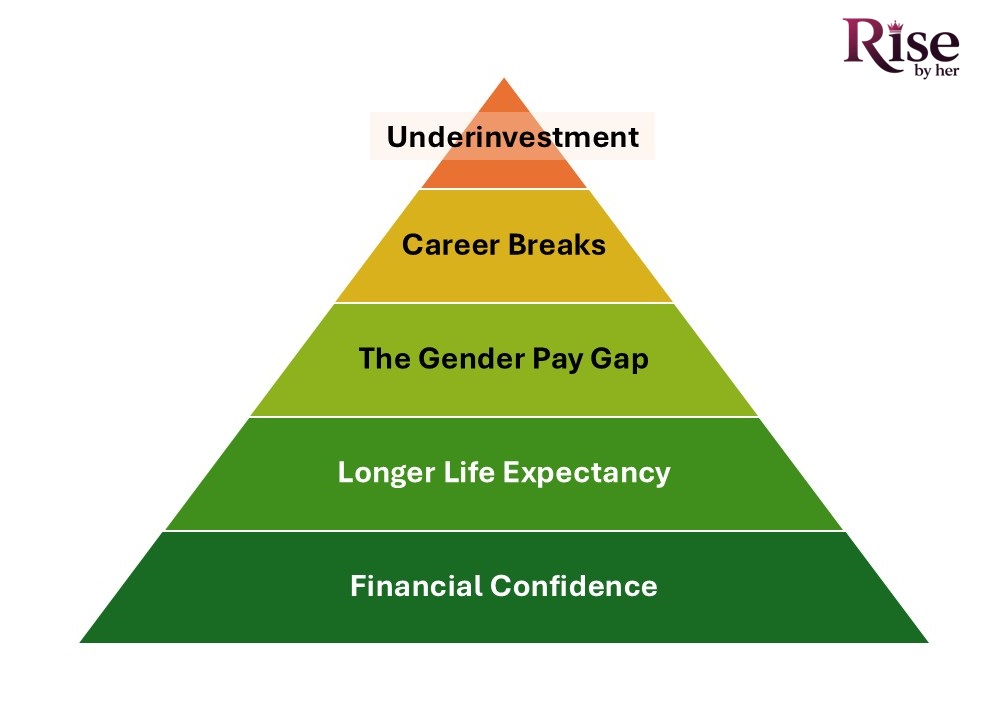
Here are the most common challenges women face, and how a female financial planner or wealth advisor for women can help address them effectively.
The Gender Pay Gap
One of the most well-documented challenges is the gender pay gap, which can lead to lower lifetime earnings and reduced retirement savings.
Even small income differences compound significantly over time, especially when it comes to investing and long-term wealth growth.
A financial advisor helps by:
- Creating aggressive, goal-based savings plans
- Prioritizing early and consistent investing strategies
- Optimizing tax-advantaged accounts like 401(k), IRA, and Roth IRA
- Building investment portfolios designed for long-term compounding
The goal is to maximize every dollar earned so it works harder over time.
Career Breaks for Caregiving
Many women step away from their careers temporarily or permanently to care for children, aging parents, or family needs.
These breaks can interrupt income flow, retirement contributions, and career progression.
A financial advisor helps by:
- Planning ahead for income gaps during career breaks
- Building emergency funds that cover extended periods
- Adjusting retirement contributions before and after time off
- Creating “catch-up” investment strategies to rebuild lost momentum
This ensures that career pauses do not permanently derail long-term financial goals.
Longer Life Expectancy
Women generally live longer than men, which means retirement savings often need to last significantly longer.
Without proper planning, this can increase the risk of outliving savings.
A strong retirement strategy includes:
- Longevity-focused retirement income planning
- Diversified investment portfolios for long-term stability
- Sustainable withdrawal strategies (avoiding early depletion of assets)
- Healthcare and long-term care cost planning
The focus is not just on saving for retirement, but ensuring financial security throughout retirement.
Under-Investing and Risk Avoidance
Research shows that many women are more cautious when it comes to investing, which can sometimes lead to overly conservative portfolios.
While caution can reduce risk, it may also limit long-term growth.
A financial advisor helps by:
- Educating on investment fundamentals and risk vs return
- Building diversified portfolios aligned with comfort level
- Encouraging long-term investing discipline over emotional decision-making
- Gradually increasing confidence in market participation
The goal is to find a healthy balance between security and growth.
Lack of Financial Confidence
Many women report feeling less confident when making financial decisions, especially in investing or retirement planning.
This is often due to limited exposure to financial education rather than lack of ability.
A female financial advisor can support this by:
- Breaking down complex financial concepts into simple steps
- Providing ongoing financial education and coaching
- Helping clients actively participate in decision-making
- Building confidence through structured financial planning
Over time, this transforms uncertainty into clarity and financial independence.
How Female Financial Advisors Help Women Build Wealth
Working with the right financial advisor can significantly accelerate your financial progress, reduce costly mistakes, and help you build long-term financial security with more confidence and clarity.
Here’s what a strong advisor helps you achieve:
Building a Clear Financial Roadmap
A financial advisor starts by organizing your entire financial picture into one clear plan.
This includes:
- Mapping your income, expenses, and savings capacity
- Defining short-term and long-term financial goals
- Creating milestones for major life events (home purchase, business growth, retirement)
- Aligning your financial decisions with your lifestyle priorities
The result is a structured financial roadmap that turns uncertainty into a step-by-step plan.
Creating a Smart Debt Payoff Strategy
Debt can slow down wealth creation if it is not managed strategically.
A financial advisor helps you prioritize repayment by focusing on:
- High-interest debt like credit cards
- Student loans and structured repayment options
- Consolidation or refinancing opportunities (when appropriate)
- Balancing debt repayment with ongoing savings and investing
The goal is not just to eliminate debt, but to do it in a way that still allows your wealth to grow.
Investing With Confidence
Many women delay investing due to uncertainty or fear of risk. A financial advisor helps remove that barrier.
They guide you in:
- Building a diversified investment portfolio based on your goals
- Understanding risk tolerance versus long-term growth potential
- Investing consistently for retirement and wealth accumulation
- Avoiding emotional decisions during market volatility
This leads to more disciplined investing and stronger long-term results.
Retirement Planning and Long-Term Security
Retirement planning is one of the most important parts of wealth building, especially for women who often live longer and may have interrupted careers.
A financial advisor helps you:
- Maximize retirement accounts such as 401(k), IRA, and Roth IRA
- Estimate how much you need for long-term financial independence
- Create sustainable withdrawal strategies for retirement income
- Diversify assets to reduce long-term financial risk
The focus is on ensuring your money lasts throughout retirement, not just until retirement begins.
Tax-Efficient Wealth Building
Taxes can significantly impact long-term wealth if they are not properly managed.
A financial advisor supports tax-efficient strategies such as:
- Structuring investments to minimize tax liability
- Using tax-advantaged accounts effectively
- Planning withdrawals in a tax-smart order during retirement
- Coordinating investments with income planning
The goal is to legally keep more of what you earn and reinvest it for long-term growth.
The Future of Female Financial Advisors in 2026
The wealth management industry is shifting quickly, with more women entering finance and more clients expecting advisors who understand real-life money challenges, not just investment theory.
Here are the key trends shaping what comes next:
More Women Choosing Female Financial Planners
- Growing preference for advisors who understand women’s financial realities
- Stronger focus on career breaks, caregiving, and income gaps
- Increased demand for retirement planning tailored to longer lifespans
- Shift toward more personalized, relationship-based financial advice
- Higher interest in financial education and confidence-building support
Growth of Mentorship and Career Programs
- Expansion of programs like CFP Board initiatives and Women in Wealth networks
- More structured pathways into financial planning and advisory careers
- Increased access to mentorship from senior finance professionals
- Higher representation of women in leadership and advisory roles
- Stronger pipeline of certified female financial professionals (CFP®, CFA, CPA)
For women also focused on career growth and increasing earning potential, Accelerate Your Career in 2026 with Women’s Professional Networks is a valuable resource for discovering communities that offer mentorship, networking, and new professional opportunities.
Expansion of Remote Financial Advice
- Rise of virtual financial planning and video consultations
- Use of digital platforms for budgeting, investing, and tracking progress
- Easier access to advisors regardless of location
- More flexible financial planning for busy professionals and entrepreneurs
- Integration of AI tools for forecasting and portfolio insights
Shift Toward Transparent, Values-Based Investing
- Growing demand for ESG and sustainable investing strategies
- Increased focus on ethical, impact-driven portfolios
- Preference for clear, transparent fee structures
- Stronger alignment between investments and personal values
- More customized investment strategies based on client goals
FAQ: Female Financial Advisors for Women (Most Asked Questions)
Are female financial advisors better than male advisors?
Not always, but many women feel more comfortable working with female advisors due to shared experiences, communication style, and a more empathetic planning approach.
How do I verify if a financial advisor is legit?
You can check their credentials through official sources such as FINRA BrokerCheck or the SEC Investment Adviser Public Disclosure website. Always confirm licensing before investing.
What is the difference between a financial advisor and a financial planner?
A financial planner focuses on long-term strategy like retirement, budgeting, and goal planning. A financial advisor may focus more on investments, though many professionals do both.
How much does a female financial advisor cost?
Costs vary depending on services. Some charge hourly ($150–$400/hr), others charge flat fees, and many charge 1% of assets managed annually.
What is the best certification to look for?
The most trusted credential for comprehensive planning is the CFP® (Certified Financial Planner) certification.
Should I choose a fee-only advisor?
Yes, fee-only advisors are often recommended because they are typically more transparent and less likely to earn commissions from selling products.
Can a financial advisor help women entrepreneurs?
Yes. Many advisors specialize in helping women business owners with cash flow planning, tax strategy, business growth, and retirement plans for self-employed founders.
Final Thoughts: Take the First Step Toward Financial Freedom
Financial independence doesn’t happen overnight. It’s built through consistent choices, smart planning, and support from the right people.
Working with a female financial advisor can give you the confidence, clarity, and personalized strategy you need to grow wealth, eliminate debt, and plan for a secure future.
If you’re ready to take control of your finances, start by doing one thing today:
schedule a consultation with a trusted financial advisor and ask the right questions.
Your future self will thank you
In conclusion, working with a financial advisor can help you make smarter money decisions, plan for long-term growth, and reduce financial risks as you build your business, and you can also explore Proven Guide: How Women Entrepreneurs Can Find a Co-Founder for more support in building the right team around you.
By Aveline Lowell
Founder & Editor-in-Chief, RiseByHer
Aveline Lowell writes research-driven content covering women’s finance, entrepreneurship, STEM, technology, and career growth. Her work focuses on practical, well-researched information that helps women make informed decisions.
Editorial & Disclaimer: RiseByHer aims to provide accurate, well-researched, and up-to-date information. Articles are reviewed and updated when necessary and are intended for general informational and educational purposes, not personalized financial, legal, tax, or professional advice.