

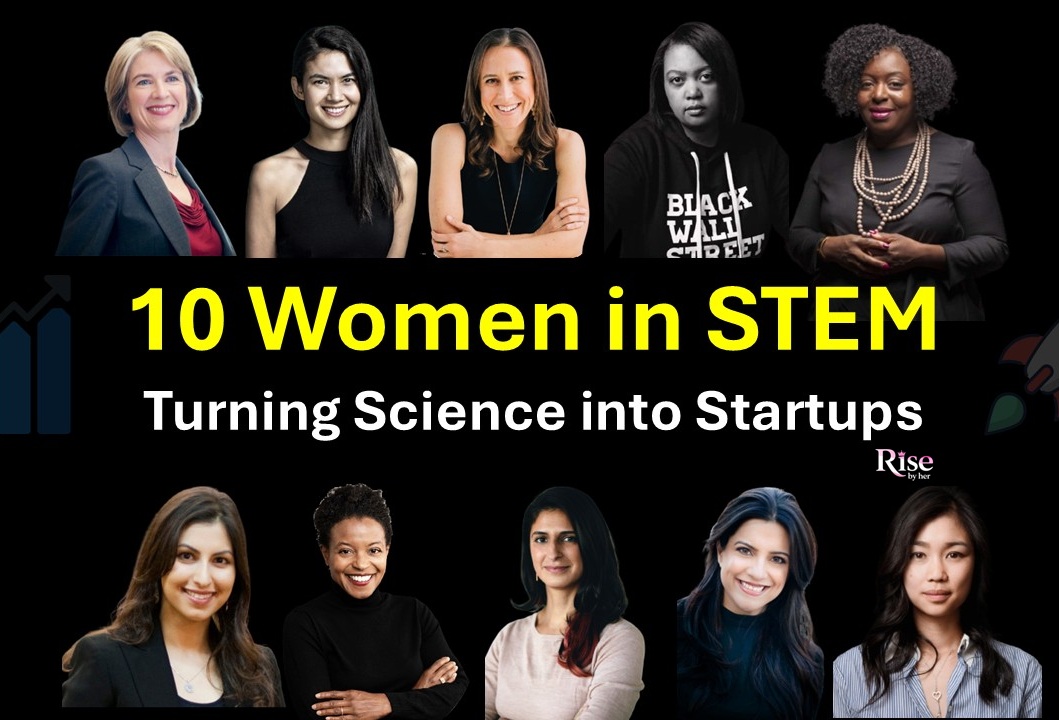
The future of tech isn’t just being written—it’s being engineered by women. For decades, the narrative surrounding STEM has focused on a persistent gender gap. But look closer at today’s startup landscape, and you’ll find a powerful shift. From editing genomes and pioneering AI to creating sustainable food sources out of thin air, women in STEM are transforming cutting-edge science into thriving, multi-million-dollar enterprises.
These aren’t just businesses; they are solutions to some of humanity’s most complex challenges.
Whether you are an aspiring founder, a scientist with a brilliant idea, or looking for blueprint-worthy inspiration, these trailblazers prove that scientific acumen mixed with entrepreneurial grit is a superpower. Let’s dive into 10 inspiring women in STEM who built successful startups, the hurdles they overcame, and how you can launch your own venture with confidence.
Why Women in STEM Are Driving Modern Startup Innovation
Diverse perspectives don’t just spark creativity—they build more profitable, resilient businesses. When women trained in science, technology, engineering, and mathematics pivot into entrepreneurship, they bring a unique competitive advantage to the startup ecosystem. By combining rigorous analytical thinking with fresh problem-solving approaches, these founders are building high-impact solutions for a rapidly evolving marketplace.
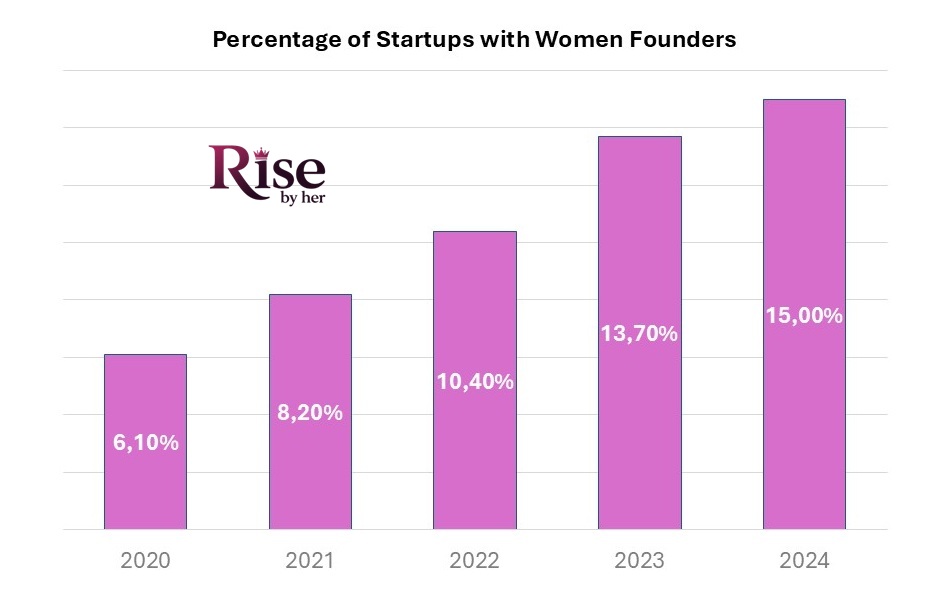
Here is exactly how women in STEM are redefining the rules of modern startup growth:
From the Lab to the Market: The “Scientist-Founder” Advantage
Professionals with a STEM background don’t just launch businesses based on trends; they build them on deep technical expertise.
- Data-Driven Decision Making: STEM-trained founders inherently use the scientific method. They form hypotheses, run lean experiments, analyze data objectively, and pivot based on evidence rather than emotion.
- Commercializing Deep Tech: Whether it’s bioinformatics, climate tech, or advanced algorithms, these women possess the technical literacy required to convert complex, laboratory-stage research into scalable, real-world products.
Solving Long-Overlooked Market Gaps
For decades, mainstream venture capital and tech development have suffered from a massive blind spot. Because the tech landscape has been historically homogeneous, massive addressable markets have been completely ignored.
- The FemTech Revolution: Women in STEM are uniquely positioned to innovate in sectors like women’s healthcare, personalized medicine, and specialized enterprise software—sectors representing billions of dollars in untapped market potential.
- Inclusive Product Design: A diverse engineering leadership team ensures that products, user interfaces, and AI models are trained and designed without systemic biases, creating safer and more universally accessible technology.
Exceptional Capital Efficiency and ROI
Statistically, women-led startups face stricter funding environments, forcing them to become highly resourceful, resilient, and strategic with their resources.
- Higher Revenue-to-Funding Ratio: Research consistently shows that women-owned tech startups generate significantly higher revenue for every dollar of venture capital invested compared to male-led counterparts.
- Sustainable Growth Models: STEM founders excel at technical risk mitigation, ensuring product-market fit is thoroughly validated before burning through massive capital reserves.
Investing in and supporting women in STEM isn’t a box-checking exercise in corporate social responsibility. It is a highly strategic economic play. The next generation of market-disrupting technology is being built by women who look at complex problems and see scalable business models.
10 Inspiring Women in STEM Who Built Top Tech Startups
Inspiration is powerful, but a proven blueprint is game-changing. To truly understand what it takes to scale a tech or science enterprise, we have to look at the women who have already broken through the laboratory glass ceiling. The following 10 founders transitioned from lines of code, petri dishes, and advanced mathematics to scale massive corporate ecosystems, showing the world exactly what STEM-driven entrepreneurship looks like.
Dr. Lisa Dyson: Making Sustainable Protein From Air
- The STEM Foundation: PhD in Theoretical Physics from MIT.
- The Startup: Air Protein.
- The Breakthrough: Dr. Dyson utilized a space-age concept originally ideated by NASA to develop a proprietary probiotic process. Her company transforms carbon dioxide, oxygen, and other elements found in the air into a nutrient-rich, sustainable protein alternative. By bypassing traditional agricultural reliance on land and water, she has raised over $100 million and created a core blueprint for the future of climate-tech and sustainable food production.
Anne Wojcicki: Rewriting the Future of DNA Testing
- The STEM Foundation: Bachelor of Science in Biology from Yale University.
- The Startup: 23andMe.
- The Breakthrough: Before 23andMe, genetic testing was locked behind expensive, institutional laboratory doors. Wojcicki democratized genomics by introducing direct-to-consumer DNA testing kits. By allowing individuals to explore their ancestry and health predispositions from home, she built a massive, pioneering genomic database that continues to fuel modern medical research, pharmaceutical developments, and personalized healthcare tracking.
Dr. Nina Tandon: Growing Living Human Bones in Lab
- The STEM Foundation: PhD in Biomedical Engineering from Columbia University and an MS from MIT.
- The Startup: EpiBone.
- The Breakthrough: Dr. Tandon is revolutionizing skeletal reconstruction by treating bone tissue engineering not just as a laboratory science, but as a viable medical product. EpiBone utilizes a patient’s own stem cells to grow living, anatomically correct bone grafts in a lab environment. This radically reduces the risk of implant rejection, paving the way for a brand-new era of personalized, regenerative medicine.
Reshma Saujani: Closing the Tech Gender Gap Forever
- The STEM Foundation: Master of Public Policy and Data-driven Advocacy from Harvard.
- The Startup: Girls Who Code (EdTech Social Enterprise).
- The Breakthrough: Recognizing that the tech industry’s future depended heavily on early pipeline diversification, Saujani built an international educational powerhouse. Girls Who Code has reached hundreds of thousands of young girls globally, providing early, structured access to computer science education. By scaling this initiative like a high-growth tech startup, she single-handedly reshaped the corporate tech pipeline for major enterprises worldwide.
Arlan Hamilton: Funding the Underserved Entrepreneurs
- The STEM Foundation: Expert Tech Landscape Venture Catalyst.
- The Startup: Backstage Capital.
- The Breakthrough: Hamilton noticed a massive systemic flaw in the Silicon Valley ecosystem: less than 10% of all venture capital was going to women, people of color, and LGBTQ+ tech founders. In response, she built a venture capital fund from scratch. Backstage Capital has since invested millions into over 200 underrepresented tech and STEM founders, proving that investing in diverse innovators yields incredible untapped market returns.
Dr. Jennifer Doudna: Revolutionizing CRISPR Medicine
- The STEM Foundation: Nobel Laureate and PhD in Biological Chemistry from Harvard.
- The Startup: Mammoth Biosciences.
- The Breakthrough: After co-discovering the revolutionary CRISPR-Cas9 gene-editing mechanism, Dr. Doudna didn’t stop at the academic level. She co-founded Mammoth Biosciences to bring this technology directly into global healthcare systems. The startup leverages CRISPR to build next-generation molecular diagnostics and therapeutics, creating an ultra-precise toolkit capable of detecting and treating genetic diseases with unprecedented speed.
Kimberley Bryant: Creating the Next Wave of Coders
- The STEM Foundation: Bachelor of Science in Electrical Engineering from Vanderbilt University.
- The Startup: Black Girls Code.
- The Breakthrough: Leveraging her extensive background as a corporate engineer in biotech and pharma, Bryant launched Black Girls Code to eliminate the stark diversity gaps in Silicon Valley. By creating localized engineering curriculums, robotics workshops, and coding bootcamps, she built a sustainable, scalable talent engine that introduces underrepresented youth to high-paying digital product pathways early.
Tracy Chou: Building Tools to Fight Online Harassment
- The STEM Foundation: MS in Computer Science and BS in Electrical Engineering from Stanford.
- The Startup: Block Party.
- The Breakthrough: As an early engineer at tech giants like Pinterest and Quora, Chou experienced first-hand how mainstream platforms lacked adequate safety features. She engineered Block Party, an advanced, data-filtering software platform designed to shield users from targeted digital harassment and online abuse. Her startup successfully brought consumer-facing cybersecurity and content control tools directly into the hands of internet users before its successful acquisition.
Kavita Shukla: Spicing Up Global Food Preservation
- The STEM Foundation: Bio-Innovation Inventor and holder of four distinct material patents.
- The Startup: The FRESHGLOW Co. (FRESHPAPER).
- The Breakthrough: Shukla turned a simple scientific observation about botanical preservation into a global food-tech product. She engineered FRESHPAPER—a simple, spice-infused material sheet that extends the shelf-life of fresh produce up to four times longer. By patenting the substrate technology, her startup has scaled across major international grocery retailers, directly tackling the multi-billion-dollar global problem of agricultural food waste.
Melanie Perkins: Design Democratization for Everyone
- The STEM Foundation: Communications Technology and Software Interface Architecture Specialist.
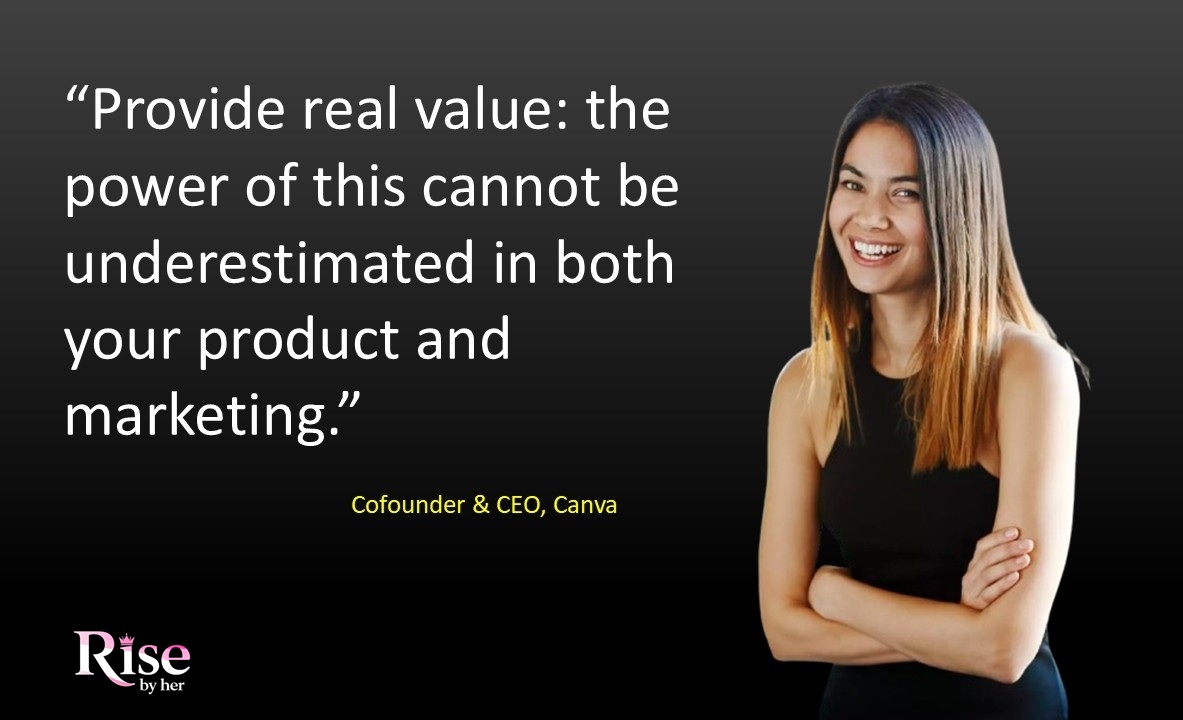
- The Startup: Canva.
- The Breakthrough: Perkins recognized that traditional graphic design software tools had an impossibly steep learning curve for everyday business owners. She engineered a cloud-based, drag-and-drop digital product framework that democratized graphic asset creation. By building a frictionless tech stack with scalable cloud rendering, she grew Canva into a multi-billion-dollar decacorn that completely disrupted the enterprise creative software industry.
At a Glance: Comparing Top Female-Led STEM Startups
To help you visualize how these different technical domains translate into commercial market value, the table below breaks down the core industries, proprietary innovations, and funding landscapes of these top female-led ventures.
| Founder | Company | Industry Sector | Core Technical Innovation | Funding & Market Status |
|---|---|---|---|---|
| Dr. Lisa Dyson | Air Protein | ClimateTech / FoodTech | Converting atmospheric CO2 into sustainable protein meat analogues via proprietary gas fermentation. | Early-Stage Venture Backed ($107M+ raised from Google Ventures, ADM, Barclays). |
| Anne Wojcicki | 23andMe | Consumer Genomics / Biotech | Democratizing DNA sequencing via direct-to-consumer health and ancestry kits; building a massive genetic database. | Publicly Traded / Late Stage (Pioneered DTC genomic testing infrastructure). |
| Dr. Nina Tandon | EpiBone | Regenerative Medicine | Cultivating patient-specific, autologous bone and cartilage grafts using stem cells and custom bioreactors. | Series B / Clinical Stage ($71M+ raised; FDA clearances for human trials). |
| Reshma Saujani | Girls Who Code | EdTech / Social Enterprise | Scaling specialized computer science curriculums and educational pipelines like high-growth software engines. | Non-Profit Scale (Over 500,000+ students reached globally). |
| Arlan Hamilton | Backstage Capital | Venture Capital / FinTech | Engineering an alternative capital deployment engine specifically targeting underrepresented founders. | Venture Catalyst ($20M+ deployed across 200+ micro-portfolio tech companies). |
| Dr. Jennifer Doudna | Mammoth Biosciences | Deep Tech / Biotech | Leveraging CRISPR-Cas protein architectures to build next-generation molecular diagnostics and therapeutics. | Unicorn Status ($195M+ raised; partnerships with global pharma giants). |
| Kimberley Bryant | Black Girls Code | EdTech / Social Enterprise | Structuring localized robotics, software engineering, and digital product development pipelines for youth. | Non-Profit Scale (International network across major tech hubs). |
| Tracy Chou | Block Party | Cybersecurity / Consumer Tech | Building automated, data-filtering software layers to mitigate targeted digital harassment and identity abuse. | Successfully Exited / Acquired (Pioneered user-controlled anti-harassment tech stacks). |
| Kavita Shukla | FRESHGLOW Co. | AgTech / Material Science | Patenting spice-infused active substrate material sheets that extend organic shelf-life up to four times. | Profitable Commercial Scale (Global retail distribution across major grocery networks). |
| Melanie Perkins | Canva | Enterprise Software / SaaS | Creating a frictionless, cloud-rendered graphic asset ecosystem using intuitive UI abstraction models. | Decacorn Status (Valued at over $25 Billion with 180M+ monthly active users). |
What Are the Key Lessons Learned From These STEM Leaders?
Success leaves clues, but scientific success leaves a highly repeatable blueprint. The triumphs of these founders aren’t random strokes of luck; they are the direct result of combining technical discipline with commercial strategy. By analyzing their trajectories, we can extract distinct, actionable operational principles that any aspiring entrepreneur can use to scale a business.
They Solve Massive and Real-World Technical Problems
The most successful tech companies don’t build features in search of a problem; they target massive, systemic pain points.
- The Core Lesson: Avoid building “nice-to-have” software or copycat digital products. Look for critical inefficiencies—like global food waste (Shukla) or prohibitive medical testing costs (Wojcicki).
- The Strategy: Prioritize product utility over hype. When your startup solves a deeply felt, high-stakes problem, the market naturally responds, and user acquisition becomes significantly more organic.
They Apply Rigorous Scientific Methods to Business
STEM founders don’t rely on gut feelings or unvalidated trends to make critical business decisions. They run their companies like a laboratory.
- The Core Lesson: Treat every marketing campaign, product feature launch, and hiring sprint as a controlled experiment.
- The Strategy: Define clear KPIs, formulate data-backed hypotheses, build a baseline, and measure the results objectively. If a strategy fails the data test, strip away the emotion, pivot immediately, and iterate based on factual analytics.
They Remain Intensely Mission-Focused Through Crises
Building a startup means navigating constant market volatility, product bugs, and team shifts. A clear, unshakeable north star is what prevents operational collapse.
- The Core Lesson: A strong mission acts as an anchor during economic downturns, technical road blocks, or funding droughts.
- The Strategy: Tie your company’s core culture to a problem bigger than just profit margins. When your team is united around a clear mission—like fighting digital harassment (Chou)—resilience becomes baked directly into your daily operations.
They Overcame Massive Bias and Entrepreneurial Odds
The tech and venture capital landscapes have historically uneven playing fields, particularly for women and diverse innovators seeking early-stage funding.
- The Core Lesson: Operational excellence, alternative funding routes, and absolute technical competence are the ultimate tools to dismantle institutional bias.
- The Strategy: If traditional doors are closed, build your own table or seek out alternative capital ecosystems (like Hamilton’s Backstage Capital). Focus heavily on building a bulletproof minimum viable product (MVP) that demonstrates undeniable market traction and capital efficiency.
They Constantly Lift Other Women as They Rise Higher
True industry leadership isn’t just about scaling your own market cap—it’s about expanding the entire ecosystem for those coming up behind you.
- The Core Lesson: Sustainable growth relies on building strong pipelines, diverse technical teams, and collaborative professional networks.
- The Strategy: As your venture scales, consciously invest in diverse talent, open-source your non-proprietary learnings, and create internal mentorship pathways (similar to the models championed by Bryant and Saujani). A rising tide lifts all boats, and a diverse tech ecosystem creates stronger market returns for everyone.
The Emerging Trends for Women Entrepreneurs in Tech 2026
The tech landscape has evolved past mere software iteration—it is entering an era of deep infrastructure, climate necessity, and cognitive automation. As venture capital concentrates heavily on high-performing, resource-efficient entities, women tech founders are capturing market share by steering away from vanity metrics and anchoring their ventures in deep technical utility. In 2026, the data shows a clear paradigm shift: female-led startups are achieving record highs in capital efficiency, operating with lower burn rates, and driving the year’s most critical macroeconomic sectors.
Here are the top three high-growth domains where women in STEM are leading market expansion:
Leading the Charge in Generative AI Innovation Hubs
We have moved past the initial phase of superficial AI wrappers. In 2026, women engineers and product leaders are building foundational B2B infrastructure and production-grade software ecosystems.
- The Infrastructure Shift: High-performing infrastructure platforms, like Lian Qiao’s multi-billion-dollar Fireworks AI, are proving that women are dominating the dev-ops, API optimization, and model fine-tuning landscapes.
- Ethical and Applied Governance: The market is demanding accountability, giving rise to specialized roles in AI compliance, data privacy engineering, and context-aware retrieval architectures (RAG)—technical domains heavily championed by female enterprise architects.
Breaking Modern Boundaries in Biotech and Healthcare
The convergence of advanced data analytics, laboratory automation, and biology has turned HealthTech and FemTech into massive, institutional funding magnets.
- Predictive Diagnostics & Personalized Therapeutics: Women scientists are scaling platforms that utilize machine learning to predict molecular drug toxicity and map complex genetic epitopes, significantly accelerating the clinical trial timeline for global pharmaceutical pipelines.
- Hardware Integration: Innovation is moving directly into the clinical space, with female founders commercializing hardware interfaces like real-time augmented reality surgical projection tools and advanced biomaterial scaffolding.
Driving Green Technical Solutions for Climate Change
Cleantech and climate technology are no longer alternative investments; they are foundational pillars of industrial manufacturing, supply chain risk management, and regulatory compliance.
- Decarbonizing Heavy Industry: From engineering biological, zero-carbon alternatives to cement (like Liv Andersson’s Biozeroc) to designing electrochemical platforms for automated wastewater resource recovery, women chemical engineers are transforming industrial waste into high-value supply chain assets.
- AI-Driven Regenerative Agriculture: Founders are deploying predictive disease intelligence platforms and deep DNA sequencing technologies to map microbiome health in soil, allowing agricultural enterprises to withstand climate-induced drought and secure global food supply networks.
How You Can Launch Your Venture and Build a STEM Startup
Transitioning from a technical expert to a startup founder requires a shift from managing code and data to managing market realities. If you have a background in STEM, you already possess the core analytical skills needed to build a groundbreaking company. The challenge lies in translating that raw technical capability into a scalable business model that customers want to pay for.
Here is your exact, step-by-step operational roadmap to turn your technical expertise into a high-growth startup:
Identify a Complex Technical Problem You Care About
Every billion-dollar tech company starts by looking at a major systemic friction point and asking how technology can fix it.
- Avoid the “Solution in Search of a Problem” Trap: Do not build software or hardware simply because the technology is cool. Start entirely with the customer’s pain point.
- The Sweet Spot: Look for intersections where high operational costs, massive data inefficiencies, or outdated manual workflows overlap with your unique scientific or engineering skillset.
Start Small and Validate Your Minimum Viable Product
In business, building the perfect product on day one is an expensive mistake. You need to prove that the market actually wants what you are building before spending your capital.
- Build a Lean MVP: Strip your product down to its core functional offering. If you are building a B2B platform, your MVP might just be a simple, manual script or a clickable wireframe that solves one specific problem for an early customer.
- Gather Objective Feedback: Get your MVP into the hands of real users immediately. Measure their actual usage data and behavioral patterns rather than relying on polite compliments or vague promises.
Master the Crucial Business Basics and Growth Metrics
To attract investors, partners, and high-tier talent, you must learn to speak the language of business as fluently as you speak the language of tech.
- The Vital Financials: Move past laboratory jargon and master unit economics. You need to clearly understand your Customer Acquisition Cost (CAC), Customer Lifetime Value (LTV), monthly burn rate, and runway.
- Build a Repeatable Sales Process: Exceptional technology does not sell itself. Map out a clear pipeline showing exactly how you find a lead, convert them into a user, and retain them as a long-term customer.
Secure Venture Funding and Capital for Diverse Teams
Scientific research and deep-tech products often require substantial early-stage capital to move past the initial prototyping phase.
- Target the Right Investors: Do not waste time pitching generalist investors if you are building complex biotech or hardware. Look specifically for specialized VCs, angel networks, and syndicates that explicitly focus on early-stage STEM, deep tech, and underrepresented founders.
- Leverage Non-Dilutive Funding: Before giving away equity in your company, aggressively apply for government grants, academic research awards, and corporate innovation stipends that allow you to fund development without giving up ownership.
Utilize Modern Incubator Resources Built Just for You
You do not have to build your tech empire in complete isolation. The modern startup ecosystem has highly specialized networks designed to support emerging technical founders.
- Join Tech Accelerators: Programs like Y Combinator, Techstars, or niche biomedical and climate-tech incubators provide seed capital, structured entrepreneurial training, and direct access to enterprise buyers.
- Leverage Focused Communities: Plug into specialized tech networks and female-founder ecosystems. These spaces provide high-level peer mentorship, warm introductions to institutional investors, and tactical advice on navigating the scaling process.
Critical Pitfalls: Mistakes to Avoid When Launching
Even the most brilliant scientific breakthrough can fail if the commercial execution is flawed. In the startup ecosystem, technical brilliance does not automatically insulate you from market realities. To help you navigate the transition from innovator to executive, we have outlined the most common operational pitfalls that STEM founders encounter—and exactly how to avoid them.
1. Over-Engineering the Product Before Market Validation
- The Mistake: Spending months or years building a complex, flawless, multi-featured product in complete isolation before getting it into the hands of real users.
- The Risk: You risk building something beautiful that nobody actually wants or is willing to pay for, completely draining your early capital reserves.
- The Pivot: Build a raw, functional Minimum Viable Product (MVP) focused on solving just one core problem. Launch it quickly, collect objective usage data, and iterate based on real customer feedback rather than assumptions.
2. Ignoring Unit Economics and Cash Burn Rate
- The Mistake: Mismanaging early capital by over-hiring or scaling marketing budgets before achieving true product-market fit.
- The Risk: Running out of cash runway before the product can generate sustainable revenue, leading to premature company collapse.
- The Pivot: Obsess over your financial metrics from day one. Know your exact monthly burn rate, track your Customer Acquisition Cost (CAC) against Customer Lifetime Value (LTV), and ensure you always maintain at least six months of operational runway.
3. Building an Inflexible Tech Stack That Cannot Scale
- The Mistake: Selecting software frameworks or data architectures based on temporary trends or shortcuts, rather than long-term stability and security.
- The Risk: Creating “technical debt” that requires an expensive, time-consuming overhaul of your entire infrastructure just as user acquisition begins to accelerate.
- The Pivot: Design your early-stage technical architecture with modularity and clean documentation in mind. Choose reliable, cloud-native infrastructure and scalable database models that can seamlessly handle sudden spikes in platform traffic.
Strategic Ways to Build Your Dream Startup With Confidence
Confidence isn’t something you inherit—it is an operational byproduct of having a bulletproof strategy. Transitioning from a technical specialist to a chief executive can trigger intense imposter syndrome. However, when you replace guesswork with structural validation, data-backed roadmaps, and a resilient mindset, execution becomes second nature. Building your dream STEM venture requires decoupling your confidence from external validation and anchoring it directly to your strategic framework.
Here is how to cultivate institutional confidence and build a scalable startup from a position of absolute control:
1. Shift From Technical Perfectionism to Market Speed
In academia and engineering, releasing a product with a minor bug feels like a failure. In the startup ecosystem, waiting for flawlessness is fatal.
- The Strategic Mindset: Reframe your definition of “perfect.” A perfect early-stage release is one that gets into the market fast enough to collect actionable behavioral analytics.
- The Confidence Play: Accept that your product will iterate. True confidence comes from knowing your team possesses the agility to patch, pivot, and improve code based on real-time user feedback, rather than trying to predict human behavior in a vacuum.
2. Build a Complementary Core Leadership Team
You do not need to be a world-class engineer, a master corporate accountant, and a high-ticket sales executive all at once. Trying to carry every operational vertical solo destroys executive focus and breeds anxiety.
- The Strategic Action: Conduct an honest self-assessment of your skill gaps. If you are a brilliant deep-tech researcher, actively recruit a co-founder or early operator who specializes in growth marketing, corporate business development, and financial forecasting.
- The Confidence Play: Surrounding yourself with specialists doesn’t diminish your authority—it amplifies it. Leading a balanced, competent team allows you to make executive decisions backed by multi-disciplinary data.
3. Normalize Failure as Standard Experimental Noise
When a scientific experiment fails in a laboratory, you don’t abandon your degree; you analyze the variable anomaly, adjust the parameters, and run the next test. Your startup operations must be treated with the exact same objective distance.
- The Strategic Action: Establish a corporate culture where failing fast is structurally rewarded, provided the failure yields clean data. If a marketing channel yields a poor conversion rate, or a product feature suffers low engagement, document the metrics immediately.
- The Confidence Play: When you look at operational setbacks as standard experimental noise rather than personal shortcomings, your executive decision-making remains cold, calculated, and completely free of panic.
4. Rely on a Peer Advisory Board and Mentor Network
Isolation is the ultimate driver of founder burnout and strategic hesitation. To scale with confidence, you need access to an objective sounding board composed of people who have already walked your path.
- The Strategic Action: Form an informal advisory board consisting of seasoned tech founders, domain-specific attorneys, and venture capitalists. Schedule structured, bi-monthly updates to stress-test your growth metrics, regulatory compliance, and fundraising timelines.
- The Confidence Play: Having access to trusted industry veterans who can validate your choices or constructively course-correct your strategy provides an unshakeable psychological safety net. You aren’t guessing your way to market share; you are executing a verified playbook.
Conclusion: Your Turn to Reshape the Tech Landscape
The trajectory of modern innovation makes one thing clear: the intersection of technical acumen and entrepreneurial strategy is where the future is being built. The 10 extraordinary founders we explored didn’t scale their empires by waiting for a perfect environment or relying on traditional blueprints. They succeeded because they treated market challenges like scientific variables—hypothesizing, testing, analyzing, and iterating with relentless focus.
Whether you are an engineer with a lines-of-code solution, a scientist looking to commercialize lab research, or a visionary leader aiming to bridge a critical market gap, the startup ecosystem needs your perspective. Armed with data-driven decision-making, a modular scaling strategy, and an unwavering commitment to solving real-world problems, you possess the exact toolkit required to disrupt major industries.
Do not wait for absolute certainty to begin. Identify your target problem, build a lean minimum viable product, and launch your venture with calculated confidence. The next massive breakthrough in tech is waiting to be engineered—and it might just be yours.
By Aveline Lowell
Founder & Editor-in-Chief, RiseByHer
Aveline Lowell writes research-driven content covering women’s finance, entrepreneurship, STEM, technology, and career growth. Her work focuses on practical, well-researched information that helps women make informed decisions.
Editorial & Disclaimer: RiseByHer aims to provide accurate, well-researched, and up-to-date information. Articles are reviewed and updated when necessary and are intended for general informational and educational purposes, not personalized financial, legal, tax, or professional advice.