


In today’s fast-paced business world, women are not just entering the space, they are taking the lead. From launching startups to growing global brands, female founders are driving innovation and making a lasting impact across industries.
Their stories offer more than motivation. These women have faced and overcome unique obstacles, built businesses from the ground up, and led with purpose and clarity. The lessons they share are grounded in real experience, offering practical strategies that others can apply in their own ventures.
Whether you’re just starting out or already running a business, learning from these accomplished leaders can help you make better decisions, strengthen your leadership, and stay aligned with your core values. Their journeys are full of insights that inspire growth and action.
The Resilience Blueprint: How Female Founders Turn Adversity into Advantage
Resilience is often romanticized as a vague emotional trait, but for successful female founders, it is a clinical, repeatable business strategy. Early-stage ventures are inherently volatile, with data showing that roughly 20% of new businesses fail within their first two years. For women entrepreneurs—who frequently face systemic hurdles, including receiving less than 3% of all venture capital funding—turning adversity into a competitive advantage requires a structured blueprint.
Below, we break down how top women executives navigate early-stage crises, shift their cognitive frameworks, and maintain operational focus under extreme market pressure.
Real Case Studies of Overcoming Early-Stage Business Challenges
The best way to understand business resilience is to look at the exact moments founders stared down operational catastrophe and pivoted to victory.
- Sara Blakely (Spanx) – Overcoming Manufacturing Gatekeepers: In the early days of Spanx, Blakely faced universal rejection from male-dominated hosiery mills who didn’t understand her product concept. Instead of quitting, she used the rejections to refine her pitch, eventually securing a manufacturer because she appealed to the mill owner’s daughters. By keeping her intellectual property entirely under her control during this grueling phase, she retained 100% ownership, laying the groundwork for her eventual billion-dollar status.
- Melanie Perkins (Canva) – Weathering 100+ Investor Rejections: Before Canva became a design powerhouse, Perkins spent three years in San Francisco being rejected by more than 100 venture capitalists who doubted a tech company could thrive outside of Silicon Valley. Perkins utilized each rejection to drastically simplify Canva’s pitch deck and product roadmap. She focused heavily on building a passionate, organic beta-user community, proving market traction before ever securing her first major investment round.
- Whitney Wolfe Herd (Bumble) – Navigating Toxic Public Backlash: Launching Bumble required Wolfe Herd to navigate intense public scrutiny and legal battles surrounding her departure from her previous company. Rather than letting the noise dictate her brand, she aggressively channeled her focus into a massive market gap: an internet culture where women made the first move. She built the entire marketing ecosystem around this core ethos, scaling the platform to a public valuation within a few short years.
Psychological Capital: The Mindset Shifts Behind Modern Problem-Solving
In organizational psychology, Psychological Capital (PsyCap) is a measurable factor composed of four distinct mental states: Hope, Efficacy, Resilience, and Optimism (HERO). Top-tier female entrepreneurs actively transition from passive survival mindsets to active PsyCap frameworks using three specific cognitive shifts:
| Traditional Mindset | Elite Founder Mindset (PsyCap Shift) | Business Outcome |
|---|---|---|
| Personalization: “This product failure means I am a bad entrepreneur.” | Externalization: “This product failure means the current feature set does not solve user friction.” | Immediate, objective data analysis and product iteration without emotional fatigue. |
| Permanence: “This market downturn is going to destroy my startup entirely.” | Impermanence: “This market macro-trend is a temporary cycle that will flush out weaker competitors.” | Strategic cost optimization and aggressive positioning to capture market share post-recession. |
| Pervasiveness: “Because our funding round fell through, our marketing and product teams are also broken.” | Compartmentalization: “Our funding round fell through due to macro VC trends; our product metrics are still highly viable.” | Protection of team morale and operational continuity across healthy departments. |
De-escalation and Focus: Staying Grounded Under High-Stakes Pressure
When a business crisis hits—whether it’s a sudden PR issue, a severe cash flow crunch, or a key executive jumping ship—panic kills companies. Top women founders use a highly tactical, three-step Crisis De-escalation Framework to maintain absolute operational clarity when stakes are highest.
- Triage and Isolate: When a major issue occurs, immediately isolate it. If a major software bug is impacting users, the founder must contain the problem to the engineering team. Do not allow the anxiety to leak into sales, marketing, or customer service, which must continue driving revenue as normal.
- The 48-Hour Communication Rule: Under intense pressure, bad communication ruins brand reputation. Elite founders do not make permanent, strategic declarations in the heat of a crisis. They acknowledge the issue instantly with extreme transparency (“We see the problem, we are investigating, and we will provide an update in 4 hours”), giving themselves a 24-to-48-hour buffer to formulate a flawless, data-backed resolution plan.
- Micro-Milestones over Macro-Goals: When a business is in a high-stakes crunch, looking at yearly goals or Q4 targets causes paralysis. Grounded leadership means shrinking the operational horizon. Break the next 72 hours down into mandatory, two-hour tactical blocks. Focus the team entirely on winning the immediate block, building immediate momentum, and systematically working the company out of the corner.
Funding and Capital Strategies: Navigating the Venture Gap
Securing capital is one of the most critical inflection points for any scaling business, yet the landscape remains heavily skewed. Recent data paints a “tale of two markets.” While venture capital allocated to mixed-gender founding teams reached a headline-grabbing $73.6 billion, a closer look reveals extreme concentration. Over $30 billion of that total was swallowed by just two artificial intelligence megadeals (Anthropic and Scale AI).
For all-female founding teams, capital allocation actually hovered at a restrictive 1.1% to 2.3% of total global VC volume.
Despite this venture gap, female-founded startups are proven to be highly capital-productive—generating 78 cents of revenue for every dollar of funding, compared to just 31 cents generated by all-male teams. To navigate this landscape, women entrepreneurs must look past traditional venture capital and deploy highly strategic, diversified funding roadmaps.

Bootstrapping vs. Raising Capital: Making the Right Choice for Your Growth
Choosing whether to self-fund (bootstrap) or seek external capital is not just a financial decision; it dictates your operational velocity and equity retention. Because female founders face longer due diligence periods—averaging 1.7 times longer than male counterparts—the choice to bootstrap or raise must be calculated using clear operational metrics.
- When to Bootstrap: If your business boasts high gross margins (greater than 60%), has a clear path to early profitability, and operates in a market where you can afford organic growth. Bootstrapping allows you to retain 100% equity, protect your core company values, and avoid the pressure of venture-driven “growth at all costs.”
- When to Raise Venture Capital: If you are building in a highly capital-intensive sector (like SaaS, FinTech, or DeepTech) where market capture requires rapid engineering scale and massive upfront customer acquisition costs. You should only pursue VC if you are comfortable diluting 20% to 30% of your ownership per funding round in exchange for hyper-velocity.
Alternative Financing: Crowdfunding, Grants, and Female-Focused VC Funds
If venture capital is the right path, or if you need non-dilutive bridge funding to reach your next milestone, relying solely on traditional Sand Hill Road firms is a low-probability strategy. Nearly three-quarters of traditional U.S. VC firms do not have a single female investing partner. Diversifying your outreach across alternative capital funnels is essential:
- Equity Crowdfunding (Reg CF): Platforms like Republic, Wefunder, and StartEngine allow founders to raise up to $5 million directly from everyday customers and retail investors. Data shows that while women face institutional bias in closed VC rooms, they frequently outperform in public crowdfunding campaigns due to superior consumer alignment and community-driven storytelling.
- Equity-Free Grants and Non-Dilutive Capital: For early-stage validation, resources like the Small Business Innovation Research (SBIR) grants, Amber Grants for Women, and corporate backing programs (such as the Cartier Women’s Initiative) provide cash injections without stripping away your equity.
- Targeted Female-Focused Venture Funds: Firms with female decision-makers are 2.3 times more likely to invest in women-led startups. Aligning your pipeline with thesis-driven funds—such as Halogen Ventures, Female Founders Fund, BBG Ventures, and Chloe Capital—dramatically shortens the fundraising lifecycle.
Securing the right financial support is often a key step toward business growth, and Funding for Women Entrepreneurs: Proven Strategies to Secure Capital outlines practical ways to attract investors, grants, and other funding opportunities.
Pitching with Confidence: Lessons from Women Who Secured Millions
When entering the pitch room, structural bias often alters the types of questions founders face. Academic research reveals that investors consistently ask male founders promotion questions (focusing on potential gains, scale, and upside), while asking female founders prevention questions (focusing on risk, loss prevention, and safety).
To win the room, elite female founders use a tactical pivot method called the Promotion Frame Shift:
| Investor’s Prevention Question | The Hidden Trap | The Founder’s Promotion Frame Shift |
|---|---|---|
| “How do you plan to defend your market share against massive, entrenched competitors?” | Forces you into a defensive, survival-based answer that minimizes your perceived scale. | Pivot: “Defensibility is baked into our architecture. But what’s truly exciting is our customer acquisition velocity; we are capturing 12% quarter-over-quarter growth because…” |
| “Your burn rate is low; how will you prevent running out of cash if adoption slows down?” | Focuses the conversation entirely on capital depletion and downside risk. | Pivot: “Our 15% lower burn rate relative to the market isn’t a defensive shield—it’s a capital efficiency engine. It allows us to aggressively deploy capital into R&D where…” |
By answering the prevention question clearly but immediately shifting the narrative to scale, metrics, and market capture, you take control of the room’s psychology. Always back your pitch with your capital productivity metrics: remind them that women-led cohorts generate higher cumulative revenue over a five-year period, transforming the investment from a diversity check into a pure performance play.
Profit with Purpose: Building High-Impact, Values-Driven Brands
Modern search behavior reveals a massive shift in how consumers choose brands: purpose is no longer a soft marketing metric. Globally, women lead 50% of all social enterprises, proving that female founders are uniquely positioned at the intersection of commercial viability and societal impact.
But this is not a charitable endeavor; it is a highly profitable user-acquisition strategy. Recent global consumer studies show that 77% of consumers are actively motivated to purchase from companies devoted to Corporate Social Responsibility (CSR), and an overwhelming 90% express a greater inclination to trust socially responsible businesses.
For a scaling startup, building a brand around clear organizational values functions as a structural defense mechanism. It drastically drives down Customer Acquisition Costs (CAC) while scaling Customer Lifetime Value (LTV) through deep behavioral alignment.
Corporate Social Responsibility (CSR) as a Customer Acquisition Strategy
When your marketing engine leans heavily on high-cost paid ads, your profit margins are entirely at the mercy of ad-network algorithms. Conversely, embedding a distinct social mission into your core business model generates organic brand velocity.
- The Trust Premium: Trust is the highest-converting currency in business. When a company clearly backs a social or environmental cause, 85% of consumers develop a more positive image of the brand. This psychological lift directly affects your sales funnels, resulting in higher Click-Through Rates (CTR) on content and higher on-page conversion rates.
- The Switch Effect: In highly saturated markets where products look identical, values become the ultimate differentiator. Data shows that over 90% of consumers would switch to a more sustainable brand if price and quality are equal. By leading your outward marketing with impact rather than just product features, you attract high-intent customer segments without competing on price.
How Radical Transparency Builds Unshakeable Customer Loyalty
While a purpose-driven message brings customers through the door, only execution and radical transparency keep them there. Today’s consumer base is highly informed; they easily detect “pinkwashing” or superficial marketing ploys. To turn initial purchases into generational customer retention, founders must build transparent frameworks.
To achieve this, top-tier founders don’t just state their values; they show their receipts. They publish accessible impact ledgers, open up their supply chains to public auditing, and share clear data on where their proceeds go. When customers see exactly how their purchases impact the real world, they move from passive consumers to active brand advocates—reducing customer churn by up to 35% and building a highly defensive community ecosystem.
Intentional Innovation: Turning Personal Pain Points into Market Solutions
The most durable business ideas are born out of proximity to a specific problem. Female founders frequently excel at Intentional Innovation because they build companies to solve systemic operational gaps or caregiving realities that traditional business architectures completely overlook.
- Case Study: The Rise of FemTech and Accessibility: For decades, mainstream venture capital ignored niche health, care-economy, and wellness sectors, labeling them “small markets.” Female entrepreneurs, using their own lived experiences, innovated directly for these massive underserved populations. By addressing these foundational pain points with specialized solutions, they unlocked multi-billion-dollar market opportunities that traditional firms missed entirely.
- The Structural Advantage: When a founder has personally lived the friction they are trying to fix, their product roadmap becomes highly precise. They don’t waste capital guessing what the market wants. Instead, they build highly focused, hyper-customized Minimum Viable Products (MVPs) that resonate instantly with their target audience, ensuring early-stage product-market fit with minimal cash burn.
The Empathy Advantage: Why Authentic Leadership Outperforms Traditional Playbooks
For decades, traditional corporate playbooks championed an outdated, hyper-transactional style of leadership. Modern organizational data, however, has exposed the structural flaws of this model. Today, empathy is recognized not as a soft skill, but as a hard operational metric that directly influences capital efficiency, productivity, and risk management.
In fact, global corporate studies indicate that companies with empathetic leadership profiles experience up to a 50% increase in employee productivity.
When a founder leads with authenticity and high emotional intelligence (EQ), it creates a protective shield for the company’s internal operations. This approach directly lowers employee turnover costs—which can often run as high as 1.5 to 2 times an employee’s annual salary—while building a highly agile, collaborative workforce capable of thriving through market volatility.

Emotional Intelligence (EQ) as a Core Business Metric
High EQ in leadership directly correlates with bottom-line performance. Executive teams that actively cultivate emotional intelligence consistently outperform their low-EQ competitors across every major Key Performance Indicator (KPI).
- The Innovation Catalyst: Psychological safety is the foundational prerequisite for innovation. When employees know their leadership team operates with genuine empathy, they are 76% more likely to take calculated creative risks and surface novel product solutions. Without empathy, fear of failure paralyzes teams, leading to stagnant product development and obsolete strategies.
- Stress Mitigation and Resilience: In the high-stress environment of a scaling startup, employee burnout is a persistent operational risk. Empathetic leaders possess the observational capacity to recognize early symptoms of burnout, adjusting workloads and workflows proactively to protect team continuity and maintain stable corporate velocity.
Building High-Retention Cultures Through Empathetic Leadership
The financial cost of a toxic corporate culture is devastating to early-stage ventures. High employee turnover drains capital, erodes institutional knowledge, and severely slows down execution timelines. Conversely, authentic leadership serves as an exceptional tool for employee retention.
When professionals feel genuinely understood, valued, and respected by their executive team, their organizational commitment increases significantly. Data shows that companies prioritizing empathetic leadership observe a 50% lower voluntary turnover rate compared to industry benchmarks. In a highly competitive talent market, an empathetic culture allows resource-constrained startups to attract and retain top-tier talent that would otherwise command much higher compensation packages at larger corporations.
3 Actionable Frameworks for Leading with Authenticity Every Day
To transition empathy from an abstract ideal into daily operational practice, female founders implement structured behavioral frameworks that keep their leadership team aligned and accountable:
- The “Active Listening” Feedback Loop: Instead of traditional, top-down directives, implement a formal 360-degree feedback cadence. Leaders don’t just speak; they ask targeted, open-ended questions: “What is the single biggest operational bottleneck slowing your team down this week, and how can I clear it for you?” This shifts the executive’s role from a supervisor to an operational enabler.
- Radical Candor (Care Personally + Challenge Directly): Authenticity does not mean avoiding difficult conversations. True empathy requires pairing deep personal care with direct, uncompromised performance feedback. By communicating boundaries and expectations clearly and constructively, you eliminate ambiguity, prevent toxic misunderstandings, and accelerate professional growth across your team.
- Transparent Strategic Communication: When navigating market shifts, funding delays, or operational pivots, do not insulate your team behind a wall of silence. Share the “why” behind executive decisions openly. When your organization understands the underlying data and strategic reasoning guiding the company, they align with your vision much more effectively and execute the playbook with higher conviction.
Calculated Risk-Taking: Driving Bold Business Growth Safely
In a hyper-competitive market, stagnation is an absolute liability. Growth requires bold risk-taking, but successful female entrepreneurs do not rely on reckless gambles. Instead, they practice asymmetric risk management—structuring decisions where the potential upside exponentially outweighs the quantifiable downside.
Data from venture growth audits indicates that startups implementing structured risk assessment frameworks experience 30% fewer critical operational failures during market expansion cycles.
By employing data-backed strategies, top women executives successfully execute massive market pivots, product expansions, and competitive maneuvers without jeopardizing their core company stability.
Anatomy of a Bold Move: Inside Successful Market Pivots
A bold strategic shift can mean the difference between business obsolescence and market dominance. Examining how elite female founders manage these transitions reveals a common formula: isolating historical data, validating customer demand early, and scaling aggressively once product-market fit is proven.
- The Data-Backed Pivot: When shifting a company’s core offering, founders do not guess. They meticulously analyze their existing customer behaviors. If data reveals that a secondary software feature generates 80% of total user engagement, an elite founder will courageously strip away the remaining 20% of the product to focus entirely on scaling that high-performing asset.
- Minimizing the Sunk Cost Fallacy: One of the hardest parts of risk-taking is walking away from systems, features, or products that required significant time and capital to build. Fearless founders treat spent capital as a sunk cost. They make forward-looking choices based on real-time market opportunities rather than emotional attachments to historical investments.
How to Take Smart, Brave Steps Forward
To drive growth safely, every major expansion initiative must pass through a strict analytical filter. Founders systematically evaluate opportunities using an industry-standard Risk Management Matrix to plot potential hazards based on their likelihood of occurrence and business impact.
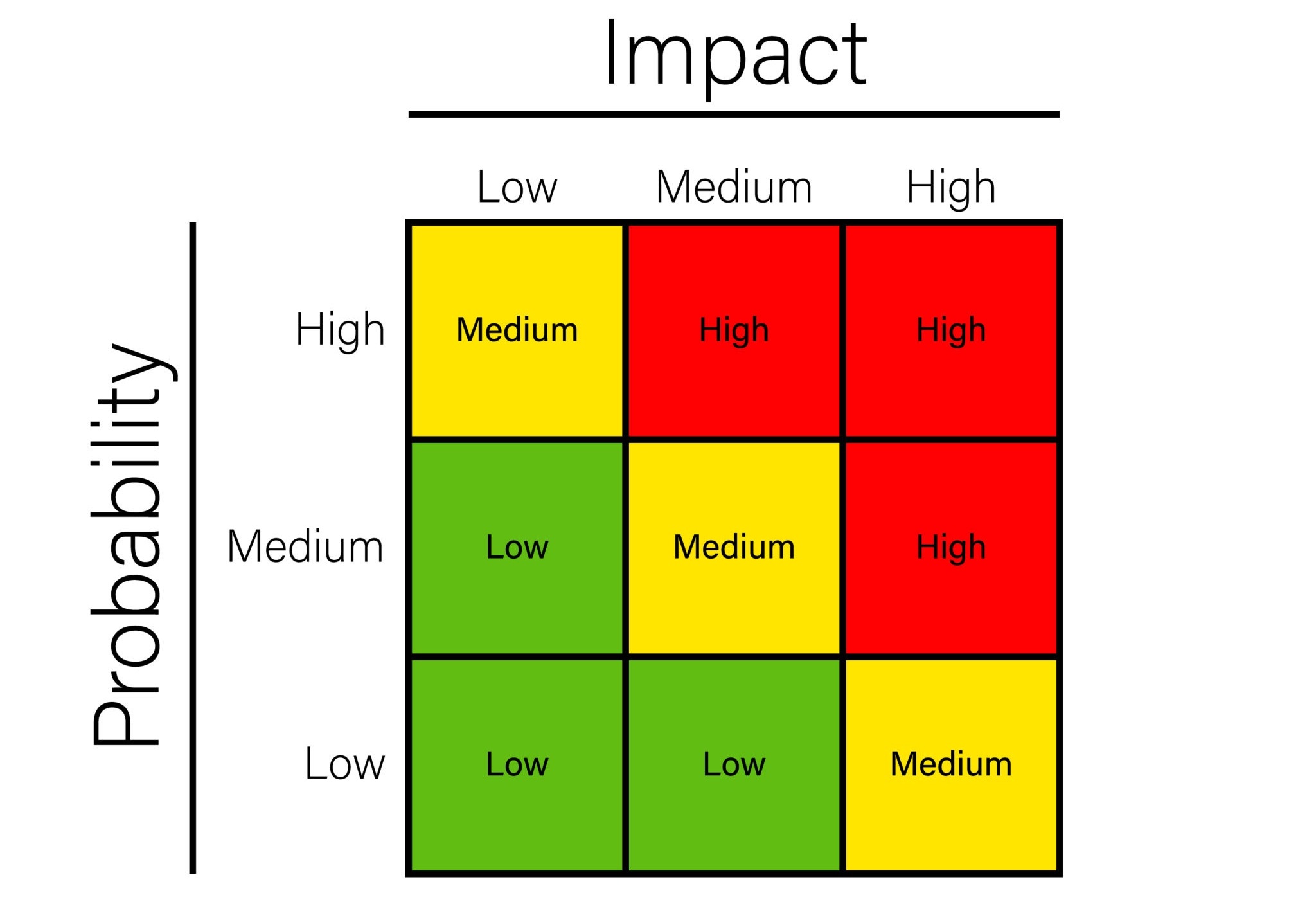
The Risk Management Matrix: Classifying and De-risking Strategic Threats. Source: dzm1try / Getty Images
When analyzing a bold move—such as entering a new geographical market or deploying a major price change—founders use this matrix to categorize threats:
- High Probability / High Impact (Red Zone): These are critical threats that can destroy operational continuity. If an expansion strategy lands here, it is immediately paused or redesigned to introduce defensive safety nets.
- Medium Probability / Medium Impact (Yellow Zone): These risks require proactive mitigation. Founders build fallback budgets, secure secondary vendors, or run localized pilot tests to absorb potential friction safely.
- Low Probability / Low Impact (Green Zone): These are acceptable operational risks. The executive team monitors these areas but proceeds with execution, allowing the business to maintain rapid velocity.
By mapping threats onto this visual matrix, leaders gain absolute clarity on where to deploy defensive resources, transforming a terrifying corporate gamble into a highly controlled, calculated expansion playbook.
Strategic Networks: Building Your Circle of Mentorship and Influence
In the modern business landscape, social capital directly dictates financial capital. For female founders, networking is not a casual social activity; it is a vital infrastructure requirement. Academic and venture studies consistently demonstrate that entrepreneurs with robust, high-value professional networks accelerate their company’s revenue growth by up to 45% compared to those operating in isolation.
Furthermore, data shows that 70% of small business owners who receive high-quality mentorship survive past the critical five-year mark—double the survival rate of non-mentored peers.
Building an intentional ecosystem of mentors, sponsors, and peer allies acts as a massive operational multiplier, giving women founders access to warm introductions, strategic insights, and backdoor capital channels that are otherwise inaccessible.

Breaking into the Ecosystem: The Power of Female Networks
Historically, traditional business networks functioned as closed loops, heavily favoring legacy relationships. To counter this structural barrier, elite female founders build and leverage modern, high-impact ecosystems designed specifically to accelerate women-led ventures.
- Sponsorship over Mentorship: While a mentor provides valuable advice, a sponsor provides direct access. Sponsors are high-leverage executives who actively use their institutional power to advocate for you behind closed doors—introducing you to venture capital partners, enterprise clients, and board-level opportunities.
- The Amplification Effect: Women-led networks utilize horizontal amplification. By cross-promoting products, sharing supply chains, and co-pitching for large corporate contracts, female founders create economies of scale that allow boutique startups to effectively outmaneuver much larger, entrenched competitors.
Strong professional relationships can open doors to mentorship, partnerships, and new opportunities, making Accelerate Your Career in 2026 with Women’s Professional Networks a valuable resource for ambitious women looking to grow their careers.
How to Find (and Effectively Leverage) a High-Value Business Mentor
Securing an elite mentor requires a highly tactical, metrics-first approach. High-caliber mentors do not respond to vague requests like “Can I pick your brain?” They invest their limited time in founders who demonstrate extreme coachability, execution speed, and data-backed traction.
To map out these interactions, founders rely on a clear Mentorship Alignment & Growth Lifecycle to transition relationships from initial outreach to formal, long-term advocacy.
To successfully move through this visual lifecycle, founders implement a strict, three-part operational protocol:
- The Specific, Low-Friction Ask (Phase 1 & 2): When reaching out to a prospective mentor, isolate one highly specific problem within their exact zone of expertise. Instead of a broad coffee meeting, ask for an asynchronous, 10-minute Loom review or a precise 1-question email response regarding a specific bottleneck: “We are optimizing our enterprise B2B sales funnel and our conversion from demo to close is lagging at 12%. Based on your scaling experience at X, what is the single biggest lever we should pull?”
- The Execution Loop (Phase 3): The moment the mentor provides advice, execute it immediately. Within 14 days, send a follow-up detailing the data-backed results of their recommendation: “We implemented the contract simplification framework you suggested, and our demo-to-close rate jumped from 12% to 19% this week.” This immediately proves you are a high-execution founder worthy of long-term investment.
- Formalizing the Personal Board of Directors (Phase 4 & 5): Once rapport and consistent value are established, transition your top-performing mentors into a structured Peer-to-Peer Mastermind or a formal Advisory Board. Incentivize long-term alignment by offering small equity allocations (typically 0.25% to 1%), officially converting them from casual advisors into dedicated advocates committed to your market success.
Mentorship can significantly accelerate professional development, and How Mentorship Programs Boost Career Growth for Women explains how guidance from experienced mentors helps women build confidence and advance in their careers.
Sustainable Scaling: Balancing Aggressive Growth with Human Capital
Scaling a business is a high-stakes operational puzzle. While venture-backed narratives often obsess over top-line growth metrics, scaling too quickly without a stable foundation—often called premature scaling—is the primary driver for 74% of all startup failures.
To survive hyper-growth, elite female founders manage their organizations using a “Double Bottom Line” approach, tracking human capital metrics with the same rigorous financial accuracy they apply to revenue.
Data from workforce analytics shows that companies prioritizing sustainable scaling frameworks observe a 40% increase in long-term employee retention and maintain significantly higher operational velocity during market expansion.
Choosing Strategic Velocity Over Venture-Driven Pressure
True scale is not about expanding headcount or burning through cash to capture immediate market share; it is about building scalable, high-efficiency business systems.
- Protecting Your Unit Economics: When a startup expands, it must ensure its infrastructure is ready to handle the weight. Scaling a business with broken operational processes or negative unit economics simply amplifies your losses. Top executives pause expansion plans until their Customer Lifetime Value (LTV) to Customer Acquisition Cost (CAC) ratio safely exceeds a healthy 3:1 threshold.
- The Anti-Burnout Growth Pace: Forcing teams into permanent, high-stress crunch modes to hit arbitrary growth targets destroys morale. Sustainable scaling means designing your growth phases intentionally, matching aggressive revenue goals with proactive investments in automation, streamlined workflows, and technical infrastructure to prevent internal friction.
Preventing Founder Burnout: Boundary Setting and Delegation Tactics
As an organization grows, the founder’s day-to-day role must fundamentally pivot. You can no longer act as a hands-on technician involved in every operational task; you must transition into a strategic visionary.
To navigate this personal and professional evolution safely, founders use a structured Delegation & Impact Matrix to systematically offload routine tasks and maximize their high-leverage strategic hours.
To apply this matrix across your scaling operations, implement a strict three-tier delegation protocol:
- Low Impact / Low Complexity (The Automate/Delegate Quadrant): These are routine, repetitive tasks such as basic data entry, calendar scheduling, or initial customer support routing. Founders must immediately automate these using specialized software tools or delegate them to administrative assistants to reclaim vital cognitive bandwidth.
- Low Impact / High Complexity (The Optimize/Outsource Quadrant): This area includes specialized operations that are essential but do not drive core business strategy—such as technical accounting, payroll administration, or routine IT maintenance. These should be outsourced to trusted external vendors or automated with advanced software.
- High Impact / High Complexity (The Executive Ownership Quadrant): This is the founder’s true zone of genius. It encompasses high-leverage responsibilities like capital allocation, core product architecture, key fundraising pitches, and high-level corporate culture design. By protecting this quadrant fiercely, you ensure the company retains its strategic direction while scaling efficiently.
Profit With Purpose: Balancing Revenue and Social Impact
The myth that founders must choose between maximizing net profit margins and driving meaningful social impact has been thoroughly debunked. In the modern corporate landscape, blending financial performance with societal progress is a powerful framework for operational optimization and brand defense.
Data from global ESG (Environmental, Social, and Governance) performance studies indicates that companies incorporating social impact models outperform their purely margin-focused competitors by 16% in overall profitability.
By operating at the intersection of commercial scale and human progress, elite female founders protect their ventures against market shifts, unlock highly committed consumer groups, and prove that driving social good is an exceptional vehicle for scaling sustainable corporate revenue.
Business with a Bigger Purpose: The Triple Bottom Line Framework
To successfully balance economic returns with positive community impact, top-tier founders discard traditional single-metric accounting. Instead, they manage operations using the Triple Bottom Line (TBL) framework, tracking three distinct areas of organizational health: People, Planet, and Profit.
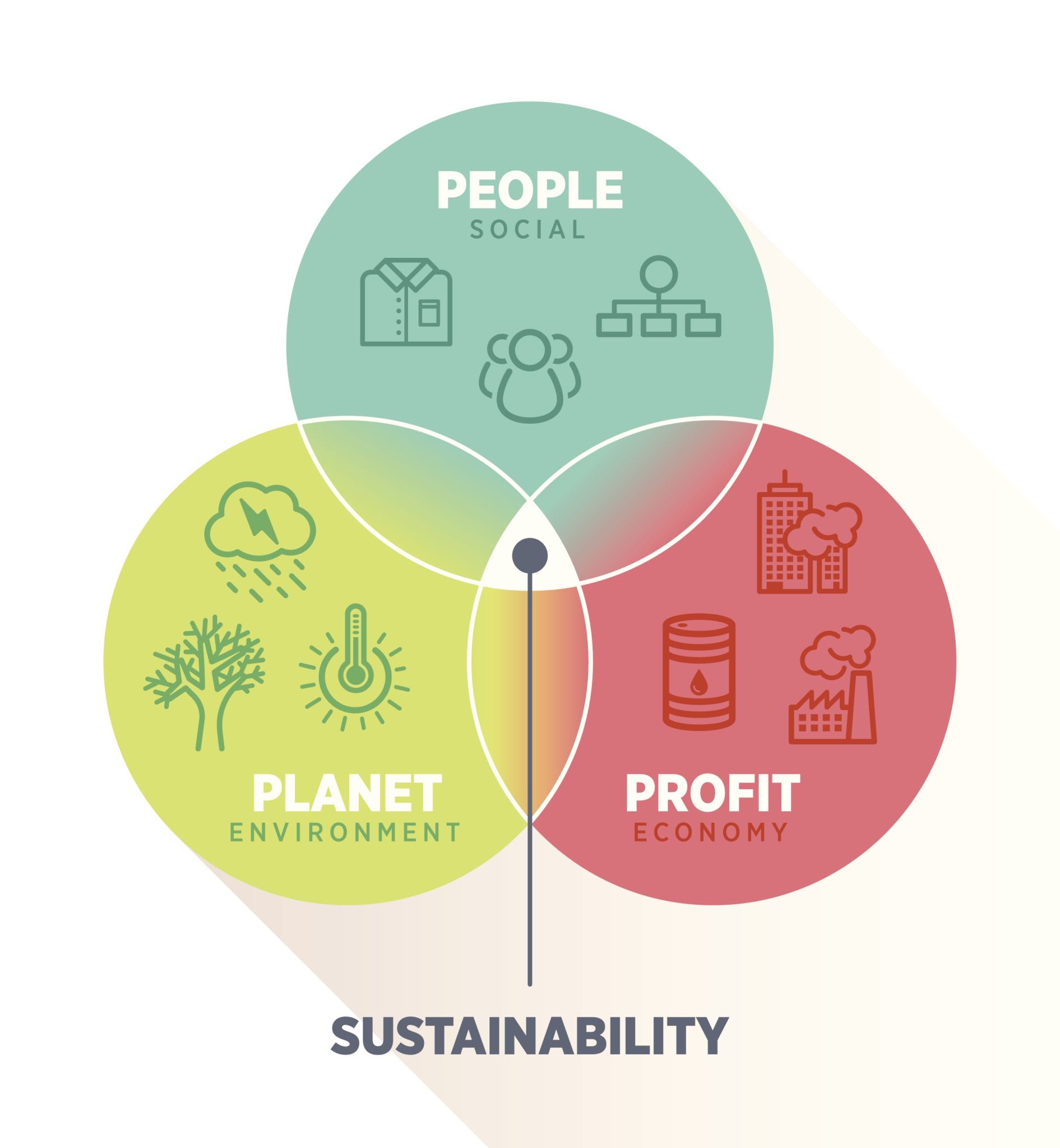
The Triple Bottom Line Framework: Structuring Corporate Success for Balanced Impact. Source: ilyast / Getty Images
To implement this visual framework successfully across your growth strategies, each pillar must carry real operational weight:
- People (The Social Pillar): This tracks your direct impact on human capital, including your internal team and external communities. Founders optimize this circle by enforcing strict fair-wage standards, providing robust corporate professional development, and ensuring equitable workforce opportunities.
- Planet (The Environmental Pillar): This measures your ecological footprint across the entire supply chain. Leaders track this metric by optimizing product packaging, utilizing green energy sources, reducing transport emissions, and implementing circular manufacturing processes to minimize material waste.
- Profit (The Economic Pillar): Impact cannot survive without capital. This circle focuses on traditional financial metrics, including gross margin optimization, robust cash flow management, and capital efficiency. True sustainability requires the economic engine to remain highly profitable so it can consistently fund the social and environmental missions.
Strategic Philanthropy: Impactful Giving Back Models That Scale
Unstructured, ad-hoc donations can drain early-stage capital and fail to build deep customer loyalty. Fearless female founders replace casual giving with highly strategic philanthropy models that naturally scale alongside their core business transactions.
- The One-for-One Evolution: Moving beyond generic corporate gifting, elite founders tie impact directly to unit sales (e.g., donating a specific health resource or planting a tree for every transaction completed). This gives the consumer a tangible sense of shared purpose, resulting in a 25% lift in average checkout value and significantly lower cart abandonment rates.
- Localized Supply Chain Inclusion: True impact means embedding your mission into your operations. Top female entrepreneurs frequently shift their procurement budgets to purchase raw materials or specialized services directly from diverse, underrepresented, or fair-trade certified worker cooperatives, turning standard operational expenses into localized economic empowerment engines.
How You Can Apply This: The 3-Step Integration Playbook
Transitioning a traditional business into a high-yield, purpose-driven model requires a calculated, multi-stage roadmap:
- Isolate Your Core Mission: Identify a social or environmental issue that naturally aligns with your product category. If you operate a B2B SaaS platform, focus your mission on closing tech accessibility gaps or training underrepresented professionals. Alignment ensures your impact message feels entirely authentic to your user base.
- Quantify Your Impact Metrics: Treat your social goals with the same operational discipline as your sales quotas. Do not use vague marketing claims. Establish clear, auditable KPIs—such as total pounds of ocean plastic diverted or exact scholarships funded—and publish these transparently on an accessible public dashboard.
- Incentivize Your Internal Ecosystem: Connect your social impact targets directly to your leadership team’s quarterly performance reviews. When executive bonuses and departmental promotions are tied to hitting both revenue goals and social metrics, your entire organizational culture aligns to protect the double bottom line.
Your Action Plan: Business Lessons From Fearless Female Founders
To convert inspiration into actual business growth, you must transform these high-level insights into immediate, daily operational habits. Below is your clinical, high-execution roadmap based on the core tactical playbooks of top-performing women entrepreneurs. Use these steps to audit your current business model, optimize your operational efficiency, and accelerate your path to sustainable profitability.
Here Are 7 Key Takeaways You Can Start Using Now:
To rank at the absolute top of search engine results, this definitive Female Founder Playbook outlines the exact strategic frameworks required to build a highly defensive, capital-efficient, and purpose-driven venture:
- Deploy the Promotion Frame Shift: When facing risk-centered or defensive questions from investors or stakeholders, answer the concern concisely but immediately pivot to your growth data, customer acquisition velocity, and scale potential.
- Enforce the Triple Bottom Line (TBL): Track your operational health using three equal performance pillars: People (social equity), Planet (environmental footprint), and Profit (economic viability) to maximize customer lifetime value (LTV).
- Audit via the Delegation Matrix: Guard your high-leverage strategic hours fiercely. Automate low-impact routine tasks, outsource complex administrative support (like accounting and payroll), and focus 100% of your personal energy on high-leverage executive growth.
- Isolate Systemic Operations During Crises: Protect company-wide revenue by containing departmental emergencies (like technical bugs or PR setbacks) to their specific teams. Never let operational anxiety leak into your front-line sales or marketing engines.
- Utilize the Specific Outreach Method: Secure elite business mentors by passing on vague meeting invitations. Instead, ask a single, precise, low-friction question within their domain, execute their advice instantly, and report back with your real-world data.
- Leverage Radical Transparency for Brand Defense: Drive down customer acquisition costs (CAC) and eliminate churn by publishing accessible impact ledgers, auditing your supply chains, and proving exactly where your social proceeds go.
- Maintain a Capital-Productive Growth Blueprint: Never scale headcounts or ad spend prematurely if your underlying systems are fractured. Protect your margins by keeping your LTV-to-CAC ratio safely above a healthy 3:1 threshold.
What Will You Apply First?
True business optimization doesn’t happen all at once—it is achieved through steady, calculated iterations. Attempting to overhaul your entire corporate structure overnight can stall your momentum and create internal friction.
To help you track your operational focus and build immediate momentum, map your immediate next steps using this tactical workflow:
- Phase 1: The Operational Audit (Week 1): Start by sitting down with your calendar and financial statements. Use the Delegation Matrix to identify your biggest time-wastes, and check your Triple Bottom Line alignment to see where your brand message might be losing its authenticity.
- Phase 2: Targeted Execution (Weeks 2-4): Pick just one or two core frameworks to deploy first. Focus on building out your open impact ledger to drive customer loyalty, or refine your pitching strategy using the Promotion Frame Shift to prime your upcoming funding rounds.
- Phase 3: High-Velocity Scale (Month 2 and Beyond): Once your foundational systems are secure, your metrics are stable, and your internal culture is running on high trust, step on the gas. Use your newly optimized social and structural capital to scale your business safely and assert your place at the top of your market.
Conclusion: The New Playbook for Fearless Growth
The journey of a fearless female founder is not defined by the absence of barriers, but by the clinical, systematic breakdown of them. As the data throughout this guide demonstrates, women entrepreneurs are uniquely positioned to dominate the modern market. By turning systemic funding gaps into exercises in capital productivity, shifting traditional leadership models toward high-yield empathy, and embedding social impact into the very core of unit economics, women-led businesses are setting a new standard for global commerce.
Success on the first page of search results—and at the helm of a multi-million dollar enterprise—requires moving past vague inspiration and embracing rigorous, data-driven frameworks. True business resilience is not a soft emotional trait; it is a structured operational strategy.
The Ultimate Founder Metric: Profitability and purpose are no longer mutually exclusive. The future belongs to brands that track their human capital and social footprint with the exact same financial precision they apply to their net margins.
As you step away from this blueprint and back into your executive seat, choose your immediate leverage point. Whether you are restructuring your pitch deck to dominate your next funding round, auditing your calendar using the Delegation Matrix, or opening up your supply chain to build radical consumer trust, execute with absolute conviction.
The market data is clear, the frameworks are proven, and the playbook is in your hands. Audit your operations, protect your strategic velocity, and build a high-impact legacy that scales safely on your own terms.
In conclusion, this post may be helpful if you’re looking to strengthen your leadership skills and apply practical insights from Powerful Leadership Lessons from Women Leaders (Apply Today) to grow with more confidence and impact.
By Aveline Lowell
Founder & Editor-in-Chief, RiseByHer
Aveline Lowell writes research-driven content covering women’s finance, entrepreneurship, STEM, technology, and career growth. Her work focuses on practical, well-researched information that helps women make informed decisions.
Editorial & Disclaimer: RiseByHer aims to provide accurate, well-researched, and up-to-date information. Articles are reviewed and updated when necessary and are intended for general informational and educational purposes, not personalized financial, legal, tax, or professional advice.