
Women entrepreneurs are launching smarter, faster, and more independently in 2026, and crowdfunding is one of the most powerful ways to fund your idea without giving up control. Whether you’re building a product, starting a service-based business, or scaling a mission-driven brand, the right platform can help you raise money, attract loyal customers, and prove demand early. In this guide, you’ll discover the best crowdfunding sites to empower women entrepreneurs in 2026, plus how to choose the best one for your business goals.
Why Crowdfunding Is a Smart Funding Option for Women Entrepreneurs in 2026
In 2026, crowdfunding is a game-changer for women entrepreneurs. It helps you raise capital faster, prove demand instantly, and grow your brand without relying on banks or giving away equity.
The Growing Importance of Crowdfunding for Women-Led Businesses
In recent years, crowdfunding has become a game-changer for women entrepreneurs, providing an alternative to traditional financing. With venture capital (VC) funding for female-led startups still lagging behind, women-founded businesses received only 2.1% of global VC funding in 2023 (source), more female entrepreneurs are turning to crowdfunding platforms to launch and scale their businesses.
The rise of equity crowdfunding, rewards-based funding, and peer-to-peer lending has democratized access to capital, allowing women to bypass traditional gatekeepers and connect directly with backers who believe in their vision. This trend is expected to grow even further, with more women leveraging crowdfunding to fuel their startups.
Challenges Women Face in Securing Traditional Funding
Despite making up a significant portion of new business owners, women entrepreneurs face major funding gaps due to:
- Gender Bias in Venture Capital – Investors often favor male-led businesses, limiting access to funding.
- Lack of Collateral for Bank Loans – Many women lack property or financial assets required for business loans.
- Limited Networking Opportunities – Fewer industry connections make it harder to secure angel investments.
Because of these barriers, many women-led startups struggle to scale. This is where crowdfunding comes in.
How Crowdfunding Empowers Female Entrepreneurs
Crowdfunding is more than just a funding source, it’s a powerful tool for women entrepreneurs to gain visibility, build community, and test their ideas. Here’s how it helps:
- Access to Capital Without Bias – Crowdfunding removes gender barriers by allowing direct engagement with supporters.
- Increased Brand Exposure – A successful campaign builds awareness and attracts customers before launch.
- Stronger Community Support – Women-led crowdfunding campaigns often receive high engagement, as female consumers love to support women-owned brands.
- Validation of Business Ideas – If backers are willing to fund a project, it proves market demand.
With the global crowdfunding market projected to reach $50 billion by 2025, this financing model is more important than ever for women entrepreneurs. But not all platforms are created equal. Up next, we’ll explore the 10 best crowdfunding platforms for women entrepreneurs, so you can find the one that best suits your business needs.
Types of Crowdfunding Explained (Rewards, Equity, Donation, Debt)
Before choosing a crowdfunding platform, women entrepreneurs need to understand the four main types of crowdfunding. Each model works differently, attracts different backers, and comes with unique risks, legal rules, and profit potential. Picking the right crowdfunding type can make the difference between a successful campaign and a funding failure.
Rewards-Based Crowdfunding (Best for Products and Pre-Orders)
Rewards-based crowdfunding is one of the most popular options for women entrepreneurs launching physical products, beauty brands, fashion, gadgets, or creative projects. Instead of giving away equity, you offer supporters a reward such as early access, discounts, or limited-edition products.
This model works best when you can clearly show what you are selling and create excitement around your launch. Platforms like Kickstarter and Indiegogo are widely used for rewards campaigns, especially when you can build momentum through social media and email marketing.
- Best for: product-based businesses, creators, early-stage brands
- Main advantage: no equity given away
- Main risk: production delays and fulfillment costs
Equity Crowdfunding (Best for Startups Seeking Investors)
Equity crowdfunding allows women founders to raise money by offering shares of their company to investors. Instead of supporters receiving a product, they receive ownership in the business and may profit if the company grows or exits.
This option is ideal for scalable startups in tech, health, sustainability, fintech, and other high-growth industries. Equity crowdfunding is more regulated than rewards crowdfunding, and it often requires strong financial projections, a clear valuation, and legal preparation.
Equity crowdfunding platforms typically attract serious investors, so credibility and traction matter more than social buzz.
- Best for: scalable startups, high-growth businesses
- Main advantage: larger funding potential
- Main risk: dilution and complex legal requirements
Donation-Based Crowdfunding (Best for Community and Social Impact Projects)
Donation crowdfunding is based on supporters giving money without expecting a product or ownership in return. This type is commonly used for social impact businesses, nonprofits, community projects, women-led causes, or personal hardship fundraising.
Donation crowdfunding works best when the mission is emotional and easy to support. Storytelling is the most important success factor, and campaigns often grow through viral sharing and community support.
This option is less ideal for profit-driven startups, but it can be powerful for women entrepreneurs building mission-based businesses.
- Best for: nonprofits, community projects, social impact businesses
- Main advantage: fast support with no repayment
- Main risk: harder to scale unless the mission is highly shareable
Debt Crowdfunding (Best for Businesses That Want Funding Without Equity)
Debt crowdfunding, also known as peer-to-peer lending, allows women entrepreneurs to raise money as a loan that must be repaid over time. Instead of giving away equity, founders pay back lenders with interest, similar to a traditional business loan.
This model is often a strong option for women entrepreneurs who already have revenue and want funding to expand inventory, hire staff, invest in equipment, or scale operations.
Debt crowdfunding is ideal for founders who want to keep full ownership but are confident they can handle monthly repayments.
- Best for: small businesses with stable revenue
- Main advantage: keep full ownership
- Main risk: repayment pressure and interest costs
| Type | Description | Best For | Popular Platforms | Example |
| Rewards-Based Crowdfunding | Backers receive products or perks instead of equity. | Startups, creative ventures, and product launches | Kickstarter, Indiegogo | A sustainable fashion startup pre-sells its designs before production. |
| Equity-Based Crowdfunding | Backers invest in exchange for ownership (equity). | Startups seeking investors and scalable businesses. | SeedInvest, Crowdcube, Republic | A woman-led AI startup raises funds by offering equity to investors. |
| Donation-Based Crowdfunding | Backers donate with no financial return expected. | Nonprofits, social enterprises, and community projects. | GoFundMe, Kiva | A female artisan in Africa raises funds through Kiva to expand her business. |
| Debt Crowdfunding | Backers lend money that must be repaid with interest, similar to a business loan. | Businesses that want funding without giving up equity. | Kiva, Funding Circle, LendingClub | A woman-owned bakery raises $20,000 through crowdfunding loans to buy equipment and repays it monthly. |
How to Choose the Best Crowdfunding Platform for Your Business
Choosing the right crowdfunding platform is key to a successful campaign. Each platform has unique features, so it’s essential to understand the different models and key factors before launching.
- Funding Model: Some platforms use “all-or-nothing” (you only get funded if you reach your goal), while others offer “flexible funding” (you keep what you raise). Example: Kickstarter is all-or-nothing, while Indiegogo offers both.
- Fees & Costs: Most platforms charge a platform fee (3%–8%) + payment processing fees (~2.9%). Example: iFundWomen has a 5% platform fee, while GoFundMe has none for personal fundraisers.
- Target Audience: Some platforms specialize in tech startups, creative businesses, or social impact projects. Example: iFundWomen supports female entrepreneurs.
- Success Rate: Platforms with a strong track record increase your funding chances. Example: Kickstarter has a 40% success rate.
- Marketing Support: Some platforms offer coaching, backer networks, and marketing tools. Example: Patreon helps creators build long-term memberships.
Choosing the right platform depends on your business type and funding goals. But before you launch, you need to understand the real costs involved. In the next section, we’ll break down crowdfunding fees and platform costs to know before you start your campaign.
Crowdfunding Fees and Platform Costs to Know Before You Launch
Most crowdfunding platforms charge a platform fee plus payment processing fees, usually taken directly from the funds you raise. Depending on the platform, total fees often range between 5% and 10%, but they can be higher once you include marketing, fulfillment, and taxes.
Common Crowdfunding Platform Fees You Should Expect
Most platforms charge these standard fees:
- Platform fee (typically 0%–5%)
- Payment processing fee (usually 2.9%–3.5% + small fixed charge per donation/pledge)
- Currency conversion fees for international backers
- Withdrawal fees depending on your payout method
Some platforms only charge fees if your campaign is successful, while others take fees regardless of whether you hit your goal.
Hidden Crowdfunding Costs Many Women Entrepreneurs Forget
Even if a platform has low fees, your campaign may still become expensive due to operational costs. Many women-led startups underestimate these expenses, which can cause major cash flow problems after the campaign ends.
Common hidden costs include:
- Shipping and fulfillment costs (especially international orders)
- Packaging and product production costs
- Paid ads and influencer marketing
- Video creation and professional campaign design
- Taxes on crowdfunding income (depending on your country and business structure)
- Refunds, chargebacks, and failed payments
If you’re running a rewards-based campaign, fulfillment is often the biggest cost that eats into your profits.
Rewards Crowdfunding vs Equity Crowdfunding: Cost Differences
Crowdfunding costs also depend heavily on the type of campaign you choose.
- Rewards-based crowdfunding usually has lower platform fees, but higher fulfillment costs. You must deliver products or perks, which can quickly reduce your net earnings.
- Equity crowdfunding tends to involve higher legal and compliance costs. You may also pay platform service fees, investor onboarding fees, and legal documentation expenses, especially if you’re raising larger amounts.
- Donation crowdfunding is often cheaper, but some platforms encourage optional “tips” or take higher processing fees depending on how donations are structured.
- Debt crowdfunding may include origination fees and repayment interest, meaning you raise capital but must plan for monthly repayment.
How to Reduce Crowdfunding Costs and Keep More Profit
Women entrepreneurs can protect their profits by planning smarter before launch.
Here are practical ways to reduce campaign expenses:
- Choose platforms with transparent fee structures
- Build shipping costs into your reward pricing
- Offer digital products or low-cost rewards when possible
- Negotiate supplier pricing before you launch
- Create a realistic marketing budget instead of overspending
- Add a “buffer” in your funding goal to cover unexpected costs
Crowdfunding can be a powerful way to raise money, but only when you understand the real costs and plan your campaign with accurate numbers.
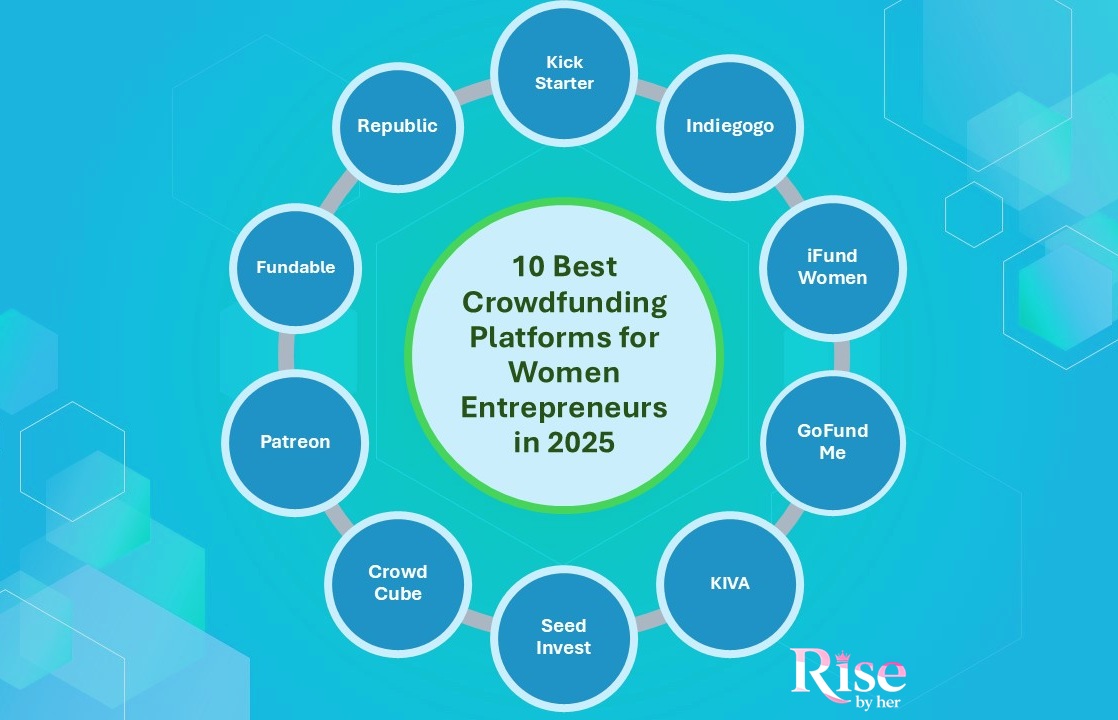
10 Best Crowdfunding Platforms for Women Entrepreneurs in 2026
Not all crowdfunding platforms deliver the same results. Here are the Top 10 Best Crowdfunding Platforms for Women Entrepreneurs in 2026 to help you raise funds, build visibility, and launch with confidence.
1. Kickstarter – Best for Creative Women Entrepreneurs
- Overview: Kickstarter is a leading platform for creative projects like fashion, tech, and design.
- Why It’s Great: Strong community of backers, all-or-nothing funding model for committed support.
- Fees: 5% platform fee, plus payment processing fees (~3%).
- Success Story: Lisa Fetterman raised $1.3M for her Nomiku sous vide device.
2. Indiegogo – Best for Innovators & Startups
- Overview: Indiegogo supports a range of startups and creative ventures with flexible funding options.
- Why It’s Great: Flexible funding lets you keep the funds even if you don’t hit your goal, ideal for global exposure.
- Fees: 5% platform fee, plus payment processing fees (~3%).
- Success Story: Elvie raised over $1M for its smart breast pump.
3. iFundWomen – Best for Women-Led Businesses
- Overview: iFundWomen is a female-focused platform offering funding and coaching.
- Why It’s Great: Focuses on women founders. Provides mentorship to ensure campaign success.
- Fees: 5% platform fee, plus payment processing fees (~3%).
- Success Story: Gina Bartasi raised $800K for Kindbody.
4. GoFundMe – Best for Social Impact Projects
- Overview: GoFundMe is ideal for nonprofits and social causes, with zero platform fees for personal campaigns.
- Why It’s Great: No platform fees for personal campaigns. Simple and user-friendly.
- Fees: 2.9% processing fee.
- Success Story: Code/Art raised $50K for girls in coding.
5. Kiva – Best for Entrepreneurs in Developing Countries
- Overview: Kiva offers microloans with 0% interest, supporting women in emerging markets.
- Why It’s Great: Global reach with 0% interest loans. Perfect for small businesses and artisans.
- Fees: No fees for borrowers.
- Success Story: A Kenyan artisan raised $2,500 on Kiva.
6. SeedInvest – Best for High-Growth Startups
- Overview: SeedInvest is an equity crowdfunding platform ideal for high-growth startups.
- Why It’s Great: 700K+ investors ready to support. Best for scalable women-led startups.
- Fees: 7.5% success fee.
- Success Story: Ellevest raised $33M via SeedInvest.
7. Crowdcube – Best for UK-Based Startups
- Overview: Crowdcube is a leading equity crowdfunding platform for UK and European startups.
- Why It’s Great: Focus on tech, fashion, and sustainability. No upfront costs.
- Fees: 7% platform fee.
- Success Story: Elvie raised £4.5M through Crowdcube.
8. Patreon – Best for Creators & Coaches
- Overview: Patreon is a membership-based platform for creators, educators, and coaches.
- Why It’s Great: Recurring income stream from dedicated supporters. No all-or-nothing pressure.
- Fees: 5%–12% platform fee.
- Success Story: Amanda Palmer earns $50K/month on Patreon.
9. Fundable – Best for Scaling Women-Owned Startups
- Overview: Fundable offers rewards or equity-based crowdfunding for growing businesses.
- Why It’s Great: No success fees. Ideal for scaling businesses.
- Fees: $179/month subscription fee.
- Success Story: A skincare brand raised $100K via Fundable.
10. Republic – Best for Tech & Impact-Driven Startups
- Overview: Republic offers equity crowdfunding for tech and impact-driven startups.
- Why It’s Great: Non-accredited investors can invest. Focus on diverse, impact-focused founders.
- Fees: 6% success fee + 2% equity.
- Success Story: An AI startup raised $1.2M via Republic.
How to Run a Successful Crowdfunding Campaign (Step-by-Step)
Running a successful crowdfunding campaign is more than just raising money, it’s about building a community of supporters who believe in your vision. Here are some top tips for women entrepreneurs to ensure their campaign stands out:
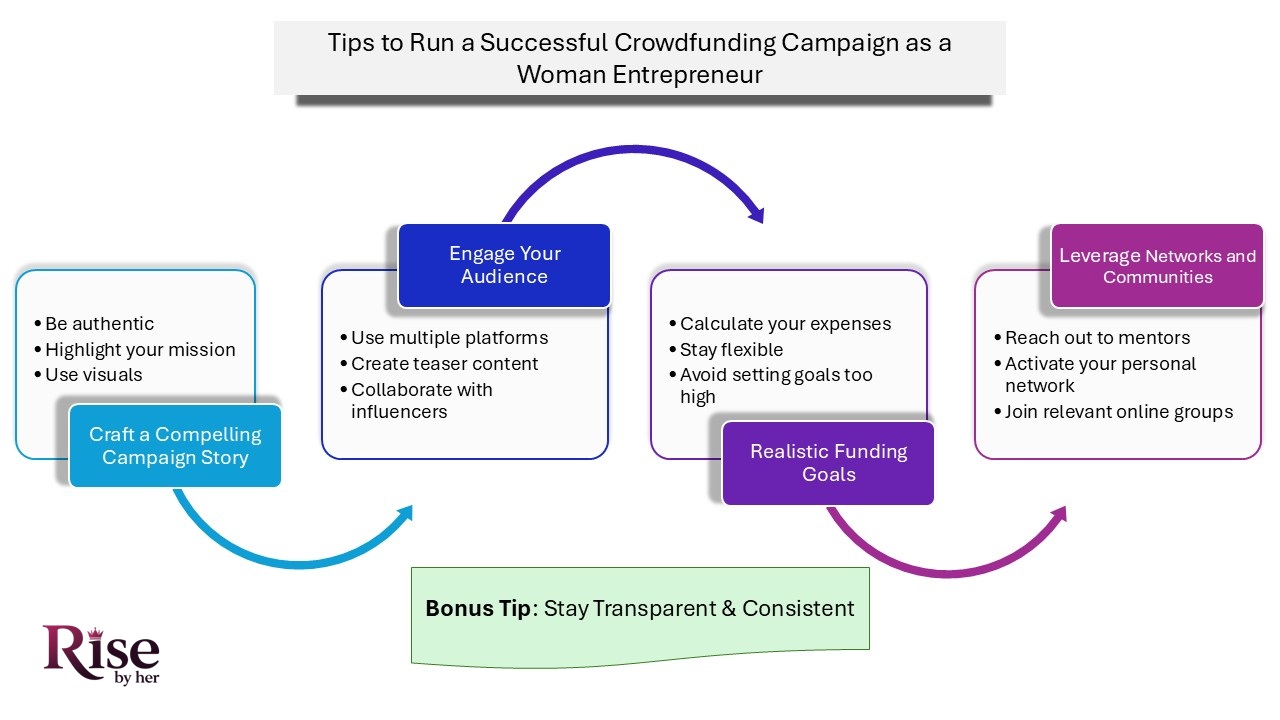
Step 1: Craft a Compelling Campaign Story
Your story is the heart of your campaign. It should resonate with your audience and clearly communicate why your project matters.
Tips for a compelling story:
- Be authentic: Share your personal journey and challenges.
- Highlight your mission: Explain how your business is solving a problem or making a difference.
- Use visuals: Include videos, photos, and infographics to make your story more engaging.
A compelling narrative builds trust and helps backers feel connected to your mission.
Step 2: Engage Your Audience Through Social Media & Marketing
Social media is a powerful tool to promote your crowdfunding campaign and create excitement.
How to engage:
- Use multiple platforms: Share updates on Instagram, Facebook, Twitter, and LinkedIn.
- Create teaser content: Build anticipation with sneak peeks, behind-the-scenes footage, or exclusive offers.
- Collaborate with influencers: Partner with women-focused influencers to expand your reach.
Engagement isn’t just about promoting your campaign, it’s about building relationships and growing a loyal following.
Step 3: Set Realistic Funding Goals
Setting a realistic funding goal is crucial to the success of your campaign. Aim for a goal that reflects your project’s needs while being achievable.
Tips for setting goals:
- Calculate your expenses: Ensure your goal covers production, marketing, and shipping costs.
- Stay flexible: If your campaign exceeds its goal, be prepared to offer stretch goals or additional rewards.
- Avoid setting goals too high: An unrealistic goal can scare away potential backers. Focus on what you truly need to get started.
Realistic goals build credibility and show that you’ve planned your campaign thoughtfully.
Step 4: Leverage Networks and Communities
You don’t have to go alone. Leverage your networks and communities to amplify your campaign.
How to leverage networks:
- Reach out to mentors: Ask your mentors or industry leaders for advice and support.
- Activate your personal network: Your friends, family, and colleagues can help spread the word.
- Join relevant online groups: Engage with women entrepreneurs’ groups, business forums, and local networks.
Leveraging your community can help you gain momentum and build a network of loyal backers.
Bonus Tip: Stay Transparent & Consistent
Keep your bakers updated with regular progress reports. Share milestones, challenges, and celebrate successes together. Transparency and consistency build trust and keep your community engaged throughout the journey.
Best Crowdfunding Marketing Strategies to Get Backers Fast
Getting backers quickly is less about luck and more about how well you prepare and promote your campaign before and after launch. A strong crowdfunding strategy builds momentum early, keeps attention high, and turns interest into funding.
1. Build your audience before launch
Don’t wait until your campaign goes live. Start collecting emails, social followers, and early supporters weeks in advance. A warm audience is far more likely to back your project on day one.
- Create a simple landing page with a waitlist
- Offer early updates or exclusive previews
- Share your story consistently on social media
2. Launch with strong first-day momentum
The first 48 hours are critical. Platforms tend to promote campaigns that gain traction quickly, so you need early pledges.
- Reach out personally to friends, family, and early supporters
- Ask them to back on day one, not “sometime during the campaign”
- Aim for 20 to 30 percent of your goal early to build trust
3. Use storytelling, not just selling
People don’t fund ideas, they fund stories they believe in. Your campaign should clearly explain why your project matters.
- Focus on the problem you are solving
- Show your journey as a founder
- Use simple, emotional language instead of technical jargon
4. Leverage social proof
Backers are more likely to join when they see others already supporting you.
- Display early backer numbers prominently
- Share testimonials or early feedback
- Highlight milestones as you reach them
5. Promote across multiple channels
Relying on one platform limits your reach. Combine channels to maximize visibility.
- Instagram and TikTok for visual storytelling
- Email marketing for direct conversion
- LinkedIn for professional and investor audiences
6. Offer compelling rewards and urgency
Your reward structure should encourage fast decisions.
- Limited early-bird discounts
- Exclusive bundles or bonuses for early backers
- Clear deadlines to create urgency
A successful crowdfunding campaign is built on preparation, consistent communication, and momentum. When you combine audience building with strong storytelling and early traction, you significantly increase your chances of reaching your funding goal quickly.
Common Crowdfunding Mistakes Women Entrepreneurs Should Avoid
Crowdfunding is a powerful way to fund your women-led business, but there are common mistakes that many entrepreneurs make. Avoiding these can help you run a more successful and stress-free campaign.
Setting Unrealistic Funding Goals
Mistake: Setting a funding goal that’s too high or too low can harm your campaign’s chances of success.
How to Avoid It:
- Be realistic: Estimate the true costs of your project, including production, marketing, and shipping.
- Aim for a manageable target: A goal that is too lofty can make backers feel uncertain, while a low goal might not cover your expenses.
- Pro Tip: Start with a target goal that covers your minimum needs and offers room for stretching goals if your campaign exceeds expectations.
Neglecting Marketing & Audience Engagement
Mistake: Thinking that once your campaign is live, the funding will come. This is a mistake many entrepreneurs make when they neglect to market their campaign.
How to Avoid It:
- Engage early: Start promoting your campaign before it launches. Build anticipation and interest through email lists and social media.
- Use content: Share behind-the-scenes updates, exclusive offers, and personal stories to keep your audience engaged.
- Consistency is key: Regular updates and communication with backers keep them excited and invested.
- Pro Tip: Run targeted ads on platforms like Facebook and Instagram to reach a broader audience.
Failing to Deliver Promised Rewards
Mistake: Not delivering rewards on time, or failing to deliver on promises, can damage your reputation and lose trust with your backers.
How to Avoid It:
- Plan for fulfillment: Ensure that you’ve accounted for production timelines, shipping, and reward creation.
- Communicate delays: If something unexpected happens, keep your backers informed and transparent about the delay.
- Set realistic reward tiers: Ensure you can deliver the rewards at the level of backing you’re offering.
- Pro Tip: Use project management tools to track reward fulfillment and keep everything on schedule.
Bonus Tip: Stay Transparent & Open
Throughout your campaign, be sure to communicate openly with your backers. Transparency about challenges, delays, or unexpected outcomes will help maintain their trust and support.
Success Stories: Women Entrepreneurs Who Raised Money Through Crowdfunding
Crowdfunding has empowered many women entrepreneurs to transform their ideas into successful businesses. Here are some inspiring examples of women-led companies that thrived through crowdfunding.
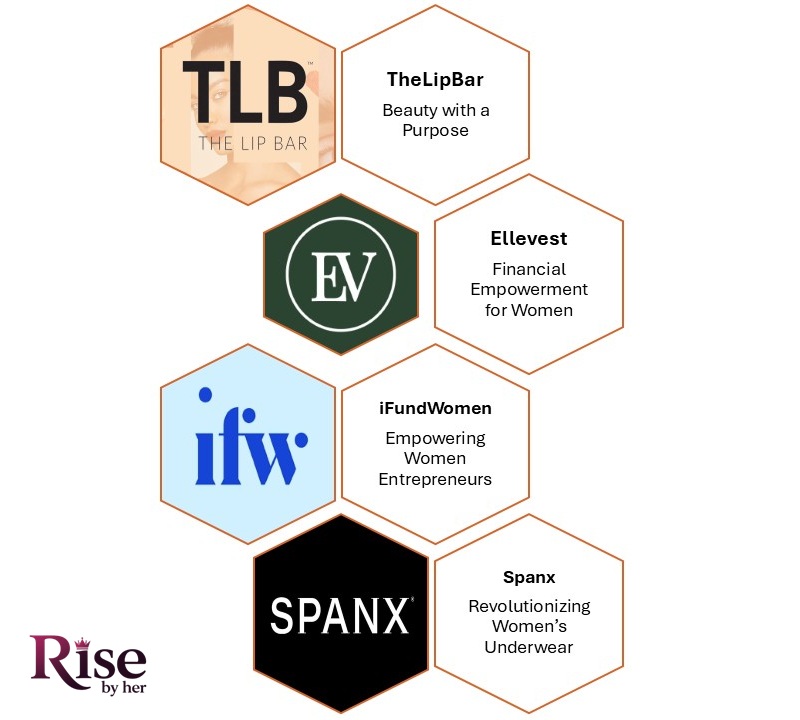
The Lip Bar – Beauty with a Purpose
The Lip Bar, founded by Melissa Butler, used crowdfunding to disrupt the beauty industry with an inclusive makeup line.
Why It Was Successful:
- Authentic storytelling about breaking into a competitive industry.
- Engaged communities through social media and personal connections.
- Clear mission around diversity and inclusion.
Result: Raised $200,000, growing into a multi-million-dollar brand.
Ellevest – Financial Empowerment for Women
Ellevest, a platform focused on women’s investment needs, raised funds through equity crowdfunding.
Why It Was Successful:
- Targeted audience: Women seeking financial solutions.
- Strong digital marketing with a focus on financial empowerment.
- Educational approach to investing.
Result: Raised $32 million, establishing itself as a leader in women’s investment.
iFundWomen – Empowering Women Entrepreneurs
iFundWomen is a crowdfunding platform designed for women entrepreneurs, offering coaching and fundraising support.
Why It Was Successful:
- Community support fostering collaboration among women entrepreneurs.
- Personalized coaching for successful campaigns.
- Focus on women’s success.
Result: Helped hundreds of women raise millions of dollars.
Spanx – Revolutionizing Women’s Underwear
Sara Blakely used crowdfunding to launch Spanx, her innovative shapewear brand.
Why It Was Successful:
- Innovative product addressing a market gap.
- Word-of-mouth marketing through satisfied customers.
- Strong backer support.
Result: Spanx became a global brand, making Sara Blakely a self-made billionaire.
Is Crowdfunding Right for You? When It Works and When It Doesn’t
Crowdfunding is a powerful tool that can help women entrepreneurs launch and grow their businesses. From securing funding to building a loyal community, it’s an effective way to turn your vision into reality. Let’s quickly recap the key takeaways:
- Crowdfunding offers access to capital without relying on traditional loans or investors.
- There are different types of crowdfunding to choose from, including rewards-based, equity-based, and donation-based.
- Success requires strategic planning, from setting realistic goals to creating compelling campaigns and engaging your audience.
- Women entrepreneurs have seen remarkable success through crowdfunding, thanks to strong storytelling, community support, and transparent communication.
Whether you’re just starting out or looking to expand your existing business, crowdfunding can be a game-changer. It’s an opportunity to showcase your passion and connect with people who believe in your mission. Don’t be afraid to explore the different platforms and find the best fit for your business goals.
Is Crowdfunding Right for You? When It Works and When It Doesn’t
Crowdfunding gives women entrepreneurs a powerful way to raise capital, validate business ideas, and build an early customer base without relying on traditional funding routes. The key to success is choosing the right platform and matching it with your business model, funding goals, and audience.
Whether you choose rewards-based crowdfunding for product launches, equity crowdfunding for scalable startups, donation-based funding for social impact, or debt crowdfunding for growth financing, your decision should be based on strategy, not trend.
Before you launch, make sure your campaign is realistic, well-planned, and financially clear. Strong storytelling, a clear value proposition, and a well-defined funding target can significantly increase your chances of reaching or exceeding your goal.
Most importantly, treat crowdfunding as more than just fundraising. It is a visibility tool, a validation system, and a launch strategy that can help you build momentum long before your product or service fully scales.
Start small, plan carefully, and choose the platform that aligns with your long-term vision.
If you are looking to secure funding more strategically, these insights on Women in STEM: Fundraising Secrets to Grow Your Startup can help you strengthen your approach and improve your chances of success.
If you’re ready to take the next step, don’t miss Women in STEM: How to Succeed in Crowdfunding for practical strategies to launch a winning campaign and attract the right supporters.
By Aveline Lowell
Founder & Editor-in-Chief, RiseByHer
Aveline Lowell writes research-driven content covering women’s finance, entrepreneurship, STEM, technology, and career growth. Her work focuses on practical, well-researched information that helps women make informed decisions.
Editorial & Disclaimer: RiseByHer aims to provide accurate, well-researched, and up-to-date information. Articles are reviewed and updated when necessary and are intended for general informational and educational purposes, not personalized financial, legal, tax, or professional advice.