

In 2026, women entrepreneurs are shaping the future of business like never before. With access to digital tools, funding opportunities, and supportive networks, more women are breaking barriers and launching successful ventures across various industries. However, challenges like securing capital, balancing responsibilities, and navigating competitive markets remain key concerns.
This guide provides step-by-step strategies tailored to help aspiring female business owners start, grow, and sustain their businesses in 2026. Whether you’re exploring business ideas, funding options, or digital marketing strategies, this article will equip you with the insights and resources needed to turn your vision into reality.
Ready to take the first step? Let’s dive in!
How to Choose the Right Business Idea and Identify Your Niche
Before you invest time or money into a business, you need an idea that matches 3 things: market demand, your skills, and profit potential. The goal is not to choose a business you “like”, but a business people will pay for consistently.
1. How to Identify a High-Potential Business Idea
- Assess Your Strengths & Passions: What skills or experiences can you turn into a business?
- Research Market Demand: Use tools like Google Trends, Ubersuggest, and AnswerThePublic to identify trending business ideas for women.
- Analyze Competitors: Study successful businesses in your niche to find gaps and opportunities.
- Validate Your Idea: Test with surveys, social media engagement, or a small pilot launch before committing fully.
2. Best Business Niches for Women in 2026
- Digital products (e-books, courses)
- Eco-friendly brands (sustainable fashion, beauty)
- Remote services (virtual assistance, consulting)
- Health & wellness (coaching, fitness apps)
Key Takeaway: Align your business idea with both personal passion and market demand for long-term success.
Writing a Simple but Effective Business Plan
A business plan doesn’t need to be 40 pages to be useful. The goal is to create a clear roadmap that helps you stay focused, understand your numbers, and make smarter decisions. Even if you start small, a simple business plan makes it easier to grow faster and avoid expensive mistakes.
1. Essential Elements of a Winning Business Plan
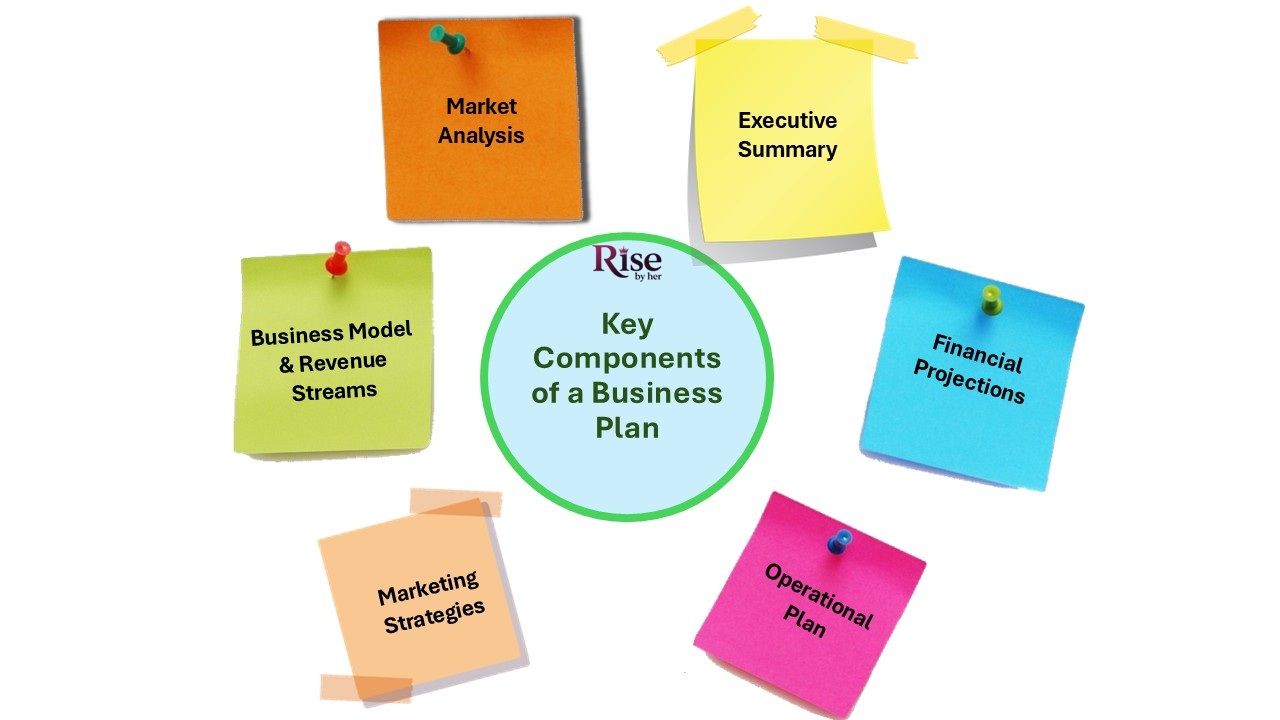
- Executive Summary: A concise overview of your business, mission, and unique value proposition.
- Market Analysis: Research your target audience, industry trends, and competitors to identify opportunities.
- Business Model & Revenue Streams: Define how you will generate income (e.g., product sales, subscriptions, services).
- Marketing Strategies: Outline branding, digital marketing, and customer acquisition tactics.
- Operational Plan: Detail daily operations, supply chain management, and team roles.
- Financial Projections: Estimate startup costs, pricing strategies, and break-even points.
2. Free Tools to Create Your Business Plan Fast
You do not need to pay for expensive business planning software. There are many free tools that can help you create a professional and organized business plan in less time.
- LivePlan: AI-powered business plan builder
- Score.org Templates: Free business plan templates
- Google Docs/Excel: DIY business plan tracking
Pro Tip: Keep your business plan flexible and revisit it regularly as your startup grows.
Legal Steps to Start a Business as a Woman Entrepreneur
Choosing the right business legal structure is essential for protecting your assets, minimizing taxes, and ensuring compliance with regulations.
1. Business Structure Options Explained (LLC, Sole Proprietor, etc.)
- Sole Proprietorship: Simple setup, full control, but personal liability.
- Limited Liability Company (LLC): Combines liability protection with tax flexibility.
- Corporation (C-Corp & S-Corp): Best for scaling but involves more regulations.
- Partnership: Ideal for co-owned businesses, but partners share liability.
2. How to Register Your Business Step by Step
- Choose a Business Name: Ensure it is unique and available for registration.
- Register with the Government: File with local/state agencies and get a business license.
- Obtain an EIN (Employer Identification Number): Required for tax purposes and hiring employees.
- Open a Business Bank Account: Keep personal and business finances separate.
- Understand Tax & Licensing Requirements: Check local, state, and federal regulations.
2. Free Legal Resources and Compliance Tools
- IRS.gov: Get EIN & tax compliance guides
- SBA.gov: Business structure & licensing help
- LegalZoom & Rocket Lawyer: Affordable legal assistance
Pro Tip: Consult a legal expert to choose the best structure for your business growth!
How to Fund Your Business and Secure Capital
Securing funding for your business is one of the biggest obstacles for women starting a business, but it doesn’t have to stop you. Whether you’re launching with savings, applying for grants, or seeking investors, the right funding strategy can help you grow faster and avoid financial stress. The key is choosing capital that fits your business model and keeps you in control.
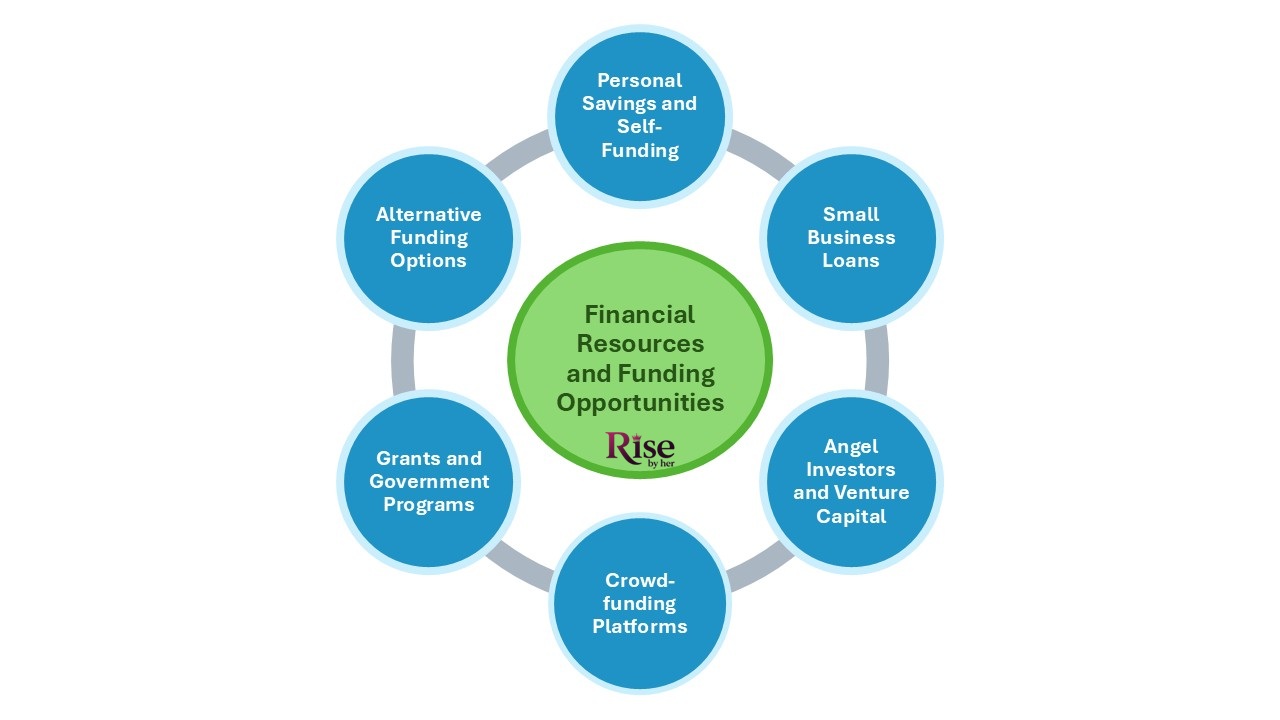
1. Self-Funding and Personal Savings Strategy
Self-funding is the simplest and most common way to start a business. It gives you full control, no debt, and no pressure from investors. This approach works especially well for low-cost businesses that can generate income quickly.
Instead of trying to fund everything at once, focus on starting lean and investing only in what you truly need to launch.
Key principles of self-funding:
- Start with a realistic startup budget based on essentials only
- Avoid spending heavily on branding, tools, or courses at the beginning
- Use your first profits to reinvest and grow step by step
- Keep your business and personal finances separate
This method is ideal for freelancers, coaches, content creators, and digital product businesses where startup costs are low but income potential is high.
Check out 5 Quick Ways Women Can Save Money Today to start improving your finances immediately.
2. Small Business Loans and Bank Financing
If your business requires more capital upfront, Small business loans an help you move faster. These are commonly used for inventory, equipment, marketing, or launching a physical product.
However, loans should be used carefully because they create financial responsibility from day one. Before applying, you need a clear plan for how you will generate income and repay the loan.
Important points to consider:
- Banks usually require a business plan and financial projections
- A good credit score improves your chances of approval
- Microloans are often easier for beginners to access
- Funds can be used for setup costs, inventory, or expansion
Loans are best suited for structured businesses with a clear revenue model and predictable income.
3. Angel Investors and Venture Capital Explained
Investor funding is designed for businesses that can grow fast and scale big. Unlike loans, investors give you money in exchange for ownership in your business.
This option is not necessary for most small businesses, but it becomes powerful if you are building a startup with strong growth potential.
Here’s how it works in simple terms:
- Angel investors are individuals who invest early-stage money
- Venture capital firms invest larger amounts in high-growth startups
- Both usually require equity (a share of your business)
- They expect strong growth, traction, or early revenue
To attract investors, you need more than an idea. You need proof that your business can grow, such as customers, revenue, or a strong market opportunity. You also need a clear pitch explaining your business model and growth strategy.
If you are ready to scale your business, this guide on How to Secure Angel Investment for Women-Led Startups (2026 Guide) will show you how to attract the right investors and close funding faster.
4. Crowdfunding Platforms That Work in 2026
Crowdfunding allows you to raise money from real people who believe in your idea. Instead of relying on banks or investors, you raise small contributions from a large audience.
It works especially well for product-based businesses and creative ideas that people can see, understand, and support emotionally.
What makes crowdfunding successful:
- A strong and clear story behind your idea
- Eye-catching visuals and product presentation
- Early audience building before launching your campaign
- Marketing through social media and email lists
Explore the Best Crowdfunding Platforms for Women Entrepreneurs (2026 Guide) to find the right platform to raise funds for your business.
5. Grants and Government Funding for Women Entrepreneurs
Grants are one of the most attractive funding options because they don’t need to be repaid. They are often offered by governments, nonprofits, and organizations that support women and small business growth.
However, grants are competitive, so preparation is key. A strong application can significantly increase your chances of approval.
What you should know:
- Grants are usually targeted at specific industries or goals
- Women entrepreneurs are often prioritized in funding programs
- You typically need a business plan and budget outline
- Local grants are often easier to access than global ones
These programs are especially common in areas like education, health, social impact, and innovation-based businesses.
Discover the Best Small Business Grants for Women (2026 Guide) to find funding opportunities for your business.
6. Alternative Funding Options (Side Income, Partnerships, etc.)
If traditional funding options don’t work for you, there are still many practical ways to finance your business without relying on banks or investors.
Many successful entrepreneurs start their business as a side project while earning income elsewhere, then scale gradually as revenue grows.
Alternative funding methods include:
- Starting your business as a side hustle and reinvesting income
- Offering freelance services to generate startup capital
- Partnering with someone who brings funding or skills
- Pre-selling services or products before official launch
You can also use business credit cards for short-term expenses, but this should be managed carefully to avoid debt issues.
These methods may feel less “formal,” but they often give you more control, less pressure, and a safer path to long-term success.
Learn How Women Entrepreneurs Can Get Funding: Top Strategies for Success to improve your chances of securing business financing.
Building a Strong Support System and Finding Mentors
As a woman entrepreneur, building a strong support network and seeking mentorship are crucial for overcoming challenges and accelerating business growth. Surrounding yourself with the right people and resources can provide guidance, encouragement, and opportunities that will help you navigate the complexities of entrepreneurship.
1. Why Networking Is Critical for Women Entrepreneurs
Networking is essential for any entrepreneur, but especially for women in business. By connecting with other like-minded women, you can gain valuable insights, share experiences, and collaborate on opportunities. Consider joining women’s business networks like:
- National Association of Women Business Owners (NAWBO)
- Ellevate Network: A global community of women professionals supporting each other’s growth.
- Ladies Who Launch: An organization empowering women entrepreneur through events, resources, and networking.
These organizations not only provide a platform for meeting potential partners or investors but also create a sense of belonging and support within the entrepreneurial community.
2. Mentorship Programs and How to Join Them
Finding the right mentor can significantly impact the trajectory of your business. A mentor can offer advice on decision-making, share industry knowledge, and help you avoid common pitfalls. Seek out mentorship programs specifically designed for women entrepreneurs, such as:
- Women’s Business Centers (WBCs): Offers free mentorship and resources to women-owned businesses.
- SCORE Mentorship Program: Provides free, confidential business mentoring with experienced business owners.
- The Young Women Entrepreneurs Network (YWEN): Offers mentorship and resources for young women looking to start and grow businesses.
3. Online Communities for Women in Business
In addition to formal networks, online communities and social media groups can serve as a valuable source of support and connection. Platforms like LinkedIn and Facebook have numerous groups where women entrepreneurs share advice, ask questions, and connect for potential collaborations. Some groups to explore include:
- Women Entrepreneurs of Facebook: A community of women sharing advice, experiences, and opportunities.
- SheEO: A global community of women entrepreneurs and investors supporting women-led ventures.
4. Women-Focused Business Events and Conferences
Participating in women-focused business events can help you expand your network, gain inspiration, and access growth opportunities. Consider attending events like:
- The Women’s Business Summit
- Forbes Women’s Summit
- Women in Business Conference: Tailored for entrepreneurs and executives to network and learn from industry leaders.
5. Accountability Groups for Business Growth
In addition to finding mentors, peer support is crucial. Consider joining or forming a peer accountability group, where you can exchange ideas, set goals, and hold each other accountable for progress. This peer-driven support system can be incredibly motivating and help you stay focused on your business growth.
By building a solid support network and seeking out mentorship, you’ll equip yourself with the tools, advice, and confidence needed to overcome challenges and accelerate your growth as a woman entrepreneur.
Branding and Marketing Strategies for Women-Owned Businesses
In the competitive world of entrepreneurship, developing a strong brand identity and implementing effective digital marketing strategies are key to standing out and attracting your ideal customers. A well-crafted brand, coupled with smart marketing tactics, can help elevate your startup and ensure its long-term success.
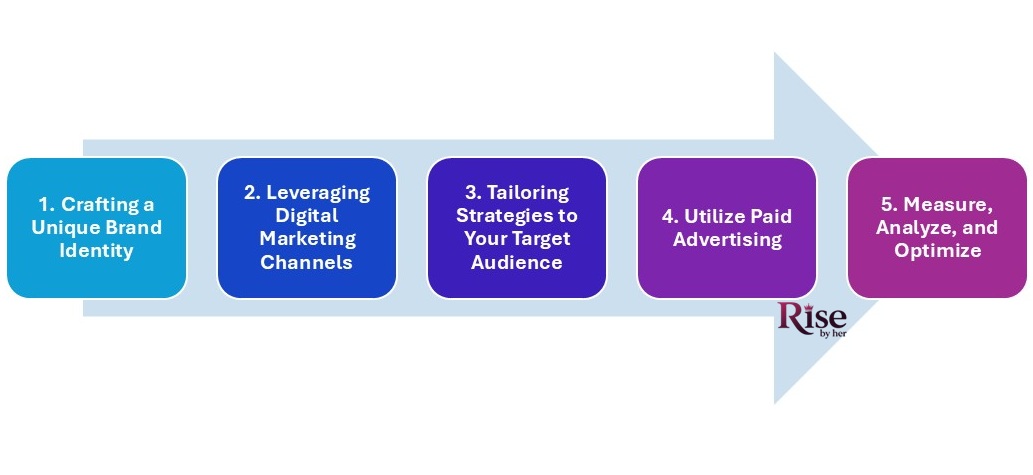
1. Building a Strong and Authentic Brand Identity
Your brand identity is more than just a logo—it’s the essence of your business. A strong brand reflects your values, mission, and the unique value you bring to the market. To create a compelling brand for your startup, start by defining your business’s core message and target audience.
- Brand Vision and Mission: Your vision should convey your long-term aspirations, while your mission focuses on the purpose and values behind your business. For example, if you’re a sustainable fashion brand, your mission could be to promote eco-friendly products while offering stylish solutions for modern women.
- Brand Voice: The tone and personality of your brand play a significant role in connecting with your audience. Whether it’s professional, friendly, or innovative, consistency in communication is crucial.
- Visual Identity: Design elements like colors, fonts, and logo should align with the essence of your brand. Platforms like Canva and Looka are excellent tools for DIY branding.
2. Digital Marketing Channels That Drive Growth
In 2026, digital marketing is a must-have for any startup. To effectively reach and engage your target audience, take advantage of various digital marketing strategies:
- Social Media Marketing: Platforms like Instagram, Facebook, and LinkedIn are invaluable for promoting your brand. Choose platforms that align with where your target audience spends their time. Post regular, engaging content like behind-the-scenes looks, product launches, and user-generated content to create a personal connection.
- Content Marketing: Creating valuable content that addresses your audience’s pain points can position you as an authority in your niche. Whether it’s blog posts, infographics, or videos, content marketing helps build trust and encourages organic traffic to your website. Use SEO strategies to optimize your content and make it discoverable.
- Email Marketing: Building an email list is crucial for direct communication with your audience. Use email campaigns to keep your customers updated about new products, promotions, or important news. Platforms like Mailchimp or ConvertKit make it easy to design professional-looking emails and track performance.
Get inspired by 25 Inspiring Success Stories of Women in Digital Marketing and see how others built success in the field.
3. How to Understand and Target Your Ideal Audience
Understanding your target audience’s behaviors, preferences, and challenges is essential when crafting marketing strategies. Conduct customer research through surveys, focus groups, or social media interactions to gather insights. Once you know your audience, personalize your marketing campaigns to resonate with them.
- Demographics and Psychographics: Consider factors such as age, income, location, and lifestyle when designing your brand message and campaigns.
- Customer Journey Mapping: Develop content and promotions based on where your customers are on their buying journey. For instance, create awareness-building content for new prospects and nurturing emails for leads who have shown interest.
4. Paid Advertising Strategies That Actually Wor
While organic strategies are crucial, leveraging paid advertising can accelerate your brand’s reach. Platforms like Google Ads, Facebook Ads, and Instagram Ads allow you to target specific demographics, locations, and interests, making them ideal for small businesses looking to scale quickly.
- Retargeting: Use retargeting ads to engage visitors who have interacted with your brand before but didn’t convert. This can lead to higher conversion rates.
- A/B Testing: Test different ad variations to understand what resonates with your audience the most and optimize your ad performance.
5. Tracking Performance and Improving Results
No marketing strategy is complete without data analysis. Use tools like Google Analytics, Facebook Insights, and email campaign reports to track key metrics such as website traffic, engagement, and conversion rates. Regularly assess your efforts to identify what’s working and adjust as needed.
By branding your startup effectively and leveraging the right digital marketing strategies, you can establish a unique presence in the market, attract your ideal customers, and set the foundation for long-term growth.
Business Tools and Technology to Scale Faster
Scaling a business today is no longer about working harder, it’s about using the right tools. From automation to AI and productivity apps, technology can help you save time, reduce costs, and grow faster with less effort. The right systems turn a small business into a scalable, efficient operation.
1. Must-Have Tools for Women Entrepreneurs
- Project Management: Trello, Asana, and Notion help organize tasks, track progress, and collaborate efficiently.
- Communication: Slack, Zoom, and Microsoft Teams enhance remote work and team coordination.
- Finance & Accounting: QuickBooks, Wave, and FreshBooks simplify bookkeeping, invoicing, and tax management.
- E-commerce & Sales: Shopify, Etsy, and WooCommerce provide platforms for selling products and services online.
2. Automating Daily Business Operations
- Marketing & Email Automation: Mailchimp and ConvertKit help automate email campaigns and nurture customer relationships.
- Social Media Management: Buffer and Hootsuite schedule posts and track engagement across multiple platforms.
- Customer Support & Chatbots: Chatfuel and Tidio offer AI-powered chatbots to improve customer interactions.
3. AI Tools, Cybersecurity, and Digital Safety
- Security & Data Protection: LastPass secures passwords, while Cloudflare protects websites from cyber threats.
- AI Tools for Productivity:
- ChatGPT for content creation & customer engagement.
- Canva for branding & social media graphics.
- HubSpot for CRM & customer management.
Using the right tech tools boosts efficiency, reduces workload, and helps businesses scale faster in 2026.
Explore Financial Independence for Women: The Best Resources and Tools to discover practical ways to build long-term financial freedom.
Overcoming Challenges Faced by Women Entrepreneurs
Building a business as a woman often comes with unique challenges, from funding barriers to bias and balancing multiple responsibilities. But these challenges are not roadblocks, they are part of the journey. With the right mindset, systems, and strategies, you can turn them into strengths that help you grow a more resilient and successful business.
1. Breaking Gender Bias in Business
Gender bias is still present in many industries, but it should not define your potential or limit your progress. The key is learning how to navigate it with confidence, clarity, and strong positioning.
In many cases, bias shows up in subtle ways such as being underestimated in meetings, facing skepticism from investors, or not being taken seriously in competitive spaces. Instead of internalizing it, focus on building authority and credibility through your work.
Practical ways to overcome gender bias:
- Build a strong personal brand that highlights your expertise
- Use data, results, and case studies to prove your value
- Surround yourself with supportive professional networks
- Speak with confidence and clarity in business settings
- Focus on industries where women-led businesses are growing rapidly
2. Overcoming Funding and Resource Barriers
Access to funding and resources can be more challenging for women entrepreneurs, but there are more opportunities today than ever before. The key is knowing where to look and how to position your business.
Instead of waiting for perfect funding conditions, focus on building momentum with what you already have.
Useful strategies include:
- Start with low-cost or service-based business models
- Use reinvestment from early profits to grow step by step
- Apply for women-focused grants and startup programs
- Explore microloans and community funding options
- Build partnerships that share resources or reduce costs
3. Work-Life Balance as a Woman Entrepreneur
Balancing business, personal life, and responsibilities can be one of the most difficult parts of entrepreneurship. Without structure, it is easy to feel overwhelmed or burnt out.
The goal is not perfect balance every day, but sustainable routines that protect your time and energy.
Helpful approaches include:
- Set clear working hours and stick to them when possible
- Focus on high-impact tasks instead of doing everything at once
- Use scheduling tools to automate repetitive tasks
- Delegate or outsource when your business grows
- Build rest and recovery into your weekly routine
4. Building Confidence and Leadership Skills
Confidence is not something you wait for, it is something you build through action and experience. Many women entrepreneurs struggle with self-doubt in the beginning, especially when entering competitive industries.
The key is to shift from “I’m not ready” to “I am learning and improving every day.”
Ways to strengthen confidence and leadership:
- Take action before you feel fully ready
- Learn from feedback instead of fearing mistakes
- Invest in continuous learning and skill development
- Practice speaking about your business clearly and confidently
- Celebrate small wins to build momentum
Develop Leadership Qualities You Need to Become a Strong Female Leader to grow confidence and leadership skills in business and life.
5. Turning Challenges Into Business Growth Opportunities
Every challenge you face as an entrepreneur can become a growth advantage if you approach it strategically. Instead of seeing obstacles as setbacks, use them as feedback to improve your business.
Many successful women entrepreneurs built stronger businesses because they adapted to challenges early on.
How to turn challenges into growth:
- Use financial limitations to build lean and efficient systems
- Turn lack of experience into learning and skill development
- Use competition as motivation to refine your positioning
- Convert setbacks into better strategies and offers
- Listen to customer feedback to improve your business model
Conclusion
Starting a successful business as a woman in 2026 is more achievable than ever. By choosing the right business idea, crafting a solid plan, securing funding, and leveraging technology and mentorship, you can build a thriving venture.
While challenges like gender bias and funding barriers exist, they can be overcome with strategic planning, networking, and access to the right resources. Act today, refine your business plan, connect with mentors, and explore funding opportunities.
What’s your biggest challenge in starting a business? Drop a comment below. I’d love to help!
By Aveline Lowell
Founder & Editor-in-Chief, RiseByHer
Aveline Lowell writes research-driven content covering women’s finance, entrepreneurship, STEM, technology, and career growth. Her work focuses on practical, well-researched information that helps women make informed decisions.
Editorial & Disclaimer: RiseByHer aims to provide accurate, well-researched, and up-to-date information. Articles are reviewed and updated when necessary and are intended for general informational and educational purposes, not personalized financial, legal, tax, or professional advice.