


Are you struggling to save money, pay off debt, or plan for the future? Wondering how to take control of your finances without feeling overwhelmed? Short-term financial goals are the answer. They break big financial ambitions into manageable, actionable steps that deliver quick wins and build confidence.
Why should women focus on short-term goals? Because they create a clear roadmap to financial independence, reduce stress, and help you make smarter money decisions today. Whether it’s building an emergency fund, paying down high-interest debt, or starting to invest, these goals set the foundation for long-term wealth.
The benefits are real: improved budgeting skills, more savings, faster debt repayment, and greater financial security. You don’t need a six-figure salary or advanced finance knowledge to get started, small, consistent actions can have a big impact.
In this guide, you’ll discover 10 practical, achievable short-term financial goals designed specifically for women. By following them, you’ll gain control over your money, feel empowered, and start building wealth step by step in 2026.
Why Short-Term Financial Goals Matter for Women
Short-term financial goals are the fastest way to build momentum with your money. Instead of waiting years to feel progress, these small wins help you gain control quickly, reduce stress, and create the foundation for long-term wealth.
For many women, money goals are not just about numbers. They are about freedom, stability, and having options. Whether you want to leave a toxic job, start a business, travel, or simply feel safe financially, short-term goals make that future feel possible starting now.
The best part is that short-term goals are easier to track, easier to stay consistent with, and they build confidence every month.
Short-Term vs Long-Term Financial Goals
Short-term financial goals are goals you can reach within a few weeks to 12 months. They focus on quick progress and building strong money habits.
Examples include:
- saving $500 to $1,000
- paying off a credit card
- creating a monthly budget
- improving your credit score
- starting investing with a small amount
Long-term financial goals usually take 3 to 20+ years and require a stronger foundation. These include:
- buying a home
- building retirement savings
- reaching financial independence
- building generational wealth
Short-term goals matter because they support long-term success. If your foundation is weak (no savings, debt stress, low credit), it becomes harder to invest, grow wealth, or take big opportunities.
Think of short-term goals as the building blocks that make your big financial dreams realistic.
How to Set Realistic Goals You Can Reach
To set goals you will actually achieve, keep them simple, measurable, and specific.
Start by asking yourself:
What is the one money problem causing me the most stress right now?
Then follow this easy method:
- Pick one goal at a time: Trying to save, invest, and pay off debt all at once usually leads to burnout.
- Make it measurable: Instead of saying “save money,” say: “Save $500 in the next 30 days.”
- Break it into weekly steps: If your goal is $500 in 4 weeks, that is only $125 per week.
- Attach a deadline: Deadlines create urgency and keep you consistent.
- Track progress weekly: Weekly tracking keeps you motivated and helps you adjust fast if you fall behind.
If you want your financial goals to stick in 2026, focus on progress, not perfection. Small consistent wins will always beat big unrealistic plans.
1. Create a Budget That Works (Without Feeling Restricted)
For women especially, budgeting can feel overwhelming because expenses are often unpredictable (family needs, health costs, lifestyle pressure, or supporting others). That is why the best budget is not the strictest one. It is the one you can actually stick to.
A simple budget gives you three powerful benefits fast:
- more control over spending
- less financial stress
- faster progress toward savings and debt payoff
Simple 50/30/20 Budget Example for Women
The 50/30/20 rule is one of the easiest budgeting methods because it keeps your money balanced without feeling extreme.
Here is how it works:
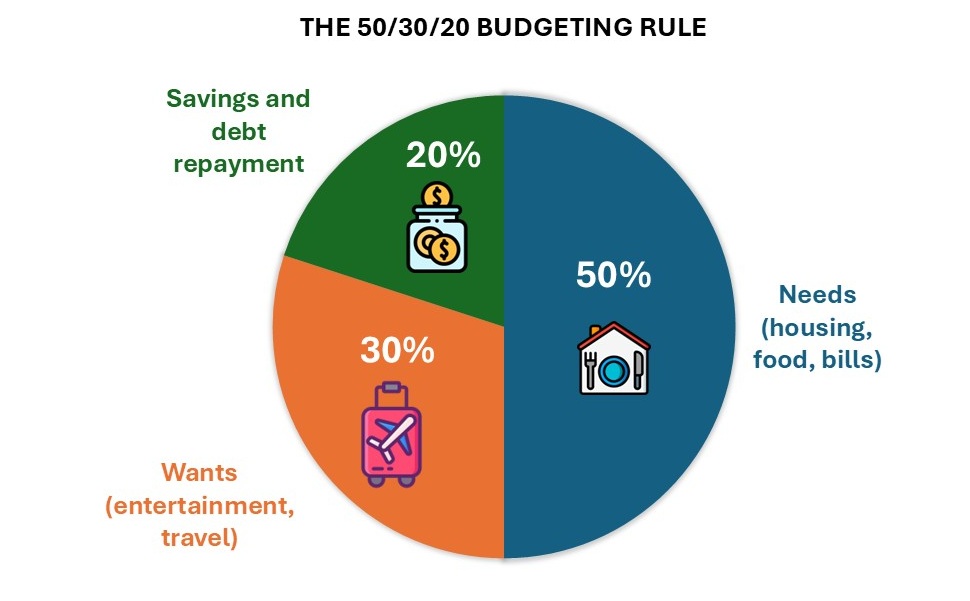
50% Needs (must-pay bills)
- rent or mortgage
- groceries
- transportation
- utilities
- insurance
- minimum debt payments
30% Wants (lifestyle spending)
- eating out
- shopping
- beauty and self-care
- subscriptions
- travel and entertainment
20% Savings + Debt Payoff
- emergency fund
- extra debt payments
- investing
- retirement contributions
Example (Monthly Income = $3,000)
- Needs (50%) → $1,500
- Wants (30%) → $900
- Savings/Debt (20%) → $600
If your bills are currently higher than 50%, do not panic. You can adjust the formula to match your reality, such as 60/20/20, and improve it over time. The goal is progress, not perfection.
Best Budgeting Apps to Track Spending Fast
If you want your budget to work, tracking your spending is non-negotiable. Budgeting apps make it easier because they automate the process and show exactly where your money goes.
Here are some of the best budgeting apps to try in 2026:
- YNAB (You Need A Budget): Best for women who want strict control and fast debt payoff.
- Rocket Money: Best for tracking subscriptions and cutting unnecessary spending.
- Mint (Mint Alternatives): Mint has changed a lot, so many women now prefer apps like Credit Karma or Rocket Money for basic tracking.
- EveryDollar: Best for beginners who want a simple budgeting layout.
- Goodbudget: Best for the cash envelope method (great if overspending is a problem).
- Spreadsheets (Google Sheets / Excel): Best if you want full control and a free budgeting option.
When you know exactly what you’re spending, you’ll spot the hidden “money leaks”, small purchases or subscriptions that add up fast. Fixing those leaks gives you the freedom to redirect money toward your financial goals, like saving, investing, or starting that business you’ve dreamed of.
2. Build a $1,000 Emergency Fund in 30 to 60 Days
An emergency fund is your financial safety net. It protects you from unexpected expenses like car repairs, medical bills, or sudden job loss, without forcing you to use credit cards or borrow money.
This is one of the smartest short-term financial goals because it gives you instant peace of mind. Even saving just $1,000 can stop a small emergency from turning into long-term debt.
The best part? You can build it faster than you think if you stay consistent.
Where to Keep Your Emergency Fund Safely
Your emergency fund should be safe, easy to access, and separate from your daily spending.
Best Places to Store It:
High-yield savings account (best option)
- earns interest
- keeps your money secure
- easy access when emergencies happen
Separate savings account at your bank
- quick to set up
- easy transfers
- good for beginners
Money market account
- safe and stable
- may offer higher interest rates
Weekly Saving Breakdown to Reach $1,000
Saving $1,000 becomes realistic when you break it into small weekly targets.
- If You Want $1,000 in 30 Days (4 Weeks): Save $250 per week
- If You Want $1,000 in 60 Days (8 Weeks): Save $125 per week
- If You Want $1,000 in 90 Days (12 Weeks): Save $84 per week
If you’re just starting your financial journey, following 3 Simple Steps for Women to Build a Strong Emergency Fund can help you quickly create a safety net and gain real peace of mind.
3. Cut 3 Spending Habits That Drain Your Money Monthly
One of the fastest ways to improve your finances is not earning more, but identifying small spending habits that quietly drain your money every month. These expenses rarely feel significant on their own, but together they can take a serious portion of your income.
The goal is not to restrict your lifestyle. It is to remove wasteful spending so your money can be redirected toward savings, debt repayment, or investing.
Fast Expense Audit Checklist
Start by reviewing your last 30 days of spending. This gives you a clear picture of where your money is actually going, not where you think it is going.
Focus on identifying patterns in these key areas:
- recurring subscriptions you no longer use or need
- frequent food delivery or takeout orders
- small daily purchases that feel harmless but add up quickly
- weekend or impulse shopping that is not planned
- bank fees such as overdraft or late payment charges
While doing your fast expense audit checklist, it can also help to explore Best Female Financial Advisors for Women (Expert Tips) if you want professional guidance to spot hidden spending gaps and improve your financial decisions.
Easy Swaps That Save $200+ Per Month
After identifying the leaks, the next step is to replace them with more intentional habits. Small adjustments are often more sustainable than strict budgeting rules.
Here are a few practical swaps that make a real difference:
- Reduce eating out by just a few meals per month and replace them with simple home-cooked meals
- Cancel 1 to 2 unused subscriptions that no longer add value
- Introduce a 24-hour waiting rule before making non-essential purchases
- Replace daily convenience spending (like coffee or snacks) with planned weekly purchases
When looking for easy swaps that save $200+ per month, these Easy Debt Payoff Hacks That Save You Money [Step-by-Step] can also help you redirect freed-up cash toward paying down debt faster.
4. Pay Off One Debt Fast Using the Snowball Method
Paying off debt is one of the most effective short-term financial goals because it immediately reduces financial pressure and frees up monthly cash flow. Instead of trying to eliminate everything at once, the focus here is to clear one debt as quickly as possible and build momentum.
The snowball method is especially powerful because it prioritizes progress over complexity. It helps you stay motivated by giving you quick wins, which increases the likelihood that you will stay consistent.
Snowball vs Avalanche: Which Is Better?
There are two main strategies for paying off debt, and both are effective, but they work differently.
Debt Snowball Method
You start by paying off your smallest debt first, regardless of interest rate. Once it is cleared, you move to the next smallest.
This method works best because:
- it creates fast psychological wins
- it builds motivation early
- it helps you stay consistent
Debt Avalanche Method
You focus on paying off the debt with the highest interest rate first, which saves more money over time.
This method works best because:
- it reduces total interest paid
- it is mathematically more efficient
- it is better for disciplined planners
Which should you choose?
If you struggle with motivation, the snowball method is usually more effective. If you are highly disciplined and focused on long-term savings, the avalanche method may work better.
How to Free Extra Cash to Pay Debt Faster
Paying off debt faster is not only about strategy, but also about creating extra cash flow. Even small increases in your monthly payment can significantly reduce repayment time.
Start by reviewing your budget and identifying areas where you can temporarily redirect money toward debt.
Common ways to free up extra cash include:
- reducing discretionary spending such as dining out or shopping
- pausing non-essential subscriptions for a few months
- using small side income or freelance earnings directly for debt payments
- applying any unexpected income (bonuses, refunds, or gifts) to your balance
Over time, even an extra $50 to $100 per month can significantly speed up your debt-free journey and improve your overall financial stability.
5. Save Your First $500 in 4 Weeks With a Weekly Goal
Saving money becomes much easier when you stop thinking in large amounts and start breaking your goal into smaller, manageable steps. Instead of trying to “save more,” you focus on a clear short-term target: $500 in 4 weeks.
This goal is realistic for most budgets because it relies on consistency, not large income changes. It also helps you build the habit of saving regularly, which is more important than the amount itself at the beginning.
Weekly Savings Challenge for Beginners
The simplest way to reach $500 is to divide it into weekly targets. This makes the process clear and easier to follow.
To reach your goal in 4 weeks, you need to save: $125 per Week or about $18 per day
If that feels too high, you can adjust the timeline slightly. The key is to stay consistent rather than perfect.
A beginner-friendly approach is to structure your savings like this:
- Week 1: focus on small cuts and quick wins (subscriptions, food spending, impulse purchases)
- Week 2: redirect any leftover budget money into savings
- Week 3: add extra income from small side tasks or selling unused items
- Week 4: push final contributions to reach the $500 target
The goal is not to feel restricted, but to train your brain to prioritize saving as a normal monthly habit.
Best Places to Automate Weekly Savings
Automation is one of the most effective ways to make saving consistent. When the process is automatic, you remove the need for constant decision-making, which reduces the risk of overspending.
A strong setup usually includes a separate account that is not linked to daily spending.
Good options include:
- a high-yield savings account for earning small interest while saving
- a separate bank savings account to keep money out of sight
- an automated transfer system that moves money weekly from checking to savings
The most effective strategy is to schedule a fixed transfer right after you receive income. Even a small amount, if automated, builds discipline over time.
6. Start Investing With $100 (Even If You’re a Beginner)
Investing is often seen as something you do “later” once you are wealthy. In reality, starting early with even a small amount like $100 can make a meaningful difference over time. The goal at this stage is not to get rich quickly, but to start building the habit of investing consistently.
The earlier you begin, the more time your money has to grow. Even small contributions can compound into significant amounts when given enough time and consistency.

Why Investing Early Builds Wealth Faster
Investing early works because of compound growth, which means your money earns returns, and those returns can also earn returns over time.
Starting with a small amount matters less than starting at all. For example, someone who invests $100 regularly over time can often end up ahead of someone who waits years to invest larger amounts.
Early investing also helps you:
- build long-term financial discipline
- learn how markets work gradually
- reduce fear and hesitation around money decisions
- create an additional income stream outside of work
The key idea is simple: time in the market is more powerful than timing the market.
Best Beginner Investing Apps for Women in 2026
For beginners, the best investing platforms are simple, low-cost, and easy to understand. You do not need advanced tools at this stage, just a safe and user-friendly entry point.
Common beginner-friendly options include:
- Fidelity: Great for beginners with educational tools and no-account minimum.
- M1 Finance: Offers fractional shares and automated investment.
- Ellevest: Designed specifically for women, aligning with career goals and life stages.
- Robinhood for simple, low-barrier investing access
- eToro for beginner-friendly interface and basic portfolio options
- Acorns for automated “round-up” investing from everyday spending
The most important factor is not the platform itself, but consistency. Choose one that feels easy to use and does not overwhelm you.
Low-Risk Starter Investments to Consider
When starting with a small amount, it is better to focus on stability and diversification rather than high-risk options.
Some common beginner-friendly choices include:
- index funds (such as S&P 500 funds) that spread risk across many companies
- ETFs (exchange-traded funds) for diversified exposure with low fees
- robo-advisors that automatically manage your investments based on your risk level
- target-date funds designed for long-term goals like retirement
At this stage, the goal is not to pick winning stocks, but to build a stable foundation and stay consistent over time.
As your confidence grows, you can gradually explore more advanced strategies, but starting simple is what keeps most beginners on track.
7. Improve Your Financial Literacy in 30 Days
Financial literacy is not just about understanding money, it is about learning how to make better financial decisions in real life. In 2026, this skill is more important than ever because everyday financial choices, from budgeting to investing, directly impact long-term stability and independence.
The good news is you do not need years of study to improve your money skills. With consistent focus over 30 days, you can build a strong foundation that changes how you manage, save, and grow your money.
Why Financial Literacy Changes Your Wealth Future
- Financial literacy gives you control over your financial decisions instead of reacting to them. When you understand how money works, you naturally avoid common mistakes like overspending, high-interest debt, and missed saving opportunities.
- It also improves your ability to plan ahead. You start to see how small daily decisions affect your long-term financial future, including your ability to build savings, invest, and reach financial independence.
- In simple terms, better financial knowledge leads to better financial outcomes. Over time, this difference becomes significant, especially when combined with consistent action and discipline.
Best Books, Podcasts, and Free Courses to Start
Building financial literacy does not require expensive education. Many high-quality resources are available for free or at low cost, and consistency matters more than volume.
Books
Books are one of the most effective ways to build a strong money mindset and understand core financial principles. Common recommendations include:
- The Psychology of Money by Morgan Housel
- Your Money or Your Life by Vicki Robin
- The Simple Path to Wealth by JL Collins
- Rich Dad Poor Dad by Robert Kiyosaki
Podcasts and audio learning
Podcasts are useful for learning while commuting or multitasking. Popular options include:
- personal finance and budgeting-focused shows
- investing and wealth-building discussions
- beginner-friendly money education content
Free courses and platforms
There are also structured beginner programs designed to build financial confidence step by step. Some platforms focus specifically on budgeting, goal setting, and basic investing principles, making them ideal for beginners who want guided learning.
Money Skills Every Woman Should Master in 2026
Financial literacy becomes powerful when it translates into practical skills you use regularly. In 2026, there are a few essential money skills that form the foundation of long-term financial growth.
First is budgeting. Understanding how to track income and expenses helps you control your money instead of losing track of it.
Second is saving and emergency planning. Having a financial buffer reduces stress and protects you from unexpected expenses.
Third is debt management. Knowing how interest works and how to prioritize repayment can significantly reduce financial pressure.
Finally, investing basics are essential. Even small, consistent investments can grow over time when started early and maintained regularly.
Together, these skills create a strong financial foundation that supports better decisions, more confidence, and long-term wealth building.
When choosing the best beginner investing apps for women in 2026, strengthening your knowledge with Boost Your Financial Literacy: 5 Easy Tips for Women can help you make more confident and informed
8. Boost Your Credit Score to 700+ for Better Opportunities
Your credit score is one of the most important financial indicators lenders use to evaluate your reliability. A strong score can make a real difference in your financial life, affecting loan approvals, interest rates, rental applications, and even certain job opportunities.
Reaching a score of 700+ is not about quick tricks. It is about consistent financial habits that show you can manage credit responsibly over time.
Why Credit Matters for Wealth Building
A good credit score is directly linked to how much money you pay over time. With a higher score, you typically qualify for lower interest rates, which means you pay less on loans, credit cards, and mortgages.
It also expands your financial options. A strong credit profile can make it easier to:
- qualify for loans or financing
- access better interest rates
- rent apartments more easily
- negotiate better financial terms
Credit Score Tips That Work Fast
Improving your credit score does not happen overnight, but there are actions that can create noticeable improvements over time.
Start by focusing on the factors that have the biggest impact:
- pay all bills on time, every time, since payment history is the most important factor
- reduce credit card balances and aim to keep usage below 30% of your limit
- avoid applying for multiple new credit accounts in a short period
- check your credit report regularly to identify and correct errors
- keep older credit accounts open, as they help build credit history length
What to Avoid If You Want a Higher Score
Just as important as building good habits is avoiding behaviors that can damage your credit.
Try to avoid:
- missing or delaying payments, even by a few days
- maxing out credit cards or consistently using high balances
- closing old accounts without a clear reason
- applying for too many loans or credit cards at once
- ignoring small debts or overdue amounts
While comparing the best beginner investing apps for women in 2026, improving your financial foundation with Boost Your Credit Score Quick: A Woman’s Guide can help you qualify for better rates and make smarter investing moves.
9. Automate Your Bills and Savings to Stay Consistent
One of the biggest challenges in managing money is not knowing what to do, but staying consistent with what you already planned. Automation solves this problem by removing daily decision-making from your finances.
When your bills and savings run automatically, you reduce the risk of missed payments, late fees, and inconsistent saving habits. This creates stability and helps you build wealth without relying on motivation every month.
Why Automation Helps Women Build Wealth Faster
Automation works because it turns good financial behavior into a system instead of a choice. Instead of deciding every month whether to save or not, the decision is already made in advance.
This approach helps you:
- stay consistent with saving even in busy months
- avoid late fees and unnecessary penalties
- reduce emotional spending decisions
- build savings without thinking about it daily
- create discipline without effort
Over time, automation removes friction from your financial life, which makes it easier to stay on track with long-term goals like saving, investing, and debt repayment.
Best Automation Setup for Beginners
A simple automation system is enough to make a big difference. You do not need complex tools or advanced financial systems to get started.
A basic setup usually includes:
- automatic transfer of a fixed amount to savings every payday
- scheduled bill payments for rent, utilities, and subscriptions
- separate accounts for spending and saving to avoid confusion
- alerts or notifications to track balances and avoid overdrafts
The most effective strategy is to automate savings first, before you have a chance to spend the money. Even small automated transfers, when done consistently, build strong financial discipline over time.
10. Create a 6-Month Wealth Plan You Can Actually Follow
A 6-month wealth plan gives your financial goals structure instead of leaving them as ideas. Without a clear plan, it is easy to start strong and lose consistency after a few weeks. With a simple roadmap, every month has a purpose, and progress becomes measurable.
This is not about building a perfect strategy. It is about creating a realistic system you can actually maintain while managing your daily life, income, and responsibilities.
Why a 6-Month Plan Builds Financial Confidence
- A short, structured plan helps remove financial confusion. Instead of constantly wondering what to do next, you follow a clear direction month by month.
- It builds confidence because you can see progress over time. Even small wins, like saving consistently or paying down debt, start to add up and create momentum.
- It also helps you stay focused. When your goals are broken into a 6-month timeline, you are less likely to overspend or abandon your plan halfway through.
Simple 6-Month Wealth Plan Template
A strong 6-month plan does not need to be complicated. It should focus on a few key financial actions that build stability and growth.
Here is a simple structure you can follow:
Month 1–2: Financial foundation
- create or fix your budget
- start tracking all expenses
- build or begin your emergency fund
Month 3–4: Debt and savings focus
- pay off one small debt or reduce a major balance
- increase monthly savings amount
- cut recurring unnecessary expenses
Month 5–6: Growth and stability
- start or increase investing contributions
- improve credit score habits
- automate savings and bills fully
Your Monthly Milestones Checklist
Tracking progress is what turns a plan into results. Each month should have a clear outcome so you know whether you are on track.
A simple checklist can include:
- I followed my budget for the month
- I saved a fixed amount consistently
- I reduced or eliminated at least one unnecessary expense
- I made progress on debt or credit improvement
- I set up or maintained automation for savings or bills
At the end of each month, review what worked and adjust what did not. Financial growth is not linear, but consistency over six months can completely change your money habits and confidence.
Final Thoughts: Start Small and Build Wealth in 2026
Building wealth is not about making one big move, it is about consistent small actions repeated over time. Each of the short-term financial goals in this guide is designed to help you gain control of your money, reduce financial stress, and create real momentum toward long-term stability.
The most important takeaway is that you do not need to do everything at once. Start with one goal, stay consistent, and then build from there. Even small improvements in budgeting, saving, debt reduction, or investing can completely change your financial situation over the next 6 to 12 months.
Wealth in 2026 is not reserved for people with high incomes. It is built by people who take action early, stay disciplined, and focus on progress instead of perfection.
Start small. Stay consistent. Build step by step.
By Aveline Lowell
Founder & Editor-in-Chief, RiseByHer
Aveline Lowell writes research-driven content covering women’s finance, entrepreneurship, STEM, technology, and career growth. Her work focuses on practical, well-researched information that helps women make informed decisions.
Editorial & Disclaimer: RiseByHer aims to provide accurate, well-researched, and up-to-date information. Articles are reviewed and updated when necessary and are intended for general informational and educational purposes, not personalized financial, legal, tax, or professional advice.