
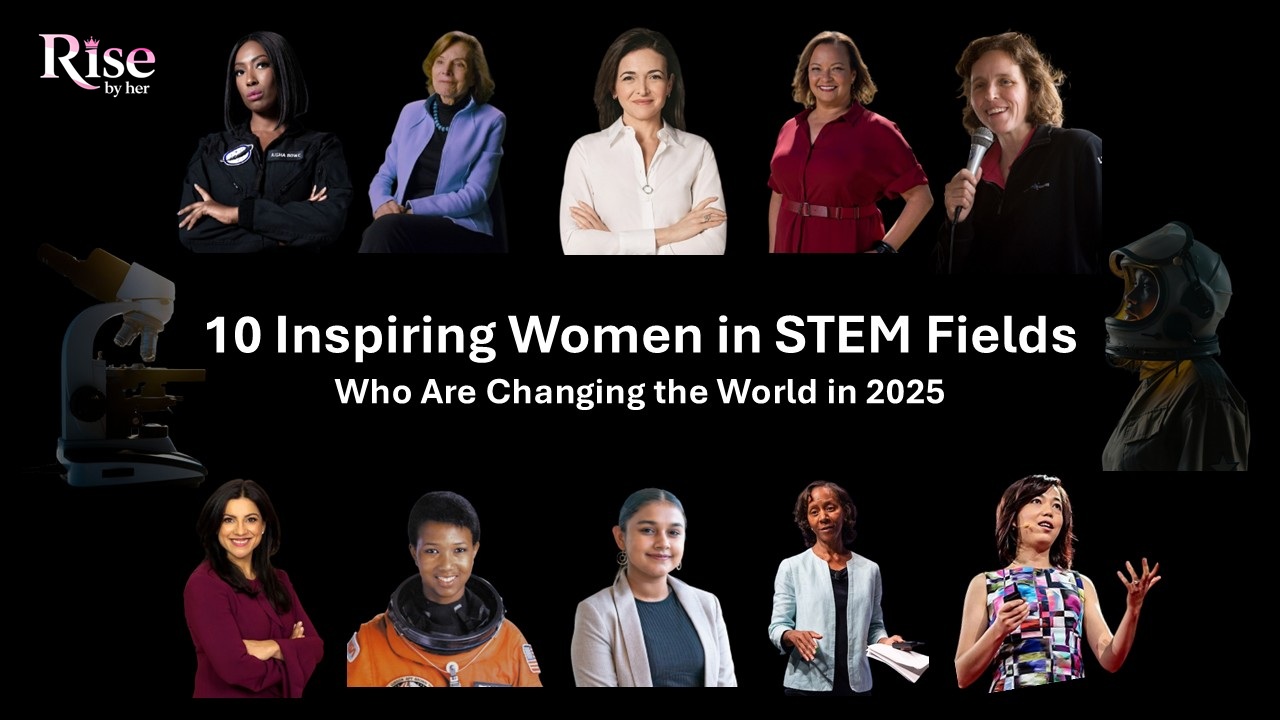
Women in STEM are leading some of the most important breakthroughs of our time. From artificial intelligence and clean energy to medical research and space exploration, they are shaping the future with bold ideas and remarkable innovation. This list highlights ten trailblazing women whose work in 2026 is advancing science, solving global problems, and inspiring a new generation of girls to pursue careers in STEM.
While women have always been integral to scientific and technological advancements, their contributions were often overlooked or underestimated. However, in recent years, the tide has turned. With the rise of influential programs, groundbreaking projects, and high-profile role models, women in STEM are now more visible than ever. They are leading the charge, solving some of the most pressing global challenges, and proving that diversity drives progress. In this post, we’ll spotlight 10 inspiring women in STEM fields who are changing the world in 2026. These incredible individuals are paving the way for future generations of women to pursue careers in science, technology, engineering, and mathematics, and they’re doing so with passion, purpose, and unwavering commitment. Whether you’re looking for inspiration or simply want to learn more about the women making history in STEM today, these profiles will leave you amazed and motivated.
How We Chose the Top Women in STEM This Year
With women still making up only about 35% of the global STEM workforce, representation isn’t just about statistics—it’s about survival in a rapidly evolving technological landscape. We didn’t pull these names out of a hat. Our selection process was rigorous, data-driven, and focused entirely on real-world outcomes.
To determine who truly shifted the paradigm, we evaluated hundreds of candidates across four specific benchmarks:
- Frontier Innovation: We prioritized women pioneering breakthroughs in 2026’s most critical sectors—specifically Generative AI ethics, quantum mechanics, climate tech infrastructure, and next-generation biotechnology.
- Measurable Global Impact: We looked for tangible results. This includes peer-reviewed research, scalable green tech innovations, major venture capital funding milestones, or technology deployed to underserved communities.
- Cultural and Policy Leadership: True leaders don’t just work in a lab; they change how the industry operates. Our list highlights women actively dismantling systemic barriers, advising global tech policy, and bridging the gender wage gap.
- The “Lift as We Climb” Factor: We heavily favored nominees who are explicitly dedicated to mentorship, providing resources, and keeping the pipeline wide open for the next generation of girls in tech.
10 Trailblazing Women in STEM Who Are Changing the World in 2026
The future isn’t just being built—it’s being rewritten. In 2026, the boundaries of what’s possible in science, technology, engineering, and math are shattering daily, driven by brilliant minds who refuse to accept the status quo. From the frontiers of spatial intelligence to the depths of our oceans, these leaders are solving the planet’s most urgent crises. Meet the 10 trailblazing women who aren’t just participating in the future; they are designing it.
1. Aisha Bowe – Aerospace Engineer and Entrepreneur

Aisha Bowe is an aerospace engineer and the founder of STEMBoard, a tech consulting firm focused on promoting diversity and creating job opportunities for underserved communities. She gained national recognition as one of the members of the historic all-female spaceflight crew on Blue Origin’s NS-31 mission in 2025. Bowe’s journey in STEM has been filled with numerous accomplishments, from working as an engineer at NASA to becoming an entrepreneur who advocates for greater inclusion in the tech industry. Her work not only furthers advancements in space exploration but also sets a path for future women in aerospace.
Notable Achievements:
- First African-American woman to start her own aerospace engineering firm
- Key figure in Blue Origin’s historic all-female spaceflight mission
2. Dr. Fei-Fei Li – AI Visionary and Professor

Dr. Fei-Fei Li is a professor of computer science at Stanford University, where she specializes in artificial intelligence (AI) and machine learning. As the co-director of Stanford’s Vision and Learning Lab, Li is one of the leading experts in the field of computer vision. Her work in AI aims to bridge the gap between human intelligence and artificial systems, developing algorithms that allow machines to understand the world as humans do. In 2025, Li’s work is being used in medical imaging, where AI is revolutionizing diagnostics and treatment planning.
Notable Achievements:
- Co-director of the Stanford Vision and Learning Lab
- Pioneering work in AI and machine learning that is transforming healthcare and robotics
3. Megan Smith – Former U.S. Chief Technology Officer and Innovator

Megan Smith served as the U.S. Chief Technology Officer under President Obama and is a former Google executive. In 2025, Smith continues her impactful work in the tech world, advocating for innovation and diversity in Silicon Valley. Her dedication to increasing the representation of women and minorities in STEM has inspired countless women to pursue careers in tech. Smith’s contributions in the public and private sectors have shaped policies that support women in technology, ensuring a future where everyone can have access to opportunities in the tech industry.
Notable Achievements:
- U.S. Chief Technology Officer (2014-2017)
- Advocate for gender equality and diversity in tech
- Founder of Shift7, a company aimed at creating scalable, diverse solutions
4. Marian Croak – Engineer and Inventor

Dr. Marian Croak is an engineer and Vice President of Engineering at Google. Croak is best known for inventing Voice over Internet Protocol (VoIP), which has revolutionized telecommunications by enabling voice calls over the internet. In 2025, Croak’s focus is on advancing artificial intelligence and machine learning to address global health challenges. Her groundbreaking work in AI has been instrumental in creating technology solutions that are improving healthcare systems worldwide.
Notable Achievements:
- Inventor of VoIP technology
- Advancing AI to improve global healthcare systems
5. Dr. Sylvia Earle – Marine Biologist and Explorer
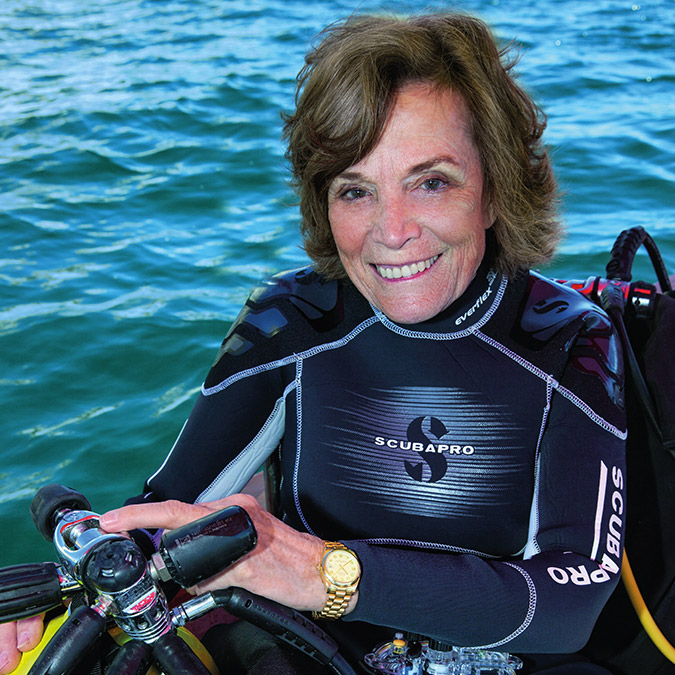
Dr. Sylvia Earle is a renowned marine biologist and one of the world’s leading ocean explorers. As a National Geographic Explorer-in-Residence, Earle has dedicated her life to understanding and protecting the world’s oceans. Her work in ocean conservation has had a profound impact on policies related to marine life preservation, and her advocacy for environmental protection has inspired many women to pursue careers in marine science. In 2025, Dr. Earle continues her efforts to promote sustainability and raise awareness about the importance of ocean health.
Notable Achievements:
- Founder of the Mission Blue initiative, which works to create marine protected areas
- Recipient of numerous prestigious awards for her conservation work
6. Dr. Lisa Jackson – Environmental Advocate and Technology Executive

Dr. Lisa Jackson is the Vice President of Environmental Initiatives at Apple and was previously the Administrator of the U.S. Environmental Protection Agency (EPA). In 2025, Jackson continues to lead efforts to integrate environmental sustainability into technology products. Under her leadership, Apple has become a global leader in sustainability, with ambitious goals for carbon neutrality. Her work focuses on how technology companies can mitigate their environmental impact and contribute to a greener planet.
Notable Achievements:
- Former Administrator of the U.S. EPA
- Leader in integrating sustainability practices into technology companies
7. Sheryl Sandberg – Technology Executive and Author

Sheryl Sandberg is the former Chief Operating Officer (COO) of Facebook and the author of the bestselling book “Lean In”. Sandberg has long been a champion for women in leadership roles and has used her platform to encourage women to take on challenges and break through barriers. In 2025, Sandberg continues to advocate for women in technology, using her position to support women entrepreneurs and women in leadership roles across the world.
Notable Achievements:
- Former COO of Facebook
- Advocate for women in leadership and technology
8. Reshma Saujani – Founder of Girls Who Code

Reshma Saujani is the founder of Girls Who Code, a nonprofit organization aimed at closing the gender gap in technology. Through her work, Saujani has reached millions of girls worldwide, inspiring them to pursue coding and other STEM disciplines. In 2025, Girls Who Code continues to be a leader in empowering young women to enter tech fields, and Saujani remains a powerful voice in the movement for gender equality in STEM.
Notable Achievements:
- Founder of Girls Who Code
- Author of “Brave, Not Perfect”
9. Gitanjali Rao – Innovator and Time Magazine’s Kid of the Year

Gitanjali Rao is a young inventor who was named Time Magazine’s Kid of the Year in 2020. At just 15 years old, Rao invented a device called Tethys, which helps detect lead in drinking water. By 2025, Rao’s innovations continue to impact the world, and she is a rising star in STEM. Her work highlights the importance of young women in tech and inspires others to innovate for social good.
Notable Achievements:
- Time Magazine’s Kid of the Year (2020)
- Inventor of Tethys, a device to detect lead in drinking water
10. Dr. Mae Jemison – Physician, Engineer, and Former NASA Astronaut
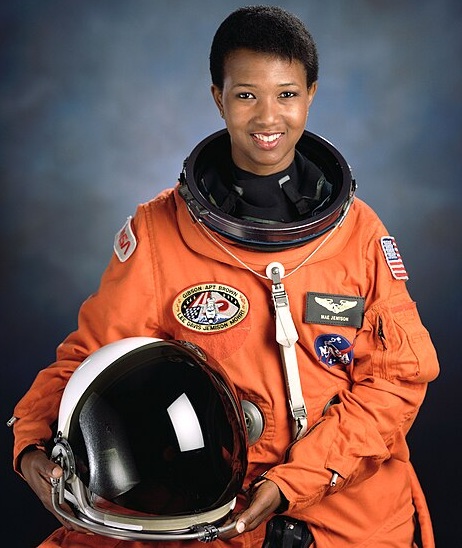
Dr. Mae Jemison is a physician, engineer, and former astronaut who made history as the first African American woman to travel into space. Since leaving NASA, Jemison has dedicated herself to promoting STEM education, especially for girls and minorities. Her foundation, the Jemison Group, focuses on integrating science and technology with social good, and she continues to inspire future generations of women in STEM to pursue careers in science, engineering, and space exploration.
Notable Achievements:
- First African American woman in space
- Founder of the Jemison Group, which promotes STEM education and social impact
Leading STEM Fields Where Women Are Making the Biggest Impact
The days of women being sidelined as “exceptions” in tech labs are officially over. In 2026, women aren’t just participating in the modern scientific revolution—they are architecting it. As venture capital shifts toward deeply technical, high-utility industries, female engineers, researchers, and founders are dominating the frontiers of high-growth tech.
If you want to know where the most profound societal shifts are happening right now, look at these three pillars where women are driving the agenda.
Artificial Intelligence and Ethics
The initial gold rush of Generative AI focused purely on speed and scale; 2026 is the year of governance, accountability, and spatial intelligence. Women are leading the charge in ensuring that machine learning systems are unbiased, secure, and equitable. From developing frameworks for “explainable AI” (XAI) to pioneering computer vision that respects privacy, female data scientists are translating ethical theory into hard-coded guardrails. Without this leadership, the commercial scalability of AI would grind to a halt under regulatory pressure.
Climate Tech and Sustainable Engineering
Solving the climate crisis requires structural engineering, not just policy papers. Women are at the forefront of the 2026 green tech boom, engineering breakthroughs in grid-scale battery storage, carbon capture optimization, and circular industrial design. By marrying deep tech with environmental necessity, female founders and mechanical engineers are proving that sustainability isn’t a corporate marketing metric—it’s the fastest-growing economic sector of our decade.
Biotechnology and Personalized Medicine
The one-size-fits-all model of healthcare is rapidly becoming obsolete. In biotech labs across the globe, women are spearheading the shift toward hyper-personalized therapeutics. Through the integration of CRISPR gene editing, mRNA delivery mechanisms, and AI-driven protein folding, female immunologists and bioinformaticians are developing targeted cures for rare diseases and cancer. Their work in 2026 is fundamentally shifting the medical paradigm from reactive treatment to proactive, genetic prevention.
Top Challenges Women Face in STEM (And How to Overcome Them)
While progress is undeniable, the playing field in STEM is far from level. Systemic friction, cultural inertia, and institutional gaps still force brilliant women to navigate an obstacle course that their male peers rarely encounter. Retaining female talent in technical roles isn’t just a diversity goal; it is a business imperative.
If we are going to fix the leaky pipeline, we have to look directly at the friction points holding women back—and deploy actionable, strategic blueprints to dismantle them.
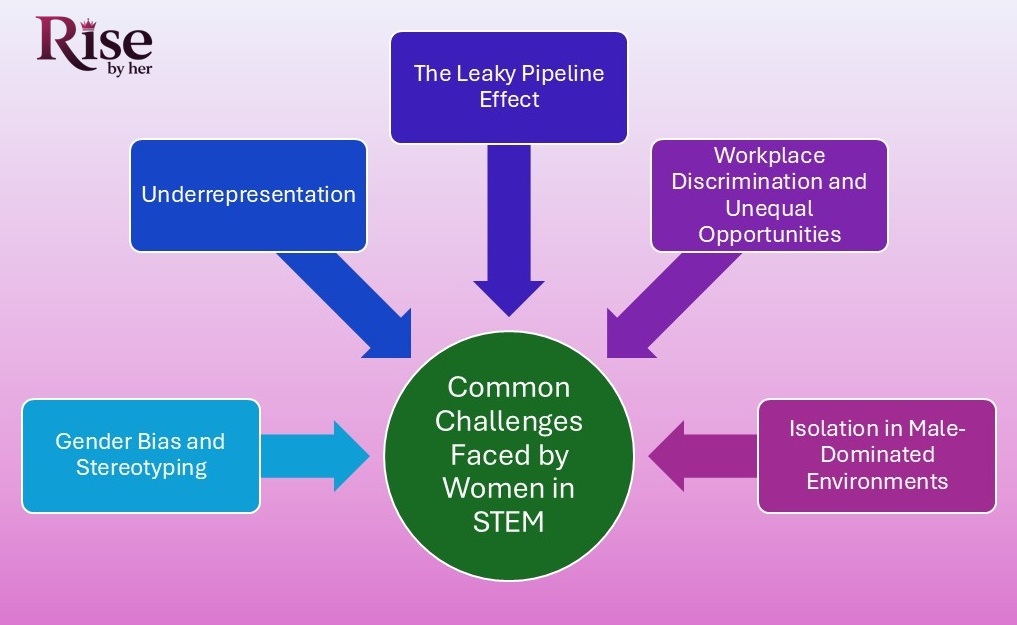
Breaking Through the Glass Ceiling in Tech Leadership
Despite filling entry-level technical roles at higher rates than ever, women remain severely underrepresented in the C-suite and on board seats. The transition from senior engineer to director or VP is often blocked by opaque promotion criteria and informal “sponsorship networks” that exclude women.
- How to Overcome It: Shift from seeking mentors to securing sponsors. While mentors give advice, sponsors hold decision-making power and actively advocate for you behind closed doors. For organizations, the fix requires institutional restructuring: replacing subjective promotions with standardized, data-driven performance metrics and establishing formal sponsorship programs that pair high-performing female engineers with executive leadership.
Overcoming Imposter Syndrome and “Bro-Culture”
Imposter syndrome isn’t an inherent psychological flaw in women; it is a natural reaction to a highly exclusionary environment. When tech teams, hackathons, and boardrooms are dominated by an insular “bro-culture,” women are subtly (and sometimes overtly) signaled that they do not belong. This chronic underestimation leads to burnout and premature exits from technical tracks.
- How to Overcome It: Reframe the narrative. Recognize that feeling like an outsider is an environmental symptom, not a personal deficit. Build micro-communities—both within your company and through broader networks like Women Who Code or local tech councils—to validate your experiences. For leadership, eliminating this friction means aggressively auditing team dynamics, penalizing microaggressions, and building psychological safety into the engineering culture.
Bridging the STEM Wage and Funding Gap
The financial disparity in STEM exists on two fronts: the persistent gender wage gap for corporate employees and the abysmal venture capital allocation for female founders. Female tech entrepreneurs consistently receive less than 3% of total venture capital funding, starving viable, deeply technical, female-led startups of the liquidity they need to scale.
- How to Overcome It: For professionals, counter the wage gap with aggressive, market-backed salary negotiations, leveraging transparent compensation data from platforms like Levels.fyi. For founders, navigating the funding gap requires targeting female-led VC firms, angel syndicates specifically dedicated to diversity in deep tech, and equity-free government innovation grants. Ultimately, the industry must hold investment funds accountable by demanding transparency in their portfolio demographics.
How to Launch a STEM Career from Scratch: A Step-by-Step Guide
Breaking into STEM doesn’t require a lifetime of coding or an elite pedigree; it requires a strategic framework. The tech and engineering landscape is highly meritocratic—if you can prove you can solve problems, the industry has a place for you. Whether you are pivoting from a non-technical background or starting completely from zero, this blueprint outlines the exact tactical phases needed to build a high-velocity STEM career in today’s market.
Step 1. Identify Your Passion and Tech Interests
STEM is a massive ecosystem. Trying to learn “everything” is a fast track to burnout. Your first objective is to locate the intersection of what you enjoy and what the market demands. Are you drawn to logic, data, and patterns? Look into Data Science or Backend Engineering. Do you have an eye for human behavior and design? Consider UI/UX Architecture or Product Management. Identify your target domain early so your learning path remains razor-focused.
Step 2. Build Foundational Skills via Bootcamps and Degrees
You do not need a four-year computer science degree to break into the industry, but you do need structured, rigorous technical literacy. Choose a pathway that matches your budget and timeline:
- The Academic Route: Traditional degrees offer deep theoretical foundations and robust alumni networks.
- The Accelerated Route: Reputable, project-based coding bootcamps or specialized technical certification tracks (like AWS, Google Cloud, or specialized AI/Data analytics certifications) fast-track your practical readiness for entry-level roles.
Step 3. Find Mentors and Peer Role Models
You cannot be what you cannot see. Navigating technical fields alone is incredibly taxing, which makes finding a mentor non-negotiable. Look for professionals who are 2 to 3 years ahead of where you want to be—they remember the entry-level struggle vividly and can offer the most practical, actionable advice. Reach out via LinkedIn with highly specific, respectful questions rather than generic “Can I pick your brain?” requests.
Step 4. Gain Hands-On Experience with Open-Source or Personal Projects
In STEM, your portfolio is your true resume. Employers care far more about what you have built than where you went to school.
- Build public repositories: Launch personal projects on GitHub that solve real problems.
- Contribute to open-source: Fix bugs or add features to existing open-source software. This proves you can read, understand, and collaborate on a codebase written by other engineers—a massive green flag for hiring managers.
Step 5. Join Supportive Communities
Women in STEM thrive in communities where they can share challenges, celebrate successes, and access resources. Join forums, clubs, and supporting organizations like Society of Women Engineers (SWE) or Women Who Code to stay inspired and connected.
Isolation kills momentum. Surround yourself with networks designed to uplift women in technology. Dive into global or regional professional communities like AnitaB.org, regional tech meetups, and specialized forums. These spaces are goldmines for unadvertised job listings, hackathons, interview prep partnerships, and emotional support when the learning curve gets steep.
Step 6. Stay Adaptable and Keep Upskilling
STEM is constantly changing. Stay updated with the latest trends, technologies, and research. Lifelong learning ensures that your skills remain relevant and positions you for growth and leadership opportunities.
The tech stack you learn today will evolve tomorrow. In a landscape shaped by rapid shifts in machine learning, cloud architecture, and automation, your most valuable asset is your meta-learning capability—your ability to learn how to learn. Treat upskilling as a routine business practice. Dedicate a few hours every week to exploring emerging tools, framework documentation, and industry trends to keep your skill set highly competitive.
If you’re ready to grow in tech or science, Women in STEM: How Reskilling Unlocks Limitless Opportunities shows how building new skills can open doors to better career opportunities.
Step 7. Embrace Risk and Apply Anyway
Data consistently shows that women rarely apply for jobs unless they meet 100% of the listed qualifications, while men apply when they meet roughly 60%. Job descriptions are wish lists, not rigid mandates. If you meet the core requirements and possess the foundational capacity to learn the rest on the job, send the application. Lean into the discomfort of the unknown, master the behavioral interview, and let your portfolio speak for itself.
The Future of Women in STEM: Opportunities and Emerging Careers
The jobs of tomorrow are being built on interdisciplinary frameworks that barely existed a decade ago. As computational power scales and societal challenges deepen, the highest-growth career paths are carving out spaces where data science, physical engineering, and biology converge.
For women entering or pivoting into STEM, targeting these frontier industries offers a massive competitive advantage: a blank slate free from decades of legacy bias, where technical innovation is valued above all else. If you want to future-proof your career, these are the leading domains to watch.
Quantum Computing Specialists
We are moving rapidly past the limits of classical silicon-based computing. With tech giants successfully introducing advanced quantum processors, the race for “quantum supremacy” has turned into a commercial gold rush. This has triggered an unprecedented demand for specialized talent capable of developing quantum-resistant security and optimizing complex systems.
- The Opportunities: Key emerging tracks include Quantum Software Developers who build logic pipelines via frameworks like Qiskit, Quantum Cryptography Experts designing the post-quantum encryption protocols that protect global financial systems, and Quantum Machine Learning Engineers marrying quantum architecture with massive AI neural networks.
- Core Skills Needed: Linear algebra, quantum mechanics fundamentals, Python programming, and advanced algorithmic design.
Climate Adaptation Engineers
While climate mitigation focuses on stopping future damage, climate adaptation is the engineering discipline dedicated to protecting humanity from the immediate infrastructure risks of extreme weather, rising sea levels, and shifting global ecosystems. Private industries, municipalities, and global engineering firms are hiring aggressively to fortify their real-world assets.
- The Opportunities: As a Climate Adaptation Engineer or Resilience Specialist, your work involves using predictive climate models and Geographic Information Systems (GIS) to redesign civil infrastructure, audit corporate supply chain vulnerabilities, optimize grid-scale battery storage, and engineer circular, sustainable industrial environments.
- Core Skills Needed: Environmental engineering, predictive data analytics, structural simulation tools, GIS software, and deep knowledge of global ESG regulatory frameworks.
Bioinformaticians and AI Clinicians
The intersection of medicine and data science is undergoing its most profound shift since the decoding of the human genome. Thanks to milestones like DeepMind’s AlphaFold, we no longer just analyze biological systems—we model them predictive-first. This has created high-yield hybrid roles that bridge laboratory wet labs and algorithmic execution.
- The Opportunities: High-impact careers include AI Bioinformatics Analysts who train neural networks on genomic, transcriptomic, and multi-omic datasets, Genomic Model Developers utilizing PyTorch or TensorFlow for accelerated drug discovery, and AI Clinical Bioinformaticians who translate complex computational findings directly into EHRs (Electronic Health Records) to help oncologists prescribe hyper-personalized therapies.
- Core Skills Needed: Proficiency in R or Python, machine learning frameworks, data curation, and familiarity with clinical interoperability standards like HL7 and FHIR.
Frequently Asked Questions About Women in STEM
To rank for highly competitive featured snippets and “People Also Ask” (PAA) boxes, your answers must be direct, factually accurate, and structured with clear semantic data.
Here are the optimized answers to the most critical search queries regarding women in technology and engineering this year.
What percentage of STEM workers are women in 2026?
Women make up approximately 35% of the global STEM workforce. While women represent nearly half of the total workforce worldwide, their representation within specific technical fields remains uneven. Women lead significantly in healthcare and life sciences, holding roughly 75% of positions, but they remain highly underrepresented in technology and computing, where they account for 26% to 35% of roles. In engineering and specialized artificial intelligence tracks, female representation drops even lower, sitting between 15% and 30% globally.
What is the highest-paying STEM field for women?
The highest-paying STEM field for women is computer and information research science, specifically specialized roles in artificial intelligence (AI) and machine learning (ML). Tech leadership, advanced cloud architecture, and specialized engineering tracks consistently lead the market in total compensation. AI and machine learning engineers command median annual salaries ranging from $135,000 to over $170,000, while software architects and data scientists follow closely with median salaries firmly established between $112,000 and $150,000 per year.
How can companies support women in tech and engineering?
Companies can support women in tech by implementing formal executive sponsorship programs that actively champion mid-level female engineers for leadership positions and board assignments. Organizations must also standardize promotion tracks with objective, data-backed performance metrics to fix the career drop-off at the initial manager level. Performing transparent annual compensation audits to eliminate gender pay gaps and fostering an engineering culture built on psychological safety and flexible hybrid work models are equally critical steps to retaining high-performing female talent.
Why do women leave STEM careers?
Women leave STEM careers primarily due to isolation, a lack of transparent promotion pathways, and exclusionary corporate cultures often described as “bro-culture.” Up to 40% of women leave technical paths within 5 to 7 years, citing systemic friction such as severe underrepresentation in leadership, unequal pay, and a lack of executive sponsorship. This high turnover rate is driven by environmental factors and structural barriers rather than a loss of interest or technical capability in the subject matter.
What are the best scholarships for women in STEM?
The best scholarships for women in STEM include the Science, Mathematics, and Research for Transformation (SMART) Scholarship, the Society of Women Engineers (SWE) Scholarships, and the Palantir Women in Technology Scholarship. Additionally, major tech companies fund prestigious awards like the Google Anita Borg Memorial Scholarship and the Generation Google Scholarship, which offer significant financial aid and direct networking access to undergraduate and graduate female students pursuing degrees in computer science and engineering.
Who was the first woman to win a Nobel Prize in science?
Marie Curie was the first woman to win a Nobel Prize in science, receiving the Nobel Prize in Physics in 1903 alongside her husband Pierre Curie and physicist Henri Becquerel for their groundbreaking investigations into radiation. She later became the first person and remains the only woman to win two Nobel Prizes, securing the Nobel Prize in Chemistry in 1911 for her discovery of the elements radium and polonium, which fundamentally revolutionized the field of nuclear physics.
How does diversity in STEM impact innovation?
Diversity in STEM impacts innovation by introducing a wider array of perspectives, which directly expands the scope of problem-solving and accelerates scientific discovery. Research consistently proves that diverse engineering and research teams are significantly more likely to identify product flaws, minimize algorithmic bias in artificial intelligence systems, and develop highly creative solutions for global challenges. Outdated or homogeneous tech development pipelines frequently overlook critical consumer demographics, making inclusive teams a vital driver for commercial market success and robust public safety.
Final Thoughts: Inspiring the Next Generation of Women in STEM
Women in STEM fields are not only shaping the future (they’re redefining it). From space missions and AI breakthroughs to climate solutions and life-saving technologies, the impact of women in science, technology, engineering, and mathematics is undeniable. The ten incredible women we’ve highlighted in this post are just a glimpse of the innovation, resilience, and brilliance that women bring to STEM every day.
Yet, despite the progress, gender gaps persist. Many talented women still face systemic challenges that make it harder to enter, stay, and thrive in STEM careers. Addressing these barriers isn’t just a matter of fairness, it’s essential for global progress, innovation, and equity.
By supporting initiatives that promote gender diversity in STEM (such as mentorship programs, inclusive hiring practices, and STEM education for girls) we can help create a world where every woman has the opportunity to reach her full potential. You can make a difference by:
- Sharing stories of women in STEM on your platforms
- Encouraging young girls to explore science, coding, engineering, and math
- Donating to organizations that support STEM education for girls
- Advocating for equality and inclusion in your own workplace
The future of STEM is diverse, inclusive, and powered by women. Let’s be part of the movement that makes sure every young girl knows that she belongs in STEM, and that she can change the world.
By Aveline Lowell
Founder & Editor-in-Chief, RiseByHer
Aveline Lowell writes research-driven content covering women’s finance, entrepreneurship, STEM, technology, and career growth. Her work focuses on practical, well-researched information that helps women make informed decisions.
Editorial & Disclaimer: RiseByHer aims to provide accurate, well-researched, and up-to-date information. Articles are reviewed and updated when necessary and are intended for general informational and educational purposes, not personalized financial, legal, tax, or professional advice.