
When Malala Yousafzai stood before the United Nations after surviving an assassination attempt, she didn’t ask for sympathy—she demanded access to blackboards and textbooks for millions of silenced young girls. Her story, like countless others across the globe, proves a fundamental truth: real empowerment isn’t a passive concept or a corporate buzzword. It is an active, persistent movement driven by individuals who choose to challenge systemic barriers, disrupt outdated norms, and create opportunities where none existed before.
Whether it is a mathematician calculating orbital mechanics at NASA, a founder bootstrapping an idea into a billion-dollar brand, or a survivor organizing grassroots peace networks in conflict zones, inspiring women empowerment stories share a common thread: they turn personal resilience into community-wide progress.
Below is an overview of the key figures highlighted in this guide, showcasing how individual courage scales into lasting global impact across education, business, STEM, and advocacy.
What Defines a Modern Women’s Empowerment Story?
Historically, stories about women’s achievements often focused on isolated success—celebrating the rare “first” woman to break into a male-dominated field. Today, the definition of an empowering women story has shifted from individual exception to structural change. A modern empowerment story does not end when a woman overcomes a personal or professional barrier; it shows how her triumph creates a framework that lifts others up with her.
These stories offer concrete proof that equity is achievable across education, business, STEM, and civic life. They move beyond vague inspiration, demonstrating how individual resilience transforms into measurable, long-term progress for entire communities.
The 3 Pillars of Modern Empowerment
- Scalable Impact over Individual Success: True empowerment turns personal victory into collective opportunity. Whether it is building a global nonprofit, establishing an educational scholarship, or designing mentorship networks, modern leaders build systems that outlast their own accomplishments.
- Economic and Social Autonomy: Real empowerment requires access to real tools—financial self-sufficiency, bodily autonomy, quality education, and equal representation in decision-making spaces.
- Systemic Disruption: Instead of simply adapting to legacy institutions, modern stories highlight women who redesign outdated systems, challenge discriminatory policies, and create more inclusive environments.
At-a-Glance: Leaders Driving Global Change
| Leader | Primary Industry / Sector | Measurable Impact & Achievement | Core Driving Quality |
|---|---|---|---|
| Malala Yousafzai | Education & Human Rights | Co-founded the Malala Fund; youngest Nobel Peace Prize laureate advocating for universal girls’ education. | Unyielding Advocacy |
| Sara Blakely | Business & Entrepreneurship | Bootstrapped Spanx into a $1.2 billion enterprise with $5,000 in personal savings without initial outside funding. | Grounded Innovation |
| Katherine Johnson | STEM & Aerospace | Calculated crucial trajectory path data for Apollo 11 and John Glenn’s orbital spaceflights at NASA. | Technical Mastery |
| Alaa Murabit | Peace & Global Security | Founded Voice of Libyan Women; served as a UN High-Level Commissioner advancing women’s participation in peace processes. | Strategic Diplomacy |
| Angeline Murimirwa | Education & Grassroots Growth | CEO of CAMFED; scaled educational support networks to reach millions of girls across Sub-Saharan Africa. | Community-Led Leadership |
| Anne-Marie Imafidon | Tech & Youth Empowerment | Co-founded Stemettes; mentored and guided over 60,000 young women exploring careers in STEM fields. | Inclusive Disruption |
Women Transforming Education and Local Communities
Access to education remains one of the most effective catalysts for economic independence and community development. Worldwide, persistent barriers like poverty, regional conflict, and discrimination continue to keep millions of girls out of the classroom. These empowering women stories illustrate how targeted local action and global advocacy break down structural hurdles to create sustainable learning opportunities.
Malala Yousafzai: Advocating for Universal Girls’ Education
After surviving a targeted attack for attending school in Pakistan, Malala Yousafzai became a global champion for educational rights. Co-founding the Malala Fund, she works to secure 12 years of free, safe, and quality education for every girl. As the youngest Nobel Peace Prize laureate, her efforts direct critical funding toward local educators and policy reforms in regions where girls face extreme barriers, including Pakistan, Afghanistan, and Nigeria.
Angeline Murimirwa: Expanding Education Access Across Africa
As one of the first girls supported by CAMFED (Campaign for Female Education) in Zimbabwe, Angeline Murimirwa experienced how poverty restricts potential. Now serving as CEO of CAMFED, she leads initiatives that have helped millions of girls across Sub-Saharan Africa complete their schooling.
- Community-Led Growth: Oversees a network of over 200,000 CAMFED alumnae who mentor students and fund local school fees.
- Economic Reinvestment: Demonstrates how educated young women reinvest resources directly back into their hometowns.
Angela Ghayour: Fighting for Afghan Girls’ Right to Learn
When secondary education for girls was banned in Afghanistan in 2021, educator Angela Ghayour founded the Herat Online School. Operating remotely, her digital platform delivers free lessons in subjects ranging from mathematics and science to coding, utilizing volunteer teachers worldwide to preserve learning for girls confined to their homes.
Alexia Hilbertidou: Empowering Young Women in Tech and Leadership
To address the gender gap in STEM and corporate governance, Alexia Hilbertidou founded GirlBoss New Zealand at age 16. The initiative has grown into a community of over 13,500 young women. Through career accelerators and leadership workshops, she equips teenage girls with tangible skills to enter male-dominated industries, offering practical women empowerment examples for the next generation of leaders.
Women Building Businesses and Leading Careers
Female entrepreneurs and corporate executives face distinct funding and structural hurdles. Women-led startups continue to receive a fraction of total venture capital funding worldwide, yet female-founded companies consistently generate higher revenue per dollar invested. These empowering women stories illustrate how bootstrapping, strategic innovation, and inclusive capital are reshaping modern commerce.
Sara Blakely: Bootstrapping Spanx into a Billion-Dollar Empire
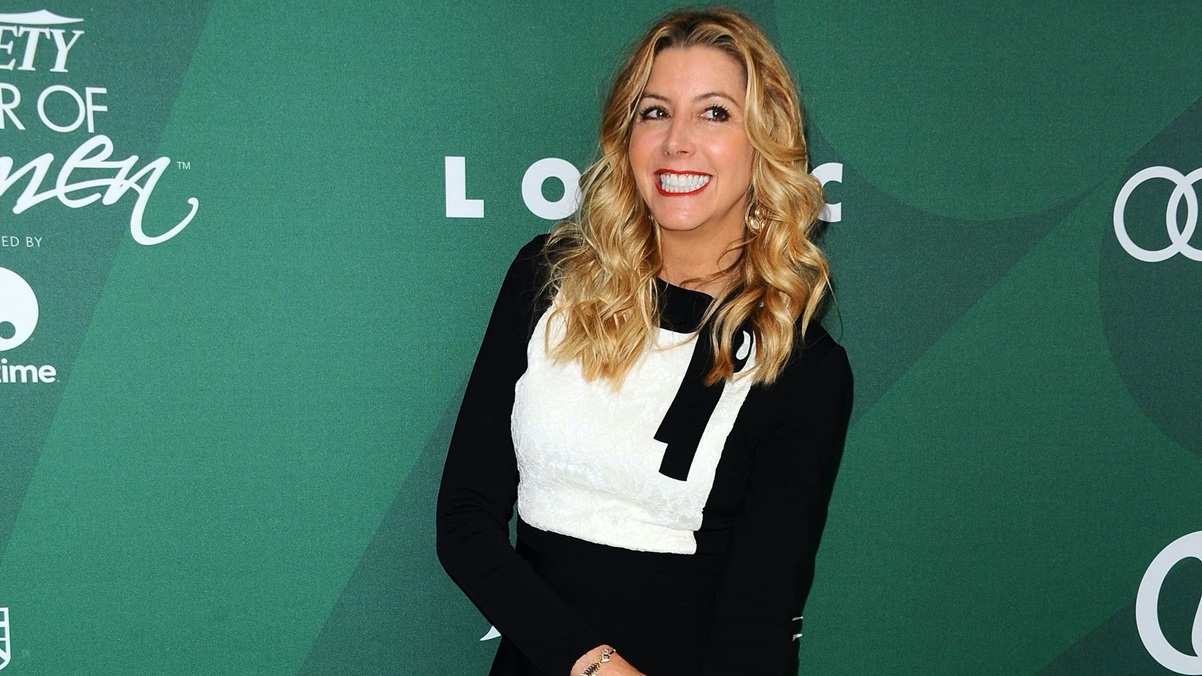
With just $5,000 in personal savings and no formal business background, Sara Blakely launched Spanx in 2000. She spent years researching patents, negotiating directly with manufacturing mills, and pitching her product on department store floors.
- 100% Ownership: Retained full ownership without taking early institutional capital.
- Historic Milestone: Became the world’s youngest self-made female billionaire in 2012, setting a precedent for independent business growth.
Whitney Wolfe Herd: Redefining Tech Leadership With Bumble
After leaving Tinder, Whitney Wolfe Herd recognized an unmet need in digital networking: an environment where women make the first move. She launched Bumble in 2014, expanding the platform from dating into professional networking (Bumble Bizz). In 2021, Herd became the youngest woman to take a major U.S. tech company public as CEO, demonstrating how product design tailored to women’s safety drives massive market success.
Jessica Alba: Building a Consumer Brand With The Honest Company
Frustrated by the lack of clear labeling and safe ingredients in household goods, actor Jessica Alba co-founded The Honest Company in 2011. Despite initial skepticism from traditional investors, she scaled the venture into a publicly traded consumer brand. Her journey offers tangible women empowerment examples of leveraging consumer advocacy to disrupt established retail markets.
Angela Benton: Opening Doors for Minority Tech Founders
Technologist Angela Benton launched NewME Accelerator in 2011 to address the stark lack of diversity in Silicon Valley funding. Her platform has helped underrepresented founders secure tens of millions of dollars in venture capital, providing minority-led tech startups with the capital, mentorship, and operational tools required to scale sustainably.
Women Breaking Barriers in STEM
Despite making up half the global workforce, women remain underrepresented in science, technology, engineering, and mathematics. The gender gap is especially pronounced in specialized roles, research leadership, and technical founding teams. These inspiring stories about women show how breakthrough achievements in laboratories, space programs, and classrooms continue to dismantle barriers for future generations.
Katherine Johnson: The NASA Mathematician Who Reached the Stars
During the height of the Space Race, mathematician Katherine Johnson calculated critical trajectory paths for NASA. Working through systemic racial and gender discrimination, her manual calculations proved vital for John Glenn’s 1962 orbital spaceflight and the historic Apollo 11 moon landing. Her legacy highlights how technical mastery opens doors in previously restricted fields.
Marie Curie: Pioneering Modern Physics and Chemistry
Marie Curie revolutionized scientific understanding through her research on radioactivity, discovering polonium and radium. Her discoveries laid the foundation for modern nuclear physics and medical cancer radiation therapy. She remains the only person to win Nobel Prizes in two distinct scientific disciplines—Physics in 1903 and Chemistry in 1911—and later became the first female professor at the University of Paris.
Anne-Marie Imafidon: Connecting Young Women to STEM Careers
To address the shortage of women in tech, computer scientist Anne-Marie Imafidon co-founded Stemettes in 2013. Having passed GCSE computing at age 11 and earned a master’s degree from Oxford at age 20, she now uses her experience to mentor teenage girls. Through her organization, she has enabled over 60,000 young women to gain practical exposure to coding, engineering, and digital entrepreneurship.
Dr. Segenet Kelemu: Advancing Sustainable Agriculture in Africa
Molecular plant pathologist Dr. Segenet Kelemu leads research on beneficial microorganisms that protect crops naturally against diseases. As Director General of the International Centre of Insect Physiology and Ecology, her work directly improves food security, crop yield, and soil health for smallholder farmers across Africa, serving as a powerful women empowerment example in agricultural science.
Aya Mouallem: Engineering Inclusive EdTech
Lebanese engineer and researcher Aya Mouallem designs accessible educational tools for marginalized and underrepresented communities. By co-founding All Girls Code, she runs hands-on hardware and programming bootcamps specifically tailored for young refugee women, demonstrating how engineering can directly serve humanitarian goals and bridge technological divides.
Women Overcoming Adversity and Creating Change
Personal hardship often acts as the catalyst for grassroots social reform. When women convert individual survival into collective action, they build protection networks and drive policy changes that benefit entire communities. These empowering women stories demonstrate how resilience in conflict zones, disaster recovery, and human rights advocacy fosters long-term structural progress.
Alaa Murabit: Championing Peace, Security, and Women’s Rights
Physician Alaa Murabit founded Voice of Libyan Women at age 21 during the 2011 Libyan revolution. Recognizing that sustainable peace depends on inclusive governance, she partnered with local religious leaders to advocate for women’s political participation and human rights. Her strategic approach eventually led to her appointment as a UN High-Level Commissioner for Health Employment and Economic Growth.
Editar Ochieng: Fighting Gender-Based Violence in Kibera
After surviving sexual assault in Nairobi’s Kibera settlement, Editar Ochieng established the Feminist for Peace Rights and Justice Centre. Her organization offers critical crisis intervention by operating safe houses, organizing legal support, and training local youth to monitor human rights violations in informal settlements.
Malvika Iyer: Turning Tragedy Into Disability Rights Activism
At age 13, Malvika Iyer survived a bomb blast in India that resulted in severe leg injuries and the amputation of both hands. Refusing to let trauma restrict her future, she earned a Ph.D. in social work and emerged as an international disability rights advocate focused on universal design, adaptive employment, and body positivity.
Bibi Aisha: Rebuilding Her Life After Abuse
Bibi Aisha gained international attention after appearing on the cover of Time magazine in 2010, bringing global awareness to human rights abuses under Taliban oppression. After receiving reconstructive surgery in the United States, she transformed her personal journey into an enduring symbol of survival and human rights defense.
Neema Namadamu: Mobilizing Women for Peace in the DRC
Polio survivor Neema Namadamu founded Maman Shujaa (Hero Women) in the Democratic Republic of the Congo. Her initiative equips women with digital literacy and internet access, allowing them to document human rights violations in conflict zones directly to international peace organizations.
What These Women’s Stories Teach Us About Empowerment
Examining these diverse trajectories reveals a consistent pattern: true progress occurs when individual resilience is backed by systemic support. Whether scaling a grassroots community program or funding a tech startup, successful initiatives move past passive encouragement and focus on removing structural barriers.
These narratives highlight four core principles that drive lasting change:
- Proximity Drives Effective Solutions: The most impactful leaders—like Angeline Murimirwa and Editar Ochieng—developed solutions based on their lived experiences within the communities they serve.
- Economic Independence is Foundational: Autonomy begins with financial security, technical training, and ownership, as demonstrated by bootstrapped entrepreneurs and STEM pioneers.
- Mentorship Creates Scalable Networks: Empowerment compounds when established leaders actively create pathways, funding opportunities, and platforms for the next generation.
- Policy and Cultural Reforms Must Align: Sustainable progress requires pairing local, grassroots action with high-level policy advocacy and legal protections.
Framework: 4 Steps to Cultivate Female Leadership
- Audit and Expand Access to Capital
Action: Allocate dedicated funding, micro-grants, or venture capital specifically for women-led initiatives and underrepresented founders. - Build Structured Mentorship & Technical Pathways
Action: Establish formal sponsorship programs in high-growth fields like STEM, business management, and civic governance to equip emerging leaders with practical skills and networks. - Design Inclusive, Safe Operational Environments
Action: Implement flexible workplace policies, equal pay audits, and zero-tolerance frameworks against gender-based discrimination and harassment. - Amplify Grassroots and Community-Led Solutions
Action: Partner directly with local, women-led non-profits and community advocates who understand the specific cultural and economic needs of their populations.
Frequently Asked Questions About Women’s Empowerment
What are real-life examples of women’s empowerment?
Real-life examples include Malala Yousafzai funding global girls’ education, Sara Blakely bootstrapping Spanx into a billion-dollar company, and Katherine Johnson calculating NASA spaceflight trajectories. Empowerment occurs whenever women gain the capital, education, or authority to dismantle systemic barriers and expand opportunities for others.
How do women overcoming adversity create community impact?
Survivors of hardship often convert personal adversity into organized advocacy. By opening local crisis shelters, organizing legal defense networks, and launching community-led education initiatives, they create targeted interventions that protect human rights and drive grassroots social stability.
Why are women empowerment stories essential for future leaders?
Documented stories of female achievement offer clear blueprints for navigating career and institutional hurdles. They dismantle historical gender biases, increase ambition among young women, and provide actionable strategies for entering male-dominated fields like STEM, tech, and corporate leadership.
What are the main pillars of women’s empowerment?
The four core pillars are economic independence, access to quality education, political representation, and personal safety/bodily autonomy. Strengthening these four areas gives women the agency to make self-directed life choices.
How does educating women benefit global economies?
Educating women directly increases household income, lowers infant mortality, and accelerates national GDP growth. According to global economic studies, countries that close the gender gap in education experience higher productivity, stronger innovation, and greater financial stability.
How can organizations actively support female leadership?
Organizations can support female leadership by conducting equal pay audits, establishing formal mentorship and sponsorship programs, funding female-led innovation, and implementing transparent promotion frameworks in executive management.
Conclusion: Honoring Women Who Are Reshaping Our World
The stories of the educators, founders, scientists, and human rights advocates highlighted in this guide prove that women’s empowerment is far more than an abstract ideal—it is a continuous engine of global progress. From classroom benches in rural villages to boardrooms and space labs, every barrier broken creates a precedent that makes the next victory possible.
Systemic change does not happen in isolation. It relies on a continuous chain reaction: individual courage sparks grassroots momentum, local initiatives drive institutional policy, and success stories inspire the next generation to lead. When we invest in women’s education, back female-founded ventures, and champion equal representation across every industry, we strengthen communities and economies as a whole.
Honoring these women means moving beyond passive admiration to active support. By sharing their achievements, mentoring emerging talent, and advocating for equitable opportunities in our own workplaces and communities, we help ensure that these inspiring stories are not rare exceptions—but the standard for generations to come.
By Aveline Lowell
Founder & Editor-in-Chief, RiseByHer
Aveline Lowell writes research-driven content covering women’s finance, entrepreneurship, STEM, technology, and career growth. Her work focuses on practical, well-researched information that helps women make informed decisions.
Editorial & Disclaimer: RiseByHer aims to provide accurate, well-researched, and up-to-date information. Articles are reviewed and updated when necessary and are intended for general informational and educational purposes, not personalized financial, legal, tax, or professional advice.