

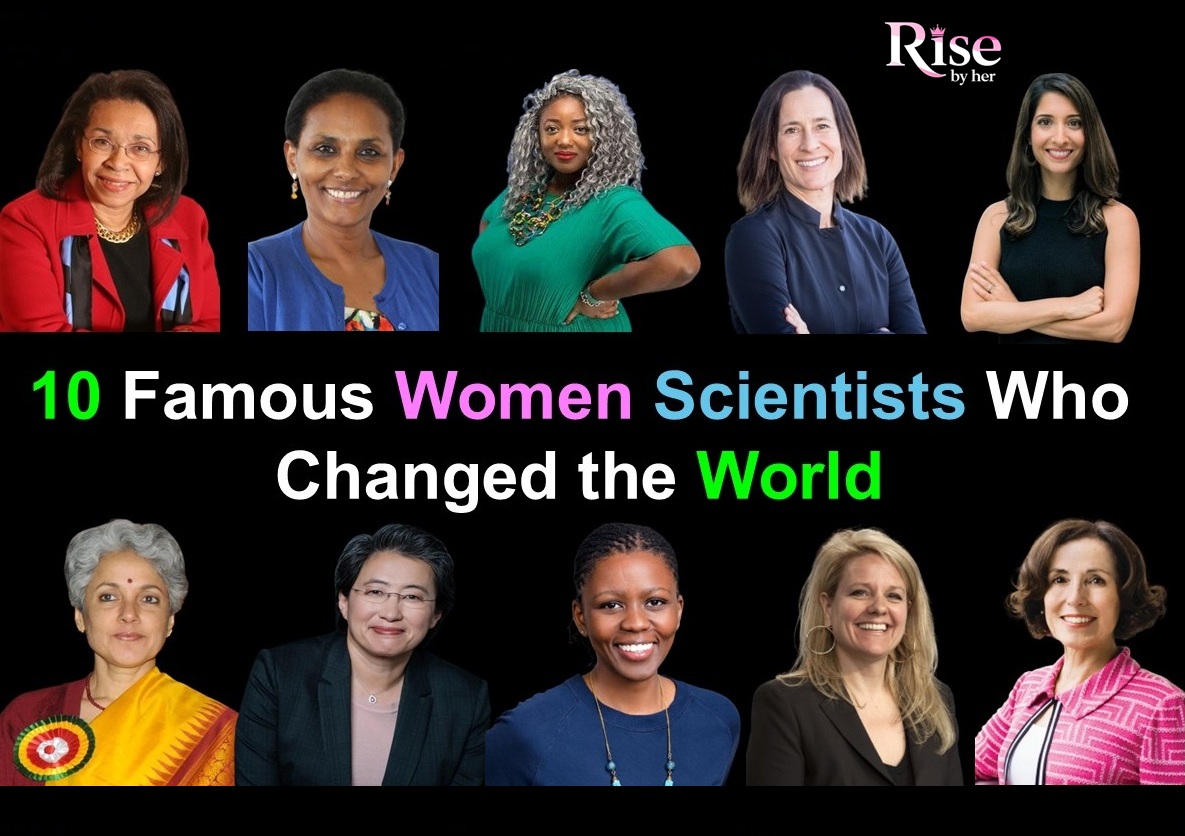
Across the globe, women are leading a powerful shift in the world of STEM. From high-tech labs to grassroots nonprofits, they are breaking barriers, reimagining innovation, and championing inclusion in science, technology, engineering, and mathematics. These leaders are not only thriving, but they’re also building systems of opportunity for others to follow.
This blog highlights remarkable women at the forefront of STEM organizations, whose global efforts are shaping the future of tech, education, and policy. Whether they’re launching impactful NGOs, heading international companies, or mentoring the next generation, their contributions prove that inclusive leadership drives real change. If you’re passionate about gender equity in STEM or simply want to be inspired by real-world impact, these stories will energize and empower you. Explore how these pioneering women are creating pathways, shifting paradigms, and making innovation accessible to all.
Top Global Women Leaders Advancing STEM Advocacy in 2026
Across the world, influential women leaders are driving policy change, research funding, and gender equity in science and engineering. These women-led STEM organizations are shaping international advocacy efforts and expanding opportunities for women in technology and research.
Why STEM Advocacy Matters on a Global Scale
- Advocacy bridges the gap between science and society.
- It influences education policies, funding, and international collaboration.
- Women advocates ensure that scientific solutions address issues affecting underrepresented communities.
Influential Women Advocates in STEM Fields
Here are some standout figures that make a global impact:
- Dr. Soumya Swaminathan
Former Chief Scientist at the World Health Organization, she promotes evidence-based policies and access to science for all, especially in global health. - Dr. Hayat Sindi
One of the first female Saudi scientists in biotechnology, she’s a UNESCO Goodwill Ambassador and founder of the i2 Institute for Imagination and Ingenuity, empowering youth in STEM. - Dr. France A. Córdova
Astrophysicist and former Director of the U.S. National Science Foundation, she’s an advocate for women’s leadership in scientific research and international collaboration. - Dr. Mónica López Hidalgo
A Mexican neuroscientist raising awareness about funding disparities and gender equity in Latin American science communities.
Global Initiatives Led by Women Advocates
Many of these women are behind powerful initiatives such as:
- Gender-responsive STEM education campaigns
- International mentorship programs
- Open science and inclusion policies at the UN, UNESCO, and World Bank
- Nonprofit organizations that fund girls in STEM in developing countries
These women are more than scientists; they’re strategic leaders shaping the future of global STEM ecosystems through inclusive advocacy.
Women-Led STEM Nonprofits Driving Innovation Worldwide
From climate research to AI ethics, women are leading powerful STEM nonprofits and NGOs that accelerate innovation. These organizations support scientific breakthroughs, promote diversity in STEM fields, and create global impact through mission-driven leadership.
Why Women-Led STEM Nonprofits Matter
- They tackle systemic issues such as gender bias in STEM education and hiring.
- Many operate globally, bridging opportunity gaps in low-resource settings.
- They promote hands-on learning, mentorship, and entrepreneurship in tech.
Influential Women Founders Leading the Charge
Here are some remarkable women transforming the world through nonprofit innovation:
- Reshma Saujani – Founder of Girls Who Code (USA)
Her organization has reached over 500,000 girls globally, closing the gender gap in computer science. - Anne-Marie Imafidon – Co-founder of Stemettes (UK)
Advocating for women in STEM since 2013, Stemettes offers free programs and mentoring across Europe. - Dr. Ronda Zelezny-Green – Co-founder of Panoply Digital (Global)
Focuses on mobile tech solutions to support women and girls’ education in underserved regions. - Dr. Segenet Kelemu – Director of the International Centre of Insect Physiology and Ecology (Kenya)
A champion for African women in science, she leads agricultural innovation impacting food security and sustainability.
Key Focus Areas of These Nonprofits
- STEM education for girls in marginalized communities
- Digital skills training and coding bootcamps
- Innovation hubs and incubators for women-led tech startups
- Global advocacy for inclusive science and research policies
Female Executives Leading Global Tech and Engineering Companies
Women CEOs and executives are transforming major technology and engineering companies in 2026. Their leadership influences AI development, sustainable engineering, biotech innovation, and inclusive workplace strategies across the global STEM ecosystem.
Why Female Executive Leadership Matters in STEM
- Women in executive roles challenge traditional power structures in tech.
- They prioritize ethical innovation, employee wellbeing, and gender equity.
- Their presence inspires the next generation of female engineers, developers, and tech founders.
Notable Women CEOs Making Waves in 2026
Here are standout leaders shaping the future of technology and engineering on a global scale:
- Gwynne Shotwell – President & COO of SpaceX (USA)
A key force behind the company’s global satellite internet expansion and Mars mission strategy. - Lisa Su – CEO of AMD (USA)
Renowned for revitalizing the semiconductor industry and leading breakthroughs in AI-powered processors. - Gita Gopinath – First Deputy Managing Director of the IMF (India/USA)
While not in tech per se, she influences global digital infrastructure and economic tech policy at a macro level. - Zhang Yaqin – AI expert and former President of Baidu (China)
Leads major innovation programs and tech startups focused on autonomous systems and smart cities. - Shivani Siroya – Founder & CEO of Tala (Global)
Leveraging fintech to deliver microloans via smartphone apps to underserved communities in over 40 countries.
Key Areas These CEOs Are Disrupting
- AI and machine learning in enterprise applications
- Space and aerospace innovation
- Semiconductor design and processing
- Fintech solutions for financial inclusion
- Sustainable engineering and smart infrastructure
These women are not only running billion-dollar companies but also reshaping industries and proving that female leadership delivers both purpose and profit in 2026’s global tech landscape.
Women Transforming STEM Education and Policy Globally
Access to STEM education remains a critical issue, and women leaders are at the forefront of reform. Through curriculum innovation, public policy initiatives, and scholarship programs, women-led organizations are expanding STEM opportunities for girls and underrepresented communities.
Why Policy and Education Leadership in STEM Matters
- Education policy determines who gets access to quality STEM instruction.
- Women in leadership positions bring equity-focused perspectives to system-wide reform.
- Their work creates sustainable pipelines for girls and marginalized groups to thrive in STEM fields.
Influential Women Leading STEM Education Reform
Some standout women shaping education and policy at a global level include:
- Dr. Shirley Malcom – Senior Advisor at the American Association for the Advancement of Science (USA)
A longtime advocate for inclusive STEM education and workforce diversity policies. - Dr. Maya Bundt – Chair of the CyberPeace Institute (Switzerland)
She influences digital safety education policies, particularly for youth and underrepresented communities. - Dr. Mmantsetsa Marope – Former Director of the International Bureau of Education (UNESCO)
Led global education transformation policies, including competency-based STEM learning for developing nations. - Dr. Ameenah Gurib-Fakim – Former President of Mauritius and biodiversity scientist
An advocate for STEM curriculum reform and science-based policy in Africa.
Global Impact of These Education Leaders
- Advancing gender equity in science curricula and classrooms
- Influencing national and international STEM education policies
- Leading initiatives in STEM teacher training and curriculum design
- Supporting cross-border partnerships for STEM access in low-income regions
These women are not only improving access to STEM; they’re reshaping what it means to learn, teach, and lead in a global digital age.
Grassroots Women Innovators Powering Local STEM Movements
Beyond large institutions, women are leading grassroots STEM initiatives that create change at the community level. These unsung heroines build coding programs, maker labs, and science mentorship networks that directly impact local innovation ecosystems.
The Power of Grassroots STEM Leadership
- Grassroots initiatives are often more adaptable, culturally relevant, and community-driven.
- Women leaders at the grassroots level focus on local problems create hands-on solutions.
- These movements build future STEM talent from the ground up, especially in underserved or rural regions.
Examples of Grassroots STEM Changemakers
Here are some impactful women leading local STEM movements:
- Sandra Cauffman – Costa Rican aerospace engineer and community advocate
Inspires youth in Latin America by leading local outreach programs focused on space science. - Dr. Rose Mutiso – Co-founder of the Mawazo Institute (Kenya)
Supports African women researchers and connects scientific research with grassroots policy and development. - Trisha Prabhu – Founder of ReThink (India/USA)
Created an anti-cyberbullying tech tool as a teen and advocates for digital literacy through school outreach. - Gladys Kalema-Zikusoka – Ugandan wildlife vet and conservationist
Uses STEM outreach to train communities on health-tech, conservation science, and biodiversity monitoring.
Key Characteristics of Their Impact
- Community-based STEM education and mentorship
- Development of low-cost, sustainable tech solutions
- Collaborations with local schools, NGOs, and youth groups
- Emphasis on inclusion, problem-solving, and empowerment through science
How Women in STEM Are Creating Opportunities for the Next Generation
Women in STEM are not only building careers, they are building pathways. Through mentorship programs, accelerator initiatives, and global networks, women-led organizations are ensuring the next generation of scientists, engineers, and tech leaders can thrive.
The Importance of Visible STEM Role Models
- Role models help young women envision themselves in STEM careers.
- They combat stereotypes by showing real-world examples of diverse success.
- Mentorship and visibility are proven to increase retention and ambition among girls in STEM education tracks.
How Women Leaders Are Making a Difference
These changemakers are actively creating opportunities through:
- Mentorship Programs: Many STEM leaders run or support structured mentorship programs to guide girls and young women through their education and early careers.
- Scholarships and Fellowships: Women-led foundations are funding formal education, bootcamps, and international training for aspiring scientists, engineers, and developers.
- Workshops and STEM Camps: Programs like Black Girls Code and Technovation Girls, led or supported by female leaders, offer hands-on learning for tech, robotics, and coding.
- Speaking Engagements and Media Representation: Through TED Talks, social media, documentaries, and public appearances, women in STEM are making their journeys visible to a global audience.
Lasting Impact on Future Generations
- Increasing the number of girls pursuing STEM degrees
- Building confidence and a sense of belonging in technical environments
- Empowering young women to become innovators, founders, and leaders
Conclusion
From boardrooms to classrooms and local communities, women-led STEM organizations are rewriting the story of global innovation. Their leadership proves that inclusion is not just a moral choice, it is a catalyst for progress. By driving change in education, technology, and policy, these women are building a world where innovation thrives through diversity, collaboration, and equity.
The impact of their work extends far beyond today’s breakthroughs. It lays the foundation for future generations of girls who will see themselves as scientists, engineers, and changemakers. As we celebrate these trailblazers, one truth stands clear: when women lead in STEM, the world does not just advance, it transforms.
Read more related articles on: Women in STEM and Tech

By Aveline Lowell
Founder & Editor-in-Chief, RisebyHer
Aveline Lowell is the Founder and Editor-in-Chief of Rise by Her, where she publishes research-driven content focused on women’s entrepreneurship, financial independence, and scalable income strategies. Her work covers profitable business models, grant opportunities, digital income growth, and strategic career advancement for modern women building sustainable wealth.
She is committed to providing structured, practical guidance that helps women make informed financial and business decisions.