
Starting a business is exciting, but also incredibly demanding. That’s why having the right co-founder can make all the difference. A strong co-founder brings not only complementary skills and energy to the table, but also emotional support, shared responsibility, and a partner in growth. For women-led startups, this partnership can be especially powerful.
Many women entrepreneurs face unique hurdles, like limited access to funding, underestimated leadership, or balancing family with business growth. The right co-founder can help you break through those barriers, share the weight of strategic decisions, and keep momentum when challenges arise.
But finding that person isn’t just about chemistry or convenience, it’s about alignment, vision, and trust. In this step-by-step guide, we’ll walk you through how to find, vet, and build with the right co-founder, so you can turn your idea into a strong, successful, and scalable business in 2025 and beyond.
Define Your Business Vision, Values, and Ideal Co-Founder Profile
Before you start searching for a co-founder, take time to understand what you truly need. You’re not just looking for talent. You’re looking for someone whose vision, values, and work style complement your own.
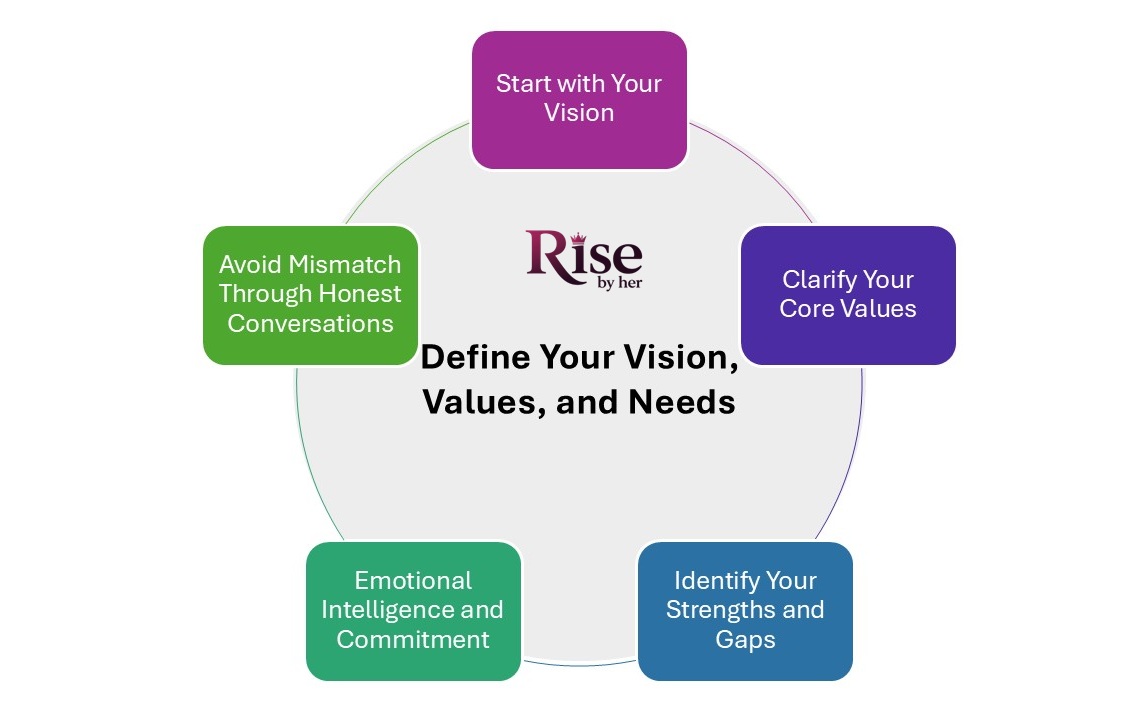
Start with Your Vision
What kind of business are you building? Is it a fast-scaling tech startup or a sustainable service-based brand? Do you want to raise venture capital or keep ownership close? Defining your vision helps you find someone who shares the same goals and understands the journey you’re committing to.
Clarify Your Core Values
Your business values will shape every decision you make. Think about what matters most to you. Is it innovation, transparency, community impact, or flexibility? A co-founder should respect those values and live by them. When your values are aligned, you build trust and avoid unnecessary conflict down the road.
Identify Your Strengths and Gaps
Look at what you’re good at and where you need help. Are you strong in operations but need someone with tech skills? Or maybe you’re creative and need someone with financial expertise. Knowing this helps you find a co-founder who balances your abilities instead of duplicating them.
Emotional Intelligence and Commitment
A great co-founder isn’t just smart. They are emotionally mature, resilient under pressure, and capable of having tough conversations. Also, talk about time and financial commitment early. Are they ready to go all in? Can they handle uncertainty? These questions are critical.
Avoid Mismatch Through Honest Conversations
Most co-founder problems come from misaligned expectations. Talk openly about how you make decisions, handle stress, and split responsibilities. It may feel awkward at first, but it will save you a lot of trouble later.
Key Skills and Traits Women Entrepreneurs Should Look for in a Co-Founder
Now that you’ve clarified your vision and values, it’s time to figure out the exact qualities your ideal co-founder should bring to the table. Think of this step as writing a Wishlist, not just for professional expertise, but for personal compatibility too.
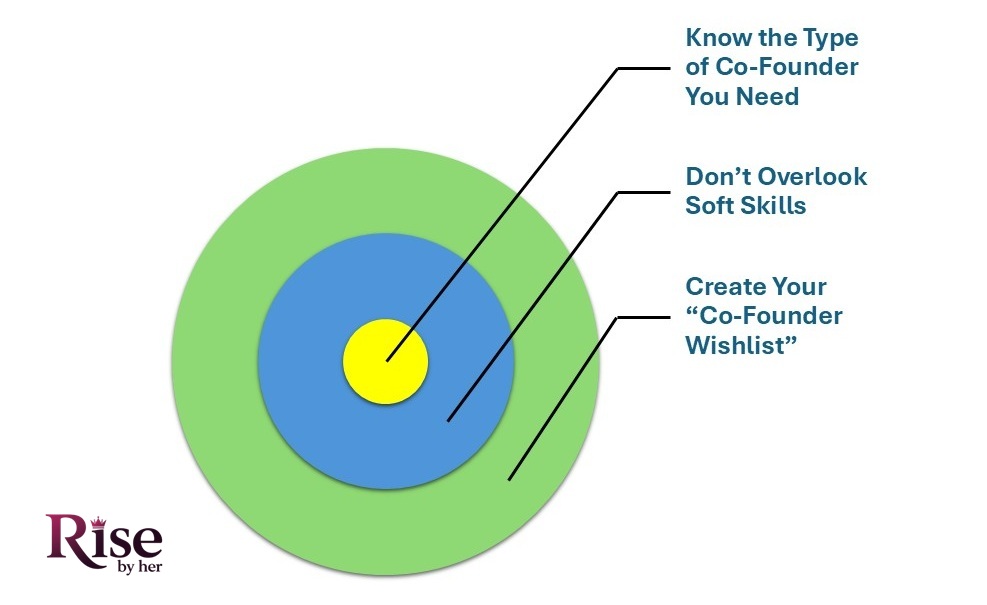
Know the Type of Co-Founder You Need
Start by identifying the skill gap in your business. Co-founders generally fall into three categories:
- Technical co-founders: Ideal if your product is tech-based, like an app or platform.
- Operational co-founders: Great for organizing systems, handling logistics, and managing the backend.
- Creative co-founders: Perfect if your business leans heavily on branding, design, content, or storytelling.
Figure out which area you lack in, then seek someone who complements that space.
Don’t Overlook Soft Skills
While technical or business skills are essential, soft skills can make or break your partnership. Look for someone who:
- Communicates clearly and honestly
- Handles feedback well
- Making decisions under pressure
- Can navigate conflict respectfully
- Is dependable and emotionally grounded
Trust, transparency, and emotional maturity are just as important as a stacked resume.
Create Your “Co-Founder Wishlist”
Take a moment to write down your ideal co-founder’s qualities. This includes both hard and soft skills, industry knowledge, work ethics, and communication style. Think of it as your filter, it will help you say yes to the right person and no to someone who’s not a good fit, even if they’re talented.
Being intentional here will save you time, reduce friction later, and give your business a much stronger foundation.
Best Platforms, Communities, and Networks to Find Your Ideal Co-Founder
Finding the right co-founder starts with knowing where to look. Luckily, in 2025, women entrepreneurs have more options than ever before.
- Online platforms are a great place to begin. Sites like CoFoundersLab, Y Combinator’s Startup School, and Indie Hackers offer spaces to connect with people actively looking to start or join businesses. You can browse profiles, filter by interests or skills, and reach out directly to potential co-founders.
- Networking remains powerful. Tap into LinkedIn, join local entrepreneur meetups, or attend startup weekends and pitch events. Accelerators and business incubators are also full of ambitious individuals looking to build the next big thing.
- Don’t forget women-focused communities like Elpha, Dreamers & Doers, or Women Who Startup. These groups are not only supportive but also full of high-caliber women looking to collaborate, partner, or build something meaningful.
Whether you go digital or in-person, the key is consistency. Show up, share your vision, and stay open to conversations. You never know who the right fit might be.

How to Vet Potential Co-Founders with Smart, Strategic Questions
Choosing the right co-founder is crucial for the success of your startup. Before you make any commitments, ensure that you and your potential partner are on the same page about key aspects of running the business. Here’s a list of essential co-founder interview questions that can help assess your compatibility:
What Are Your Long-Term Goals?
It’s essential to ensure that both of you are aligned in terms of the vision and direction of the company. Discuss your ambitions and the company’s future. Are you looking for quick growth, or are you aiming for long-term sustainability? Clarity here can help avoid conflicts later.
How Do You Handle Conflict Resolution?
Conflicts are inevitable in any business relationship. It’s important to know how your potential co-founder deals with disagreements or challenges. Do they prefer to discuss things openly, or are they more likely to avoid confrontation? Understanding their conflict resolution style can help you avoid friction down the road.
What’s Your Time Commitment?
Ensure that your co-founder is willing to dedicate enough time to the startup. Early-stage businesses often require intense effort. If one partner can’t meet the time expectations, it can cause strain. Talk about your expected work hours, and make sure you’re on the same page.
How Do You Feel About Financial Risk?
Starting a business often involves financial uncertainty. Discuss how comfortable your co-founder is with taking financial risks. Are they ready to make sacrifices, or are they only in it for the potential reward? This conversation helps avoid disagreements when tough decisions need to be made.
Test Your Compatibility with Co-Working
Before committing fully, consider working together on a project or a trial period. This helps you gauge your working style and assess whether you mesh well in a day-to-day startup environment. A short-term collaboration can reveal if you’re a good fit or if there are red flags.
Legal Agreements: Founder Agreements
Once you’ve found the right partner, it’s crucial to put everything into writing. A well-drafted Founder Agreement will outline each co-founder’s roles, responsibilities, and equity shares. It can also cover conflict resolution procedures, intellectual property rights, and exit strategies. This legal document will protect both parties and help prevent future disputes.
Make It Official: Legal and Financial Agreements for Co-Founders
Once you’ve found the right co-founder and are ready to take your startup to the next level, it’s time to get the legal and financial setup in place. This ensures you both have a clear understanding of each other’s roles, responsibilities, and expectations. Here are the essential legal steps to take:
Define the Equity Split
One of the first and most important aspects of your startup’s legal setup is deciding how to split the equity. It’s vital to discuss and agree on an equity split that reflects each co-founder’s contribution. This includes financial investments, time commitment, and expertise. Make sure the split is fair to both parties to avoid future disagreements.
Consider Vesting for Equity
Equity vesting is a mechanism that ensures co-founders earn their equity over time. Typically, equity vests over a 4-year period with a 1-year cliff. This means that if a co-founder leaves the company before the 1-year mark, they don’t get any equity. Vesting protects both parties by ensuring long-term commitment to the company. It also discourages co-founders from leaving early without fulfilling their obligations.
Draft a Co-Founder Agreement
A co-founder agreement outlines the roles, responsibilities, and expectations of each co-founder. This legal document is critical for defining what each person brings to the table and what will happen in case of disagreements or the eventual dissolution of the company. Key elements to include are equity shares, decision-making authority, IP ownership, dispute resolution processes, and exit strategies.
Leverage Legal Tools to Simplify the Process
There are several tools available to help you create legally binding documents without needing a lawyer for every step. Some popular options include:
- Clerky: Known for simplifying legal paperwork for startups, Clerky provides templates for equity agreements, co-founder agreements, and more.
- Gust Equity: This platform helps you manage and track equity splits, including vesting schedules, and offers templates for co-founder agreements.
- LegalZoom: A well-known service that offers affordable legal documents and business formation services, including co-founder agreements and equity splits.
These tools streamline the process and ensure that your legal setup is both correct and professional.
Tips for Avoiding Future Conflicts
To prevent legal and financial conflicts down the road, here are a few tips:
- Clear Communication: From the start, be transparent about your expectations and concerns. Regular check-ins can help avoid misunderstandings.
- Plan for the Worst-Case Scenario: Include clear exit strategies in your agreements. If one co-founder decides to leave or sell their shares, you’ll have guidelines in place.
- Get Everything in Writing: Even if you trust each other, having written agreements helps prevent future disputes. Trust is essential, but clarity and documentation provide protection for everyone involved.
Red Flags to Watch for When Choosing a Co-Founder
While finding the right co-founder can significantly boost your startup’s chances of success, choosing the wrong partner can have the opposite effect. It’s essential to watch out for co-founder red flags that might indicate your potential partner isn’t a good fit for your business. Here are some warning signs to be aware of:
Lack of Transparency
A co-founder who is secretive about their intentions, background, or financial situation can be a major red flag. Transparency is crucial in any business partnership. If your potential partner isn’t forthcoming about their plans, goals, or past business dealings, this could indicate future issues. Trust is the foundation of a strong partnership, and secrecy erodes that trust from the start.
Poor Communication
Effective communication is key to a successful startup partnership. If your co-founder struggles to communicate clearly, whether it’s about their ideas, progress, or issues, it can lead to frustration and misunderstanding. Regular, open communication helps both parties stay aligned, especially when challenges arise. A lack of communication, especially during critical moments, can signal deeper issues that might prevent the company from moving forward.
Inconsistent Commitment
Starting and running a business requires time, energy, and commitment. If your co-founder isn’t fully invested in the project or consistently shows a lack of commitment, it can become a serious issue. Inconsistent work habits or flaking on agreed-upon tasks could indicate that they’re not ready for the level of effort required to make the business succeed. This can lead to resentment and imbalance in the partnership.
Examples of Red Flags in Action
One real-world example comes from a startup founder who partnered with someone who, over time, showed a lack of commitment. Initially, they both agreed to split responsibilities evenly, but one partner consistently failed to meet deadlines or contribute equally. Over several months, the disparity in effort became too apparent to ignore. The founder found themselves taking on the bulk of the work, leading to burnout and frustration. Eventually, they had to walk away from the partnership, which delayed the company’s progress significantly.
How to Gracefully Walk Away If It’s Not a Fit
If you notice any of these red flags and decide that your co-founder is not a good fit, it’s important to handle the situation delicately. Here are some tips on how to walk away gracefully:
- Have an Honest Conversation: Discuss your concerns openly with your co-founder. Acknowledge the issues and share your perspective calmly. This will help avoid unnecessary hostility and confusion.
- Be Prepared to Make Changes: If you feel that the partnership isn’t working, consider the best path forward for both parties. It might involve negotiating an exit or restructuring the partnership.
- Offer Alternatives: If parting ways is the best solution, suggest alternatives, such as bringing in a new partner or offering the person a more passive role in the business.
- Keep It Professional: Even if the situation is difficult, remain professional. Avoid burning bridges. The business world is small, and you never know when paths might cross again.
Success Stories of Women Entrepreneurs Who Found the Right Co-Founder
Sara Blakely and Jesse Itzler – Spanx
Sara Blakely, founder of Spanx, partnered with Jesse Itzler, a co-founder of Zico Coconut Water. Their complementary skills, Sara’s product expertise and Jesse’s business acumen, helped scale Spanx into a billion-dollar brand.
Lesson: Find partners who complement your strengths.
“Collaboration is key.” – Sara Blakely
Whitney Wolfe Herd and Chris Gulczynski – Bumble
Whitney Wolfe Herd and Chris Gulczynski co-founded Bumble, blending Whitney’s experience from Tinder and Chris’s design skills. Their shared vision for a safe, empowering dating platform made Bumble a success.
Lesson: Shared values and vision are essential.
“Empowering women is our driving force.” – Whitney Wolfe Herd
Jessica Alba and Christopher Gavigan – Honest Company
Jessica Alba and Christopher Gavigan co-founded The Honest Company, creating eco-friendly and non-toxic products. Their partnership combined Jessica’s passion for wellness and Christopher’s sustainability expertise.
Lesson: Choose a co-founder who shares your passion and brings complementary skills.
“We’re focused on making a real difference.” – Jessica Alba
Tracy Chou and Megan Holcomb – Project Include
Tracy Chou and Megan Holcomb co-founded Project Include to promote diversity in tech. Their shared mission has empowered many companies to adopt inclusive hiring practices.
Lesson: A shared mission and values are crucial.
“Build a company that reflects who you want to be.” – Tracy Chou
Key Takeaways
- Complementary Skills: Great co-founders balance each other’s strengths.
- Shared Vision: Align on core values and goals.
- Trust and Communication: Keep open communication and trust.
These stories show how finding the right co-founder can lead to a successful and impactful business.
Build Your Business with Intention and the Right Strategic Partner
Building your startup with the right co-founder is one of the most important decisions you’ll make. The right partnership can bring diverse skills, ideas, and perspectives, while a poor one can lead to frustration and setbacks. As a woman entrepreneur, choosing a partner who shares your vision, values, and work ethic is essential for long-term success.
- Startup Success Tip: Take your time in finding a co-founder who complements your strengths and challenges you to grow. Be intentional, communicate openly, and ensure your goals align.
- Business Partner Tip for Women: Don’t rush the process. A thoughtful, well-aligned partnership can be the foundation of your startup’s success.
Are you currently looking for a co-founder? Share your ideas or challenges below!
Explore more articles on:

By Aveline Lowell
Founder & Editor-in-Chief, RisebyHer
Aveline Lowell is the Founder and Editor-in-Chief of Rise by Her, where she publishes research-driven content focused on women’s entrepreneurship, financial independence, and scalable income strategies. Her work covers profitable business models, grant opportunities, digital income growth, and strategic career advancement for modern women building sustainable wealth.
She is committed to providing structured, practical guidance that helps women make informed financial and business decisions.