

In 2026, bootstrapping has become a popular and empowering choice for women entrepreneurs looking to start and grow their businesses. Have you ever wondered how to fund your business without relying on loans or investors? Bootstrapping involves using personal savings or resources to finance your startup, giving you full control over your business decisions and direction.
Are you tired of navigating the challenges of securing traditional startup funding? For many women, access to capital can be a significant barrier. Bootstrapping offers a solution, allowing you to build your business at your own pace while maintaining flexibility and autonomy. Plus, it eliminates the risk of accumulating debt: something every entrepreneur wants to avoid.
In this guide, we’ll explore why bootstrapping is not just a viable option, but a powerful strategy for women entrepreneurs in 2026. Ready to take control of your business and achieve your goals on your own terms? Let’s dive in.
What Bootstrapping Means for Women Entrepreneurs in 2026
Bootstrapping refers to funding your startup using your own resources, without external investors or loans. It’s a strategic approach for entrepreneurs starting a business with little money, enabling full control over decisions and growth. Below is an overview of the key principles of bootstrapping:
| Principle | Description |
| Start Small and Lean | Minimize initial expenses and focus on core business functions. Prioritize essential tools and services to keep costs low. |
| Personal Savings | Use your personal savings or income from side jobs as initial capital. Budget wisely and allocate resources efficiently. |
| Reinvesting Profits | As your business starts generating income, reinvest profits back into the company instead of drawing personal earnings. This fuels sustainable growth. |
| Avoid External Funding | Resist the urge to seek loans or investors in the early stages. This allows you to retain full control over your business decisions and equity. |
| Bootstrapping Basics | Focus on self-sufficiency by relying on your own financial resources and gradual growth instead of external assistance. |
Key Takeaways:
- Bootstrapping requires a disciplined approach to budgeting and spending.
- Reinvesting profits is crucial to fueling your business’s growth without taking on debt or sacrificing equity.
- Maintaining control over your business allows you to shape its direction without external interference.
By following these bootstrapping basics, you can build a self-sustaining business that grows organically over time.
How to Bootstrap Your Startup in 2026 (Step-by-Step Guide)
Bootstrapping a startup in 2026 involves strategic planning and smart execution. Here’s a step-by-step guide on how to bootstrap your startup, with a focus on minimizing costs and maximizing growth:
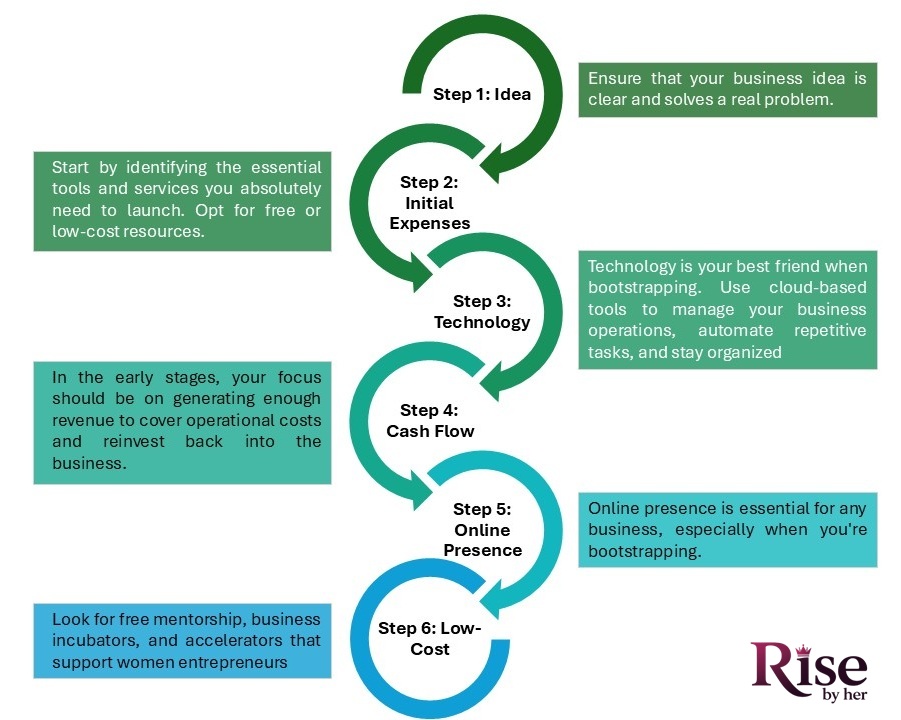
Step 1: Validate Your Startup Idea Before Investing Money
Before diving into the operational side of things, ensure that your business idea is clear and solves a real problem. Focus on niche markets where you can offer unique value and do thorough research to validate your idea. This will save you time and money in the long run. Women entrepreneurship 2026 is about creating innovative solutions that meet market needs with minimal investment.
Step 2: Start with a Lean Budget and Cut Unnecessary Costs
One of the key bootstrapping steps is keeping your initial costs low. Start by identifying the essential tools and services you absolutely need to launch. Opt for free or low-cost resources like open-source software, remote work tools, and digital marketing strategies. Avoid spending on office space or hiring full-time staff at the beginning, this will help you save funds for reinvestment in other critical areas.
Step 3: Use AI Tools and Automation to Reduce Expenses
Using AI tools and automation is one of the most effective ways to lower startup costs when bootstrapping in 2026. Instead of hiring a full team early on, women entrepreneurs can rely on affordable or even free AI-powered tools to handle repetitive and time-consuming tasks. This helps reduce operational expenses while keeping the business lean and efficient. The goal is not to replace human input, but to remove unnecessary manual work so you can focus on growth and strategy.
AI and automation can be applied across several key areas of your business:
- Marketing and content creation: Generate blog posts, social media captions, email newsletters, and ad copy without outsourcing content creation.
- Customer support: Use chatbots and automated responses to handle common questions and provide 24/7 support without a large team.
- Finance and bookkeeping: Automate invoicing, expense tracking, and basic accounting tasks to reduce the need for external accountants in the early stages.
- Social media management: Schedule posts in advance and maintain consistency without spending time posting daily.
- Market research: Use AI tools to analyze trends, competitors, and customer behavior faster and at a lower cost than traditional research methods.
Step 4: Focus on Cash Flow Instead of Profit Perfection Early On
Managing cash flow is crucial for any bootstrapped business. In the early stages, your focus should be on generating enough revenue to cover operational costs and reinvest back into the business. Instead of drawing profits right away, keep that money within the business to fund marketing, product development, or expand your team. Prioritizing cash flow ensures long-term sustainability and growth.
Step 5: Build a Digital Presence Before Scaling
building an online presence is essential for any business, especially when you’re bootstrapping. Leverage social media and content marketing to create awareness about your product or service without spending it on traditional advertising. Use platforms like Instagram, LinkedIn, and YouTube to engage with your target audience, build your brand, and generate leads.
Step 6: Use Free Tools, Grants, and Low-Cost Platforms
As a bootstrapped entrepreneur, you need to be resourceful. Look for free mentorship, business incubators, and accelerators that support women entrepreneurs. Join online communities, attend webinars, and use free online courses to continuously develop your skills. Networking with other women entrepreneurs can also provide valuable insights and support during the bootstrapping phase.
By following these practical startup tips and focusing on cost-effective strategies, you can successfully bootstrap your business. Keep your goals focused, remain adaptable, and reinvest in growth to create a thriving, self-sustaining startup.
How Women Entrepreneurs Can Access Free Funding, Tools, and Networks
Accessing the right support systems can significantly reduce startup costs and increase your chances of success when bootstrapping. Many women entrepreneurs overlook the fact that there are free or low-cost resources available, from funding programs to professional networks and digital tools. The key is knowing where to look and how to actively engage with these opportunities instead of trying to build everything alone.
1. Build Strategic Business Connections
Strong business connections can open doors to funding, partnerships, and growth opportunities. Focus on building meaningful relationships rather than collecting contacts.
- Attend local business events, workshops, and startup meetups
- Connect with founders, investors, and professionals on LinkedIn
- Collaborate with complementary businesses in your niche
- Follow up consistently to maintain long-term relationships
You can fast-track your growth by joining supportive communities, just like in Accelerate Your Career in 2026 with Women’s Professional Networks.
2. Find Mentors and Women-Led Business Communities
Mentorship can help you avoid costly mistakes and accelerate decision-making in the early stages of your startup.
- Seek mentors with experience in your industry or funding stage
- Join women-focused entrepreneurship programs and accelerators
- Participate in structured mentorship platforms or incubators
- Engage with communities that offer guidance, not just networking
A strong mentor can completely change your career path, as explained in How Mentorship Programs Boost Career Growth for Women.
3. Access Grants, Microloans, and Startup Support Programs
Many funding opportunities are specifically designed to support women-led startups, especially in early-stage development.
- Research government and nonprofit grant programs for women entrepreneurs
- Explore microloans designed for small or first-time business owners
- Look into startup incubators that provide funding plus training
- Apply consistently, as many programs have recurring funding cycles
You can explore practical funding approaches in Funding for Women Entrepreneurs: Proven Strategies to Secure Capital.
4. Use Free Startup Tools and Software
Reducing operational costs starts with using the right tools from day one instead of paid solutions you don’t yet need.
- Use free project management tools to organize tasks and workflows
- Leverage free design tools for branding and marketing materials
- Use basic CRM systems to manage customers and leads
- Start with free versions of accounting and finance software
5. Join Online Communities for Women Founders
Online communities provide real-time support, feedback, and opportunities that can help you grow faster without spending money.
- Join women entrepreneur groups on platforms like LinkedIn and Facebook
- Participate in startup forums and business discussion communities
- Engage in conversations, ask questions, and share your progress
- Use communities to test ideas and validate your business direction
Common Challenges Women Face When Bootstrapping (and How to Overcome Them)
Starting and growing a business comes with obstacles, but women entrepreneurs often encounter additional challenges. From access to capital to work-life balance, these hurdles can be frustrating but they are not insurmountable. Here’s a look at the most common challenges for women entrepreneurs and practical ways to overcome them.
1. Limited Access to Startup Capital
Many women struggle to secure startup funding due to gender biases in investment and loan approvals. Studies show that women-led businesses receive less venture capital than those led by men.
How to Overcome It:
- Explore alternative funding sources like microloans, crowdfunding, and grants designed for women entrepreneurs.
- Build strong business credit and prepare a solid business plan to improve your chances of securing loans.
- Network with women-focused investor groups and angel investors who prioritize funding female-led startups.
2. Balancing Business and Personal Responsibilities
Juggling the demands of running a business while managing family responsibilities can be overwhelming. Many women feel pressured to “do it all”, leading to burnout.
How to Overcome It:
- Set clear boundaries between work and personal life to avoid exhaustion.
- Use time management tools like scheduling apps to stay organized.
- Delegate tasks whenever possible so you can focus on growth.
3. Gender Bias in Funding and Business Growth
Women entrepreneurs often face skepticism about their business capabilities. In male-dominated industries, securing clients, investors, or leadership roles can be harder due to outdated gender norms.
How to Overcome It:
- Build confidence in your expertise and assert your value in professional settings.
- Seek mentors and women entrepreneur networks for guidance and support.
- Focus on results and performance, letting your success speak for itself.
4. Lack of Professional Networks
Networking plays a crucial role in business success, yet women often have fewer opportunities to connect with influential decision-makers.
How to Overcome It:
- Join women-in-business organizations and attend industry events to expand your network.
- Leverage LinkedIn and social media to connect with mentors, investors, and clients.
- Create a supportive community of like-minded entrepreneurs for collaboration and partnerships.
5. Scaling Without External Investors
Many women entrepreneurs bootstrap their businesses, making it challenging to scale quickly without external investment.
How to Overcome It:
- Focus on reinvesting profits into business expansion rather than relying on external funding.
- Use technology and automation to streamline operations and save costs.
- Consider strategic partnerships to access new markets and resources without high expenses.
While the road to entrepreneurship comes with unique obstacles, women in business have more resources and support than ever before. By tackling these challenges for women entrepreneurs head-on and implementing strategic solutions, you can overcome obstacles in business and build a successful, sustainable venture.
Smart Financial Strategies for Bootstrapped Startups
Strong financial management is the backbone of any successful bootstrapped startup. When external funding is limited or nonexistent, every financial decision directly impacts your ability to grow and sustain the business. Women entrepreneurs, in particular, benefit from building disciplined financial habits early, ensuring that limited resources are used strategically rather than reactively.
1. Build a Sustainable Lean Budget
A lean budget helps you prioritize only what is essential in the early stages of your startup. Instead of planning for ideal scenarios, focus on what you actually need to launch and operate efficiently.
- Separate essential costs from optional expenses
- Start with minimum viable spending (tools, marketing, operations)
- Avoid long-term contracts in the early stage
- Adjust your budget monthly based on real performance
2. Track and Control Business Expenses from Day One
Tracking every expense helps you understand where your money is going and prevents unnecessary spending patterns from forming.
- Record all expenses, even small ones
- Use simple accounting tools or spreadsheets
- Review spending weekly or monthly
- Identify and eliminate non-essential costs early
3. Reinvest Profits Strategically for Growth
Instead of withdrawing early profits, reinvesting them back into the business can accelerate long-term growth and stability.
- Reinvest in marketing and customer acquisition first
- Improve product or service quality before scaling
- Upgrade tools or systems that increase efficiency
- Avoid reinvesting in non-essential upgrades too early
4. Maintain Healthy Cash Flow Cycles
Cash flow is more important than profit in the early stages of a bootstrapped startup. Consistent cash movement ensures your business can operate without interruptions.
- Monitor incoming and outgoing cash regularly
- Encourage faster payments from clients when possible
- Avoid delays in invoicing or collections
- Keep a small cash reserve for emergencies
5. Know When (and Where) to Spend or Save
Smart spending decisions help you stretch limited resources without slowing down growth. The key is knowing what drives revenue and what does not.
- Spend on activities that directly generate income or leads
- Save on tools or services that do not impact growth
- Outsource only when it increases efficiency or revenue
- Continuously evaluate return on every expense
Conclusion: Your Roadmap to Successfully Bootstrap a Startup in 2026
Bootstrapping a startup in 2026 is less about having large capital and more about making smart, disciplined decisions from the beginning. Women entrepreneurs who succeed with bootstrapping usually follow a clear progression: they validate their idea early, build lean systems, leverage available support, and maintain strong financial control as they grow.
Your roadmap should follow a structured flow that keeps your business sustainable at every stage.
- Start with idea validation: Make sure there is real demand for your product or service before investing heavily in development or marketing.
- Move to lean execution: Launch with a simple, cost-efficient version of your business and focus only on essential operations.
- Use networks and funding support: Tap into mentors, communities, grants, and low-cost resources to reduce pressure on your own capital.
- Focus on financial discipline: Track expenses closely, reinvest profits wisely, and prioritize cash flow to keep your business stable and scalable.
Bootstrapping is not about doing everything alone. It is about building intelligently with the resources you have, while consistently making decisions that support long-term growth.

By Aveline Lowell
Founder & Editor-in-Chief, RisebyHer
Aveline Lowell is the Founder and Editor-in-Chief of Rise by Her, where she publishes research-driven content focused on women’s entrepreneurship, financial independence, and scalable income strategies. Her work covers profitable business models, grant opportunities, digital income growth, and strategic career advancement for modern women building sustainable wealth.
She is committed to providing structured, practical guidance that helps women make informed financial and business decisions.