
Want to work from anywhere, command a high salary, and finally achieve true work-life balance? You aren’t alone. Remote tech jobs offer unparalleled flexibility, but competition is fierce. To stand out to top remote employers, you can’t just be “good with computers”—you need to master the exact technical and asynchronous tools that keep distributed teams running. From high-ROI certifications to the AI skills rewriting the industry, this guide breaks down the essential blueprint women need to break into tech and secure a thriving remote career.
The Rise of Remote Work for Women in Tech
The shift to distributed work isn’t just a change in geography; it’s a structural revolution for women in the technology sector. While the traditional corporate office often perpetuated systemic hurdles, the remote landscape acts as a merit-driven equalizer. For women looking to build sustainable, high-income careers, mastering the remote ecosystem is no longer just a lifestyle choice—it is a powerful competitive strategy.
Beyond Flexibility: Autonomy, Safety, and Closing the Wage Gap
While “working in sweatpants” is the common trope, the true value of remote work runs much deeper. For women, autonomy over their schedule means managing energy levels, personal priorities, and deep-focus work blocks without the performance theater of a physical office.
Furthermore, data shows that remote work significantly lowers exposure to microaggressions and office politics, creating a psychologically safe environment where output speaks louder than visibility. Most importantly, it democratizes compensation. When geography is removed from the equation, women can interview for high-paying roles in major tech hubs like San Francisco or New York without the burden of relocation, directly helping to narrow the gender wage gap.
The Borderless Talent Pool: Why Remote-First Tech Companies Hire Globally
The modern tech company is no longer bound by a 30-mile radius around an office building. To scale fast and build resilient software, startups and enterprise giants alike are looking for the best global talent.
Remote-first employers aren’t hiring based on who is best at shaking hands at the watercooler; they are hiring based on technical capability and reliable execution. By positioning yourself as a remote-ready tech professional, your address becomes irrelevant, allowing you to compete for positions based purely on your skill set and value delivery.
Overcoming the “Isolation Gap”: The Realities of Digital-First Careers
To speak like a true industry expert, we have to look at the challenges alongside the benefits. Remote work requires a deliberate effort to avoid professional isolation. Without natural networking opportunities over lunch, women in tech must actively build digital communities.
Failing to manage your digital visibility can lead to being passed over for promotions—a phenomenon known as proximity bias. Thriving in a remote career means learning how to advocate for your work, document your achievements publicly, and intentionally seek out mentorship via global communities like Women Who Code or Elpha.
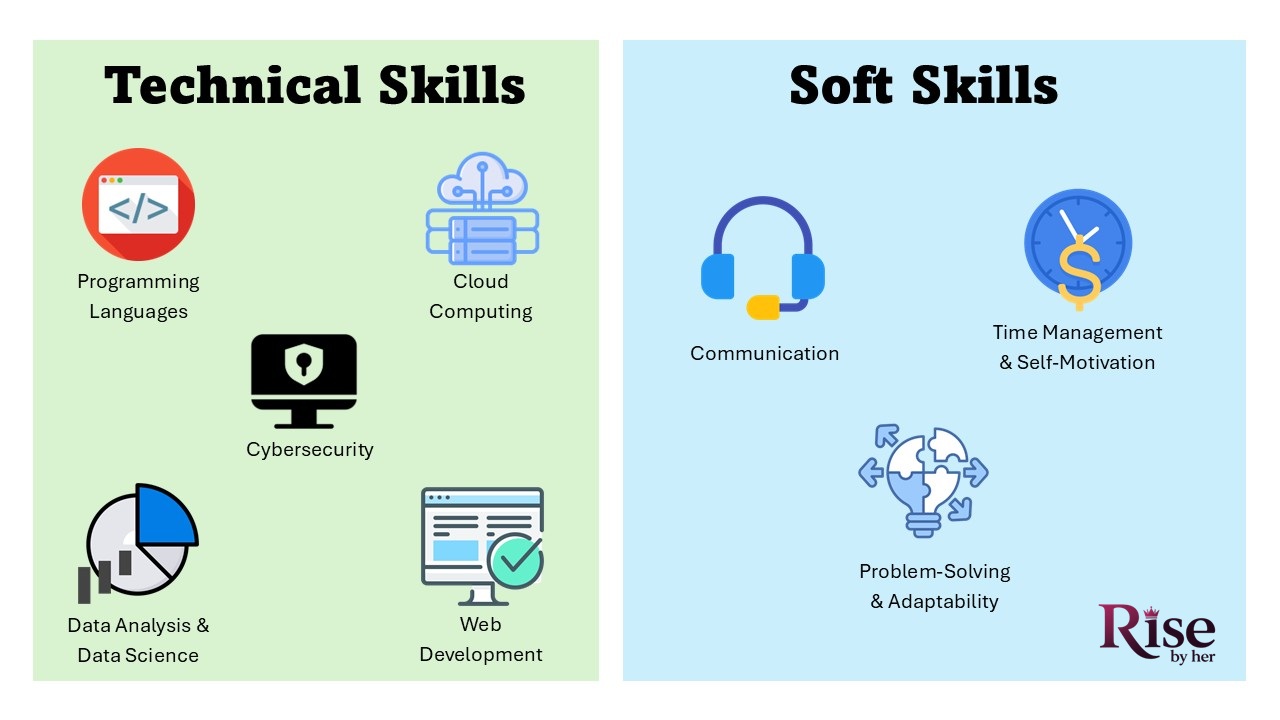
Top Technical Skills for High-Paying Remote Tech Roles
To secure a premium remote role, general technical literacy is no longer enough. Because remote managers cannot look over your shoulder, they hire based on unambiguous proof of execution. Landing these positions requires mastering specific high-leverage tools and frameworks that allow you to deliver independent, asynchronous value from day one.
AI Literacy & Prompt Engineering (The New Baseline)
AI is no longer a futuristic bonus; it is a foundational workflow requirement. Remote employers prioritize professionals who leverage generative AI to write code faster, automate code reviews, and streamline debugging.
- Key Focus Areas: Context window optimization, few-shot prompting, and AI tool integration.
- Core Tools to Master: GitHub Copilot, ChatGPT Plus, Claude, and basic LangChain workflows.
Cloud Computing (AWS, Azure, and DevOps Fundamentals)
Every remote-first tech company operates entirely in the cloud. Understanding how infrastructure is deployed, monitored, and scaled is critical for keeping distributed engineering pipelines running smoothly.
- Key Focus Areas: Infrastructure as Code (IaC), containerization, and serverless architecture.
- Core Tools to Master: AWS (S3, EC2, Lambda), Microsoft Azure, Docker, Kubernetes, and GitHub Actions for CI/CD.
Data Analysis & Data Science (SQL, Python, and Visualization)
Remote organizations rely heavily on data-driven decision-making to sync cross-functional teams across multiple time zones. Knowing how to extract raw data, model it cleanly, and translate it into clear business intelligence makes you an invaluable asset.
- Key Focus Areas: Relational database management, data pipeline building, and interactive reporting dashboards.
- Core Tools to Master: SQL (PostgreSQL/BigQuery), Python (Pandas, NumPy), Excel (Advanced), and Power BI or Tableau.
Cybersecurity & Information Security
When a workforce is entirely distributed, every remote employee’s home network becomes a potential vulnerability. Companies pay top dollar for professionals who know how to protect cloud infrastructure, secure remote endpoints, and enforce strict governance policies.
- Key Focus Areas: Identity and Access Management (IAM), zero-trust architecture, and compliance monitoring (SOC 2, GDPR).
- Core Tools to Master: Wireshark, Splunk, AWS IAM, and automated vulnerability scanners.
Full-Stack Web Development & Modern Frameworks
The demand for high-performing web applications continues to skyrocket. Remote-first engineering teams favor developers who can cross the boundary between front-end user experience and robust back-end logic.
- Key Focus Areas: Asynchronous state management, RESTful APIs, and component-driven architecture.
- Core Tools to Master: React.js, Next.js, Node.js, PostgreSQL, and Git version control.
Power Skills: The Soft Skills That Matter Most to Remote Teams
When your team is scattered across continents, traditional “soft skills” transform into business-critical technical execution. Remote employers don’t look for the loudest voice in the room; they look for autonomous operators who can move projects forward without constant supervision. If you want to survive and thrive in a distributed company, mastering these core collaborative dynamics is non-negotiable.
Asynchronous Communication (Slack, Notion, and Documentation)
In a distributed environment, writing is the primary way you work. Because your team members may be asleep when you are online, clear communication means writing with extreme clarity, leaving comprehensive context, and providing direct action items.
- The Remote Expert Move: Instead of sending a vague “Hey, do you have a minute?” on Slack, write detailed, structured updates that include the problem, what you’ve tried, and your proposed solution.
- Core Tools to Master: Notion, Slack, Loom (for quick video walkthroughs), and markdown documentation in GitHub.
Micro-Management Immunity: Self-Motivation & Time Mastery
Remote managers cannot track your hourly mouse movements. They care about outcomes, not hours logged. To succeed, you must build “micromanagement immunity,” which means setting your own clear boundaries, hitting deadlines reliably, and proactively flagging roadblocks before they become emergencies.
- The Remote Expert Move: Work in dedicated, deep-focus blocks and use shared digital calendars to show your team exactly when you are available for deep work versus live meetings.
- Core Tools to Master: Todoist, ClickUp or Asana, time-blocking methods, and automated status updates.
Cross-Functional Problem Solving & Global Collaboration
Working remotely means interacting with diverse, cross-functional engineering, product, and marketing teams from various cultural backgrounds and time zones. Success requires strong empathy, active listening, and the ability to solve complex technical problems through screen shares and collaborative digital canvases.
- The Remote Expert Move: Run highly efficient, agenda-driven alignment meetings and back up your conclusions with clear data dashboards that anyone on the global team can interpret instantly.
- Core Tools to Master: Miro or Mural (for digital brainstorming), Figma, and shared reporting dashboards.
High-ROI Certifications That Validate Your Expertise
When you lack years of on-site corporate experience, industry-recognized credentials serve as your digital passport to a remote career. For women entering or pivoting within tech, certifications bypass subjective resume screening by providing objective, standardized proof of your skills. The key to a high return on investment (ROI) is selecting credentials backed by major cloud providers and tech giants that remote recruiters actively filter for in their hiring pipelines.
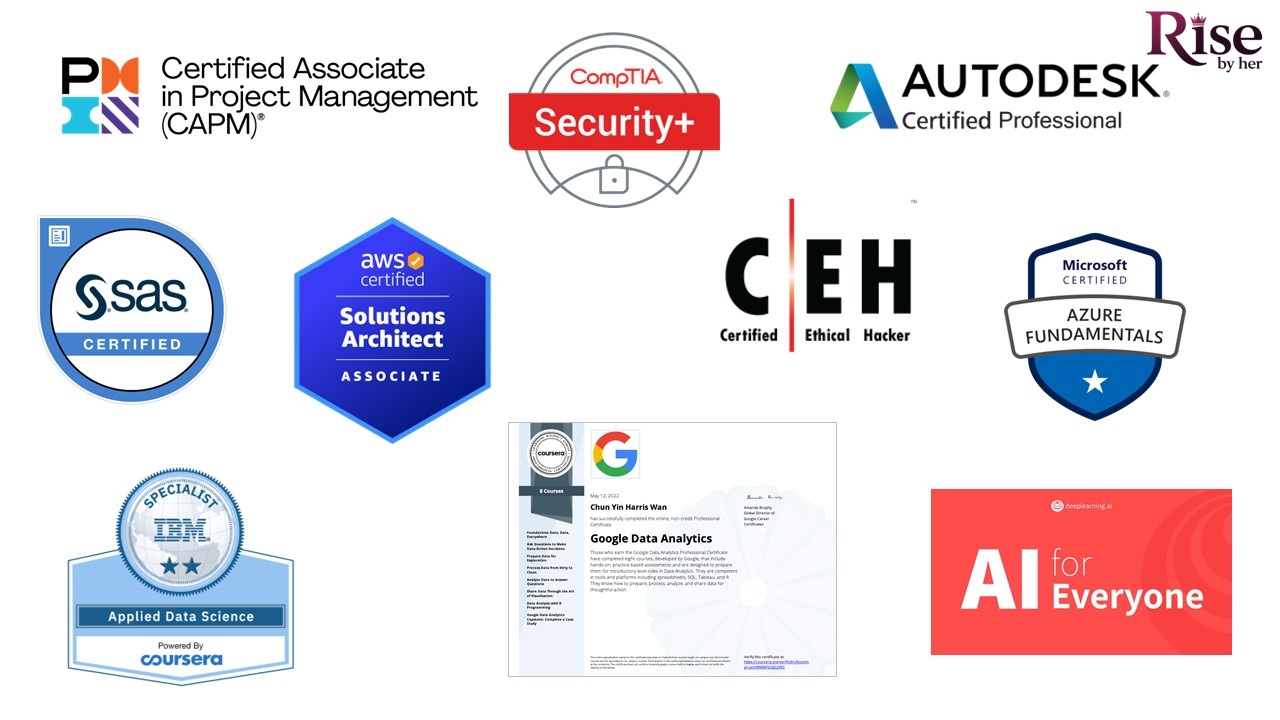
Cloud Architecture: AWS Certified Cloud Practitioner / Microsoft Azure Fundamentals (AZ-900)
Cloud infrastructure is the bedrock of every remote enterprise. Gaining a foundation in cloud ecosystems signals to employers that you understand how distributed applications deploy and scale.
- Why It’s High-ROI: Cloud skills carry a massive salary premium. These entry-level certificates prove you speak the infrastructure language of the tech giants dominating the market.
- Estimated Time Commit: 4 to 6 weeks.
- Best For: Aspiring cloud engineers, DevOps technical recruiters, product managers, and systems administrators.
Data & Analytics: Google Advanced Data Analytics or IBM Data Science
Every remote-first team tracks performance through data. Validating your ability to clean data sets, write queries, and build automated reports makes you immediately deployable within a distributed growth or product team.
- Why It’s High-ROI: These professional certificates go beyond theory. They require capstone projects using real-world tools like Python and SQL, giving you an instant portfolio to show remote hiring managers.
- Estimated Time Commit: 2 to 4 months (at 10 hours/week).
- Best For: Financial analysts, business intelligence specialists, operations managers, and data scientists.
Development & Support: Meta Front-End Developer or Google IT Support
If your goal is to build web applications or manage the underlying IT infrastructure that keeps remote teams connected, these targeted, career-focused programs from Meta and Google provide a direct pathway.
- Why It’s High-ROI: They are built directly by industry leaders to address active hiring shortages. The Meta credential connects you directly to their exclusive job board consortium, while the Google IT Support certificate acts as the gold standard for breaking into remote tech help desk and systems coordination roles.
- Estimated Time Commit: 3 to 5 months.
- Best For: Career-changers, front-end engineers, UX/UI collaborators, and remote infrastructure support specialists.
Certifications at a Glance: Cost, Time, and Career Impact (The Table)
Before diving into training, use this quick-reference matrix to compare the timeline, entry requirements, and ultimate career trajectory of the top tech credentials:
| Certification | Focus Niche | Est. Time Commit | Average Cost | Ideal For |
|---|---|---|---|---|
| AWS Cloud Practitioner / AZ-900 | Cloud Infrastructure | 4–6 Weeks | ~$100 (Exam) | SysAdmins, DevOps, Technical Product Managers |
| Google Advanced Data Analytics | Business Intelligence & Data | 2–4 Months | $39–$49/mo (Coursera) | Data Analysts, Financial Advisors, Operations |
| Meta Front-End Developer | Software Engineering | 3–5 Months | $39–$49/mo (Coursera) | Web Developers, UI Collaborators, App Creators |
| Google IT Support Professional | System Security & Support | 3–6 Months | $39–$49/mo (Coursera) | Help Desk, Infrastructure Coordinators, Pivoters |
Where to Learn: Top Free and Affordable Upskilling Platforms
You don’t need an expensive computer science degree to land a premium remote tech role. The tech industry values what you can build and validate over where you went to school. By leveraging highly targeted, low-cost digital academies, you can acquire enterprise-level technical skills entirely on your own schedule without breaking the bank.
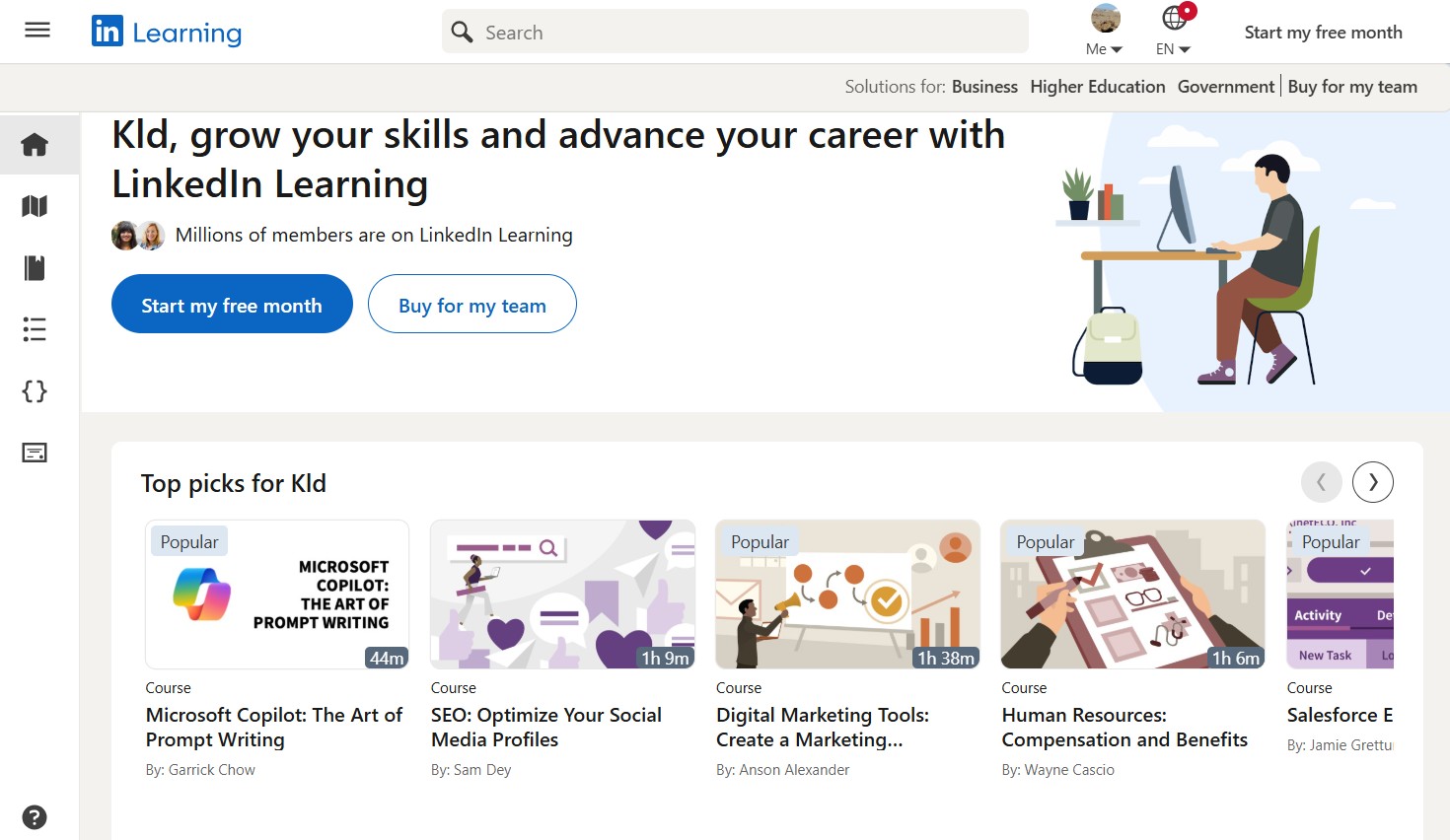
Free and Open-Source Standard Bearers
If your budget is zero, these platforms offer world-class, rigorous engineering and data curricula without charging a dime.
- freeCodeCamp: The gold standard for self-paced, interactive web development and data analysis certifications. You write real code directly in your browser and build a full portfolio of projects.
- Harvard’s CS50 (via edX): The world’s most famous introductory computer science course. It is completely free to audit and provides an unmatched conceptual foundation in logic, algorithms, and data structures.
- IBM SkillsBuild & Cisco Networking Academy: Exceptional, free-to-access industrial pipelines offering verified digital badges and structured paths in AI literacy, cybersecurity fundamentals, and Linux administration.
Massive Open Online Courses (MOOCs) for Professional Credibility
When you need the institutional backing of a tech giant or university on your resume, these subscription and marketplace models offer the highest ROI.
- Coursera: Best for structured career pivots. While individual professional certificates from Google, Meta, and IBM require a monthly subscription (around $39–$49), you can audit almost any individual course for free. Expert Tip: If you plan to take multiple certificates, a Coursera Plus annual subscription provides the best value.
- Udemy: The ultimate “just-in-time” learning tool. Udemy is not built for structured degree paths, but it is the absolute best platform for filling a highly specific tool gap. Need to master Power BI, Docker, or advanced SQL queries in 15 hours? Wait for their frequent sales and grab a top-rated, highly practical course for under $20.
- Codecademy: An outstanding interactive environment for mastering syntax. It is brilliant for getting your hands dirty with Python, SQL, or JavaScript quickly, though you should graduate to building projects locally on your own machine as soon as you learn the basics.
The Digital Coffee Shop: Building a High-Value Network on LinkedIn and Twitter/X
In a remote-first economy, who you know online dictates the inbound job opportunities you receive. You cannot rely on traditional corporate mixers; instead, you must treat platforms like LinkedIn and Twitter/X as your active networking hubs. By strategically engaging with industry peers and leaders, you bridge the physical distance gap and put your skills directly in front of hiring managers.
- The Remote Expert Move: Don’t just apply to jobs through generic portals. Find recruiters or engineering managers at remote-first companies you admire. Follow them, engage thoughtfully with their posts, and share your own learning journey publicly (e.g., posting about a complex SQL query you just solved or a Power BI dashboard you designed). This creates top-of-mind awareness so that when a remote role opens up, they already know your face and capabilities.
- Core Communities to Join: Beyond standard connections, embed yourself in targeted digital ecosystems like Elpha (the premier network for women in tech), Tech Ladies, and local or global Slack/Discord communities dedicated to your specific technical niche.
The “Proof of Work” Strategy: How to Stand Out to Remote Employers
In the remote hiring ecosystem, resumes are easily ignored, but raw proof of execution is undeniable. Because remote managers face an influx of hundreds of applications per opening, they lean heavily on candidates who show, rather than tell, what they can build. To cut through the noise and land a top-three ranking in a recruiter’s mind, you must shift from a traditional job-seeker mindset to that of a digital builder.
Build a Public Portfolio (GitHub, Portfolio Website, or Case Studies)
Your portfolio is your real-world currency. A remote manager wants to see how you structure code, manage data pipeline architecture, or design an interface without guidance.
- The Remote Expert Move: Don’t just host raw code or spreadsheets. Write a compelling, 3-slide case study for each project detailing: The Problem, Your Technical Solution, and The Measurable Business Outcome. For example, don’t just say you know Python; show how you automated a data-cleaning script that saved a team 10 hours a week.
- Core Channels: A clean GitHub repository with descriptive README files, a personal portfolio site built via Notion or Webflow, or live data visualization dashboards published on Nova or Tableau Public.
Optimize Your Resume & LinkedIn for Remote ATS (Applicant Tracking Systems)
Before a human ever sees your application, an automated algorithm scores it. If your resume and LinkedIn profile lack specific tool keywords and remote-readiness phrases, you are filtered out before the first round.
- The Remote Expert Move: Explicitly incorporate keywords like asynchronous project management, cross-functional alignment, and distributed collaboration. Under your past roles, instead of just listing responsibilities, format your accomplishments to highlight your independent drive: “Managed cloud deployments completely remotely across 3 distinct time zones.”
- Core Action: Tailor your resume using tools like Jobscan or FastApply to match the exact skill density of the job description before hitting submit.
Master the Remote Interview: Video Presence & Technical Assessments
The interview begins the second your camera turns on. A messy background, poor audio quality, or unstable internet signals to a remote manager that you aren’t equipped to manage a professional home office.
- The Remote Expert Move: Treat your video workspace as your product. Invest in a dedicated microphone, crisp lighting, and a neutral, professional background. During technical assessments or live coding challenges, narrate your internal logic out loud. Remote interviewers evaluate your communication framework and how you handle roadblocks under stress just as much as your final solution.
Where to Look: Remote-First and Women-in-Tech Job Boards
Applying on generic, high-volume job boards is a lottery where remote roles get flooded with thousands of unqualified resumes within minutes. To dramatically boost your response rates, target vetted, niche ecosystems that cater specifically to distributed companies and inclusive tech employers.
- The Top Remote-First Platforms: We Work Remotely (WWR) and Remote OK for rapid, tech-heavy startup pipelines; FlexJobs for manually vetted, scam-free career paths.
- The Top Women-in-Tech Communities: Elpha (the premier digital network for tech-focused women), WomenTech Network, and the Women in Technology (WIT) Hub. These platforms bridge the physical distance gap, directly connecting you with corporate sponsors and hiring managers who actively champion gender diversity.
Frequently Asked Questions About Remote Tech Jobs for Women
Can I get a remote tech job with no prior experience?
Yes. Remote-first employers prioritize a verified portfolio over a traditional background. By building a public “Proof of Work” (such as functional GitHub repositories, case studies, or live data visualization dashboards) and pairing it with a high-ROI certification, you can demonstrate technical competence without traditional corporate office history.
What are the highest-paying entry-level remote tech roles?
Data Analysis, Cloud Support, and Junior Full-Stack Web Development currently lead the market in starting salaries for distributed positions. These fields allow for clean, measurable asynchronous tracking, making companies highly willing to hire remote talent globally.
How do I avoid scams when looking for remote tech jobs?
Stick to dedicated, vetted job boards like FlexJobs, We Work Remotely, and inclusive premium communities like Elpha or Tech Ladies. Avoid postings on generic classified boards that ask for upfront financial investments for “home equipment” or lack a verified corporate domain link.
How can women combat proximity bias in a completely remote company?
To prevent being overlooked for promotions while working from home, track your metrics closely and broadcast your wins. Implement a strong asynchronous update pipeline by sharing interactive reports, keeping clean documentation in shared spaces like Notion, and scheduling regular alignment touchpoints with your leadership team.
Conclusion: Build Your Remote-Ready Blueprint Today
The modern remote tech landscape is no longer an elusive corporate perk—it is an accessible, high-income reality for women who intentionally align their skills with market demand. Transitioning into a distributed career doesn’t require a radical, multi-year overhaul. Instead, it requires steady, compounding progress: validating your core technical expertise, mastering the art of asynchronous communication, and showcasing an undeniable, public portfolio.
Your Immediate Next Steps
- Audit Your Skill Set: Select one high-priority skill niche from this guide—whether it is AI workflow optimization, cloud fundamentals, or data analysis—and commit to it.
- Secure Your Passport Credential: Pick a single, high-ROI professional certification (like the AWS Cloud Practitioner or Google Data Analytics) to anchor your resume.
- Build in Public: Document your learning journey on LinkedIn or Elpha. Let potential remote employers watch you solve technical challenges in real-time.
The freedom to design your workday, bypass physical office politics, and command a compensation package based entirely on your output is well within reach. Stop waiting for the perfect job description to find you. Build your remote-ready toolkit today, launch your proof of work, and make your value absolutely undeniable.
If you’re exploring flexible ways to earn more, this guide on Top High-Income Freelance Jobs for Women can help you discover profitable opportunities that match your skills.
By Aveline Lowell
Founder & Editor-in-Chief, RiseByHer
Aveline Lowell writes research-driven content covering women’s finance, entrepreneurship, STEM, technology, and career growth. Her work focuses on practical, well-researched information that helps women make informed decisions.
Editorial & Disclaimer: RiseByHer aims to provide accurate, well-researched, and up-to-date information. Articles are reviewed and updated when necessary and are intended for general informational and educational purposes, not personalized financial, legal, tax, or professional advice.