


You don’t need a computer science degree to rule the tech sector. If you have a background in science, technology, engineering, or math, you already possess the ultimate tech superpower: systematic problem-solving. While the 2026 tech market is highly competitive, the demand for analytical, data-driven minds has never been higher. IT isn’t just looking for programmers anymore—it’s looking for you. Here is your exact, step-by-step blueprint to pivot your STEM background into a high-paying IT career this year.
Why Women in STEM are Uniquely Positioned for IT Success
The tech industry doesn’t just need more coders; it needs better problem solvers. If you come from a science, technology, engineering, or math background, you aren’t starting from scratch—you are already halfway there. Modern IT infrastructure relies heavily on logic, structured testing, and data-driven decisions. Your STEM training has already wired your brain to think like a high-level engineer. By mapping your existing analytical toolkit to modern tech ecosystems, you can bypass entry-level friction and position yourself as a premium candidate in a highly competitive market.
Translating Your STEM Logic: From Lab or Research to Code
Transitioning into IT doesn’t mean throwing away your hard-earned background. It means translating your existing skills into the language tech recruiters speak. The core methodologies used in scientific research, engineering, and data analysis map perfectly onto software development and systems architecture.
Here is exactly how your STEM habits translate into high-value IT workflows:
| Your Current STEM Skill | The Direct IT Equivalent | Why It Matters to a Tech Team |
| The Scientific Method | Debugging & Troubleshooting | Formulating a hypothesis, testing variables, and isolating a broken component is the exact framework used to fix software bugs or resolve network outages. |
| Lab/Research Protocols | System Architecture & Documentation | Following rigorous, repeatable steps in a lab translates directly to writing clean documentation and maintaining DevOps deployment pipelines. |
| Statistical Analysis & Excel | Data Engineering & BI Analytics | If you can clean research data, run regressions, or manage complex spreadsheets, you already understand the core logic of SQL databases and data pipelines. |
| Mathematical Proofs | Algorithm Design & Logic | The structural logic required to solve a complex equation is identical to writing efficient, optimized backend code. |
Expert Insight: When updating your resume, stop focusing on where you did the work (the lab, the field, or the classroom) and start focusing on how you solved the problem. Replace phrases like “Conducted laboratory experiments” with “Designed and executed systematic testing protocols to isolate data anomalies.”
The 2026 Tech Landscape: Why Diverse STEM Backgrounds are in High Demand
The tech landscape has fundamentally shifted. Standard tech applicants who only know how to write basic syntax are hitting a wall due to the rise of AI-assisted coding tools. Companies no longer look for simple “code monkeys”—they look for domain experts who can apply technical tools to complex, real-world problems.
This shift works heavily in your favor for several distinct reasons:
- The Rise of Cross-Disciplinary Tech (BioTech, HealthTech, ClimateTech): Silicon Valley is poured into industries that require deep domain knowledge. An IT team building genomic sequencing software desperately needs a biology major who understands data pipelines, not just a programmer who knows Python syntax.
- AI Literacy Requires Systems Thinking: In 2026, AI models handle a lot of the baseline coding. The human premium is now placed on prompt architecture, algorithmic validation, and data governance—areas where systematic, STEM-trained thinkers naturally excel.
- Solving the Tech Bottleneck: Engineering teams frequently struggle with communication and broader business integration. Diverse STEM professionals bring a unique blend of technical curiosity and structured project management that helps bridge the gap between pure code and real-world execution.
The market isn’t looking for you to hide your non-traditional tech background. It’s waiting for you to leverage it.
Best IT Career Paths for Women in STEM in 2026
You don’t need to reinvent the wheel to break into tech. The fastest route to a high-paying IT role is alignment—taking the specific analytical frameworks you already master and matching them to the tech sectors currently experiencing severe talent shortages. In 2026, the tech industry is moving away from generalized roles toward specialized engineering. By targeting a career path that treats your specific STEM background as an asset rather than a detour, you instantly command higher leverage, better starting salaries, and a shorter transition timeline.
The Matrix: Matching Your Specific STEM Major to the Right IT Role
To maximize your transition efficiency, you need to map your specific academic or professional domain to its high-growth tech counterpart. This matrix eliminates the guesswork and shows you exactly where your background gives you an unfair competitive advantage.
| Your STEM Background | Core Transferred Cognitive Skill | Target 2026 IT Domain | Target Entry-Level Roles |
| Mechanical, Civil, or Electrical Engineering | Spatial logic, stress testing, complex infrastructure mapping | Cloud & DevOps | Cloud Support Associate, Junior DevOps Engineer, Site Reliability Engineer (SRE) |
| Mathematics, Statistics, or Actuarial Science | Algorithmic logic, predictive modeling, data hygiene | Data Science & AI | Junior Data Analyst, Analytics Engineer, AI Prompt Operator |
| Biology, Chemistry, or Lab Research | Strict compliance protocols, variable isolation, pattern recognition | Cybersecurity / HealthTech | SOC Analyst, Compliance Auditor, Clinical Data Specialist |
| Healthcare, Nursing, or Environmental Science | Human-centric problem solving, regulatory tracking, workflow empathy | Product Management | Associate Product Manager (APM), Technical Business Analyst |
Cloud Architecture & DevOps (Great for Engineering & Physics Backgrounds)
If your background involves physical engineering, thermodynamics, or complex hardware systems, your brain is already optimized for systems thinking. Cloud computing and DevOps (Development Operations) are not about writing thousands of lines of creative code; they are about designing, scaling, and maintaining virtual infrastructure.
- Why it fits you: Designing a secure AWS or Azure cloud network requires the exact same structural logic as designing an electrical grid, a piping system, or a mechanical engine. You understand dependencies, bottlenecks, and system failures.
- The 2026 Reality: As enterprises complete their migrations to multi-cloud environments, the demand for cloud specialists has skyrocketed.
- Skills to prioritize: Linux fundamentals, Terraform (Infrastructure as Code), and foundational certifications like AWS Certified Cloud Practitioner or Microsoft Azure Fundamentals.
Data Science, AI, and Analytics (Great for Math, Stats & Bio Backgrounds)
For those who spent their STEM careers dealing with large datasets, population metrics, or mathematical proofs, the data sector is your natural home. With the massive maturity of generative AI models in 2026, the tech world is drowning in data but starving for people who actually understand empirical analysis.
- Why it fits you: If you have run regressions, managed massive Excel matrices, or analyzed biological trial data, you already possess data literacy. Tech platforms just use different tools (like SQL and Python) to achieve the exact same analytical outcomes.
- The 2026 Reality: AI engineering teams desperately need professionals who can handle data curation, validation, and algorithmic bias tracking.
- Skills to prioritize: Intermediate SQL (queries, joins, aggregations), Python data libraries (Pandas, NumPy), and data visualization tools like Power BI or Tableau.
Cybersecurity & Risk Compliance (Great for Chemistry & Systematic Thinkers)
Cybersecurity is often misunderstood as a field reserved for elite hackers. In reality, a massive portion of modern enterprise cybersecurity centers around threat detection, risk mitigation, and strict regulatory compliance—tasks that perfectly match the mental model of laboratory scientists.
- Why it fits you: Chemists, biochemists, and lab researchers are trained to operate under extreme safety protocols, track contamination risks, and follow rigid procedural checklists. In cybersecurity, tracking down a malware strain or auditing a network vulnerability uses the exact same systematic, detail-oriented methodology.
- The 2026 Reality: With stricter international data privacy laws and sophisticated cyber threats, companies are aggressively hiring analytical thinkers who can audit systems and enforce security frameworks.
- Skills to prioritize: Understanding network protocols (TCP/IP), basic scripting, and studying for the CompTIA Security+ certification.
Product Management & HealthTech (Great for Healthcare & Environmental STEM)
If you love tech but want to stay closer to human impact, strategy, and cross-functional leadership, Product Management or specialized HealthTech roles are ideal. This path bridges the gap between software engineers, business executives, and the end-user.
- Why it fits you: Healthcare professionals (nurses, pre-med graduates) and environmental scientists excel at managing chaos, prioritizing empathy, and understanding complex user workflows under pressure. You don’t need to write the code; you need to define what the engineers should build based on market and user data.
- The 2026 Reality: Digital health, telemedicine platforms, and climate tech tracking software are massive growth sectors. Companies in these spaces prefer candidates who understand the domain (e.g., hospital workflows or environmental regulations) over pure tech generalists.
- Skills to prioritize: Agile/Scrum methodologies, user journey mapping, and product analytics tools like Mixpanel or Jira.
Must-Have Skills for the 2026 Tech Market
Knowing how to code is no longer enough to guarantee a top-tier tech job. In 2026, the intersection of widespread cloud adoption and artificial intelligence has redefined what an entry-level professional looks like. Employers are bypassing generic applicants in favor of candidates who possess a balanced “T-shaped” skill set: deep competence in foundational data tools combined with the ability to automate workflows and communicate complex systems. By focusing your preparation on these three modern pillars, you will build a resume that bypasses the entry-level bottleneck and aligns perfectly with modern engineering needs.
Core Tech Skills: Master Cloud Foundations, Python, and SQL
The absolute baseline for modern IT infrastructure rests on three pillars: managing cloud data, querying databases, and automating tasks via scripting. If you learn nothing else technically, master these three components.
- Cloud Infrastructure Foundations: In 2026, local server architecture is a rarity. Everything is hosted on public clouds. You don’t need to be an expert architect on day one, but you must understand core concepts like virtualization, cloud storage buckets, and IAM (Identity and Access Management) security models.
- SQL (Structured Query Language): Data is the lifeblood of modern enterprise applications. You must be able to read, write, and optimize queries to pull data from relational databases. Focus on learning
SELECTstatements, advancedJOINoperations, groupings, and subqueries. - Python Scripting: Python remains the undisputed programming language of choice for career switchers. Rather than trying to build complex web applications, focus on using Python for automation, interacting with APIs, data parsing, and file manipulation.
The AI Advantage: Prompt Engineering and Workflow Automation
The rise of generative AI has changed how technical work gets done. Instead of manually writing every line of syntax, modern IT professionals act as editors and orchestrators, using AI to massively accelerate their output.
- Advanced Prompt Engineering: This goes beyond typing basic questions into a chat window. As an IT professional, you need to understand system prompts, context window optimization, and how to feed code blocks into AI models to debug software, generate test cases, or refactor legacy scripts efficiently.
- Low-Code/No-Code Automation Workflows: Enterprises heavily rely on automating repetitive workflows. Mastery of tools like Zapier, Make, Power Automate, or GitHub Actions allows you to connect disparate software systems, route data pipelines, and automate alerts without writing massive codebases from scratch.
- AI-Assisted Code Generation: You must become fluent with developer-centric AI tools like GitHub Copilot, Cursor, or Claude. The skill lies in reviewing the generated output, identifying security vulnerabilities, and ensuring the code architecture fits into the broader company system.
High-Value Soft Skills: Systems Thinking and Agile Mindsets
Technical skills get you the interview, but your cognitive frameworks land you the job. Tech teams in 2026 value soft skills that streamline project delivery and prevent structural bottlenecks.
- Systems Thinking: This is your core advantage as a STEM professional. It is the ability to understand how a single change in a microservice, database, or cloud bucket affects the entire operational ecosystem. It prevents engineers from fixing one bug while accidentally creating three more.
- Agile and Scrum Frameworks: Modern software development doesn’t happen in isolation; it happens in rapid, iterative cycles. You need to understand how to operate within two-week sprints, manage your tasks via boards like Jira or Trello, and collaborate effectively in daily stand-up meetings.
- Cross-Functional Communication: Tech teams are no longer siloed in back rooms. You must be able to translate complex, technical issues into clear, actionable insights for non-technical stakeholders, product managers, and business executives without using confusing jargon.
2026 Education Paths: Certifications vs. Bootcamps vs. Degrees
The fastest way to stall your tech transition is to over-invest in the wrong education. In the 2026 hiring landscape, the traditional requirement of a four-year computer science degree has largely collapsed in favor of skills validation. Employers are no longer looking at where you acquired your technical knowledge, but rather how effectively you can apply it to their current systems. As a woman with a STEM background, you already possess academic credibility. Your goal now is to choose the leanest, most targeted educational vehicle to bridge your specific technical gaps without draining your bank account or pausing your career for years.
Do You Need a Second Degree? (The Honest Truth for 2026)
The short answer is no. If you already hold a Bachelor’s or Master’s degree in a STEM field—even if it is in biology, civil engineering, or chemistry—you do not need to go back to university for a computer science degree.
In 2026, tech recruiters treat a non-CS STEM degree as proof of your problem-solving capacity, mathematical competence, and logical reasoning. Going back to school for a formal tech degree often results in massive financial debt and a 2-to-4-year delay in entering the market.
Instead, look at your existing degree as the foundation and use hyper-focused micro-credentials to layer the specific IT skills you lack. The only exception? If your employer is fully funding a specialized Master’s in Data Science or Cybersecurity while you continue to work. Otherwise, skip the university registrar and opt for faster, agility-focused pathways.
Top Certifications to Fast-Track Your Resume
Certifications are the ultimate equalizer for career switchers. They provide a structural, universally recognized stamp of approval that instantly signals your competence to automated applicant tracking systems (ATS) and tech recruiters.
For an entry-level professional breaking into tech, focus on vendor-specific credentials that match the current 2026 infrastructure demands:
- AWS Certified Cloud Practitioner (CLF-C02) or Azure Fundamentals (AZ-900): These are the baseline industry standards. Because over 80% of enterprise systems operate in multi-cloud environments, holding one of these proves you understand virtual architecture, cloud databases, and cloud security frameworks.
- CompTIA Security+: If you are targeting cybersecurity, system administration, or government-contracted tech roles, this certification is non-negotiable. It bypasses basic help-desk expectations and establishes you as a foundational risk analyst.
- Google Cloud Professional Data Engineer: For math, statistics, or life science majors aiming straight for data engineering or AI validation pipelines, this certification signals massive expertise in big data structures and machine learning architecture.
Explore More Certifications: Top Certifications Every Woman in STEM Should Have
Choosing a Bootcamp That Actually Guarantees Placement Metrics
If you decide that self-study via certifications isn’t structured enough, a technical bootcamp can accelerate your transition. However, the bootcamp market is highly saturated, and many programs rely on outdated marketing statistics. To protect your investment, you must evaluate bootcamps based on strict criteria.
Look for modern programs that align their financial incentives with your employment success. In 2026, top-tier bootcamps like App Academy, Coding Temple, and Bloom Institute of Technology offer transparent, legally backed Tuition Refund Guarantees or modified Income Share Agreements (ISAs), meaning you pay minimal costs upfront, and the tuition balance is forgiven or refunded if you do not secure a tech role within 6 to 12 months of graduation.
When vetting a bootcamp, disregard generic “90% placement” claims on their homepage. Instead, ask the admissions team for their audited data reports and ensure their curriculum explicitly covers advanced AI integration and cloud native architectures rather than just basic front-end coding. If a bootcamp is still only teaching standard HTML/CSS without cloud workflows or data pipeline automation, it will not make you competitive in the current market.
How to Build a Job-Ready Portfolio (Without a Tech Job)
In the 2026 technical job market, the phrase “show, don’t tell” has become the golden rule of hiring. Recruiters are inundated with generic resumes listing the exact same bootcamps and standardized courses. To break through the noise as a career switcher, you must prove you can solve messy, real-world business problems. A job-ready IT portfolio acts as your proof-of-work. By engineering a curated repository of projects that demonstrate your practical fluency in cloud deployments, database management, and script automation, you completely eliminate the “lack of experience” objection before you even step into an interview room.
GitHub and Beyond: Showcasing Real-World Problem Solving
A premium GitHub profile is far more than a storage dump for class assignments. To catch the eye of senior engineering managers, your profile must reflect actual developer hygiene and systematic thinking.
- Ditch the Tutorial Projects: Do not fill your repository with standard weather apps, basic calculators, or generic to-do lists. Recruiters spot these instantly and swipe past.
- Build End-to-End Solutions: Create projects that mirror enterprise realities. For example, rather than just writing a simple python script, build an automated data pipeline that pulls public environmental metrics from an API, cleanses the data via Pandas, stores it in an AWS S3 bucket, and updates a Power BI dashboard automatically.
- Prioritize Documentation (The README): Non-technical recruiters rarely open code files; they read your
README.md. Treat this file like a executive summary. For every project, clearly document the business problem, your chosen architecture layout, data lineage, explicit instructions to run the deployment, and how you leveraged AI tools to optimize your workflow.
Open-Source Contributions: A Golden Ticket for Career Switchers
Contributing to open-source software (OSS) is the absolute closest you can get to matching real-world corporate tech experience on a resume. It proves you know how to operate inside a professional engineering ecosystem.
- Simulate Team Dynamics: Working on public repositories forces you to download massive codebases, read other people’s architecture, write clean documentation, submit Pull Requests (PRs), and manage feedback from senior code maintainers.
- How to Find Beginner-Friendly Issues: You don’t have to rewrite a core Linux database on day one. Navigate to large GitHub repositories and filter open issues using labels like
good-first-issue,documentation, orhelp-wanted. - Leverage Your Non-Tech Domain Knowledge: If you background is in biology or healthcare, look for open-source health informatics software or research toolkits. Your domain expertise allows you to spot logical errors, improve dataset hygiene, or rewrite user onboarding documentation better than a pure programmer.
Micro-Freelancing and Pro-Bono Tech Projects for Non-Profits
The fastest way to gain confidence is to work with actual business stakeholders who have real constraints and shifting requirements.
- Pro-Bono Work for Local Charities: Reach out to neighborhood non-profits, small community organizations, or independent animal shelters. They frequently run on broken, outdated digital infrastructure. Offer to migrate their legacy databases to a secure cloud server, build a streamlined automated system for donor outreach, or audit their cybersecurity protocols.
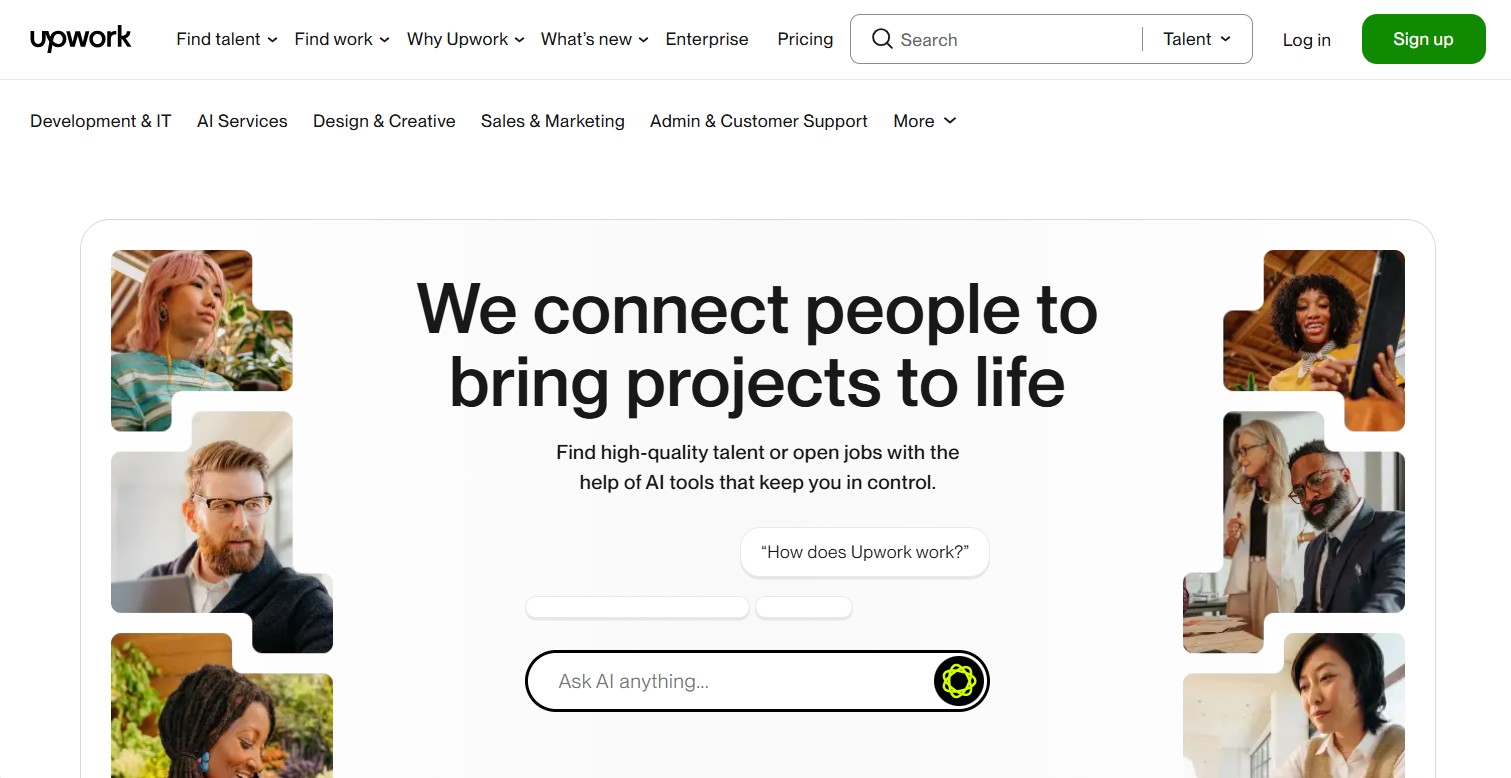
- Target Strategic Micro-Freelancing Upwork Gigs: Avoid massive, low-budget web design competitions. Instead, search specialized freelance boards for hyper-focused, short-term tasks. Look for businesses needing assistance with clean-up scripts, configuring specific AWS cloud permissions, or constructing SQL reporting queries.
- The Resume Payoff: This allows you to legally replace the “Project” section on your resume with a formal “Technical Consultant” or “Freelance IT Engineer” entry, instantly establishing professional authority.
Remote Tech Apprenticeships and Virtual Experience Programs
If you prefer a highly structured avenue to build enterprise skills without leaving your home, modern virtual simulation initiatives offer open access pipelines.
- Utilize Free Corporate Job Simulations: Platforms like Forage partner directly with tier-one global organizations (including AWS, Accenture, and Boston Consulting Group) to offer completely free, self-paced virtual work experience programs.
- Work Through Actual Enterprise Briefs: These simulations require you to tackle tasks designed by real engineering teams—such as configuring a secure virtual private cloud (VPC), executing a cloud migration assessment, or analyzing a mock security breach.
- Earn Verified Credentials: Upon completion, you walk away with verified certificates, explicit resume-ready talking points, and direct inclusion into specific corporate recruiter talent networks looking for non-traditional candidates.
Strategic Networking and Community Building
In a highly competitive tech market, submitting cold applications online is the least efficient way to land a job. Over 70% of open tech positions are filled through internal referrals before the public ever sees the job description. For a career switcher coming from a STEM background, networking isn’t an arbitrary social task—it is a core engineering strategy. By tapping into targeted global communities, optimizing your digital presence, and cultivating advocates within your target companies, you bypass the automated filters and get your portfolio directly in front of the human decision-makers who can hire you.
Top Global Communities Supporting Women in Tech (and How to Leverage Them)
You do not have to navigate your career pivot in isolation. Massive, well-established professional networks exist specifically to help women break into, stay in, and thrive within the tech ecosystem.
Rather than just joining these spaces to passively scroll, you need an active engagement strategy to maximize their value:
- WomenTech Network: Famous for its massive global reach and virtual summits, this is an excellent platform for broad networking. To leverage it, actively apply for their event scholarships, join their localized digital country chapters, and utilize their specialized Talent Hub to find companies with audited diversity hiring initiatives.
- Tech Ladies: A highly structured community boasting over 150,000 members worldwide. They host a private, vetted job board featuring companies explicitly looking to diversify their engineering teams. Use their forums to ask for specific advice on how to handle interview questions or request anonymous resume reviews from senior engineers.
- WomenHack: This community focuses heavily on direct candidate-to-employer matching through invite-only virtual and in-person speed-networking events across 120+ cities. It completely eliminates cold applications; you get to pitching your skills directly to engineering managers who are actively scaling their teams.
- r/girlsgonewired: A massive, anonymous community on Reddit with over 56,000 members. This is your go-to space for raw, unvarnished insights. Use it to search for candid reviews of specific bootcamps, internal culture breakdowns of major tech firms, and honest salary negotiation data.
LinkedIn Strategy: How to Network with Tech Hiring Managers
Hiring managers on LinkedIn do not want to receive generic connection requests that say, “Hi, please look at my resume and let me know if you are hiring.” This looks desperate and creates immediate psychological friction. To get a response from a busy tech leader, your outreach must be targeted, respectful, and brief.
Follow this multi-step outreach protocol to build high-value connections:
- Identify the Right Target: Do not waste time messaging internal HR recruiters who deal with thousands of applicants. Instead, look for the direct decision-maker: the Engineering Manager, Lead Cloud Architect, or Director of Data Analytics inside a company you admire.
- Interact with Their Content First: Before sending a direct message, find a recent post or article they shared. Leave an insightful, professional comment showing you actually read it. This ensures your name and profile face look familiar when you land in their inbox.
- Deploy a Frictionless Pitch: Send a short connection note that respects their time and places zero immediate demands on them.
Finding a Mentor vs. Finding a Sponsor: What You Actually Need
As you scale your Tech transition, you need to understand the fundamental distinction between two different types of professional support. Relying on the wrong relationship dynamic can stall your career growth.
- The Mentor: The Person Who Talks To You. A mentor is a trusted counselor who helps you build your roadmaps, untangle technical concepts, and handle imposter syndrome. They give you actionable feedback on your portfolio and share their past career mistakes. You can find mentors through formal community match-making programs like the Women in Tech® Hub WITH Mentoring platform. Understanding How Mentorship Programs Boost Career Growth for Women can also help you choose the right mentor and make the most of the relationship.
- The Sponsor: The Person Who Talks About You. A sponsor is someone entirely different: they are a senior leader inside your target company who possesses organizational power and budget control. A sponsor doesn’t sit down to review your Python code; instead, they mention your name in closed-door leadership meetings when a new project opens up or an internal referral is needed.
How to leverage this breakdown: Use mentors early on to sharpen your technical readiness and build confidence. Once you land an entry-level technical role or secure an apprenticeship, pivot your energy toward identifying potential internal sponsors by consistently delivering high-quality engineering work, volunteering for cross-department tasks, and making your career growth goals transparent to company executives.
The STEM-to-IT Job Application Blueprint
Building an elite technical portfolio and sharpening your skill set is only half the battle; you must also know how to package and sell your expertise. The traditional job application pipeline is notoriously broken, heavily reliant on automated filters that reject perfectly qualified non-traditional talent. To successfully pivot from STEM to IT, your application strategy needs to be calculated and precise. By engineering your resume to pass automated screens, formatting your digital footprint to attract active headhunters, and targeting inclusive tech employers, you turn a blind application into a strategic conversion funnel.
How to Rewrite Your Non-Tech STEM Resume to Pass the ATS
Most enterprise companies use an Applicant Tracking System (ATS) to scan resumes for specific semantic matches before a human ever sets eyes on them. If your resume is formatted like an academic curriculum vitae or filled with legacy lab jargon, the algorithm will automatically disqualify you.
To optimize your resume for an IT transition, apply these three expert rewrites:
- De-emphasize the Scientific Domain, Emphasize the Tooling: Replace domain-specific nouns with broadly applicable technical verbs. If you wrote Python scripts to process genomic sequencing data in a biology lab, the focus should not be on the genes—it should be on the pipeline architecture.
- Adopt the “Core Technical Competencies” Section: Place a clean, bulleted matrix of your hard technical skills (e.g., SQL, Python, AWS, Git, Linux) right at the top of the page, directly under your header. The ATS reads top-down, and front-loading these keywords establishes immediate contextual relevance.
- The X-Y-Z Formatting Formula: Structure your professional experience bullets using Google’s classic framework: “Accomplished [X], as measured by [Y], by doing [Z].”
Optimizing Your LinkedIn Profile for Active Tech Recruiters
Tech recruiters do not use Google to find talent; they spend their entire day inside a specialized tool called LinkedIn Recruiter. This platform functions purely on keywords, locations, and Boolean search filters. If your profile headline says “Biology Graduate seeking opportunities,” you are functionally invisible to the tech sector.
Transform your profile into an inbound recruiter magnet with these strategic updates:
- The Semantic Headline: Your headline shouldn’t just be your current job title. It needs to contain your target job title alongside your core technical stack.
- Formula:
Target Role | Tech Stack Element 1 + Tech Stack Element 2 | Transitioning STEM Professional - Example:
Junior Cloud Engineer | AWS, Terraform, Linux | Transitioning Mechanical Engineer
- Formula:
- Turn On “Open to Work” (Behind the Scenes): Set your preferences to “Open to Work,” but restrict visibility to Recruiters Only. This flags your profile in LinkedIn Recruiter search algorithms without broadcasting your job search to your current employer.
- Keyword-Stuffed “Skills” Section: Add at least 20 technical skills to your profile. Recruiters filter talent by checking exact skill boxes (e.g., Agile Methodologies, SQL, Data Analysis). The more matches you have, the higher your profile ranks in their search results.
Navigating the 2026 Interview Process: Technical Panels & Behavioral Fits
The technical interview process can feel intimidating, but as a STEM professional, you possess a massive natural advantage: you are trained to think out loud under empirical constraints.
Modern tech evaluations typically consist of two distinct phases:
1. The Technical Panel & Code Review
In 2026, engineering managers are moving away from forcing candidates to solve trick algorithmic riddles on empty whiteboards. Instead, they prefer practical, scenario-based take-home assignments or code architecture reviews. You might be handed a broken script and asked to debug it, or shown an inefficient AWS cloud map and asked to optimize it.
- The Expert Strategy: Prioritize communication over absolute perfection. If you hit a wall, explain your logical framework out loud: “I know that to scale this query, I need to isolate this specific variable. While I don’t recall the exact syntax for this AWS cloud configuration from memory, my approach would be to reference the documentation to execute an IAM security policy.”
2. The Behavioral Framework
Tech teams want to know how you handle failure, system downtime, and cross-functional friction. When answering behavioral questions, use the STAR Method (Situation, Task, Action, Result) and explicitly highlight your systems thinking and Agile adaptability. Show how your lab or engineering background taught you to document failures systematically rather than panicking under pressure.
Women-Friendly Job Boards and Companies with Diversity Tech Initiatives
Rather than shouting into the void of massive general job boards like Indeed, target niche job spaces where employers are explicitly paying a premium to find non-traditional, diverse technical talent.
Vetted Women-Friendly Job Boards
- WomenTech Network Talent Hub: A global matchmaking platform specifically designed to pair diverse candidates with tech companies looking to scale their engineering teams equitably.
- WomenHack: A premium platform that completely flips the job hunt. Vetted tech employers request interviews with you based on your technical profile, bypassing the initial resume screen entirely.
- WeAreTechWomen Jobs: An excellent job board specializing in early-career technical programs, apprenticeship pipelines, and returnships for women transitioning from alternative technical fields.
Top Enterprise Diversity Leaders
If you are mapping out your corporate targets, look for companies with transparent internal equity tracking and structured employee resource networks. In the current 2026 landscape, global organizations like Kyndryl, Accenture, Salesforce, and KnowBe4 consistently score at the top of diversity rankings.
These companies don’t just put diversity statements on their websites; they deploy real-time internal equity dashboards via platforms like Tableau to track promotion rates, run annual pay equity audits, and fund powerful internal Employee Resource Groups (ERGs) that actively sponsor and accelerate underrepresented professionals into senior engineering roles.
Checklist: Your 90-Day Tech Transition Action Plan
Transitioning into IT doesn’t happen by accident; it happens through execution. When you’re switching careers from a STEM background, trying to learn everything at once is a recipe for burnout. To break into the tech sector efficiently, you need a structured, time-bound roadmap that prioritizes high-impact skills, practical portfolio building, and strategic market positioning. This 90-day execution framework breaks your transition down into clear, manageable monthly sprints, designed to maximize your technical readiness and get you job-market ready as fast as possible.
Month 1 (Days 1–30): Establish Your Technical Architecture
The first 30 days are about clearing the noise and wiring your brain for modern IT infrastructure. Your goal this month is to master the foundational triple-threat: Cloud basics, SQL, and Git fundamentals.
- Select Your Tech Domain: Review your STEM background matrix and formally commit to one definitive target path (e.g., Cloud/DevOps, Data Analytics, or Cybersecurity).
- Set Up Your Local Development Environment: Install a modern code editor (like Visual Studio Code), set up Python on your machine, and establish local command-line terminal basics.
- Master Foundational Relational Databases: Complete a hands-on course in standard SQL. Practice querying, filtering with
WHEREclauses, grouping data viaGROUP BY, and combining tables withJOINparameters. - Learn Git and Version Control: Create a personal GitHub account. Learn how to open a terminal, initialize a repository, execute a git commit, push code modifications, and manage standard merge conflicts.
- Launch Your Foundational Cloud Training: Dedicate 15 hours to studying core cloud concepts (virtualization, storage buckets, and identity access management) using free tier modules on AWS Skill Builder or Microsoft Learn.
Month 2 (Days 31–60): Engineer Your Proof of Work
With the foundations in place, Month 2 pivots from theoretical learning to practical creation. This month is entirely focused on eliminating the “lack of experience” objection by building an undeniable digital portfolio.
- Pass Your First Core Cloud Certification: Register for and pass your foundational vendor exam (such as the AWS Certified Cloud Practitioner or Microsoft Azure Fundamentals) to validate your resume for applicant tracking systems.
- Build an End-to-End Automation Project: Write a custom Python script that solves a real data or systems problem—such as an automated pipeline that pulls metrics from a public API, parses it, and structures it in a clean format.
- Deploy Your Project Code to the Cloud: Take your automation script and deploy it live inside a public cloud environment using automated scheduling tools or serverless functions (like AWS Lambda).
- Optimize Your Project README Files: Write exhaustive, enterprise-grade documentation for your GitHub repositories detailing the explicit business problem, architectural flow diagram, technical stack, and step-by-step setup instructions.
- Submit Your First Open-Source Contribution: Navigate to a public technical project on GitHub, filter open issues by the
good-first-issuetag, and submit a pull request to optimize documentation or fix a minor code bug.
Month 3 (Days 61–90): Launch Your Strategic Market Attack
Your final 30 days are all about packaging your skills, infiltrating tech networks, and running a targeted inbound and outbound job application funnel.
- Translate Your STEM Resume for the ATS: Strip out non-technical lab or academic jargon and restructure your career bullet points using the X-Y-Z formula (“Accomplished X, measured by Y, by doing Z”).
- Optimize Your LinkedIn Profile for Inbound Recruiter Searches: Update your main headline to mirror your target tech title and core stack keywords, and change your internal privacy settings to “Open to Work (Recruiters Only).”
- Identify and Join 3 Core Women-in-Tech Communities: Establish active member profiles inside platforms like Tech Ladies, WomenTech Network, or WomenHack to access their specialized, internal job boards.
- Execute a Vetted LinkedIn Outreach Strategy: Connect with 5 engineering managers or technical leads weekly at target organizations by sending highly personalized, low-friction connection requests showing system alignment.
- Establish a Weekly Application Target: Commit to submitting a highly tailored, custom-fit application blueprint to 5–10 vetted, women-friendly companies per week while tracking interview metrics and technical take-home assignments systematically.
Conclusion: Step Fearlessly Into the Future of Tech
The transition from a traditional STEM background into the fast-paced world of IT can feel intimidating, but the data is entirely on your side. The 2026 tech ecosystem is undergoing a massive cultural and structural shift—moving away from rigid, legacy requirements and opening its doors to systematic, diverse thinkers who know how to solve real-world problems.
Your science, math, or engineering training hasn’t just prepared you for this pivot; it has given you an unfair competitive advantage. The analytical logic you used in the lab, the mathematical models you built in the classroom, and the structural workflows you navigated in your previous roles are the exact cognitive frameworks that drive modern cloud computing, data analytics, and cybersecurity infrastructure.
You do not need to restart your career from scratch. By aligning your existing skills with targeted certifications, engineering a clean, proof-of-work portfolio, and embedding yourself within supportive, women-focused technical networks, you can bypass the traditional entry-level gatekeeping.
The tech industry is actively looking for professionals who bring unique perspective and structured problem-solving to the table. Stop waiting until you feel 100% qualified to apply. Trust your training, leverage your unique STEM roadmap, and step fearlessly into the future of tech—the industry is ready for you.
This post might help: 25 High-Paying STEM Careers for Women in 2026 (Salaries, Degrees & Growth Outlook)
By Aveline Lowell
Founder & Editor-in-Chief, RiseByHer
Aveline Lowell writes research-driven content covering women’s finance, entrepreneurship, STEM, technology, and career growth. Her work focuses on practical, well-researched information that helps women make informed decisions.
Editorial & Disclaimer: RiseByHer aims to provide accurate, well-researched, and up-to-date information. Articles are reviewed and updated when necessary and are intended for general informational and educational purposes, not personalized financial, legal, tax, or professional advice.