
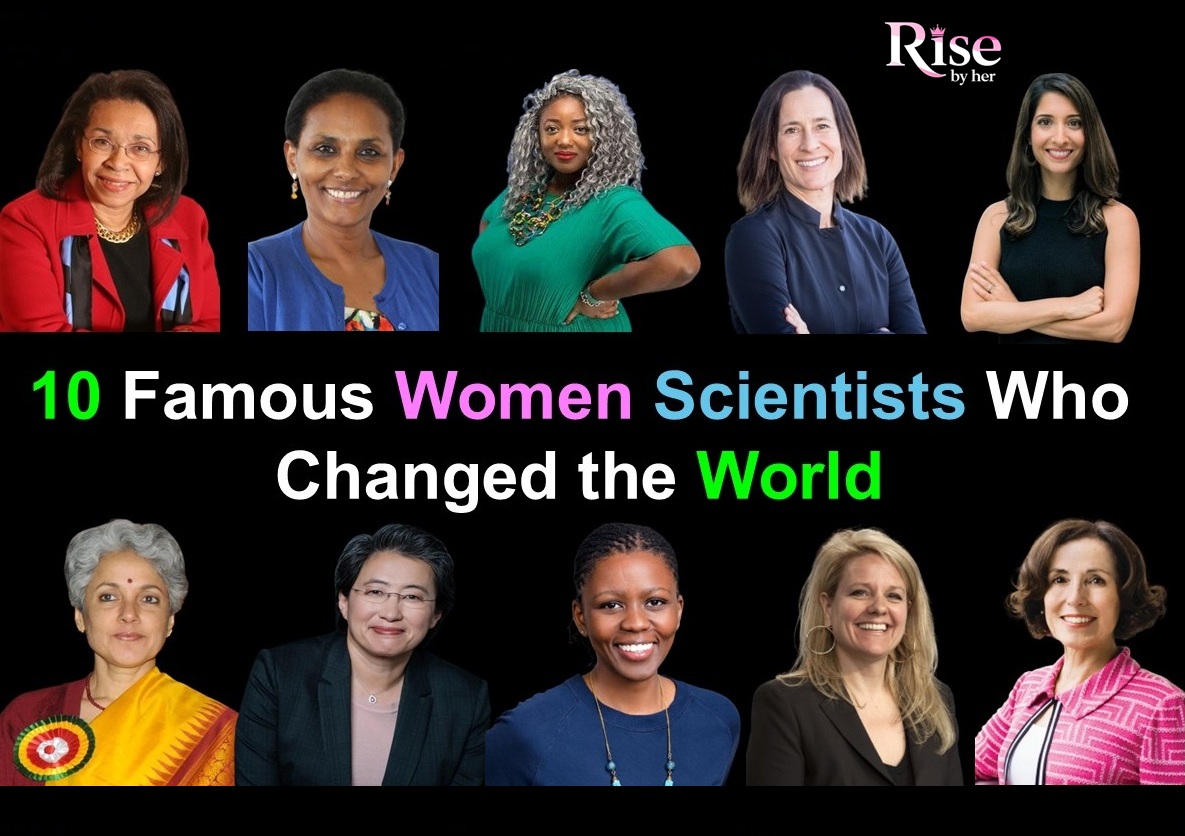
Despite decades of policy discussions and institutional initiatives, gender parity in science and technology remains an uphill climb. As of 2026, UNESCO and UNESCO-aligned global workforce tracking reveal that women still hold just 28% of the global STEM workforce. Worse, the disparity is even starker in high-growth, foundational sectors: women account for only 16% of engineering professionals and less than 25% of senior leadership roles in Artificial Intelligence.
However, systemic change is no longer waiting on top-down corporate promises. Instead, it is being driven directly by women-led STEM organizations—agile non-profits, venture-backed advocacy networks, and grassroots movements that deploy targeted grants, technical bootcamps, and policy frameworks to close the gender gap.
To help educators, investors, and professionals identify where the most significant structural impact is happening right now, our editorial team evaluated over 40 global networks. Below is our verified index of the most influential female-led organizations advancing gender equity in STEM for 2026.
Quick Guide: Top Women-Led STEM Initiatives at a Glance
| Organization | Primary Focus | 2026 Benchmark / Reach | Best For |
|---|---|---|---|
| Women in Tech® Global | Digital Inclusion & AI Ethics | 5M Women Target by 2030 (54+ Countries) | Mid-Career Upskilling & Global Advocacy |
| Black Girls Code | Youth Computer Science & AI Literacy | 100k+ Students Trained | K-12 Early Tech Pipeline & Coding |
| Greenlight for Girls (g4g) | Hands-On Science Education | 120,000+ Girls Engaged Globally | Interactive STEM Workshops (Ages 11-15) |
| Society of Women Engineers (SWE) | Engineering Leadership & Grants | $1.5M+ Annual Academic Scholarships | Professional Engineering Acceleration |
| Women in Cybersecurity (WiCyS) | Infosec & Cyber Talent Pathways | 10k+ Active Global Members | Information Security Mentorship |
Leading Global Nonprofits Championing Gender Equity in STEM
While public policy sets the baseline, top-tier global non-profits execute the ground-level work required to retain women across every stage of the STEM pipeline. Rather than relying on generic awareness campaigns, the most effective female-led organizations operate like agile innovation labs—deploying technical certifications, hardware access, and policy interventions.
Below is an in-depth breakdown of the flagship global non-profits setting the standard for structural impact in 2026.
Women in Tech® Global: Scaled Impact Across 50+ Countries
Led by Chief Executive Officer Elodie Robertson, Women in Tech® Global has evolved from an advocacy collective into one of the most operationally agile tech diplomacy entities in the world. Operating under high-level diplomatic protocols, the group directly addresses digital illiteracy and financial access disparities across 65+ active international chapters.
The 2026 Strategic Pillars
- Education: Accelerating STEM skills and practical artificial intelligence ethics.
- Business: Expanding access to venture funding and startup incubators for female founders.
- Digital Inclusion: Providing hardware access and last-mile internet connectivity to underserved communities.
- Tech Diplomacy: Working directly with international policymakers to enact inclusive technology mandates.
Key 2026 Initiatives & Metrics
Global Impact Milestone: The organization is on track toward its core mandate of directly empowering 5 million women and girls in STEAM by 2030 through vocational upskilling and entrepreneurship.
- Policy & Tech Diplomacy: Following international milestones like the Osaka Protocol, their global summits bring together heads of state, venture capital leaders, and tech ministers to formalize inclusive AI ethics frameworks.
- Emerging Tech Upskilling: In 2026, their educational arm pivoted heavily toward Generative AI literacy, spatial computing, and cybersecurity bootcamps tailored for mid-career professionals facing tech-driven workforce disruptions.
Girls Who Code & Black Girls Code: Bridging the Early-Stage Tech Gap
The drop-off rate for female interest in STEM peaks between ages 13 and 17. Girls Who Code (led by CEO Dr. Tarika Barrett) and Black Girls Code tackle this “leaky pipeline” by embedding computer science directly into youth culture.
How They Address the Early Pipeline
| Stage | Focus & Approach | Featured Programs |
|---|---|---|
| Ages 7–12 (Inspiration) | Black Girls Code: Culturally centered, high-engagement learning in game design and music coding. | Code Along Series, Regional Summer Bootcamps |
| Ages 13–18 (Mastery) | Girls Who Code: Free immersion tracks and practical programming skills to prepare for higher ed. | Summer Immersion Program, Self-Paced CS Tracks |
| Collegiate & C-Suite | Workforce Pipelines: Transitioning graduates directly into technical internships and leadership tracks. | AI & Cyber Internships, Tech Founder Grant Networks |
Distinct Approaches to Early-Stage Literacy
- Girls Who Code (Systemic Pipeline Building): Focuses heavily on free Summer Immersion Programs, self-paced computer science tracks, and college-to-career networking. Their 2026 strategic updates feature workforce integration programs designed to help alumni navigate AI adoption in corporate environments.
- Black Girls Code (Culturally Relevant Applied Tech): Specializes in high-engagement, culturally centered learning models. Through initiatives like the Code Along series and regional summer bootcamps, BGC teaches youth to build real-world applications in game asset design, music production via code, and introductory machine learning.
Greenlight for Girls (g4g): Inspiring Next-Gen Female Scientists
While software and computing capture much of the tech headline space, greenlight for girls (g4g) focuses on physical sciences, bio-engineering, renewable energy, and mathematics. Founded to demonstrate the everyday relevance of science, g4g transforms passive learning into interactive, lab-based discovery.
Core Focus Areas
- Biotechnology & Health Sciences: Hands-on lab work in genetics and medical device design.
- Renewable Energy & Climate Tech: Experiential projects focused on solar, wind, and battery storage systems.
- Applied Physics & Robotics: Interactive builds teaching foundational mechanical engineering concepts.
- Space Sustainability & Circular Economy: Science workshops targeting micro-plastics, satellite tracking, and environmental science.
Key 2026 Highlights
- 120,000+ Students Mobilized: Through partnerships with academic research centers and industrial sponsors, g4g has brought free, hands-on science workshops to girls across over 100 global locations.
- Focus on Climate Tech & Circular Economy: Recent g4g curricula emphasize sustainability challenges, pairing students with female scientists to solve real-world problems in micro-plastics, clean energy storage, and environmental engineering.
- Encouraging Early STEM Identity: By focusing on the 11–15 age demographic, g4g builds “science capital”—giving young women the confidence to elect advanced physics, chemistry, and calculus courses during secondary education.
Key Areas Where Women-Led STEM Organizations Are Driving Innovation in 2026
Women-led STEM organizations are moving away from passive career advocacy and taking direct technical leadership in high-growth, mission-critical industries. By aligning grants, research labs, and venture networks with global economic shifts, these organizations ensure female innovators are actively designing the core infrastructure of the future.
Below are the primary technical and economic domains where female-led initiatives are generating measurable disruption.
Ethical AI and Algorithmic Governance
As generative AI models and autonomous systems become central to enterprise operations, bias mitigation and data privacy have shifted from compliance concerns to foundational engineering requirements. Female-led networks are leading the development of responsible AI architecture to ensure training data reflects diverse real-world demographics.
Strategic Initiatives in AI & Emerging Tech
- Algorithmic Auditing & Bias Mitigation: Organizations like the Women in AI (WAI) collective provide open-source frameworks and technical toolkits to detect implicit bias in machine learning models prior to deployment.
- AI Policy & Tech Governance: Leveraging international summits such as the AI for Good Global Summit, female leaders actively collaborate with regulatory bodies to craft enforceable AI safety and data governance policies.
- Emerging Tech Upskilling: Targeted bootcamps hosted by groups like Black Girls Code and Women in Tech® Global deliver hands-on training in prompt engineering, machine learning ops (MLOps), and AI ethics.
Climate Tech, Cleantech, and Sustainable Engineering
Closing the gender gap in clean energy is essential to hitting global net-zero targets. Women-led organizations are channeling technical talent toward clean technology, circular economy modeling, and climate resilience.
| Innovation Sector | Core Organizational Focus | Key Industry Output |
|---|---|---|
| Cleantech & Energy Systems | Women in Cleantech & Sustainability (WCS): Applied learning in clean energy storage, battery chemistry, and grid modernization. | Applied AI workflows for grid optimization and decarbonization strategies. |
| Circular Economy & Bio-Materials | greenlight for girls (g4g): Experiential labs focused on micro-plastics mitigation and sustainable material design. | Early exposure to bio-engineering concepts for secondary school students. |
| Agritech & Climate Resilience | Regional Grassroots Alliances: Deploying hardware sensors and sustainable agricultural tools in developing markets. | Sensor-integrated irrigation systems and automated crop health monitoring. |
Venture Capital and Direct Funding for Female Founders
Access to early-stage capital remains one of the largest structural barriers for female tech entrepreneurs. Historically, less than 3% of total venture capital funding goes to all-female founding teams. In response, female-led funding alliances are building alternative venture pathways to bridge this equity financing gap.
Capital Deployment Benchmark: Non-profit accelerators like the Women in Tech Accelerator (in partnership with Village Capital) distributed over $600,000 in direct grants across 12 growth markets, demonstrating how non-dilutive capital speeds up commercialization for female-led startups.
Financial Mechanisms Driving Change
- Micro-Grants & Non-Dilutive Capital: Organizations such as Women Who Tech deploy direct equity-free cash grants to allow early-stage founders to build Minimum Viable Products (MVPs) without giving up control.
- Female-Led Angel Alliances: Networks like Female Founders connect women-led startups with more than 500 venture capital firms and institutional business angels across major tech hubs.
- Investor-Readiness Bootcamps: Specialized intensive programs focus on financial modeling, unit economics, and pitch architecture to convert seed-stage startups into venture-ready companies.
Cybersecurity and Defense Technology Pathways
With cyber threats expanding globally, workforce shortages in information security pose a systemic risk. Women-led organizations are building fast-track training pipelines to bring non-traditional talent into specialized cyber defense and digital forensics.
Focus Areas in Infosec Leadership
- Information Security Bootcamps: Women in Cybersecurity (WiCyS) provides direct pathways into cloud security, ethical hacking, and threat intelligence through sponsored industry certifications.
- CISO Executive Track: Mentorship programs designed to help senior female security engineers transition into Chief Information Security Officer (CISO) and board-level risk management roles.
Grassroots Movements & Local Leadership Shaping Regional Communities
While global non-profits establish top-down policy frameworks, hyper-local grassroots initiatives solve the immediate, region-specific barriers preventing women from entering and remaining in STEM. From bridging regional infrastructure deficits to navigating unique socio-cultural landscapes, regional leaders are building tailored community models that scale local innovation into global impact.
Below are the key operational models where grassroots female leaders are generating hyper-local transformation in 2026.
Hyper-Local STEM Incubators in Emerging Markets
In regions with limited venture capital distribution, localized incubator models provide the hardware, infrastructure, and early seed funding required to commercialize female-led innovations. Rather than importing Western tech frameworks, these incubators focus on “last-mile” technical solutions designed for local economic priorities.
Regional Incubator Footprints in 2026
| Region | Primary Grassroots Hubs | Core Technical Focus | Operational Impact Model |
|---|---|---|---|
| Sub-Saharan Africa | WomSTEM (FEM-HUB Mashinani) & Village Capital Partners | Climate-smart agritech, off-grid biosystems, and localized AI tools. | Hardware fabrication labs paired with localized micro-grants. |
| Latin America (LATAM) | Laboratoria & Regional Innovation Centers | Web development, UX design, and data science bootcamps. | Income-share agreements (ISAs) with direct enterprise placement pipelines. |
| Southeast Asia | UK-Thailand Women in STEM Network & Regional Accelerators | Clean technology, marine biology, and sustainable manufacturing. | University-backed cross-border research grants and lab access. |
Community-Driven Mentorship and Career Sponsorship Networks
A core driver of female retention in technical fields is moving from passive “mentorship” (giving advice) to active “sponsorship” (advocating for promotions and funding). Grassroots organizations build structured, peer-led networks that match mid-career female engineers with senior executive sponsors.
- Peer-to-Peer Technical Circles: Community-led groups like Tech Sisters create micro-communities where women share code reviews, collaborate on open-source repositories, and prepare for technical interviews.
- Executive Sponsorship Tracks: Initiatives within regional summits—such as the Women in Tech Summit Kenya—focus on bridging the jump from senior developer to engineering management through direct executive endorsement.
- Mental Health & Workplace Retention: Incorporating holistic support systems to address workplace burnout, microaggressions, and imposter syndrome—factors that disproportionately cause senior female talent to leave technical roles.
Last-Mile Hardware and Infrastructure Connectivity
Technical bootcamps are ineffective without reliable electricity and high-speed internet. Grassroots female leaders in peri-urban and rural areas are directly engineering last-mile infrastructure to ensure marginalized communities gain access to the digital economy.
Last-Mile Connectivity Metric: Rural innovation hubs like Kenya’s FEM-HUB Mashinani combine off-grid solar energy systems with satellite internet to deliver reliable AI and digital literacy toolkits to over 15,000 rural entrepreneurs.
Key Infrastructure Interventions
- Solar-Powered Mobile Labs: Converting transit vehicles into off-grid computer labs equipped with satellite connectivity to reach isolated rural schools.
- Low-Bandwidth Curriculum Design: Developing lightweight, offline-first learning software and WhatsApp/SMS-based educational chatbots (e.g., AgriVate Learn) so users can learn without continuous broadband access.
- Hardware Refurbishment Alliances: Collecting corporate e-waste, upgrading device specs, and redistributing hardware directly to low-income female students entering computer science programs.
Culturally Centered Advocacy and Local Language STEM Literacy
A significant barrier in emerging markets is that most advanced STEM documentation and code repositories are published exclusively in English. Grassroots innovators address this by translating technical curricula into local languages and designing culturally relevant learning modules.
- Localized Tech Terminology: Initiatives across LATAM and Asia translate core programming concepts into regional dialects, lowering language barriers for first-generation tech learners.
- Culturally Contextualized Problem Solving: Teaching computer science and robotics through local challenges—such as engineering automated solar crop dryers, local waste-management tracking systems, or regional health diagnostic tools.
- Community & Family Engagement: Engaging local elders, parents, and community leaders to demonstrate the economic return on girls’ STEM education, actively shifting cultural norms from the ground up.
How to Support and Partner with Women-Led STEM Initiatives
Translating advocacy into measurable workforce change requires strategic alignment, capital allocation, and operational participation. Whether you are an individual practitioner, an enterprise executive, or a academic administrator, partnering with women-led STEM organizations offers actionable frameworks to bridge the gender gap while expanding technical capacity.
Below are the four primary pathways for individuals and institutions to meaningfully engage with female-led STEM networks in 2026.
Corporate Sponsorships, CSR Alliances, and ESG Integration
For enterprise organizations, supporting female-led non-profits is no longer just a Corporate Social Responsibility (CSR) checklist item—it is an essential Environmental, Social, and Governance (ESG) strategy directly linked to talent acquisition and retention.
Enterprise Partnership Impact: Enterprise accelerators, such as the Standard Chartered Foundation Women in Tech Accelerator, distributed over $600,000 in grant funding across 12 markets in 2026, demonstrating how corporate-nonprofit alliances speed up commercialization for diverse founders while opening regional market pipelines.
Key Corporate Engagement Models
- Co-Branded Technical Bootcamps & Hardware Grants: Underwrite specialized upskilling cohorts (e.g., cloud security, generative AI ops, or clean tech) in exchange for direct access to pipeline talent pools.
- Direct Equity-Free Venture Grants: Partner with non-profit incubators to fund seed-stage pitch competitions, providing non-dilutive capital to female founders building enterprise tech solutions.
- CSR & ESG Metric Alignment: Work with groups like WISE (Women into Science and Engineering) to implement standardized gender equity diagnostic frameworks across internal engineering teams.
Skills-Based Mentorship, Micro-Volunteering, and Advisory Tracks
Individual tech professionals, engineering managers, and researchers can drive direct impact by contributing their time and domain expertise. Rather than generic career coaching, modern women-led initiatives prioritize skills-based micro-volunteering.
| Volunteer Path | Core Engagement Model | Recommended Role / Activity | Primary Target Group |
|---|---|---|---|
| STEM Storytellers & Role Models | Virtual or in-person career talks and interactive showcase sessions. | Sharing non-linear career trajectories, overcoming technical friction, and demonstrating live tool demos. | K-12 and university students entering tech pipelines. |
| Technical Reviewers & Code Mentors | Asynchronous or project-based technical evaluation. | Conducting open-source code reviews, portfolio feedback, and mock architecture interviews. | Boot camp graduates and early-career developers. |
| Executive Advisory & Board Placement | Governance, strategic growth, and fundraising counsel. | Serving on non-profit advisory task forces, policy committees, or strategic planning groups. | Senior mid-career professionals and C-Suite leaders. |
Institutional Research Alliances and Co-Developed Curricula
Higher education institutions and research labs play a critical role in formalizing early-stage exposure into accredited degree paths and long-term career tracks.
- Joint AI Ethics & Applied Research Labs: Co-fund academic research projects with female-led research collectives to investigate algorithmic bias, climate technology, or bio-engineering.
- Dual-Credit High School to College Pathways: Higher-ed admissions offices can integrate non-profit certificate programs (such as Girls Who Code or Black Girls Code modules) directly into university application and credit evaluation systems.
- Shared Infrastructure & Lab Access: Universities can open underutilized laboratory space, prototyping gear, and supercomputing access during off-peak hours to local grassroots female tech incubators.
vidual Giving, Employee Matching, and Endowment Support
Sustainable funding is the backbone of non-profit impact. Individual donors can unlock exponential value by tapping into structured corporate giving and estate mechanisms.
- Corporate Matching Gift Programs: Utilize workplace donation matching software (e.g., Benevity, Double the Donation) to instantly double or triple personal financial contributions to accredited 501(c)(3) or international equivalent organizations.
- Designated Scholarship Endowments: Establish recurring annual funds—such as regional Women in Tech Scholarships—targeting non-traditional adult learners or underrepresented demographics pursuing computer science and engineering degrees.
- In-Kind Equipment & Software Licensing: Donate enterprise software licenses, refurbished developer laptops, or cloud credit allocations directly to grassroots hubs operating in underserved regions.
Frequently Asked Questions (FAQs)
Understanding how female-led initiatives impact the global economy requires examining specific operational metrics, sponsorship pathways, and industry data. Below are concise answers to the most frequently searched questions surrounding women-led STEM organizations in 2026.
Which is the largest women-led STEM nonprofit globally?
The largest women-led STEM non-profit by global reach and chapter network is Women in Tech® Global, alongside youth-focused organizations like Girls Who Code.
Women in Tech® Global operates across 65+ countries with a mission to empower 5 million women and girls in STEAM by 2030. For youth pipeline development, Girls Who Code leads with over 860,000 students reached across elementary, secondary, and collegiate levels.
How do women-led organizations impact gender parity in tech?
Women-led organizations accelerate gender parity by addressing the “leaky pipeline” through direct skill certification, venture funding, and policy intervention.
Rather than relying on passive awareness, these organizations deploy targeted capital (such as equity-free grants for female founders), provide hands-on technical bootcamps in high-growth fields like AI and cybersecurity, and work directly with international bodies to mandate inclusive hiring and equal pay policies.
How can companies sponsor female-led STEM initiatives in 2026?
Enterprise organizations can sponsor female-led STEM initiatives through four primary avenues: co-branded technical bootcamps, direct non-profit venture grants, corporate gift matching, and skills-based employee volunteering.
Underwriting specific upskilling cohorts (e.g., cloud architecture or Generative AI ops) allows companies to directly access a vetted pipeline of diverse technical talent while fulfilling ESG and corporate social responsibility (CSR) commitments.
What percentage of global STEM leadership is held by women in 2026?
As of 2026, women hold approximately 28% of the global STEM workforce, but occupy less than 18% of director-level and senior executive roles in technical industries.
In specialized sectors like Artificial Intelligence and engineering, female representation in executive decision-making roles remains below 16%, highlighting why women-led mentorship and executive sponsorship programs are essential for mid-career retention.
What is the difference between STEM advocacy groups and STEM incubators?
STEM advocacy groups focus on broad policy reform, public awareness, and early-stage inspiration, whereas STEM incubators provide operational infrastructure, technical hardware, and commercialization funding.
While advocacy groups build the long-term talent pipeline, female-led incubators (such as Laboratoria in LATAM or FEM-HUB in Sub-Saharan Africa) directly equip women with hardware labs, seed grants, and enterprise placement pipelines to build commercial tech ventures.
Why is early exposure (ages 11–15) crucial for girls in STEM?
Research indicates that female interest in science and mathematics drops significantly between ages 13 and 17 due to social stereotypes, lack of visible role models, and reduced access to advanced coursework.
Organizations like greenlight for girls (g4g) and Black Girls Code target the 11–15 age demographic to build “science capital”—giving middle-school students the practical confidence to pursue advanced physics, computer science, and calculus in higher education.
Conclusion
Closing the gender gap in science and technology is no longer just an equity initiative—it is an economic necessity. As we look through 2026 and beyond, women-led STEM organizations are proving that targeted interventions, from early youth coding programs to venture capital funding for female founders, create compounding rewards across the entire global economy.
Realizing full gender parity requires sustained commitment from every corner of the industry:
- Enterprises: Shift CSR investments toward direct non-profit partnerships, hardware grants, and skills-based mentorship.
- Individuals: Donate, volunteer, or offer technical sponsorship to early- and mid-career female talent.
- Institutions: Integrate non-profit certificate tracks and build joint research opportunities with female-led initiatives.
Whether you choose to sponsor a local incubator, mentor an aspiring engineer, or partner with a global network, your engagement helps build a more inclusive, resilient, and innovative technological future.
By Aveline Lowell
Founder & Editor-in-Chief, RiseByHer
Aveline Lowell writes research-driven content covering women’s finance, entrepreneurship, STEM, technology, and career growth. Her work focuses on practical, well-researched information that helps women make informed decisions.
Editorial & Disclaimer: RiseByHer aims to provide accurate, well-researched, and up-to-date information. Articles are reviewed and updated when necessary and are intended for general informational and educational purposes, not personalized financial, legal, tax, or professional advice.