


Understanding your finances is one of the most powerful steps you can take toward independence and confidence. Yet many women are expected to navigate money matters without guidance, often while dealing with pay gaps, career breaks, or other unique challenges.
This beginner’s guide is here to change that. Designed specifically for women, it covers the essentials: budgeting, saving, managing debt, building credit, and starting to invest. You’ll also find tips and tools tailored to real-life situations women face every day.
Financial literacy isn’t about perfection. It’s about making informed choices and building confidence over time. No matter where you’re starting from, this guide will help you take control of your money and your future. Let’s begin.
Financial Literacy for Women Beginners: What It Really Means
Financial literacy means understanding how money works and how to manage it effectively. It includes everyday skills such as budgeting, saving, using credit responsibly, managing debt, and preparing for long-term goals like retirement or investing. Being financially literate gives you the ability to make informed decisions about your money rather than relying on guesswork or outside advice that may not serve your best interests.
1. Why Financial Education Matters More for Women
While financial knowledge is essential for everyone, it holds special value for women. Several factors contribute to this:
- Pay inequality: Women still earn less on average than men. According to FasterCapital, the gender pay gap remains a significant barrier to building wealth and financial security.
- Career interruptions: Many women take breaks from work for caregiving or family responsibilities, which can reduce lifetime earnings and retirement savings.
- Longer life expectancy: Women typically live longer than men, which means they need more money saved for retirement and are more likely to manage finances alone later in life.
These challenges make it even more important for women to build a strong financial foundation early and continue developing it over time.
2. How Financial Literacy Builds Confidence and Independence
Understanding personal finance gives women the tools to:
- Take control of everyday spending and saving decisions
- Plan ahead with clarity and purpose
- Avoid debt traps and unnecessary financial stress
- Set and achieve meaningful financial goals
As highlighted by Voya Financial, women who actively engage with their finances report feeling more secure and better prepared for unexpected life events. Financial literacy is not just about numbers; it is about having the confidence to make decisions that align with your values and future.
How to Budget and Manage Money Effectively as a Beginner
Creating and maintaining a budget is one of the most important steps in taking control of your finances. It helps you understand where your money is going, reduce unnecessary spending, and plan for future goals. For women, budgeting can also serve as a key tool for gaining financial independence, especially when managing multiple roles or variable income.
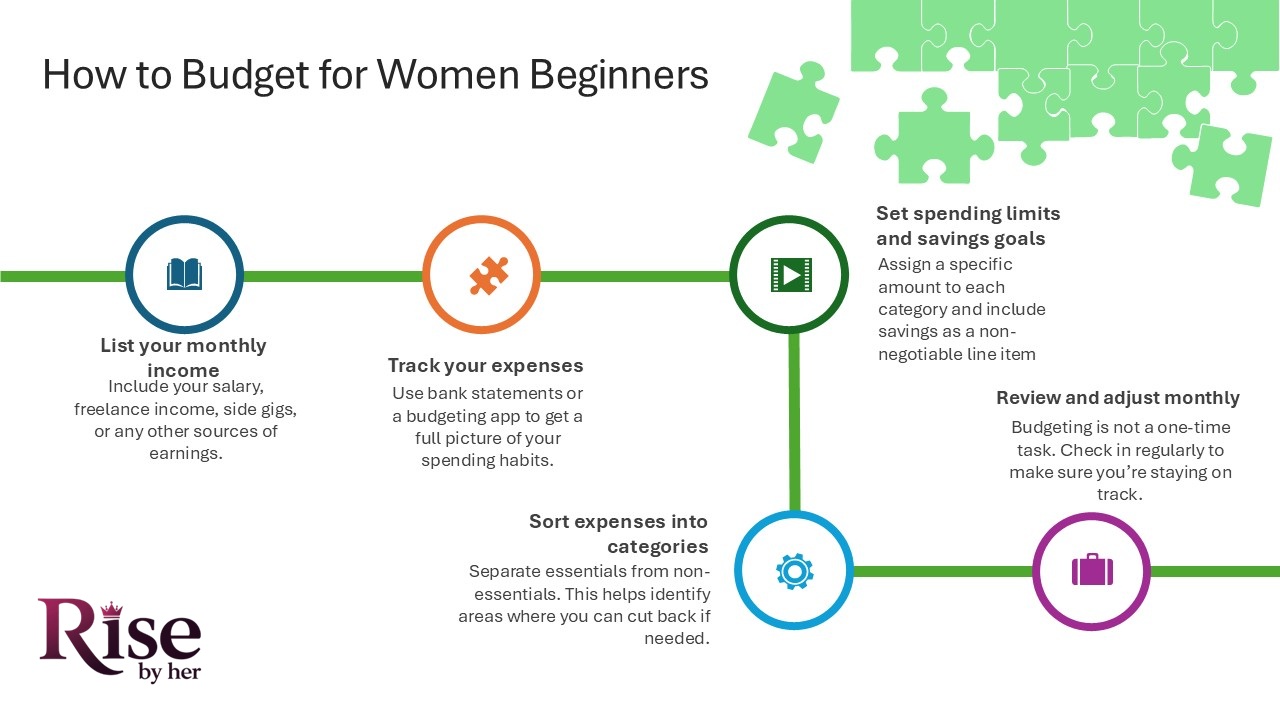
1. How to Budget for Women Beginners
Getting started with budgeting doesn’t have to be complicated. Here are a few simple steps to create a budget that works for your lifestyle:
- List your monthly income: Include your salary, freelance income, side gigs, or any other sources of earnings.
- Track your expenses: Start by recording all your spending for 30 days. Use bank statements or a budgeting app to get a full picture of your spending habits.
- Sort expenses into categories: Separate essentials (like rent, groceries, and utilities) from non-essentials (like dining out or subscriptions). This helps identify areas where you can cut back if needed.
- Set spending limits and savings goals: Assign a specific amount to each category and include savings as a non-negotiable line item.
- Review and adjust monthly: Budgeting is not a one-time task. Check in regularly to make sure you’re staying on track.
2. How to Track Expenses Easily Without Stress
- Use budgeting apps designed with women in mind, like Savvy Ladies, BolderMoney, or Mint.
- Try a physical planner or printable templates if you prefer writing things down.
- Involve a friend or partner to keep yourself accountable.
Case studies from Liberty Group and Investopedia show that women who actively track their spending are more likely to reach savings goals and avoid debt.
Learning how to budget is a powerful first step toward financial clarity. With the right tools and consistent tracking, you can create a spending plan that supports your values and future goals. Budgeting helps you spend with purpose and save with confidence.
If you want an easy way to stay on top of your finances, the 10-Minute Money Tracking Made Simple for Women guide shows how to quickly track your spending without feeling overwhelmed.
3. Common Budgeting Mistakes Women Should Avoid
Many beginners find budgeting difficult not because it is complicated, but because of a few simple mistakes that make it hard to stay consistent. Once you recognize them, it becomes much easier to stay in control of your money.
- Not tracking small daily expenses like coffee, snacks, or subscriptions, which slowly add up over time
- Creating a budget that is too strict or unrealistic compared to actual spending habits
- Forgetting irregular costs such as yearly subscriptions, gifts, or unexpected repairs
- Saving money only at the end of the month instead of setting it aside first
- Relying on memory instead of using a simple tool or app to track spending
Saving Money and Building a Strong Emergency Fund
Building savings is a crucial part of financial security, especially for women who often face unique financial challenges. Having a solid savings plan and an emergency fund can provide peace of mind and a safety net for unexpected expenses.
1. Why Every Woman Needs an Emergency Fund
An emergency fund acts as a financial cushion to cover unexpected costs like medical bills, car repairs, or sudden job loss. Experts recommend saving enough to cover three to six months’ worth of living expenses. For women, this fund is particularly important given factors such as career breaks or fluctuating income.
2. Step-by-Step Guide to Building Savings from Zero
Building savings from zero may feel difficult at first, but it becomes simple when you follow a clear and consistent process. The key is not how much you start with, but how regularly you save.
- Start by setting a very small and realistic savings goal, even if it is just a few dollars or a fixed percentage of your income
- Open a separate savings account so you do not mix savings with daily spending money
- Track your income and expenses to understand where your money is going each month
- Cut or reduce one small unnecessary expense and redirect that amount into savings
- Automate your savings so a fixed amount is transferred as soon as you receive income
- Increase your savings gradually whenever your income improves or expenses decrease
3. Easy Saving Strategies for Women on Any Income
Getting started with saving may seem overwhelming, but breaking it down into manageable steps can help:
- Set realistic goals: Start small if needed, such as saving $500 initially, then gradually increase your target.
- Automate your savings: Set up automatic transfers to your savings account right after each paycheck arrives. This “pay yourself first” method builds your savings without extra effort.
- Choose the right account: Look for savings accounts with no fees and competitive interest rates. High-yield savings accounts or credit unions often offer better returns than standard accounts.
4. How Much Should Women Save Each Month?
There is no single “perfect” amount to save each month. The right number depends on your income, expenses, and financial goals. What matters most is consistency, even small amounts can build strong savings over time.
- A common beginner rule is to save at least 10% to 20% of your monthly income
- If you are just starting, even 5% is a good beginning point
- Prioritize building an emergency fund before focusing on long-term goals
- Adjust your savings rate as your income increases or expenses decrease
- Focus on consistency rather than the exact amount, saving regularly matters more than saving big once in a while
If you’re looking for simple steps to improve your finances right away, the 5 Quick Ways Women Can Save Money Today can help you start cutting expenses immediately.
Debt Management and Credit Score Improvement for Women
Managing debt and building a strong credit history are essential skills for financial health. For women, understanding how to reduce debt and improve credit can open doors to better loans, housing, and financial opportunities.

1. Types of Debt Every Beginner Should Understand
Debt comes in many forms, including:
- Credit card debt
- Student loans
- Auto loans
- Mortgages
Each type has different interest rates and repayment terms. Knowing what kind of debt you have is the first step toward effective management.
2. Smart Debt Payoff Strategies (Snowball vs Avalanche)
When managing debt, the goal is to pay it off in a way that keeps you motivated and saves money on interest. Two of the most effective methods are the snowball and avalanche strategies.
- The snowball method focuses on paying off the smallest debts first to build motivation quickly
- The avalanche method focuses on paying off debts with the highest interest rates first to save more money over time
- Snowball is better for beginners who need quick wins and motivation
- Avalanche is better for those who want to reduce total interest and pay less overall
- Both methods require making minimum payments on all debts while focusing extra money on one target debt at a time
3. How Women Can Improve Their Credit Score Fast
A good credit score is vital for financial flexibility. Here’s how to boost yours:
- Pay bills on time, every time.
- Keep credit card balances low relative to limits.
- Avoid opening too many new credit accounts in a short time.
- Regularly check your credit report for errors or fraud.
4. Managing Student Loans and Personal Loans Effectively
Managing loans becomes much easier when you understand your repayment terms and stay consistent with payments. The goal is to avoid missed payments and reduce interest over time.
- Always know your interest rates, monthly payment, and due dates
- Pay at least the minimum on time to protect your credit score
- If possible, pay extra toward the principal to reduce total interest
- Consider refinancing or restructuring if interest rates are too high
- Prioritize high-interest personal loans before lower-interest student loans
5. Free Tools to Track Debt and Credit Health
Using simple tools can help you stay organized and avoid missing important payments. Many free options make it easy to track debt and monitor your credit.
- Budgeting apps like Mint or similar tools to track loans and expenses
- Credit monitoring apps that show your credit score and report changes
- Simple spreadsheets to list all debts, balances, and payment dates
- Bank apps that send reminders for upcoming loan payments
- Free credit report access tools to check your credit history regularly
If you’re trying to get out of debt faster, the Easy Debt Payoff Hacks That Save You Money can help you reduce interest costs and build a clearer repayment plan.
Investing for Women Beginners: A Simple Starter Guide
Investing is one of the most effective ways to build long-term wealth, but it can feel intimidating; especially for women who are just starting out. Understanding the basics and developing a clear strategy can help you grow your money confidently and securely.
1. Investing Basics Every Woman Should Know
Investing means putting your money into assets like stocks, bonds, mutual funds, or real estate with the goal of generating returns over time. Common investment vehicles include:
- Stocks: Ownership shares in a company with potential for growth and dividends.
- Bonds: Loans to governments or corporations that pay fixed interest.
- Mutual funds and ETFs: Pooled investments that spread risk across many assets.
- Retirement accounts: Such as IRAs or 401(k)s, offering tax advantages.
Starting with simple, low-cost options like index funds can help minimize risk while learning the ropes.
2. How to Start Investing with Little Money
You do not need a large amount of money to start investing. The most important step is to begin early, even with small amounts, and stay consistent over time.
- Start with low-cost options like index funds or ETFs that allow small investments
- Use investing apps that let you begin with a small budget or fractional shares
- Set up automatic monthly contributions, even if it is a small fixed amount
- Focus on long-term growth instead of trying to time the market
- Reinvest earnings to benefit from compound growth over time
- Increase your investment amount gradually as your income grows
3. Understanding Risk Tolerance and Building a Strategy
Before investing, it is important to understand how much risk you are comfortable with. This helps you choose investments that match your goals and avoid panic during market changes.
- Risk tolerance depends on your income, goals, and comfort with uncertainty
- Younger beginners can usually take more risk because they have more time to recover
- A basic strategy is to mix safer and higher-growth investments (diversification)
- Always invest with a clear goal, such as retirement, savings growth, or long-term wealth
4. Best Beginner-Friendly Investment Options (ETFs, Index Funds)
For beginners, simple and low-cost investments are often the best place to start. They reduce risk and do not require deep market knowledge.
- ETFs (Exchange-Traded Funds) that track a group of stocks for instant diversification
- Index funds that follow major markets like the S&P 500
- Robo-advisors that automatically manage your investments
- Broad-market funds instead of individual risky stocks
- Low-fee options that help you keep more of your returns
5. Common Investing Mistakes Women Should Avoid
Many beginners lose confidence in investing because of avoidable mistakes. Staying aware of these helps you build better long-term habits.
- Trying to “time the market” instead of investing consistently
- Investing without understanding the basics or risks involved
- Putting all money into one stock or one type of asset
- Withdrawing money too early because of short-term market changes
- Ignoring fees that can reduce long-term returns
6. Where to Learn Investing as a Beginner
Learning investing does not have to be complicated or expensive. There are many simple and free ways to build knowledge step by step.
- Beginner-friendly finance websites and blogs
- Free online courses on investing basics
- YouTube channels that explain simple investing concepts
- Investment apps with built-in learning sections
- Books for beginners focused on personal finance and investing fundamentals
Retirement Planning for Women: Start Early, Retire Confident
Planning for retirement is one of the most important financial steps women can take to ensure security and independence in later years. Because women often face unique challenges, early and strategic planning is essential.

1. How Retirement Accounts Work (401k, IRA Basics)
Key retirement accounts include:
- 401(k): Employer-sponsored plans that often include matching contributions.
- Individual Retirement Accounts (IRA): Personal accounts with tax benefits, including Traditional and Roth IRAs.
Knowing how these accounts work helps you maximize savings and benefits.
2. How Much Money Do Women Need for Retirement?
The amount needed for retirement depends on lifestyle, location, and expected expenses. There is no fixed number, but planning early helps you estimate a realistic target.
- A common guideline is to aim for about 70% to 80% of your pre-retirement income per year
- Your retirement needs depend on housing, healthcare, travel, and daily living costs
- Women often need more retirement savings due to longer life expectancy
- Starting early reduces the total amount you need to save each month
- Using retirement calculators can help you estimate a personal goal
Using online retirement calculators can provide personalized projections and help set realistic savings goals.
3. Why Women Face Unique Retirement Challenges
Women face specific hurdles in retirement planning, such as:
- Career breaks: Time off for caregiving can reduce contributions and compound growth.
- Lower lifetime earnings: The gender pay gap means less money saved overall.
To overcome these, focus on maximizing contributions when you can and taking advantage of employer matching programs.
4. Simple Retirement Planning Steps for Beginners
Retirement planning can feel overwhelming, but it becomes easier when broken into small steps. The key is to start early and stay consistent.
- Start contributing to a retirement account as soon as possible, even with small amounts
- Take advantage of employer-sponsored plans if available
- Set a monthly savings goal and increase it gradually over time
- Diversify your investments to balance risk and growth
- Review your retirement plan regularly and adjust as your income changes
Best Financial Tools and Resources for Women Beginners
Using the right financial tools can make money management much easier, especially when you are just starting. These tools help you track spending, invest confidently, monitor credit, and learn financial skills at your own pace.
1. Budgeting Apps and Expense Trackers
Budgeting apps help you understand where your money goes and keep your spending under control without complicated spreadsheets.
- Apps like Mint or similar tools to track income and expenses automatically
- Simple budgeting apps like YNAB (You Need A Budget) for structured planning
- Bank apps with built-in spending categories and alerts
- Manual spreadsheets for beginners who prefer full control
These tools simplify money management and empower you to make smarter decisions.
2. Investing Platforms for Beginners
Beginner-friendly investing platforms make it easier to start with small amounts and learn as you go.
- Robo-advisors that automatically build and manage your portfolio
- Brokerage apps that allow fractional shares and low minimum investments
- Platforms that offer ETFs and index funds for simple diversification
- Apps with educational features to guide first-time investors
3. Credit Score Monitoring Tools
Monitoring your credit score regularly helps you stay aware of your financial health and avoid surprises.
- Free credit report services that show your credit history
- Credit monitoring apps that track score changes in real time
- Bank or credit card apps with built-in credit score updates
- Tools that alert you to fraud or unusual account activity
4. Educational Websites and Free Courses
Learning the basics of finance is key to building long-term confidence and making smarter money decisions.
- Free personal finance blogs and beginner guides
- Online learning platforms offering introductory finance courses
- YouTube channels focused on budgeting, saving, and investing basics
- Financial literacy websites with simple step-by-step lessons
Building Financial Confidence and Breaking Money Barriers
Many women face unique psychological and societal challenges when it comes to managing money. Addressing these barriers is a crucial step toward financial empowerment and long-term success.
1. Common Money Myths Women Should Ignore
Some beliefs can hold women back from taking control of their finances, such as:
- “I’m not good with money.”
- “Investing is too risky or complicated.”
- “I don’t earn enough to save or invest.”
Recognizing and challenging these myths helps overcome financial anxiety for women and encourages proactive money management.
2. How to Build Financial Confidence Step by Step
Confidence comes with knowledge and experience. To build yours:
- Start with small, manageable financial decisions to gain momentum.
- Celebrate progress, no matter how minor it seems.
- Educate yourself using trustworthy resources and ask questions without hesitation.
3. Overcoming Fear of Investing and Money Management
Many beginners feel stressed or afraid when it comes to money, especially investing. This is normal, but avoiding it can slow down your financial progress. The key is to start small and build confidence step by step.
- Start with very small investments or savings amounts to reduce pressure
- Focus on learning the basics instead of trying to “get everything right” immediately
- Accept that mistakes are part of the learning process
- Use simple, beginner-friendly tools instead of complex financial products
- Follow a long-term approach instead of reacting to short-term market changes
- Build confidence by tracking small wins, like saving consistently each month
4. Financial Empowerment Habits for Long-Term Success
- Seek mentorship: Find a trusted financial advisor or mentor who understands your goals and challenges.
- Join supportive communities: Engage with groups focused on women’s financial growth.
- Practice self-compassion: Financial mistakes are learning opportunities, not failures.
Personal stories of women who overcame money fears can inspire and guide you on your own journey.
Building financial confidence requires both practical knowledge and emotional support. By confronting myths, seeking guidance, and celebrating your progress, you can overcome barriers and take charge of your financial future with confidence.
Frequently Asked Questions About Financial Literacy for Women
This section answers common beginner questions to help you understand the basics of managing money, saving, and investing with confidence.
What is financial literacy in simple terms?
Financial literacy means understanding how money works so you can make smart decisions about earning, spending, saving, and investing.
How can a woman start managing money with no experience?
Start by tracking your income and expenses, then create a simple budget and focus on saving a small amount consistently each month.
What is the best budget method for beginners?
The 50/30/20 rule is often best for beginners: 50% needs, 30% wants, and 20% savings or debt repayment.
How much should a beginner woman save monthly?
A good starting point is 10% to 20% of your income, but even small amounts are fine if you are just beginning.
Is investing safe for women beginners?
Investing is generally safe when done long-term and with diversified options like ETFs or index funds, but all investing carries some level of risk.
What is the difference between saving and investing?
Saving is keeping money safe for short-term needs, while investing is using money to grow wealth over the long term.
Do I need a lot of money to start investing?
No, many platforms allow you to start with very small amounts, even a few dollars, especially with fractional shares or ETFs.
How do I avoid financial mistakes as a beginner?
Start simple, track your spending, avoid unnecessary debt, and focus on consistency rather than perfection.
When should I start planning for retirement?
The best time to start is as early as possible, even in your 20s or whenever you begin earning income.
Final Thoughts: Start Your Financial Journey Today
Building financial confidence takes time, but it always starts with small and consistent actions. You do not need to know everything or have a lot of money to begin. What matters most is taking the first step and improving little by little.
Financial literacy is not about being perfect with money, but about becoming more aware and intentional with how you earn, spend, save, and invest. Even simple habits like tracking expenses, setting a small savings goal, or learning one new financial concept can make a big difference over time.
As you continue learning and practicing, your confidence will grow naturally. The key is to stay consistent, keep things simple, and focus on long-term progress rather than quick results.

By Aveline Lowell
Founder & Editor-in-Chief, RisebyHer
Aveline Lowell is the Founder and Editor-in-Chief of Rise by Her, where she publishes research-driven content focused on women’s entrepreneurship, financial independence, and scalable income strategies. Her work covers profitable business models, grant opportunities, digital income growth, and strategic career advancement for modern women building sustainable wealth.
She is committed to providing structured, practical guidance that helps women make informed financial and business decisions.