
The tech landscape has shifted. Between the massive wave of AI integration, evolving corporate DEI landscapes, and a fiercely competitive job market, navigating a career in tech looks radically different today than it did even two years ago.
But here is the unchanging reality: You shouldn’t have to build your career in a vacuum. Whether you are a software engineer trying to break into machine learning, a mid-career product manager eyeing the C-suite, or a founder looking for capital, the right network isn’t just a nice-to-have benefit—it’s your ultimate career accelerator.
If you want to know exactly where to invest your time, energy, and network equity this year, you’re in the right place. From global mentorship hubs to underground job boards, here is your definitive blueprint to the 15 best organizations supporting women in tech in 2026.
Why Supporting Women in Tech Matters More Than Ever
The conversation around diversity in tech is no longer about checking a corporate social responsibility box—it is a critical business strategy for survival. As the industry faces a massive macroeconomic shift and a complete technological overhaul, empowering women in tech isn’t just a matter of fairness; it’s the key to preventing severe talent shortages and building unbiased technology.
Navigating the Post-DEI Funding Landscape
The corporate landscape has undergone a massive retraction. The sweeping corporate diversity commitments of the early 2020s have faced budget cuts, legal challenges, and a shifting political climate, resulting in what experts call the “Post-DEI Era.”
- The Funding Squeeze: Traditional corporate-sponsored diversity initiatives are shrinking. Companies are consolidating their internal programs, leaving a massive gap in structured support for women.
- The Power of External Networks: Because internal corporate resource groups (ERGs) are facing budget constraints, independent organizations and third-party tech networks have become the ultimate safety net.
- The Bottom Line: To survive layoffs and shifting corporate priorities, women must build “network equity” outside of their immediate employers. External organizations offer a resilient, cross-industry ecosystem that corporate budget cuts cannot touch.
The AI Upskilling Imperative
We are currently living through the fastest technology adoption curve in human history. Artificial Intelligence isn’t just changing how we write code or manage products—it is fundamentally rewriting job descriptions. If women are left out of the AI revolution, the tech gender gap could widen permanently.
- Preventing Algorithmic Bias: AI models learn from the data they are fed. If the engineering teams building these models lack gender diversity, the resulting AI products will inherently carry systemic bias. Women must be in the room where these algorithms are designed.
- The Upskilling Race: The tech roles most vulnerable to immediate automation often have high female representation. Conversely, the fastest-growing fields—like Machine Learning Engineering, AI Ethics, and Data Architecture—suffer from a massive gender imbalance.
- The Opportunity: Specialized women-in-tech organizations are acting as the primary accelerators for technical upskilling. They bridge the gap by offering targeted AI bootcamps, peer-led study groups, and hands-on workshops that ensure women aren’t just consumers of AI, but its architects.
The Gender Gap in Tech: Key Stats for 2026
To solve a problem, you have to measure it accurately. While headlines frequently celebrate individual milestones for female founders and executives, the macroeconomic data tells a far more nuanced story. In 2026, the tech sector presents a sharp paradox: women are upskilling and adopting emerging technologies faster than ever before, yet systemic structural hurdles continue to cap their aggregate progress.
The hard numbers paint a clear picture of exactly where the baseline stands today.
Representation in Leadership and AI Roles
The baseline metric for overall female representation in the global tech workforce has hovered stubbornly around 26.7%. However, when we dissect the data by specialization and seniority, the disparity becomes stark.
- The AI and Machine Learning Divide: Despite Artificial Intelligence driving the current tech boom, women make up only 26% of the global AI workforce and just 18% of elite AI researchers.
- The Technical C-Suite Ceiling: While women hold roughly 29% of tech C-suite positions globally, they occupy fewer than 16% of Chief Technology Officer (CTO) or Chief Information Officer (CIO) roles. The majority of female executive representation remains heavily clustered in non-technical branches, such as HR, Legal, and Marketing.
- The Daily Tools Gap: A subtle but impactful “adoption gap” has emerged in the workplace. Approximately 48% of men in technical roles utilize generative AI tools daily to augment their productivity, compared to just 32% of women—a gap primarily driven by a reported lack of on-the-job training access for junior female engineers.
Retention Challenges and the “Broken Rung”
The gender gap in tech isn’t an acquisition problem; it’s a retention and promotion crisis. The industry is losing talent almost as fast as it recruits it.
| Career Milestone / Metric | The 2026 Reality for Women in Tech |
|---|---|
| The “Broken Rung” Rate | Only 84 women are promoted to their first managerial role for every 100 men. |
| The Mid-Career Attrition Rate | 50% of women leave the tech industry entirely by age 35, citing toxic culture or lack of growth. |
| The Venture Capital Deficit | All-female founding teams secure just 2.3% of total venture capital funding. |
| The Pay Equity Gap | Women in tech still earn an average of 84 cents for every dollar earned by men. |
The structural barrier isn’t the “glass ceiling” at the absolute top—it is the broken rung at the very first step up the ladder. Because entry-level women are blocked from moving into their first management positions at equitable rates, the pipeline of qualified female leaders is choked before it ever has a chance to scale. Furthermore, rigid return-to-office (RTO) mandates implemented across major tech firms have driven a 15% higher attrition rate among female technical staff compared to their male peers, proving that flexibility remains a necessity for sustainable career longevity.
How to Choose the Right Women-in-Tech Organization
With dozens of professional networks competing for your attention, joining the wrong one is a fast track to digital fatigue. You don’t need more unread Slack notifications—you need a curated ecosystem that moves your specific career needle. Choosing the right organization requires a strategic approach based on your current career stage, technical domain, and professional goals.
Here is the exact framework you should use to audit an organization before hitting “Join.”

Global vs. Local Chapter Reach
The scope of an organization’s network dictates the type of opportunities you’ll receive.
- The Global Powerhouses: Large, international networks are ideal if you work remotely, aim to relocate internationally, or want to understand macroeconomic tech trends. They offer massive digital communities, but it can be easier to feel like a face in the crowd.
- The Grassroots Local Chapters: Regional or city-specific networks excel at hyper-localized hyper-growth. If your goal is to find an in-person co-founder, secure a job at a local tech hub, or find a local angel investor, prioritize organizations with highly active regional chapters.
- The Hybrid Sweet Spot: Look for global organizations that host localized sub-chapters (e.g., Latinas in Tech or AnitaB.org). This gives you global leverage with local execution.
Mentorship and Sponsorship Opportunities
There is a massive structural difference between advice and advocacy. When evaluating an organization’s mentorship structure, look for how they bridge this gap.
- Organic vs. Structured Mentorship: Does the group just have a “mentorship channel” on Slack where requests go to die, or do they run a structured, cohort-based matching algorithm? Prioritize organizations that vet both mentors and mentees.
- The Sponsorship Factor: Exceptional organizations don’t just offer mentorship (someone to talk to you); they foster sponsorship (leaders who talk about you behind closed doors). Look for networks that actively connect junior and mid-career women with executive-level sponsors who have the institutional power to recommend them for promotions, board seats, or VC funding.
Career Advancement and Job Boards
A community is only as strong as its economic utility. The best women-in-tech organizations act as direct career funnels.
- Curated Job Boards: Top-tier organizations feature exclusive, inbound job boards where partner companies explicitly look for diverse technical talent. These applications often bypass the traditional applicant tracking system (ATS) black hole.
- Upskilling and Certifications: In 2026, a community must offer technical utility. Look for organizations providing subsidized cloud architecture, data science, or AI upskilling paths.
- Resume and Interview Prep: Check if the organization hosts peer-led technical mock interviews (especially system design and LeetCode-style sessions) or portfolio reviews specifically tailored to women pivoting into senior IC or engineering management roles
Cost, Inclusivity, and Accessibility
An organization’s infrastructure should align with your budget and your values.
- The Fee Structure: High-tier executive networks often require hefty annual membership dues. While they offer incredible ROI for senior leaders, entry-level engineers or students should look for groups that offer tiered pricing, sliding scales, or fully free tiers funded by corporate sponsorships.
- Inclusivity of Non-Linear Paths: Ensure the community welcomes non-traditional tech talent. The best spaces actively support bootcamp grads, self-taught developers, and women returning to the workforce after a career break.
- Intersectionality Matters: A monolithic approach to “women in tech” often leaves marginalized groups behind. Assess whether the organization intentionally builds safe spaces, sub-groups, and dedicated programming for Black, Indigenous, Latina, LGBTQIA+, and neurodivergent women in the industry.
Top 15 Organizations Supporting Women in Tech (2026)
Belonging to a professional community is no longer just about career insurance; it is about accelerating your career momentum. However, the ecosystem has rapidly transformed. Legacy networks that defined the last decade have evolved, modern digital-first platforms have exploded in popularity, and specialized hubs have emerged to address specific identities and technical niches.
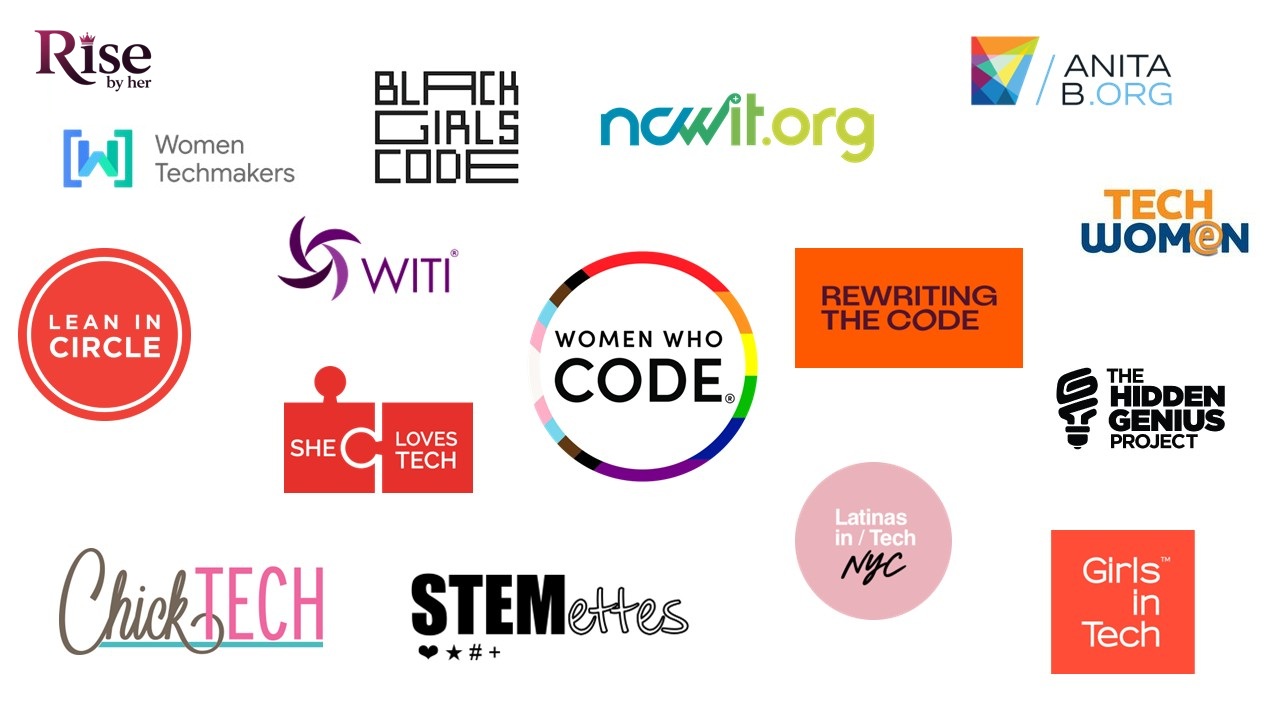
The following curated, vetted selection represents the top 15 organizations actively moving the needle for women in tech this year.
1. AnitaB.org
- Founded: 1997
- The Vibe: The global benchmark for technical scale and systemic industry impact.
- Best For: Enterprise networking, high-level job placement, and academic research.
- Why It Matters: As the architects behind the legendary Grace Hopper Celebration (GHC), AnitaB.org remains a powerhouse. In response to the evolving landscape, their focus centers heavily on immersive technical deep dives and virtual career fairs that directly connect talent with top-tier tech companies.
2. Tech Ladies
- Founded: 2016
- The Vibe: A transactional, high-utility job hub meets a supportive digital community.
- Best For: Mid-career to senior individual contributors (ICs) looking for vetted, fair-pay open roles.
- Why It Matters: Tech Ladies completely bypasses the typical noise of professional social networks. Its primary engine is a highly curated, inbound job board featuring companies thoroughly vetted for equitable hiring practices and supportive internal cultures.
3. Elpha
- Founded: 2019
- The Vibe: The underground, highly candid “LinkedIn alternative” exclusively for women in tech.
- Best For: Unfiltered career advice, salary transparency, and peer mentorship.
- Why It Matters: Elpha operates as a dynamic digital-first ecosystem. It is the premier destination for transparent discussions regarding technical challenges, corporate politics, startup fundraising, and authentic, crowdsourced workplace reviews.
4. Black Girls Code
- Founded: 2011
- The Vibe: Mission-driven pipeline builder fostering the next generation of technical creators.
- Best For: Young coders, early-career engineers, and professionals passionate about youth mentorship.
- Why It Matters: Black Girls Code remains vital to fixing the tech pipeline from the ground up. By providing hands-on coding workshops, robotics expos, and early corporate exposure, they ensure young Black women enter the workforce ready to build.
5. Women Tech Network
- Founded: 2019
- The Vibe: Global, massive scale driven by high-tech virtual infrastructure.
- Best For: Virtual international networking and global cross-border career pivots.
- Why It Matters: Hosting the monumental Women in Tech Global Conference, this platform unites hundreds of thousands of professionals across more than 170 countries. Their programming heavily prioritizes technical leadership and actionable AI engineering frameworks.
6. TechWomen
- Founded: 2011
- The Vibe: An elite, government-backed international exchange initiative.
- Best For: Emerging technical leaders across Africa, Central and South Asia, and the Middle East.
- Why It Matters: Managed by the U.S. Department of State, this initiative pairs global trailblazers with Silicon Valley tech giants for intensive mentorship, completely breaking down geographic barriers to technical advancement.
7. She Loves Tech
- Founded: 2015
- The Vibe: Part startup accelerator, part global venture capital funnel.
- Best For: Female tech founders, entrepreneurs, and early-stage innovators.
- Why It Matters: Operating the world’s largest startup competition for women-led businesses, She Loves Tech provides a crucial bridge to funding, international market access, and tier-one investor networks.
8. Rewriting the Code
- Founded: 2017
- The Vibe: Hyper-supportive, rapidly growing community for early-career tech talent.
- Best For: Undergraduate, graduate, and early-career software engineers and data scientists.
- Why It Matters: RTC specifically targets the university-to-corporate bridge. They combat early isolation by offering specialized peer cohorts, internship placement networks, and technical interview preparation.
9. NCWIT (National Center for Women & Information Technology)
- Founded: 2004
- The Vibe: Data-backed, institutional change engine heavily rooted in academia and policy.
- Best For: Researchers, educators, corporate DEI architects, and student computing award candidates.
- Why It Matters: NCWIT provides the empirical foundation for diversity in tech, offering actionable, evidence-based toolkits to restructure computing programs across thousands of universities and corporations.
10. WITI (Women in Technology International)
- Founded: 1989
- The Vibe: The original enterprise professional association built for business-minded technologists.
- Best For: Mid-level managers, executives, and technical consultants.
- Why It Matters: For decades, WITI has specialized in executive development, marketplace leadership, and building corporate governance skills tailored for technical women eyeing board positions.
11. Women Techmakers by Google
- Founded: 2014
- The Vibe: Resource-rich, developer-centric, global brand ecosystem.
- Best For: Engineers, designers, and product managers working heavily within Google Cloud and developer ecosystems.
- Why It Matters: Driven by Google’s massive global footprint, this initiative provides localized visibility, cloud platform credits, and community summits around major tech events like Google I/O.
12. STEMettes
- Founded: 2013
- The Vibe: Vibrant, UK-focused, creative youth intervention organization.
- Best For: UK and European girls, young women, and non-binary individuals exploring STEM.
- Why It Matters: STEMettes introduces young people to the tech economy via creative hackathons, corporate shadow days, and mentorship, successfully steering thousands of students toward technical degrees.
13. Latinas in Tech
- Founded: 2014
- The Vibe: Fast-growing, highly active, and culturally celebratory network.
- Best For: Latina engineers, product owners, and corporate tech professionals seeking community.
- Why It Matters: With chapters across the globe, this organization serves as a critical accelerator, facilitating direct interview tracks with top-tier technical recruiters and cultivating a tight-knit professional family.
14. ChickTech
- Founded: 2012
- The Vibe: Grassroots, hands-on, and community-centered.
- Best For: High school students discovering tech, and adult professionals looking to volunteer.
- Why It Matters: ChickTech works through regional chapters to host high-impact technology clinics, providing a welcoming environment for those who might otherwise feel excluded from technical paths.
15. Lean In Circles for Women in Tech
- Founded: 2013
- The Vibe: Small-group, highly personal peer accountability squads.
- Best For: Intimate soft-skills development, management coaching, and local peer support.
- Why It Matters: Utilizing the framework established by Sheryl Sandberg’s LeanIn.Org, these micro-communities offer a structured, confidential setting to practice negotiation, leadership strategies, and bounce back from career setbacks.
These 15 organizations are paving the way toward a more inclusive, innovative, and supportive tech industry for women in 2026 and beyond. Whether you’re just getting started or aiming for the C-suite, there’s a community here for you.
How to Maximize Your Network Benefits
Joining an organization is only 10% of the equation; knowing how to extract its value is where the real career ROI happens. Treat your memberships like an active investment portfolio rather than a passive gym subscription. If you only log in when you are actively looking for a job, you are doing it wrong.
Here is how to strategically operationalize these networks to accelerate your career growth.
Step-by-Step Tips to Join and Onboard
Do not treat onboarding like a terms-of-service agreement that you skip through. Your initial setup sets the algorithmic and social baseline for how opportunities find you.
- Audit Before You Commit: Select a maximum of two organizations from our list that align with your immediate 12-month goal (e.g., Elpha for day-to-day community support and Tech Ladies for an immediate job hunt).
- Optimize Your Internal Profile: Treat the community’s internal directory with the same respect as your LinkedIn profile. Upload a professional headshot, link your GitHub/portfolio, and use specific technical keywords (e.g., Kubernetes, LLM Fine-Tuning, System Design).
- Set Up Intentional Notification Filters: Avoid community burnout. Immediately mute general/random channels. Turn on push notifications exclusively for high-signal channels like
#jobs,#announcements, and your specific tech stack channel (e.g.,#pythonor#ai-engineering).
How to Build Real Connections (Beyond LinkedIn)
In a world saturated with generic LinkedIn connection requests, authentic professional relationships are built through mutual utility and shared projects.
- Move from Passive Consuming to Active Contributing: Don’t just read the threads. Answer technical questions where you have expertise. If someone posts an error log you’ve solved before, drop a detailed explanation.
- The “Value-First” Cold Outreach: When reaching out to a senior member in the community, never ask to “pick their brain.” Instead, send a friction-free, highly specific message:
“Hi [Name], I saw your recent post in the product channel about scaling microservices. I read the article you shared and applied it to a roadblock I had this week. I’d love to know if you’re attending the upcoming virtual round-table so I can follow up on one specific question regarding data pipelines.” - Leverage Working Groups: Join the absolute smallest sub-groups available, such as local city chapters, hackathon teams, or book clubs. It is far easier to build deep connections with 5 people in a study group than 50,000 people in a global Slack workspace.
Staying Engaged for Long-Term Career Growth
Your network needs to evolve alongside your career trajectory. The community that helped you land your first junior engineer role may not be the one that helps you secure a venture capital seed round.
- Transition from Mentee to Mentor: The fastest way to solidify your technical authority is to teach. As you progress, volunteer to run a workshop, review resumes for entry-level members, or lead a study cohort. This builds visible, documented leadership skills that look incredible on a promotion business case.
- Schedule a Quarterly Network Audit: Every three months, assess your engagement. Are you getting value out of the space? Have your career goals shifted from execution to management? If a community has gone quiet or no longer matches your direction, gracefully exit and redirect your energy toward a network that aligns with your next step.
- Document and Archive Offline Outcomes: When a connection inside a network leads to a referral, a speaking gig, or a crucial piece of architectural advice, keep a running track of it. This helps you quantify the exact ROI of your professional networks and proves which communities deserve your long-term loyalty.
Frequently Asked Questions
What happened to legacy organizations like Women Who Code and Girls in Tech?
In mid-2024, both Women Who Code and Girls in Tech permanently ceased global operations due to severe funding shortages and a retraction in corporate DEI sponsorships. While their closures marked the end of an era, the infrastructure they built has pivoted; active members have largely migrated to newer digital ecosystems like Elpha and Tech Ladies, or localized grassroots groups.
Are these organizations only for software engineers?
Absolutely not. Modern women-in-tech organizations support the entire technical and digital ecosystem. This includes Product Managers, Data Scientists, UI/UX Designers, DevSecOps specialists, Tech Founders, and VCs. If your role intersects with building, scaling, or managing technology, you will find tailored resources within these communities.
Can I join these networks if I am completely self-taught or from a non-traditional background?
Yes, in fact, many are explicitly designed to support non-linear career pivots. Networks like Rewriting the Code and ChickTech actively welcome bootcamp graduates, self-taught developers, and professionals returning to the workforce after a career break. When vetting a community, check if they have dedicated channels or mentorship paths for “career switchers.”
How do I get my employer to pay for premium memberships?
Most tech companies have a designated professional development or continuing education budget. To get approval, present your membership as a business asset rather than a personal expense. Frame your request around three tangible corporate benefits:
- Direct access to a vetted pipeline of diverse technical talent for hiring.
- Low-cost upskilling opportunities (such as specialized AI or system design workshops).
- Market intelligence gained from executive-level networking.
Can men or non-binary individuals join these communities?
Policy varies by organization. Most networks explicitly state that they welcome non-binary individuals and any marginalized genders under-represented in tech. Furthermore, many organizations encourage male allies to join as mentors, corporate sponsors, or allies, provided they align with and champion the core mission of advancing women in the industry.
Conclusion: Your Next Steps Toward Tech Career Growth
The shifting dynamics of the 2026 tech ecosystem make one thing clear: navigating your career solo is no longer a viable strategy. With corporate DEI programs scaling back and the AI upskilling race moving at breakneck speed, your community is your ultimate career infrastructure.
The legacy landscape has changed, but the rise of agile, digital-first platforms ensures that support is more accessible than ever. Joining one of these top organizations isn’t just about adding a line to your resume; it’s about intentionally building network equity—a portable asset of relationships, skills, and opportunities that moves with you from company to company, completely insulated from shifting corporate budgets.
Don’t wait for your next career pivot or a surprise wave of layoffs to seek out your people. Pick two organizations from this blueprint that align with your immediate goals, optimize your profile, and start engaging. Your next mentor, co-founder, or executive sponsor is already in the room—you just need to open the door.
If you’ve ever wondered how to grow your tech career with community support, the answer starts here: choose one organization that speaks to your goals and dive in. Whether you’re a student exploring STEM or a senior engineer aiming for leadership, these communities are designed to elevate your journey.
For a broader look at the female leaders driving systemic change across science and technology, be sure to explore our companion guide on The Most Influential Women-Led STEM Organizations in 2026.
By Aveline Lowell
Founder & Editor-in-Chief, RiseByHer
Aveline Lowell writes research-driven content covering women’s finance, entrepreneurship, STEM, technology, and career growth. Her work focuses on practical, well-researched information that helps women make informed decisions.
Editorial & Disclaimer: RiseByHer aims to provide accurate, well-researched, and up-to-date information. Articles are reviewed and updated when necessary and are intended for general informational and educational purposes, not personalized financial, legal, tax, or professional advice.