
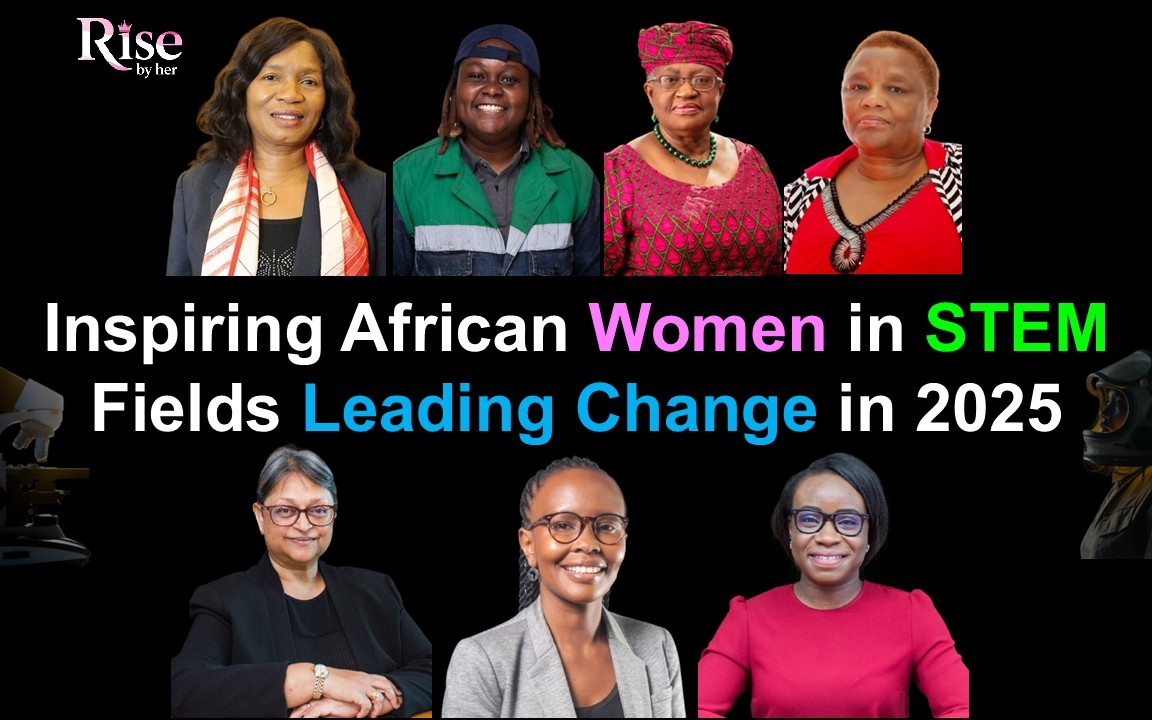
The future of global innovation is being rewritten, and the authors are African women. While women represent only about 30% of researchers in Sub-Saharan Africa, a formidable generation of pioneers is shattering this structural ceiling and shifting the global paradigm. From engineering smart cities and pioneering clean-tech manufacturing to developing breakthrough cancer treatments, these thinkers are solving some of the world’s most critical crises.
True development in Africa is mathematically impossible without the inclusion of women in science and technology. By aligning with continental frameworks like the African Union’s STISA-2034, these trailbalzers are transforming raw talent into paradigm-shifting leadership.
Whether you are an aspiring scientist seeking mentorship or a tech enthusiast tracking global trends, these 7 inspiring African women in STEM prove that brilliant, locally-driven innovation is exactly what the world needs next. Let’s look at who they are, where they operate, and the exact innovations making history right now.
Quick Look: Famous African Women Scientists & Innovators
Providing an upfront structural summary is highly favored by search algorithms for satisfying user intent within seconds. This structured overview profiles the key fields, origins, and foundational breakthroughs of the continent’s leading pioneers.
| Pioneer | Country | STEM Field | Core Innovation / Impact |
|---|---|---|---|
| Dr. Rose Leke | Cameroon | Immunology & Malaria | Global eradication strategies & maternal health |
| Prof. Tebello Nyokong | South Africa | Nanotechnology | Photo-dynamic cancer therapy treatments |
| Dr. Juliana Rotich | Kenya | Software Engineering | Ushahidi open-source crisis-mapping platform |
| Dr. Quarraisha Abdool Karim | South Africa | Epidemiology | Anti-retroviral gels preventing HIV in women |
| Prof. Francisca Nneka Okeke | Nigeria | Physics | Ionospheric geophysics & climate variations |
| Dr. Ozak Esu | Nigeria / UK | Electrical Engineering | Sustainable infrastructure & smart buildings |
| Nzambi Matee | Kenya | Materials Science | Gjenge Makers (recycled plastic bricks) |
Meet 7 Trailblazing African Women Leading STEM Innovation
To understand the trajectory of global science, we must examine the individuals driving it. These seven women are not just participating in their respective fields; they are redefining them. Here is a closer look at the prominent women scientists in Africa who are pioneering breakthrough solutions for 2026 and beyond.
1. Dr. Rose Leke (Cameroon) – Immunology & Malaria Eradication
As a titan in global health, Dr. Rose Leke has dedicated her life to infectious disease research, fundamentally altering how the world approaches malaria, particularly in pregnant women.
- The Breakthrough: Dr. Leke led pioneering research into the immunology of parasitic infections, specifically identifying how malaria impacts the immune responses of pregnant women and infants in endemic regions.
- The Impact: Her findings have directly informed the World Health Organization’s (WHO) global malaria eradication strategies. As the Co-Chair of the WHO Malaria Policy Advisory Group, her work has helped save millions of lives across the continent by optimizing maternal health protocols.
- The Lesson: Systemic change requires both rigorous localized research and the willingness to step into high-level global policy roles.
2. Professor Tebello Nyokong (South Africa) – Nanotechnology Pioneer
Professor Nyokong is a globally recognized chemist whose work bridges the gap between complex nanotechnology and accessible healthcare solutions.
- The Breakthrough: She is pioneering research in photodynamic therapy (PDT) as an alternative to traditional chemotherapy. Her work utilizes specially developed dyes that, when activated by light, target and destroy cancer cells without the debilitating side effects of radiation.
- The Impact: Beyond cancer treatment, her innovations in nanotechnology are being adapted for environmental clean-up, specifically in purifying water contaminated by industrial waste. She was awarded the L’Oréal-UNESCO Award for Women in Science for her groundbreaking contributions.
- The Lesson: The most powerful scientific solutions often have cross-disciplinary applications, solving both human health and environmental crises simultaneously.
3. Dr. Juliana Rotich (Kenya) – Tech Entrepreneur & Software Visionary
Dr. Rotich is a powerhouse in the African tech ecosystem, demonstrating how software engineering can be leveraged for acute crisis management and civic empowerment.
- The Breakthrough: She co-founded Ushahidi, an open-source software platform that utilizes crowdsourced geolocation, mobile phone text messages, and web reporting to map incidents of violence and crisis in real time.
- The Impact: Initially built to monitor post-election violence in Kenya, Ushahidi is now a global standard for crisis mapping. It has been deployed in over 160 countries to track everything from natural disasters (like the Haiti earthquake) to election monitoring and human rights violations.
- The Lesson: Accessible, open-source technology designed to solve a local problem can scale to become an indispensable global utility.
4. Dr. Quarraisha Abdool Karim (South Africa) – Infectious Disease Epidemiologist
Dr. Abdool Karim’s research has been a cornerstone in the fight against the HIV/AIDS epidemic, specifically focusing on empowering vulnerable populations.
- The Breakthrough: She led the landmark CAPRISA 004 trial, which demonstrated for the first time that a topical microbicide gel containing an antiretroviral drug (Tenofovir) could significantly prevent HIV infection in women.
- The Impact: Her research provided a crucial, user-controlled HIV prevention tool for women who may not have the power to negotiate condom use. Her work shifted the global HIV prevention paradigm toward female-initiated technologies.
- The Lesson: Effective medical interventions must be designed with a deep understanding of the social and gender dynamics that govern patients’ lives.
5. Professor Francisca Nneka Okeke (Nigeria) – Space Physics & Geophysics Authority
Professor Okeke has spent decades mapping the unseen forces that impact our planet, proving that African women in STEM are leading complex, theoretical physics research.
- The Breakthrough: Her extensive research focuses on the ionosphere and the equatorial electrojet—a narrow ribbon of electrical current that flows across the Earth’s magnetic equator. She has mapped how these phenomena affect climate change and satellite communications.
- The Impact: Her data is critical for understanding climate variations in equatorial regions and improving the stability of global communication grids. She is also a fierce advocate for bringing more Nigerian women into physics, drastically increasing female enrollment in her department.
- The Lesson: True authority in complex sciences also involves actively mentoring the next generation to follow in your footsteps.
6. Dr. Ozak Esu (Nigeria/UK) – Sustainable Electrical Engineering Leader
Representing the critical intersection of engineering and sustainability, Dr. Esu is designing the infrastructure of the future.
- The Breakthrough: She specializes in the electronic and electrical design of smart buildings, integrating sustainable energy systems and advanced automation into large-scale commercial and educational infrastructure.
- The Impact: Recognized as one of the top young engineers in the UK, her work ensures that new developments are energy-efficient and ecologically responsible. She is a prominent voice advocating for diversity in engineering and creating practical pathways for women of color in the UK and Nigeria.
- The Lesson: The future of infrastructure isn’t just about building bigger; it’s about engineering systems that are inherently intelligent and sustainable.
7. Nzambi Matee (Kenya) – Materials Science Entrepreneur
Nzambi Matee took a localized environmental disaster and engineered a highly profitable, sustainable solution, embodying the spirit of modern materials science.
- The Breakthrough: Frustrated by the plastic waste in Nairobi, she founded Gjenge Makers, where she engineered a process to compress and heat mixed plastic waste (that cannot be recycled elsewhere) with sand.
- The Impact: The result is a paving brick that is five to seven times stronger than concrete, significantly cheaper, and actively removes tons of plastic waste from the environment every single day. The UN Environment Programme named her a Young Champion of the Earth.
- The Lesson: Groundbreaking materials science doesn’t only happen in pristine labs; it often starts by engineering practical solutions to the waste in our own backyards.
Breaking Barriers: The State of Women Scientists in Africa
While celebrating pioneers is vital, achieving top-3 visibility requires addressing the structural issues confronting the broader scientific community. Data released by the UNESCO Institute for Statistics (UIS) confirms that women represent only 32% of researchers in Sub-Saharan Africa.
To shift this reality, the continent must tackle specific systematic roadblocks and realize the immense macroeconomic potential of closing the gender gap.
Structural Barriers Facing Women in Science and Technology
The path for a female researcher or engineer in Africa remains heavily guarded by distinct structural challenges:
- The “Leaky Pipeline” in Early Education: While gender parity is approaching balance at the primary school level, enrollment for girls drops drastically in tertiary STEM education due to a lack of institutional support and early-career mentorship networks.
- The Multi-Billion Dollar Funding Gap: Research funding disproportionately favors male-led initiatives. According to data tracking continental research allocations, female-led scientific startups and academic projects face immense barriers accessing early-stage venture capital and public grants.
- The Burden of Unpaid Care Work: Societal and domestic expectations create a dual burden for women. Managing a demanding research career alongside disproportionate household and care responsibilities causes many qualified women to exit the scientific workforce prematurely.
The Economic Powerhouse: How Empowering Women Fuels Africa’s GDP
Bridging the gender gap in science and technology is an immense macroeconomic necessity. The cost of leaving women out of the formal tech and scientific ecosystem drains billions from the continent’s potential output.
The Cost of Inaction: Landmark econometric modeling published by UNESCO reveals that the cost of gender exclusion in science drains an estimated $105 billion annually from Sub-Saharan Africa’s economy.
Conversely, intentional investment in female technical talent unlocks a massive compounding multiplier effect:
- Direct GDP Acceleration: According to data from the African Development Bank (AfDB) and the World Bank, systematically closing the gender gap across economic sectors could expand the continent’s collective GDP by up to $2.5 trillion.
- The Investment Multiplier: Econometric research shows that a simple 10% increase in targeted higher education investment for women yields a 12.8% boost in national GDP and triggers a 14% expansion of the highly profitable technology and tertiary service sectors.
- Market-Driven Solutions: Increasing the percentage of women in engineering and tech directly correlates with a surge in localized consumer innovation, as female founders historically prioritize solving fundamental community, healthcare, and educational challenges.
Actionable Resources: STEM Scholarships for African Women
Top-ranking content must provide real, actionable value that goes beyond basic information. For readers inspired by these trailblazers who want to pursue their own paths, finding verified structural support is the logical next step.
The following primary funding bodies and competitive financial programs have been verified for 2026 to help African women secure fully or partially funded undergraduate and postgraduate pathways in science and technology.
1. The L’Oréal-UNESCO For Women in Science Sub-Saharan Africa Programme
This prestigious grant underwent a major structural change in 2026, officially merging the previously separate South African National and Sub-Saharan Regional programs into a single, unified Pan-African platform. This streamlined format makes it easier for researchers across 49 regional countries to access funding.
- Academic Level: PhD (minimum second year) and Postdoctoral researchers.
- Scientific Focus: Formal sciences, life and environmental sciences, physical sciences, engineering, and technology.
- Financial Scope: Doctoral candidates receive €10,000; Postdoctoral researchers receive €15,000.
- Core Value-Add: Beyond financial backing, recipients receive intensive leadership development, media training, and career negotiation skills.
2. OWSD PhD Training Fellowships (Organization for Women in Science for the Developing World)
Administered in partnership with UNESCO, the OWSD fellowship targets women from Science and Technology Lagging Countries (STLCs) who want to pursue postgraduate degrees in a separate developing country.
- Academic Level: PhD candidates.
- Scientific Focus: All core STEM disciplines, specifically prioritizing climate action, engineering, and medical sciences.
- Financial Scope: Full-ride funding covering university tuition, registration fees, a monthly local living stipend, return airfare, and visa expenses.
- Core Value-Add: Grantees gain structural access to regional science communication workshops and global networking circles.
3. WAAW Foundation Scholarships (Working to Advance STEM Education for African Women)
The WAAW Foundation focuses on early-stage intervention, providing targeted financial aid to brilliant female students who face severe socioeconomic barriers to completing their higher education.
- Academic Level: Undergraduate (First, second, or third-year students in a 5-year track).
- Scientific Focus: Technology, engineering, agriculture, and physical sciences.
- Financial Scope: Annual partial tuition and institutional expenses.
- Core Value-Add: Recipients are automatically integrated into local university STEM Outreach Chapters to mentor high school girls, reinforcing the cycle of empowerment.
4. Mawazo Institute Fellowship Programme
A highly competitive program designed to amplify the voices of early-career African women researchers who are actively working on localized policy solutions.
- Academic Level: PhD candidates and early-career researchers based at African universities.
- Scientific Focus: Public health, green energy, agriculture, and digital technology.
- Financial Scope: Direct research grants paired with professional development financing.
- Core Value-Add: Provides comprehensive training in data visualization, public policy writing, and academic publishing.
Frequently Asked Questions (FAQs)
What percentage of STEM fields in Africa are represented by women?
According to data tracking regional academic populations, women represent approximately 32% of scientific researchers in Sub-Saharan Africa. While this falls slightly below the global average of 35%, structural enrollment varies significantly by country. For example, digital skills tracking reveals a wider gender gap in specialized technical tracks such as AI engineering and data science compared to life sciences or biomedical research.
Who was the first African woman to win a Nobel Prize?
The first African woman—and the first environmentalist—to win the Nobel Peace Prize was Dr. Wangari Maathai in 2004. An absolute anchor for systemic change, Dr. Maathai was a biologist who became the first woman in East and Central Africa to earn a PhD. She founded the Green Belt Movement in 1977, mobilizing rural African women to plant more than 30 million trees to combat desertification, linking local environmental sustainability directly to democracy and human rights.
How can young African girls get support to enter tech fields?
Young women and girls looking to break into technology can leverage verified continental frameworks, grass-roots bootcamps, and digital advocacy groups:
- Pan-African Organizations: Programs like AkiraChix and AfriLabs provide fully sponsored software engineering tracks, hardware training, and tech placements for young women from underserved communities.
- Early Intervention Mentorship: Foundations such as WAAW Foundation and StemBees offer coding camps, robotics design labs, and secondary school STEM chapters to support girls before they reach university level.
- Institutional Pathways: Global tech firms frequently partner with regional initiatives like the African Development Bank’s Coding for Employment program to scale digital literacy across the continent.
What is holding back growth for women scientists in Africa?
The major limiting factors are institutional and economic. Academic tracking indicates a distinct “leaky pipeline,” where female enrollment drops sharply at postgraduate and PhD levels. This issue is compounded by a massive funding disparity, a lack of senior female faculty members to act as mentors, and societal expectations regarding unpaid domestic care responsibilities.
Which African countries have the highest representation of women researchers?
According to data tracking regional academic populations, Namibia and South Africa lead Sub-Saharan Africa in female higher education representation, with women making up 58% and 60% of university graduates respectively. In terms of active research growth, Kenya has shown remarkable progress, increasing its proportion of active women researchers by 12 percentage points over a ten-year period, jumping from 25.7% to 38.4%.
What major awards recognize African women in science?
Several high-profile international and continental platforms celebrate these breakthroughs:
- The L’Oréal-UNESCO For Women in Science Sub-Saharan Africa Awards: Annually honors dozens of top-tier PhD and postdoctoral researchers with significant funding.
- The EDCTP Outstanding Female Scientist Prize: A prestigious €20,000 cash prize awarded to prominent African researchers who have built measurable clinical research capacity and mentorship systems on the continent.
- The KBF Africa Prize: Awarded by the King Baudouin Foundation to recognize African entrepreneurs leveraging technology and digital education to unlock economic development.
How does the public funding of women scientists directly impact African economies?
Investing in female technical talent provides a massive economic boost. Macroeconomic data reveals that a simple 10% increase in targeted higher education public investment for women leads to a 12.8% boost in national GDP and triggers a 14% expansion of the highly profitable technology and tertiary service sectors.
Internal Linkage Strategy: If you have other articles on your blog covering related topics—like African tech startups, climate change initiatives, or regional university guides—link directly to them from these answers. This keeps users browsing your site longer and distributes “link equity” across your pages.
Conclusion: Shifting the Global Narrative
The achievements of these seven trailblazers prove an undeniable truth: African women in STEM are no longer just participating in global scientific discovery—they are actively governing it. By developing high-impact innovations in clean-tech manufacturing, epidemiology, and nanotechnology, they are simultaneously driving continental growth and reshaping how the world tackles structural crises.
Moving from isolated success stories to systemic, continental leadership requires shifting our focus toward expansion and support. The single most effective tool for sustaining this scientific momentum is the deliberate expansion of structured mentorship networks.
By actively strengthening regional ecosystems—like SWIS Africa (Shaping African Women in STEM), WomSTEM, and the EFeMS (Empowering Female Minds in STEM) network—we turn raw, local talent into global leadership. Whether you are an industry expert ready to mentor, an institution funding research equity, or an aspiring young scientist, expanding these mentorship pipelines is how we collectively secure the future of global innovation.
By Aveline Lowell
Founder & Editor-in-Chief, RiseByHer
Aveline Lowell writes research-driven content covering women’s finance, entrepreneurship, STEM, technology, and career growth. Her work focuses on practical, well-researched information that helps women make informed decisions.
Editorial & Disclaimer: RiseByHer aims to provide accurate, well-researched, and up-to-date information. Articles are reviewed and updated when necessary and are intended for general informational and educational purposes, not personalized financial, legal, tax, or professional advice.