
For every 100 men promoted into management, only 87 women make that same critical leap—a breakdown known as the “broken rung,” documented in McKinsey & Company’s Women in the Workplace report, that creates a compounding gap long before the C-suite ever comes into view.
Navigating the corporate pipeline remains a complex challenge, making targeted strategic skills essential for long-term advancement. A dedicated emerging leaders program for women bridges this gap by equipping high-potential professionals with the strategic influence, executive presence, and negotiation frameworks required to bypass systemic barriers and step confidently into decision-making roles.
Whether you are looking to secure high-visibility projects, land a key promotion, or pitch your employer for tuition sponsorship, accelerating your career requires more than hard work—it takes a targeted playbook.
Here is everything you need to know to evaluate programs, build baseline leadership skills, and maximize your career ROI.
1. Why Women Need a Dedicated Emerging Leadership Program
Despite making up nearly half of entry-level corporate roles, women continue to face systemic hurdles that slow advancement into management. A specialized emerging leadership program for women targets the specific career barriers that generic corporate training overlooks, accelerating the path from individual contributor to executive.
Closing the Confidence, Visibility, and Opportunity Gaps
Advancement requires navigating structural workplace dynamics. Specialized programs target three key growth areas:
- The Confidence Gap: Women frequently wait until they meet 100% of job qualifications before applying for promotions, whereas men apply at 60%. Dedicated programs focus on reframing competence, unlearning perfectionism, and taking calculated strategic risks.
- The Visibility Deficit: Hard work alone does not guarantee recognition. Participants learn concrete frameworks to articulate achievements, claim credit for high-impact outcomes, and gain exposure with senior leadership.
- The Opportunity Barrier: Women are often over-mentored but under-sponsored. While mentors provide guidance, sponsors actively use their influence to advocate for candidates during behind-the-scenes promotion discussions.
How Focused Leadership Development Outperforms Generic Training
Standard management training focuses narrowly on administrative tasks, budgeting, and workflow management. However, women often navigate double-bind expectations—such as being labeled overly aggressive when assertive, or indecisive when collaborative. Dedicated programs provide a safe testing ground to master high-stakes negotiation, authority positioning, and organizational politics alongside peers facing identical challenges.
What to Expect: Realistic Outcomes in the First 90 Days
High-impact programs yield fast, measurable career shifts. Within 90 days, participants systematically transform their workplace presence:
| Timeline | Strategic Focus | Measurable Milestone |
|---|---|---|
| Days 1–30 | Baseline Audit | Complete a 360-degree feedback review and identify visibility gaps. |
| Days 31–60 | Executive Presence | Apply structured communication models in high-stakes meetings. |
| Days 61–90 | Career Expansion | Secure ownership of a high-visibility initiative and engage a senior sponsor. |
Core Skills Taught in High-Impact Leadership Programs for Women
Building foundational leadership skills for women professionals requires moving beyond day-to-day execution to master high-level organizational influence. High-impact programs target four interconnected capabilities that transform promising managers into executive-ready leaders.
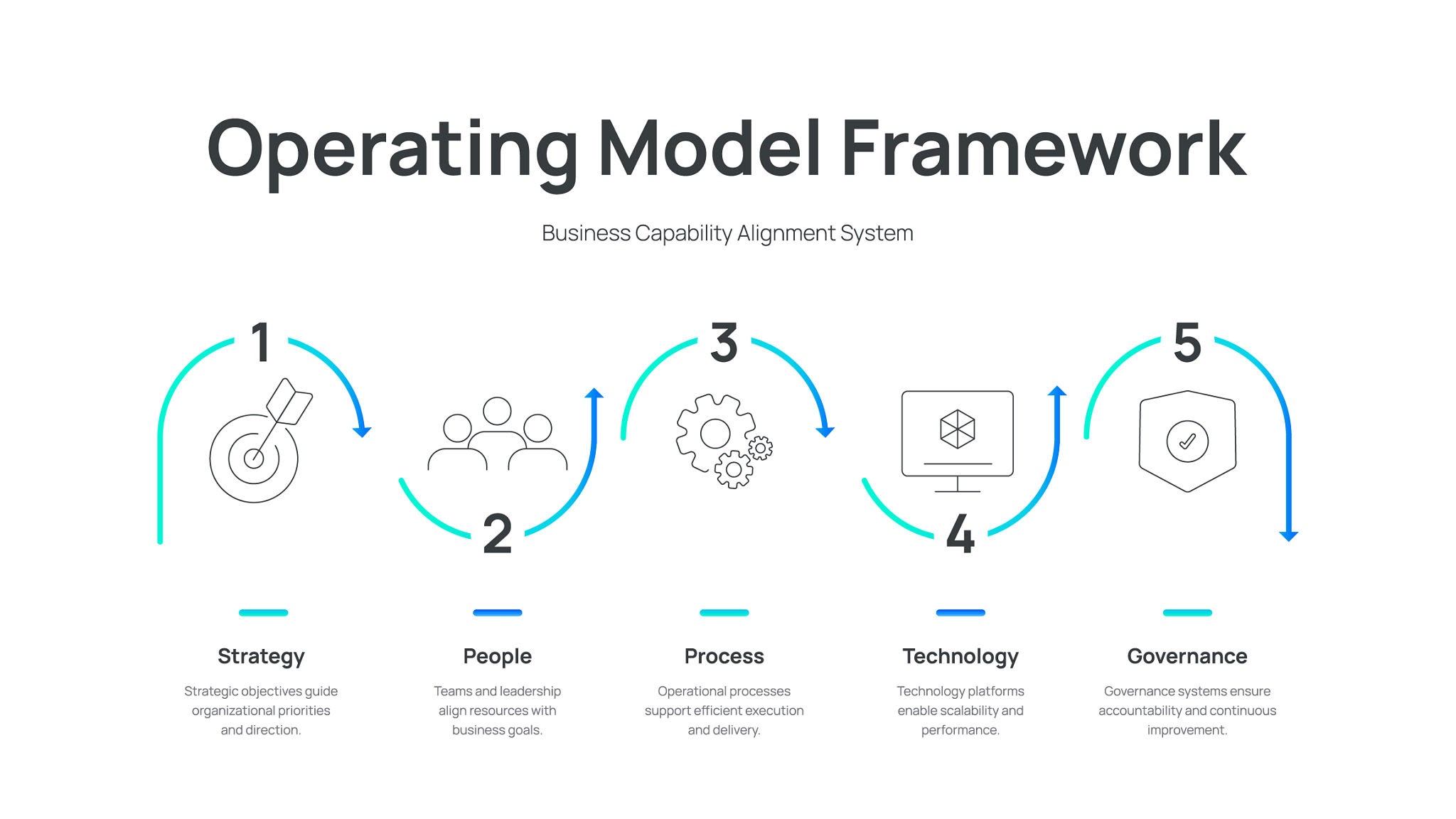
Operating Model Alignment. Source: Whale Design / Getty Images
Strategic Thinking and Executive Decision-Making Frameworks
Transitioning from an operational manager to a strategic leader demands a shift in focus from how tasks get completed to why specific initiatives drive business value. Emerging leaders learn to analyze macro-market trends, evaluate financial trade-offs, and align functional goals with overarching corporate objectives. Executive decision-making modules introduce structured frameworks—such as decision trees, scenario planning, and opportunity cost analysis—enabling participants to make confident, data-driven calls under ambiguity without falling into analysis paralysis.
Persuasive Communication and Stakeholder Influence
Technical expertise carries little weight if you cannot align cross-functional partners around your vision. Dedicated programs replace passive reporting habits with high-impact executive communication models like Pyramid Principle structuring and strategic storytelling. Participants learn to tailor their message to C-suite priorities, build consensus across conflicting departmental goals, and present complex business cases with clarity and authority.
High-Stakes Salary and Resource Negotiation Skills
Negotiation extends far beyond annual compensation reviews; it is a daily tool for securing budget, headcount, and project scope. Women professionals frequently encounter distinct backlash dynamics during negotiation. Specialized curriculum equips participants with principled negotiation tactics—anchoring, value-creation trades, and objective criteria framing—allowing them to advocate aggressively for their teams and personal career trajectory while maintaining critical working relationships.
Team Governance and Cross-Functional Project Leadership
Leading without direct authority is one of the toughest challenges for emerging executives. This skill set focuses on establishing project governance models, setting clear accountability standards, and delegating effectively to scale personal impact. Participants master strategies to navigate matrixed organizational structures, manage underperforming stakeholders, and drive alignment across diverse teams to deliver enterprise-wide results on schedule.
Developing Executive Presence and Professional Confidence
Executive presence is not an innate trait reserved for a select few; it is a learnable set of behaviors, signals, and communication choices. For women stepping into higher levels of responsibility, mastering executive presence ensures that technical competence translates directly into perceived authority and organizational influence.

Practical Tools to Build Sustainable Leadership Confidence
Sustainable confidence relies on systematic preparation and psychological reframing rather than bravado. Specialized programs introduce evidence-based techniques to eliminate imposter syndrome and build lasting authority:
- The Evidence Log: Maintain a centralized record of quantified wins, stakeholder praise, and project metrics to counter self-doubt with objective data during high-pressure moments.
- Competence Reframing: Shift focus from perfectionism—waiting to know every detail—to situational agility, trusting your framework and problem-solving capabilities to handle unexpected challenges.
- Pre-Performance Priming: Use targeted visualization and mental rehearsal before major presentations to lower cortisol levels and project calm composure.
Strategies for Speaking Up and Owning the Room in High-Stakes Meetings
Contributing early and decisively in senior meetings signals readiness for higher leadership roles. Emerging leaders leverage three high-impact strategies to command attention:
- The First 10 Minutes Rule: Make an insightful contribution, ask a framing question, or second a strategic point within the opening minutes of a meeting to establish your voice immediately.
- Interruption Management: Counter interruptions firmly without losing poise by using polite holding phrases (“I’m almost at the main takeaway, let me finish this thought real quick”).
- Bottom-Line Up Front (BLUF): Lead with your primary conclusion or recommendation before diving into supporting data, keeping executive attention focused on your core proposal.
Gravitas, Body Language, and Communication Style Alignment
Executive presence requires aligning physical delivery with verbal message to convey unwavering gravitas.
| Element | Weak Signal (To Avoid) | Strong Executive Signal |
|---|---|---|
| Vocal Delivery | Upspeak (ending statements like questions), rapid pace | Calm cadences, intentional pauses, grounded tone |
| Physical Stance | Diminutive posture, excessive head nodding | Open posture, still shoulders, direct eye contact |
| Verbal Framing | Hedging (“I just think…”, “I could be wrong, but…”) | Direct assertions (“My recommendation is…”, “The data indicates…”) |
Unlocking Career Development Through Mentorship and Sponsorship
Strategic relationships are the primary driver of corporate advancement. While technical skill opens doors, building long-term career development for women relies on cultivating strategic relationships that advocate for you when executive decisions are made behind closed doors.
The Difference Between Mentors and Sponsors (and Why Women Need Both)
Women are frequently over-mentored but under-sponsored. Understanding the distinction between these two roles is critical for targeted career progression:
- Mentors (Advice & Perspective): Mentors serve as sounding boards. They share experiences, help refine your skills, and offer guidance on navigating organizational challenges. Anyone with relevant experience can be a mentor, regardless of their level of organizational power.
- Sponsors (Advocacy & Capital): Sponsors are senior leaders with decision-making power who actively use their political capital to advocate for your promotion, assign you to high-visibility projects, and defend your track record in executive meetings.
Building and Leveraging a High-Value Strategic Network
Effective networking is not about collecting contacts; it is about building mutually beneficial strategic partnerships across your organization and industry.
- Map Your Network: Categorize your current contacts into operational (day-to-day work), strategic (future growth and business direction), and personal (coaching and support) connections. Identify gaps in strategic senior coverage.
- Deliver Upfront Value: Approach potential sponsors by aligning your goals with their strategic priorities. Offer insights, assist on key initiatives, or bring solutions to their high-priority problems before asking for advocacy.
- Maintain Reciprocal Touchpoints: Schedule brief, outcome-focused quarterly check-ins with your strategic network to share key project milestones, business wins, and updated career goals.
How Internal Visibility Accelerates Promotion Timelines
Doing great work in isolation creates a career plateau. High-impact leaders systematically convert project successes into organizational visibility:
- Share Strategic Progress Updates: Send concise, data-backed monthly execution summaries to leadership detailing project achievements and cross-functional impact.
- Volunteer for Cross-Departmental Tasks: Lead cross-functional task forces or high-priority steering committees to demonstrate enterprise-level strategic thinking to executives outside your immediate reporting line.
- Step Into External Thought Leadership: Represent your team on industry panels, internal town halls, or company-wide webinars to build an authoritative personal brand across the broader organization.
How to Choose the Right Women’s Leadership Program
Investing in a specialized leadership program requires evaluating both educational ROI and corporate fit. Selecting the right program ensures you gain high-yield executive skills while positioning your organization to fund your development.
Key Criteria: Curriculum, Modality, Duration, and Cohort Quality
To ensure maximum career impact, evaluate potential programs against four core pillars:
- Curriculum Focus: Prioritize programs centered on strategic decision-making, financial acumen, and high-stakes influence rather than surface-level soft skills.
- Delivery Modality: Choose between fully virtual, hybrid, or immersive in-person formats based on your schedule and preferred networking style. Live, interactive sessions build stronger peer connections than self-paced, pre-recorded modules.
- Program Duration: High-impact programs typically run from 6 weeks to 3 months—long enough to apply frameworks in real time without causing burnout alongside daily workloads.
- Cohort Quality: Look for peer groups composed of managers and directors at similar career inflection points to ensure relevant peer coaching and high-value networking.
Red Flags in Women’s Leadership Courses
Avoid programs that exhibit these common structural weaknesses:
| Red Flag | Why It Matters | What to Look for Instead |
|---|---|---|
| Purely Asynchronous Content | Passive video watching lacks real-time feedback, role-play practice, and networking depth. | Cohort-based live sessions with breakout practice. |
| Generic Management Curriculum | Fails to address gender-specific career hurdles like the double-bind or sponsorship gaps. | Specialized modules on executive presence, salary negotiation, and organizational politics. |
| No Post-Program Support | Learning dissipates without ongoing peer accountability or alumnus access. | Active alumni networks, ongoing mentorship pools, or follow-up coaching calls. |
Critical Questions to Ask Before Enrolling
- “What percentage of participants report a promotion, salary increase, or scope expansion within 6–12 months of completion?”
- “How are cohort participants matched for peer coaching, breakout exercises, and group accountability?”
- “Does the program provide structured resources or frameworks to help me engage internal sponsors at my current company?”
How to Pitch Your Manager for Employer Sponsorship
Most companies dedicate annual L&D budgets to high-potential talent. Frame your enrollment request around business ROI rather than personal development. Use this proven template to request employer funding:
Subject: Professional Development Request: [Program Name]
Hi [Manager Name],
As part of my goal to drive stronger strategic impact for our team this year—specifically regarding [insert key initiative or performance goal]—I would like to enroll in the [Program Name].
This program focuses directly on advanced strategic execution, stakeholder influence, and cross-functional leadership skills. The structure runs for [Duration] and is designed for full-time professionals, meaning zero disruption to my daily responsibilities.
By participating, I will bring back immediate value to our team, including:
-Applied decision-making frameworks to streamline [specific project/process].
-Strategic negotiation models to optimize [resource allocation/budget].
-A key action plan for leading our upcoming [initiative name].
The total investment is $[Cost]. I’d love to briefly discuss leveraging our department’s professional development budget during our next 1-on-1.
Best regards,
[Your Name]
[Your Title]
Real-World Career Outcomes: Measuring Program ROI
Participating in a dedicated leadership program should not feel like an abstract educational exercise; it must deliver clear, quantifiable career returns. For high-potential professionals, tracking tangible business outcomes confirms that the investment translates directly into accelerated career trajectory and compensation growth.
Fast-Tracking Promotion Readiness and Board/Executive Exposure
Transitioning to senior management requires demonstrating that you already operate at the next level. Specialized leadership programs prepare candidates to showcase executive readiness long before formal promotion cycles open:
- Executive Room Presence: Transition from presenting tactical updates to facilitating strategic discussions that align directly with C-suite priorities.
- Senior Exposure Opportunities: Position yourself to present cross-functional project findings directly to executive committees, board members, or key enterprise clients.
- Compressed Promotion Timelines: Participants frequently shorten the typical multi-year promotion cycle by actively closing identified visibility and capability gaps.
Securing Ownership of High-Impact Business Initiatives
Career advancement accelerates when you step away from routine operational maintenance and take ownership of revenue-driving or enterprise-critical projects:
- Identifying High-Yield Opportunities: Learn to spot under-resourced strategic bottlenecks within your organization that align with C-suite targets.
- Pitching Strategic Scope: Frame project proposals around measurable business outcomes—such as revenue expansion, cost reduction, or process efficiency—rather than workload volume.
- Leading Matrixed Teams: Cross-functional project leadership positions you as a unifying force capable of directing resources across departmental boundaries without relying on direct authority.
Turning Enhanced Performance Reviews into Salary Growth
Enhanced performance reviews should serve as the launchpad for compensation adjustments rather than just verbal praise. Converting performance into financial growth requires strategic framing during review cycles:
| Performance Metric | Standard Approach (To Avoid) | Strategic ROI Framing |
|---|---|---|
| Project Completion | “Completed all assigned tasks and deliverables on schedule.” | “Led cross-functional rollout 2 weeks early, driving a 14% increase in team operational efficiency.” |
| Cross-Functional Influence | “Attended alignment meetings with product and sales leaders.” | “Negotiated resource alignment across 3 departments, unlocking $120k in budget efficiency.” |
| Compensation Discussion | “I’ve been here two years and would like a raise.” | “Based on expanding my scope to lead [Initiative Name] and delivering [Metric], let’s align my compensation with senior market benchmarks.” |
Action Plan: How to Maximize Your Program Results
Enrolling in a leadership course is only the first step; maximizing your return on investment requires a structured execution strategy. By approaching your development in three distinct phases—before, during, and after the program—you ensure that newly acquired skills translate into permanent career momentum.
Pre-Program: Setting Baseline Metrics and Skill Targets
Phase 1: Establish your career baseline before Day 1
- Conduct a 360-Degree Self-Audit: Assess your current capabilities across strategic decision-making, executive presence, and negotiation. Identify 2–3 specific growth areas to focus on throughout the curriculum.
- Define Key Performance Indicators (KPIs): Set concrete, measurable goals for what success looks like upon completion (e.g., securing ownership of a cross-functional project, speaking up within the first 10 minutes of leadership meetings, or initiating contact with a prospective senior sponsor).
- Align Expectations with Your Manager: Share your learning curriculum with your direct supervisor. Confirm how your target skills map directly to department priorities and upcoming promotion milestones.
In-Program: Active Participation and Mentorship Execution
Phase 2: Engage fully and test concepts in real time
- Apply Frameworks Immediately: Treat your daily job as a live testing environment. Implement meeting techniques, bottom-line framing, and negotiation models within 48 hours of learning them.
- Engage Proactively in Live Cohorts: Step up for breakout leadership roles, ask high-yield questions during guest speaker panels, and offer constructive feedback to peers to establish your credibility within the cohort.
- Execute Strategic Mentorship Outreach: Schedule initial introductory calls with assigned mentors or prospective internal sponsors. Focus discussions on operational priorities and strategic alignment rather than general career advice.
Post-Program: Habit Stacking and Long-Term Network Maintenance
Phase 3: Turn short-term gains into permanent career trajectory
- Build Sustainable Habits via Habit Stacking: Anchor new leadership behaviors to established daily routines. For example, attach setting strategic meeting agendas directly to your Monday morning calendar review.
- Maintain a High-Value Network: Keep your program connections active by scheduling quarterly check-ins with peer accountability partners and sharing relevant industry insights with senior mentors.
- Track and Share Ongoing Wins: Maintain a centralized log of your project milestones and strategic contributions. Use these metrics during mid-year check-ins and formal performance reviews to support your case for advancement.
Frequently Asked Questions
How much does an emerging leaders program for women typically cost?
Costs generally range from $1,500 to $5,000 for online, cohort-based certificate programs delivered by specialized training organizations. Executive programs offered by top-tier universities (such as Harvard, Stanford, or Wharton) can range from $6,000 to over $15,000. Many self-paced digital courses start around $500 to $1,200.
What is the difference between a management program and an emerging leadership program?
A traditional management program focuses primarily on operational tasks, processes, budget administration, and day-to-day oversight. An emerging leadership program focuses on high-level strategic thinking, executive presence, political capital, and stakeholder influence—equipping high-potential professionals to transition from managing tasks to leading enterprise strategy.
Can I get my company to pay for a women’s leadership course?
Yes. Most mid-to-large corporations allocate annual Learning & Development (L&D) or professional development budgets per employee. To secure employer funding, present a formal business case to your manager that highlights how the program’s core outcomes (such as strategic execution, cross-functional leadership, and negotiation) align directly with departmental goals and upcoming business initiatives.
How long do these programs usually take to complete?
Most high-impact, cohort-based emerging leadership programs last between 6 weeks and 3 months. This duration typically requires 2 to 4 hours of commitment per week, balancing live instruction, peer networking, and practical workplace application without disrupting your day-to-day work responsibilities. Intensive executive bootcamps may run over 3 to 5 full consecutive days.
Conclusion
Advancing into leadership is rarely about waiting for permission—it requires taking control of your career trajectory. While individual contribution builds your technical foundation, stepping into management demands a deliberate shift toward strategic decision-making, high-impact visibility, and executive presence.
A specialized emerging leaders program for women provides the dedicated framework, peer community, and practical tools needed to break through structural barriers and accelerate your growth. By auditing your current skills, securing employer sponsorship, and actively executing a 90-day action plan, you position yourself not just for your next promotion, but for long-term executive influence.
The most effective leaders do not navigate their careers alone. Evaluate your options, pitch your manager, and learn how to Accelerate Your Career in 2026 with Women’s Professional Networks to turn your leadership potential into measurable career success.
By Aveline Lowell
Founder & Editor-in-Chief, RiseByHer
Aveline Lowell writes research-driven content covering women’s finance, entrepreneurship, STEM, technology, and career growth. Her work focuses on practical, well-researched information that helps women make informed decisions.
Editorial & Disclaimer: RiseByHer aims to provide accurate, well-researched, and up-to-date information. Articles are reviewed and updated when necessary and are intended for general informational and educational purposes, not personalized financial, legal, tax, or professional advice.