

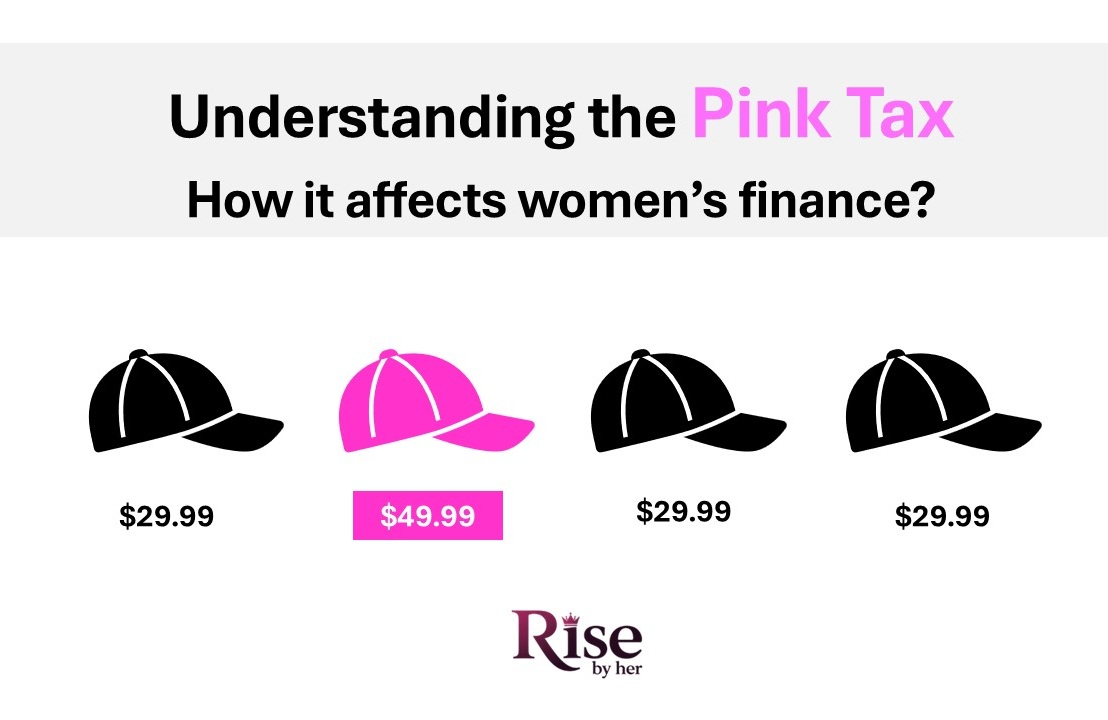
Have you ever compared a pink razor to its blue counterpart on the store shelf and wondered why the “for her” version costs a dollar more? You aren’t imagining it. That hidden markup is known as the pink tax, and it subtly drains thousands of dollars from women’s wallets over a lifetime.
In 2026, as household budgets tighten under persistent cost-of-living pressures, paying an arbitrary surcharge for everyday personal care items, clothing, and services is no longer just frustrating—it directly undercuts long-term financial independence.
This guide breaks down exactly where gendered pricing hides, how much it really costs you, and the practical, smart shopping strategies you can use today to stop overpaying. Ready to take control of your spending and outsmart unequal pricing? Let’s dive in.
What Is the Pink Tax? Definition and Gender Price Discrimination
The pink tax is not an official government tax, but rather an extra markup placed on products and services specifically marketed to women compared to nearly identical versions sold to men. From personal care items like razors and body wash to basic clothing, women routinely pay higher prices for everyday goods.
Is the Pink Tax Real? What the Research Shows
Decades of consumer data confirm this price disparity is very real. Landmark research by the New York City Department of Consumer Affairs analyzed hundreds of products across dozens of brands and found that goods marketed toward women cost an average of 7% more than similar items for men—with personal care products hitting a 13% markup. While manufacturers often attribute price differences to varying ingredients, custom packaging, or specialized formulations, independent audits consistently reveal that the core functional components remain identical.
Pink Tax vs. Tampon Tax vs. Gender Price Discrimination
To understand how gender pricing works, it helps to distinguish between three distinct terms:
| Term | What It Refers To | Example |
|---|---|---|
| Pink Tax | Higher pricing on everyday consumer products marketed to women. | A pink razor costing $8.99 while the blue version costs $7.49. |
| Tampon Tax | State sales tax applied to essential menstrual hygiene items, classifying them as non-exempt luxury goods. | Paying standard sales tax on pads or tampons. |
| Gender Price Discrimination | Charging different prices for equivalent services based on gender. | Paying more for dry cleaning a women’s blouse than a men’s button-down shirt. |
Why Does the Pink Tax Exist? Key Causes of Gendered Pricing
Understanding why women pay more for some products comes down to a mix of market strategy, supply chains, and consumer behavioral economics. While it is easy to assume price markups stem purely from corporate bias, the root causes behind the pink tax are tied to complex commercial incentives.
Gendered Marketing and Consumer Psychology
Brand strategists rely heavily on gender-based segmentation to maximize profits. By color-coding products—pink for women, blue or matte black for men—brands create distinct product categories out of virtually identical goods.
This visual distinction signals to consumers that a specific item was engineered exclusively for their needs. Women are often targeted with messaging focused on luxury, scent, or skin gentleness, which justifies higher price tags on items that cost nearly the same to produce as the baseline version.
Production Costs, Tariffs, and Supply Chain Differences
In some categories, genuine supply chain variations contribute to price discrepancies:
- Import Tariffs: International trade policy plays a quiet role. For instance, historical U.S. customs data shows higher import tariffs on certain women’s apparel (like leather shoes or silk shirts) compared to equivalent men’s garments.
- Manufacturing Adjustments: Unique bottle shapes, custom fragrances, or specialized molds can introduce minor production costs, though these rarely match the full percentage markup at retail.
Product Differentiation and Willingness to Pay
At its core, gender price discrimination persists because companies test consumer price elasticity—how much a buyer is willing to pay before walking away.
Retailers leverage the fact that women are conditioned to view certain grooming routines as non-negotiable. If consumer testing shows women will pay an extra $1.50 for a scented, ergonomically curved razor, manufacturers retain the markup. Price disparity lingers simply because the market tolerates it—until informed shoppers push back.
Where the Pink Tax Hides: Everyday Products and Examples
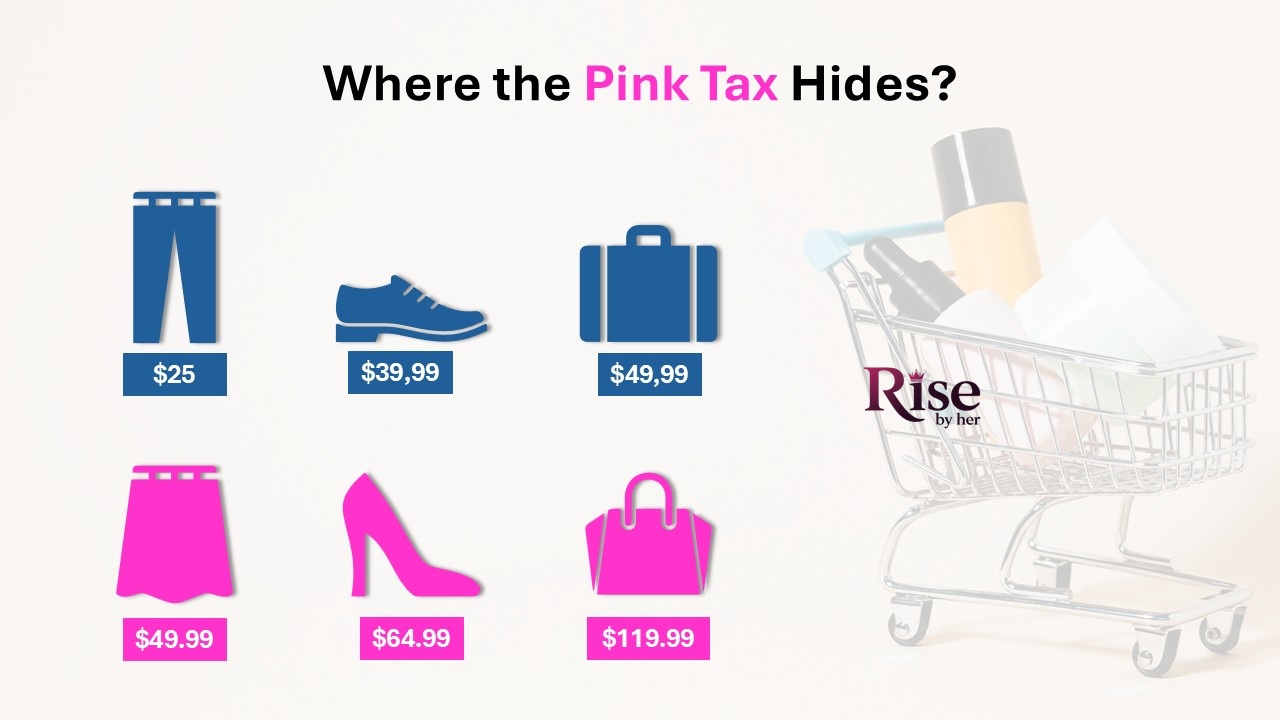
The pink tax isn’t always obvious at first glance. It typically manifests as a quiet markup on retail shelves, where products designed for women carry higher price tags despite offering the exact same utility as men’s or gender-neutral options.
Personal Care Products, Razors, and Deodorant
Personal care is where examples of the pink tax women pay are most widespread. Cartridge razors, shaving gels, body washes, and deodorants frequently feature gendered pricing.
- Razors: Multi-blade razor refills marketed to women often cost 10% to 15% more than men’s cartridge refills, even when blade quality and handle construction are identical.
- Deodorant: Women’s antiperspirants frequently cost more per ounce than men’s sticks from the same brand, despite relying on identical active ingredients like aluminum zirconium.
Children’s Toys and Clothing
Gender-based markups start long before adulthood. Consumer audits show that products affected by the pink tax include items aimed directly at young children.
- Toys: Identical items—such as children’s scooters, helmets, or plastic play sets—often carry a higher price tag when sold in pink or pastels compared to red or blue versions.
- Clothing: Girls’ basic clothing, including plain cotton tees and newborn onesies, routinely costs more than equivalent boys’ apparel, often justified by minor additions like decorative stitching or cap sleeves.
Adult Clothing, Dry Cleaning, and Personal Services
Price disparities extend beyond retail shelves and into everyday service industries.
| Service or Product Category | Industry Reality | Cost Disparity |
|---|---|---|
| Dry Cleaning | Laundering a women’s silk or cotton blouse costs significantly more than a men’s standard button-down shirt. | Dry cleaners often classify women’s shirts as “delicate garments” requiring hand-ironing, passing higher labor costs to the customer. |
| Basic Apparel | Standard white cotton tees, plain socks, and basic underwear lines. | Women’s basic wardrobe essentials carry higher average retail markups despite using similar fabric weights. |
| Haircuts & Grooming | Short hair trims and basic salon maintenance. | Women are routinely charged higher base rates for short haircuts compared to men receiving identical scissor or clipper work. |
How Much Does the Pink Tax Cost Women?
The pink tax isn’t just a minor inconvenience at the checkout line; it represents a persistent financial drain. When small price differences on everyday essentials compound over decades, they silently erode a woman’s purchasing power and long-term financial stability.

Estimated Costs and Why They Vary
Economic research shows that women pay an estimated $1,300 to $2,300 more per year than men for substantially similar products and services. Over a lifetime, this gender price gap can total well over $100,000 in out-of-pocket expenses.
These figures vary depending on a few key factors:
- Purchasing Habits: Frequency of buying personal care items, dry cleaning, and branded apparel.
- Family Size: Moms buying for daughters often pay gender markups on children’s toys, helmets, and clothing.
- Geographic Location: Service industry pricing and state-level tax laws differ significantly by region.
The Pink Tax and the Gender Pay Gap
The financial burden of the pink tax is magnified when viewed alongside the gender pay gap. On average, women earn roughly 82 cents for every dollar earned by men—a gap that widens further for women of color.
This creates a structural “double whammy”: women earn less income on average, yet face higher everyday living costs for basic goods.
Long-Term Effects on Savings, Investments, and Wealth
Every extra dollar spent covering arbitrary markups is a dollar that cannot be directed toward wealth building.
Consider the math behind opportunity cost: if a woman redirects $1,300 per year away from gendered markups and into a standard index fund earning an average 7% annual return, that money would grow to over $250,000 across a 40-year career.
When elevated living costs consistently drain disposable income, it limits a woman’s capacity to build emergency reserves, contribute to retirement accounts, or invest in real estate. Over time, the pink tax directly widens the gender wealth gap—leaving women with significantly smaller retirement cushions despite having longer average lifespans.
Is the Pink Tax Illegal? Laws and Legal Status
The legal status of the pink tax depends heavily on where you shop. While there is no single global law prohibiting gender-based markups, regulatory momentum has shifted significantly toward consumer protection.
California AB 1287 and Gender-Based Product Pricing
California leads the United States in dismantling gendered markups. Under Assembly Bill 1287 (AB 1287), businesses are legally prohibited from charging different prices for two “substantially similar” goods based on the gender they are marketed to.
- Substantially Similar Criteria: Products must share the same functional design, production materials, intended use, and brand ownership. A difference in packaging color alone (like pink vs. blue) does not justify a price markup.
- Legal Exceptions: Price variations are only permitted if a manufacturer can prove genuine differences in production time, labor, or material costs.
- Enforcement: New York enforced similar legislation in 2020, and California empowers its State Attorney General to levy steep civil penalties against non-compliant brands.
Federal Legislation and the Pink Tax Repeal Act
At the U.S. federal level, gender-based price discrimination remains legally permissible across most consumer product categories.
To address this gap, lawmakers introduced the Pink Tax Repeal Act. If passed, this federal bill would grant the Federal Trade Commission (FTC) authority to enforce national price equality mandates and treat gender markups as unfair commercial practices.
How Other Countries Address Gender-Based Pricing
International responses to gender price discrimination vary widely:
| Country or Region | Regulatory Approach |
|---|---|
| United Kingdom | While consumer advocacy campaigns pressured major retailers (such as Boots and Tesco) to voluntarily equalize razor prices, no comprehensive national ban exists for consumer goods. |
| European Union | EU gender equality directives prohibit discrimination in access to goods and services, though member nations enforce retail product pricing with varying levels of oversight. |
| Canada | Canada successfully eliminated its federal tax on essential menstrual hygiene products, though general retail product pricing remains largely unregulated by federal law. |
How to Avoid the Pink Tax: Smart Shopping Strategies
While systemic legislation continues to evolve, smart shopping habits can protect your budget right now. Navigating around gender-based price markups comes down to recognizing marketing tactics and looking beyond gendered packaging on store shelves.

Compare Unit Prices Instead of Gendered Labels
Marketing teams frequently use smaller package sizes to disguise price hikes—a subtle variation of the pink tax where women pay the same total price for less actual product.
- Check the Shelf Tag: Look past the retail price tag and compare the unit price (e.g., cost per ounce, per gram, or per count) listed in the bottom corner of the shelf label.
- Audit Active Ingredients: Over-the-counter pain relievers, lotions, and deodorants often share identical active ingredient percentages regardless of whether the packaging features floral imagery or bold blue lettering. If the formula is the same, pick the option with the lower unit price.
Choose Gender-Neutral Products When They Cost Less
Bypassing gendered marketing altogether is one of the simplest ways to avoid paying extra for basic utility.
| Product Category | Smart Shopping Alternative | Cost Advantage |
|---|---|---|
| Grooming & Razors | Buy safety razors or standard cartridges from unisex brands or the men’s aisle. | Men’s razor refills and basic shaving cream perform identically without the gendered price markup. |
| Basic Apparel | Shop the men’s or boys’ sections for basics like cotton T-shirts, hoodies, and athletic socks. | Garments often feature thicker cotton blends, longer cuts, and functional pockets at lower price points. |
| Kids’ Accessories | Select neutral colors (red, yellow, green, or black) for scooters, bike helmets, and toys. | Neutral options avoid the price hikes frequently applied to pink or pastel variations of identical toys. |
Compare Brands, Sizes, and Alternatives
Broadening your search beyond traditional big-box brands can permanently lower your recurring personal care expenses.
- Opt for Generic Brands: Retailer house brands routinely offer identical formulations for personal care products at savings of 20% to 30%.
- Buy Bulk or Concentrates: Buying multi-packs or concentrated refills cuts down on decorative packaging costs, which are routinely factored into retail prices.
- Switch to Reusable Items: Replacing single-use products with durable alternatives—such as double-edge safety razors or reusable period products—eliminates recurring gendered markups permanently.
Frequently Asked Questions About the Pink Tax
Does the Pink Tax Apply to Healthcare and OTC Medications?
Yes. Price disparities extend into healthcare, over-the-counter (OTC) medications, and wellness products. For example, painkillers specifically packaged and marketed for menstrual cramp relief frequently cost more per pill than generic pain relievers containing the exact same active ingredient (like ibuprofen or acetaminophen) found in the general medicine aisle.
What Is “Pinkflation,” and How Is It Related to the Pink Tax?
Pinkflation occurs when inflation rates rise faster on goods and services targeted toward women than on equivalent products for men.
While the pink tax represents a baseline price markup on women’s products, pinkflation describes how that price gap compounds during inflationary cycles. When wholesale costs rise, retailers frequently apply higher percentage price increases to women’s apparel, footwear, and personal care items, accelerating the cost-of-living burden on female consumers.
Are Men Ever Impacted by Gendered Pricing?
While the vast majority of gendered markups impact women, men occasionally face higher prices in specific product categories. Economic studies analyzing unit prices across retail categories show that men sometimes pay higher average prices for items like hair loss treatments (e.g., minoxidil), specialized men’s skincare, or tailored formal suits.
Do Men’s Products Function Differently Than Women’s Products?
In most everyday consumer categories, no. A 5-blade razor cartridge cuts hair at skin level regardless of whether the handle is pink or dark grey. Antiperspirant active ingredients (such as aluminum compounds) suppress sweat identically regardless of added fragrance.
Conclusion: Taking Back Control of Your Spending
The pink tax is not an inevitable cost of being a consumer. While closing the systemic gender price gap requires ongoing policy reforms and corporate accountability, you do not have to wait for the marketplace to change before protecting your personal finances.
By looking past gendered marketing, comparing unit prices on store shelves, and switching to neutral or men’s alternatives for everyday basics, you can reclaim hundreds—if not thousands—of dollars each year. Every dollar you save from arbitrary price markups is money that can be redirected toward your emergency fund, debt freedom, and long-term wealth.
The next time you are in the store aisle, take a closer look at the shelf tag. Making informed, intentional choices is the fastest way to stop overpaying and send a clear message to brands that equal utility deserves equal pricing.
By Aveline Lowell
Founder & Editor-in-Chief, RiseByHer
Aveline Lowell writes research-driven content covering women’s finance, entrepreneurship, STEM, technology, and career growth. Her work focuses on practical, well-researched information that helps women make informed decisions.
Editorial & Disclaimer: RiseByHer aims to provide accurate, well-researched, and up-to-date information. Articles are reviewed and updated when necessary and are intended for general informational and educational purposes, not personalized financial, legal, tax, or professional advice.