


Cybersecurity is no longer just one of the fastest-growing fields in tech—it’s one of the most lucrative, dynamic, and impact-driven career paths available today. Yet, despite a global shortage of over 3.5 million cybersecurity professionals, women still make up only about 24% of the industry workforce.
That gap represents your biggest opportunity.
Whether you are looking to switch careers from a non-technical field or want to scale into executive leadership, breaking into cybersecurity doesn’t require a computer science degree—it requires the right roadmap. In this 2026 guide, we break down 7 high-paying women in cybersecurity roles, their realistic starting salaries, beginner-friendly certifications, and the exact steps you can take today to launch a future-proof career.
Why Cybersecurity Is a High-Demand, High-Paying Career for Women
If you are looking for a tech career that offers near-zero unemployment, rapid salary progression, and remote flexibility, cybersecurity sits at the top of the list. As corporate networks migrate to the cloud and AI-driven threats accelerate, global demand for security talent has vastly outpaced supply.
For women, this talent gap isn’t just an industry challenge—it is an unprecedented career opportunity.
Industry Snapshot: The 4.8 Million Workforce Gap
According to the ISC2 Cybersecurity Workforce Study, the global cybersecurity talent shortage has surpassed 4.8 million open positions—a 19% increase year-over-year. In the U.S. alone, CyberSeek reports over 450,000 active job openings. With nearly half of global security demand going unmet, organizations are actively loosening rigid computer science degree requirements to recruit diverse talent.
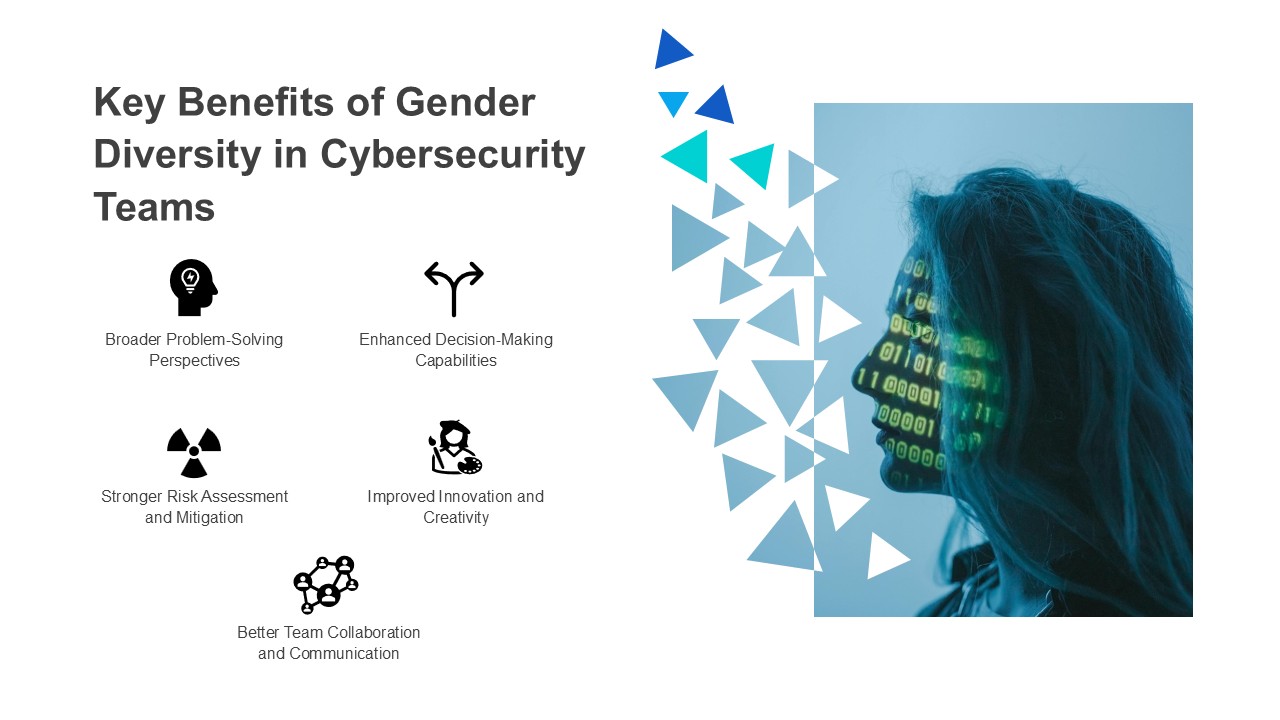
The Big Three: Why Women Are Switching to Cyber in 2026
1. Top-Tier Compensation & Financial Security
Unlike traditional tech entry points that have seen wage stagnation, cybersecurity salaries continue to climb.
- National Median Salary: The U.S. Bureau of Labor Statistics (BLS) reports a median annual wage of $124,910 for Information Security Analysts.
- Entry-Level Potential: Starting roles (such as SOC Level 1 or Junior GRC Analyst) typically start between $65,000 and $85,000, with mid-career roles routinely breaching the $130,000+ mark.
- Executive Ceiling: Chief Information Security Officers (CISOs) and Security Architects frequently command total compensation packages exceeding $250,000 to $400,000+.
2. Exceptional Job Security (33% Projected Growth)
The BLS projects information security analyst roles to grow by 33% through 2033—more than six times faster than the national average for all occupations. Because threat protection is budget-protected and mandatory for legal compliance, cybersecurity remains largely recession-resilient compared to consumer tech roles.
3. Remote Flexibility & Work-Life Integration
Cybersecurity operations run on cloud infrastructure and distributed Security Operations Centers (SOCs). Key benefits include:
- Hybrid & Fully Remote Options: Governance, Risk, and Compliance (GRC), Cloud Security, and Threat Intelligence roles frequently offer remote work models.
- Flexible Shift Structures: Distributed global teams allow for non-standard working hours, making it easier to balance professional growth with personal commitments.
- Location-Independent Earning: Remote roles allow professionals living in lower cost-of-living areas to secure competitive national tech salaries.
7 High-Paying Cybersecurity Roles for Women (Entry-Level to Executive)
Cybersecurity is not a single career path—it is a vast ecosystem of specialized disciplines ranging from risk governance and threat hunting to software architecture and executive leadership.
Whether you thrive on analytical problem-solving, corporate policy design, or coding, there is a role tailored to your background. The guide below breaks down 7 high-paying cybersecurity roles for women, outlining salary expectations, entry requirements, and the specific transferable skills that make career switchers succeed.
Roles Summary & Career Comparison
Roles Summary & Career Comparison
| Role Title | Average Salary Range (USD) | Technical Barrier | Best Transferable Skills | Primary Entry Pathway |
|---|---|---|---|---|
| 1. Cybersecurity Analyst (SOC) | $70,000 – $115,000 | Low to Moderate | Critical thinking, log analysis | CompTIA Security+, Network+ |
| 2. GRC Analyst | $75,000 – $125,000 | Low (Non-Tech) | Project management, auditing | ISACA CISA, CRISC, paralegal experience |
| 3. Cloud Security Specialist | $110,000 – $165,000 | Moderate | Systems admin, cloud basics | AWS Certified Security, Azure Security |
| 4. Penetration Tester | $95,000 – $155,000 | High | Problem-solving, scripting | CompTIA PenTest+, eJPT, CTFs |
| 5. Application Security Engineer | $115,000 – $170,000 | High | Software engineering, code review | Defensive programming, CSSLP |
| 6. Cybersecurity Architect | $140,000 – $195,000 | High (Senior) | Enterprise IT, network engineering | CISSP, SABSA, 7+ years IT experience |
| 7. Chief Info Security Officer (CISO) | $190,000 – $350,000+ | High (Executive) | Risk strategy, team management | CISSP, CISM, MBA/Leadership track |
1. Cybersecurity Analyst (SOC) – Best Entry Point
A Security Operations Center (SOC) Analyst serves as the frontline defender of an enterprise network. In this role, you monitor security tools for suspicious activities, analyze security alerts, and respond to real-time cyber incidents.
- Why it’s great for women entering cyber: SOC teams operate around the clock, offering flexible shift schedules. It is widely considered the single most accessible entry-level security role.
- Average Salary Range: $70,000 – $115,000 (Entry to Mid-Level).
- Core Skills Needed: Threat detection, SIEM tools (Splunk, Microsoft Sentinel), incident response basics.
- Recommended Entry Certifications: CompTIA Security+, Cisco CyberOps Associate.
2. Governance, Risk & Compliance (GRC) Analyst – Ideal for Non-Tech Switchers
GRC Analysts focus on the operational, legal, and risk management side of cybersecurity rather than writing code or configuring firewalls. You will help organizations comply with federal regulations (like HIPAA, GDPR, or NIST standards) and evaluate third-party vendor risks.
- Why it’s great for women entering cyber: GRC requires strong communication, project management, and attention to detail. Women with backgrounds in law, compliance, finance, healthcare, or administrative management excel in GRC without needing a computer science background.
- Average Salary Range: $75,000 – $125,000.
- Core Skills Needed: Regulatory frameworks (NIST, ISO 27001), technical writing, risk assessment.
- Recommended Entry Certifications: ISACA CISA, CRISC, ISACA ITCA.
3. Cloud Security Specialist – Fast-Growing Field
As companies migrate their operations to platforms like Amazon Web Services (AWS), Microsoft Azure, and Google Cloud, Cloud Security Specialists ensure cloud environments are protected against misconfigurations and data leaks.
- Why it’s great for women entering cyber: Cloud security is experiencing an acute talent deficit, meaning certified specialists can rapidly command six-figure salaries. It is also one of the most remote-friendly niches in tech.
- Average Salary Range: $110,000 – $165,000.
- Core Skills Needed: Identity and Access Management (IAM), infrastructure-as-code, cloud architecture.
- Recommended Entry Certifications: AWS Certified Security – Specialty, Microsoft Certified: Cybersecurity Architect Expert.
4. Penetration Tester (Ethical Hacker) – Hands-On Technical Track
Penetration Testers (or Pen Testers) are paid to legally hack into an organization’s applications, networks, and physical security measures to uncover vulnerabilities before malicious hackers exploit them.
- Why it’s great for women entering cyber: Ethical hacking offers clear, merit-based career progression. If you love gamified problem-solving, labs, and hands-on technical puzzles, this is an extraordinarily rewarding field.
- Average Salary Range: $95,000 – $155,000.
- Core Skills Needed: Scripting (Python, Bash), network scanning (Nmap), vulnerability assessment, report writing.
- Recommended Entry Certifications: CompTIA PenTest+, eJPT (eLearnSecurity Junior Penetration Tester), GIAC GPEN.
5. Application Security (AppSec) Engineer – For Developers
Application Security Engineers focus on secure software development. They collaborate directly with software engineering teams to perform code reviews, build secure pipelines, and prevent vulnerabilities like SQL injections or cross-site scripting (XSS).
- Why it’s great for women entering cyber: It is the ideal transition route for women currently working as software developers, web designers, or QA testers who want to specialize and earn higher technical compensation.
- Average Salary Range: $115,000 – $170,000.
- Core Skills Needed: Secure coding standards, OWASP Top 10 knowledge, static/dynamic code analysis (SAST/DAST).
- Recommended Entry Certifications: Certified Secure Software Lifecycle Professional (CSSLP), GIAC Web Application Defender (GWEB).
6. Cybersecurity Architect – Senior Technical Leadership
Security Architects design and build an enterprise’s overarching security infrastructure. They act as the “master builders” who map out how networks, cloud assets, employee devices, and encryption protocols fit together securely.
- Why it’s great for women entering cyber: It is a high-prestige, non-executive role that allows experienced technical women to stay on an individual contributor (IC) track while commanding executive-level pay.
- Average Salary Range: $140,000 – $195,000+.
- Core Skills Needed: Enterprise network design, Zero Trust architecture, cross-department strategy.
- Recommended Entry Certifications: CISSP (Certified Information Systems Security Professional), SABSA.
7. Chief Information Security Officer (CISO) – Executive Track
The CISO is the senior-most executive responsible for aligning an organization’s cybersecurity strategy with its business goals. CISOs manage security budgets, oversee incident response operations, and report directly to the Board of Directors or CEO.
- Why it’s great for women entering cyber: Boardrooms are actively seeking diverse executive leadership to improve corporate risk management and governance. Female CISOs bring holistic risk perspective, strong stakeholder management, and leadership.
- Average Salary Range: $190,000 – $350,000+ (plus executive bonuses and equity packages).
- Core Skills Needed: Boardroom communication, financial risk management, executive leadership, legal/regulatory strategy.
- Recommended Entry Certifications: Certified Information Security Manager (CISM), CISSP.
How to Break Into Cybersecurity: A Step-by-Step Roadmap
Transitioning into cybersecurity does not require starting from square one—or spending years earning a computer science degree. The industry’s workforce gap has forced a shift toward skills-based hiring, where practical aptitude and non-technical backgrounds are valued just as highly as traditional degrees.
Whether you are pivoting from finance, healthcare, customer support, or administration, here is the exact 3-step blueprint to transition into cybersecurity efficiently.
Step 1: Audit Your Transferable Skills (1–2 Weeks)
Cybersecurity relies heavily on soft skills and domain expertise that cannot be taught in a boot camp. Identify where your current experience maps directly into security domains:
- Finance, Accounting & Legal: Direct bridge to Governance, Risk & Compliance (GRC) and financial fraud analysis.
- Customer Support & Helpdesk: Direct bridge to SOC Analyst Level 1 (troubleshooting, ticket handling, basic networking).
- Project Management & Admin: Direct bridge to Security Project Coordinator or policy auditing.
- Healthcare & Operations: Direct bridge to HIPAA Compliance Analyst or healthcare IT security.
Step 2: Build Practical Skills with Hands-On Labs (1–3 Months)
Certifications prove you understand concepts, but hands-on labs prove you can do the job. Employers want to see that you have analyzed real logs and configured security controls.
- Interactive Learning Platforms: Build foundational confidence using TryHackMe (Pre-Security and SOC Level 1 paths) and Hack The Box Academy.
- Participate in CTFs (Capture The Flag): Join beginner-friendly CTFs through platforms like National Cyber League (NCL) or OverTheWire to practice real-world problem solving.
- Document Your Home Lab: Set up a free virtual home lab using VirtualBox, Wireshark, and Security Onion. Document your projects on GitHub or LinkedIn to show recruiters tangible proof of skill.
Step 3: Earn Industry-Recognized Certifications (2–4 Months)
Validate your self-study with certifications HR software scans for. Avoid paying thousands for generic boot camps when targeted self-study for vendor-neutral certifications yields higher ROI:
- Entry-Level Standard: CompTIA Security+ or ISC2 Certified in Cybersecurity (CC) (ISC2 routinely offers free training and exam vouchers for beginners).
- Hands-On Defensive Path: BJT (Blue Team Level 1) or Cisco CyberOps Associate.
- Networking Fundamentals: CompTIA Network+ (essential if you come from a non-technical background).
Pro Tip for Career Switchers: Never label yourself as “starting from zero” on your resume. Rewrite your past job descriptions using security terminology—highlighting data privacy handling, process documentation, risk mitigation, and system troubleshooting.
Top Cybersecurity Certifications, Bootcamps, and Scholarships for Women
Navigating the landscape of cybersecurity credentials can be overwhelming. With hundreds of certifications and expensive bootcamps on the market, choosing the wrong path can waste both time and money.
To maximize your return on investment (ROI), align your credentials directly with your experience level. Below is a structured tier breakdown of industry-recognized certifications, alongside fully funded scholarships specifically designed to support women in tech.
Certification Roadmap by Career Level
| Certification | Level | Prerequisites | Ideal For | Avg. Exam Cost (USD) |
|---|---|---|---|---|
| ISC2 CC | Entry | None | Absolute beginners, non-tech switchers | Free (Promo) / $125 |
| CompTIA Security+ | Entry | Basic networking knowledge | Frontline SOC & GRC candidates | ~$400 |
| AWS Certified Security – Specialty | Mid | AWS Cloud Practitioner / Solutions Architect | Cloud Security Analysts | ~$300 |
| CompTIA PenTest+ / eJPT | Mid | Networking & scripting basics | Aspiring Ethical Hackers | ~$200 – $400 |
| CISSP | Advanced | 5 years cumulative security experience | Architects, Managers, CISOs | ~$749 |
| ISACA CISM | Advanced | 5 years information security management | Executive Leadership Track | ~$575 – $760 |
Best Entry-Level Cybersecurity Certifications for Beginners (CompTIA Security+, ISC2 CC)
If you are breaking into the field or pivoting from a non-technical role, these credentials validate your foundational knowledge without requiring years of prior IT experience.
- ISC2 Certified in Cybersecurity (CC): Developed specifically to address the global workforce shortage, this introductory cert covers security principles, access control, and network security concepts.
- CompTIA Security+ (SY0-701): The global benchmark for entry-level cybersecurity roles. HR recruiting software widely filters for Security+ when screening candidates for SOC Analyst, Junior Systems Admin, and Helpdesk positions.
- Cisco CyberOps Associate: A tactical, hands-on certification focused on day-to-day Security Operations Center (SOC) monitoring, threat analysis, and incident response.
Advanced Cybersecurity Certifications for High-Paying Roles (CISSP, CISM, AWS Security)
Once you have 2 to 5 years of hands-on security experience, specialized credentials unlock senior-level pay scales and specialized technical tracks.
- AWS Certified Security – Specialty / Azure Security Engineer (AZ-500): Validates expertise in securing public cloud infrastructure, managing identity protocols (IAM), and configuring cloud data encryption.
- eJPT (eLearnSecurity Junior Penetration Tester) & CompTIA PenTest+: Unlike purely theoretical exams, the eJPT is a hands-on, practical exam where you conduct a real penetration test. It is highly regarded by technical hiring managers for entry-to-mid offensive security roles.
- CISSP (Certified Information Systems Security Professional): Considered the “gold standard” credential for senior security leaders, architects, and CISOs. Achieving CISSP validation instantly signals upper-tier expertise and opens doors to six-figure leadership packages.
Fully Funded Scholarships and Training Programs for Women
You do not need to pay out-of-pocket for expensive $10,000+ bootcamps. Take advantage of dedicated diversity funding, grants, and free training pathways:
Featured Funding Opportunities
- WiCyS (Women in Cybersecurity) Security Training Scholarship: Offered in partnership with SANS Institute and top tech sponsors, this multi-tiered program provides free training and GIAC certification pathways (such as GFACT, GSEC, and GCIH) worth thousands of dollars.
- SWSIS (Scholarships for Women Studying Information Security): Provides academic scholarships of $2,000 to $5,000+ for women pursuing undergraduate or master’s degrees in information security fields.
- Cyber Defense Women in Cyber Scholar Fund: Offers annual cash scholarships alongside fully sponsored trips to major conferences (such as Black Hat and RSA) for networking and recruitment.
- Her CyberTracks: A European Union-backed initiative providing specialized policy, incident response, and AI-cybersecurity training and mentorship cohorts for women professionals.
Overcoming Common Barriers: Community, Mentorship, and Negotiation
While the cybersecurity industry offers high financial rewards, women entering the field often face distinct structural hurdles—ranging from systemic imposter syndrome in male-dominated teams to navigating salary negotiations.
Surmounting these barriers requires leveraging dedicated professional networks, building strategic sponsor relationships, and quantifying your non-technical value during contract reviews.
Barriers vs. Tactical Solutions Matrix
| Common Industry Barrier | Impact on Career Growth | Strategic Action Plan |
|---|---|---|
| Isolation in Male-Dominated Teams | High burnout, limited visibility | Join dedicated peer networks (WiCyS, Cyberjutsu) for monthly cohort support. |
| Imposter Syndrome & Skill Hesitation | Delaying job applications until 100% qualified | Apply when meeting 60% of technical criteria; rely on hands-on lab proof. |
| Unrealized Salary Potential | Missing out on $10k–$30k+ in initial base pay | Benchmark market rates via CyberSeek and negotiate total comp (certs, remote perks). |
| Lack of Executive Mentorship | Slower promotion cycles to mid/senior tiers | Find a corporate sponsor (who advocates for you) vs. just a mentor (who gives advice). |
1. Finding Female Mentors and Global Peer Networks
Building a successful career in tech rarely happens in isolation. Joining structured diversity organizations gives you direct access to referral channels, hidden job boards, and specialized mentorship programs.
- WiCyS (Women in Cybersecurity): Features an annual 9-month professional mentorship cohort that pairs entry-level candidates with senior industry leads.
- Executive Women’s Forum (EWF): Focused on advancing women into director, VP, and CISO roles through leadership academies and executive networking.
- International & Niche Communities: Engage with region-specific or specialized groups like Women4Cyber (Europe), Cyversity (underrepresented populations), and Women’s Society of Cyberjutsu (WSC) for hands-on technical workshops.
2. Overcoming Imposter Syndrome and the “100% Qualification” Trap
Research shows that women frequently refrain from applying for technical roles unless they meet 100% of the posted job requirements, whereas male candidates apply when meeting roughly 60%.
- Focus on Problem-Solving over Memorization: Cybersecurity job descriptions are notoriously unaligned wish lists written by HR departments. If you possess foundational networking knowledge, hands-on lab experience, and relevant certifications, submit the application.
- Track a “Brag Sheet”: Maintain a weekly record of resolved support tickets, completed labs, policy drafts, and system optimizations. Use these concrete metrics to replace self-doubt with evidence during performance reviews.
3. Negotiating Your Worth: Salary, Certifications, and Remote Flexibility
Compensation negotiation in cybersecurity extends far beyond base salary. Because certified talent is scarce, companies often have flexibility in alternative budget buckets.
- Benchmark Real Data: Utilize CyberSeek, Glassdoor, and Levels.fyi to establish precise median salary ranges for your specific city or remote tier before entering interviews.
- Negotiate Professional Development Vouchers: If a company cannot meet your base salary requirement, ask for a written agreement to fund $3,000–$5,000 annually in specialized certifications (e.g., SANS/GIAC, CISSP) or conference passes.
- Lock in Flexible Conditions: Negotiate remote work days, shift preferences, or flexible working hours upfront as part of your standard employment package.
4. Transitioning from Mentor to Sponsor for Rapid Leadership Growth
While a mentor gives you advice behind closed doors, a sponsor uses their executive influence to advocate for your promotion when you aren’t in the room.
- Identify Internal Champions: Seek out senior engineers, team leads, or directors who actively evaluate your deliverables and understand your career goals.
- Make Your Impact Visible: Share post-incident analysis reports, project wins, and lab discoveries openly on internal channels (like Slack or Teams) and LinkedIn to stay top-of-mind for upcoming leadership opportunities.
Frequently Asked Questions (FAQ)
Do I need a computer science degree to break into cybersecurity?
No. While a technical degree can be helpful, the cybersecurity industry operates largely on skills-based hiring. Employers prioritize practical knowledge (demonstrated through hands-on labs, home projects, and certifications like CompTIA Security+ or ISC2 CC) over traditional four-year degrees. Professionals with non-technical backgrounds in finance, law, project management, and customer support routinely make successful career transitions into security domains like GRC or threat analysis.
What are the best entry-level cybersecurity roles for women with non-tech backgrounds?
The most accessible non-technical entry point is Governance, Risk & Compliance (GRC) Analyst, which relies heavily on policy review, regulatory frameworks, auditing, and clear communication rather than coding. Other strong options include Cybersecurity Project Coordinator, Third-Party Risk Analyst, and Security Awareness Trainer.
What is the average starting salary for a woman in cybersecurity?
Entry-level positions (such as SOC Analyst I or Junior GRC Analyst) typically command starting base salaries between $65,000 and $85,000, depending on location and certifications. Mid-career specialists routinely earn $110,000 to $150,000, while executive roles like Chief Information Security Officer (CISO) frequently exceed $250,000+ in total compensation packages.
How long does it take to switch careers into cybersecurity?
With dedicated self-study (10–15 hours per week), most career switchers build sufficient hands-on experience and earn an entry-level certification in 3 to 6 months. Joining a structured cohort or scholarship program—such as those offered by WiCyS or SANS Institute—can accelerate hiring timelines through direct industry networking and job referrals.
Where can women find cybersecurity mentors and free training resources?
Leading organizations providing free or fully funded training, scholarships, and formal mentorship programs include:
- WiCyS (Women in Cybersecurity): Global peer networking, SANS training scholarships, and mentorship cohorts.
- Women’s Society of Cyberjutsu (WSC): Hands-on technical workshops and career coaching.
- Black Girls Hack & Cyversity: Targeted mentorship, exam vouchers, and labs for underrepresented groups.
- ISC2 One Million Certified in Cybersecurity: Free introductory training modules and exam vouchers for beginners.
Conclusion: Take Your First Step Into Cybersecurity Today
The cybersecurity industry isn’t just expanding—it is evolving. With over 4.8 million unfilled roles globally and a growing recognition that diverse perspectives lead to stronger corporate defense, there has never been a better time for women to launch or scale a career in information security.
Whether you are pivoting from a completely non-technical field like finance, law, or administration, or looking to move up into cloud defense and executive leadership, your unique background is an asset—not a limitation.
You don’t need to master everything overnight. The key to breaking in is consistent, focused execution.
The global cybersecurity shortage isn’t going away—and the industry needs your perspective. Choose your path, start building your practical skills, and take that first step toward a future-proof, high-paying career today.
By Aveline Lowell
Founder & Editor-in-Chief, RiseByHer
Aveline Lowell writes research-driven content covering women’s finance, entrepreneurship, STEM, technology, and career growth. Her work focuses on practical, well-researched information that helps women make informed decisions.
Editorial & Disclaimer: RiseByHer aims to provide accurate, well-researched, and up-to-date information. Articles are reviewed and updated when necessary and are intended for general informational and educational purposes, not personalized financial, legal, tax, or professional advice.