

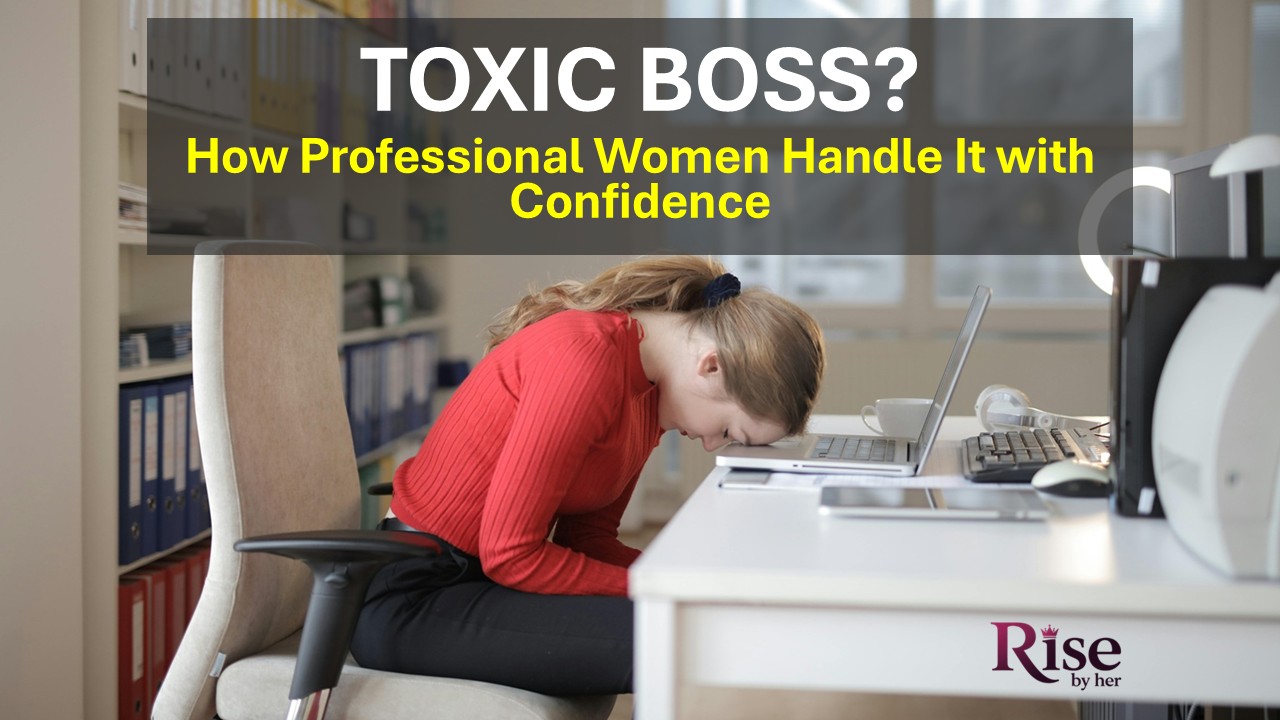
A toxic boss isn’t just someone with high expectations or a strong personality. It’s someone whose behavior drains your energy, chips away at your confidence, and turns your workday into a mental battlefield. According to a 2023 report by the American Psychological Association, 1 in 5 employees cites a toxic workplace as their number one source of stress and women are often the ones most affected by manipulative managers, micromanagement, and subtle power plays.
The impact goes far beyond frustration. A toxic boss can sabotage your career growth, shake your self-worth, and even take a toll on your health. And if you’re a driven, professional woman? The stakes can feel even higher.
In this guide, you’ll learn how to recognize the red flags of toxic leadership, protect your mental and emotional well-being, and handle the situation with confidence and professionalism. Because you deserve more than just surviving your job you deserve to thrive in it.
Signs You’re Dealing with a Toxic Boss
It’s not always easy to tell when a boss has crossed the line from being demanding to downright toxic. Some behaviors become normalized in high-pressure environments, especially for women who are taught to “tough it out” or not “overreact.”
But let’s be clear: repeated patterns of manipulation, disrespect, or emotional abuse are not part of a healthy workplace and they’re not your fault.
Common Signs of a Toxic Boss
Here are some of the most telling red flags that you might be dealing with a toxic leader:
- Micromanagement: You’re never trusted to make decisions, and your every move is scrutinized.
- Gaslighting: You’re made to question your memory or perception, especially after raising valid concerns.
- Public Shaming: Mistakes are called out in front of others, often with sarcasm or humiliation.
- Credit-Stealing: Your ideas and work are presented as theirs, you’re invisible when things go well, and the scapegoat when they don’t.
- Unclear Expectations: You’re expected to meet goals that constantly change without proper guidance or communication.
- Mood Swings: One day they’re supportive, the next they’re cold or explosive, making it impossible to know where you stand.
- Guilt-Tripping: You’re made to feel selfish for taking time off, setting boundaries, or speaking up.
How It Impacts You
These behaviors don’t just create tension; they wear you down over time:
- Lowered confidence and self-worth
- Constant anxiety or dread before work
- Fear of speaking up or making mistakes
- Trouble focusing or feeling “on edge”
- Burnout or emotional exhaustion
Quick Self-Check: Are You in a Toxic Dynamic?
Ask yourself:
- Do I feel anxious or drained after most interactions with my boss?
- Have I stopped offering ideas or speaking up in meetings?
- Am I second-guessing myself more than usual?
- Do I feel like I have to “walk on eggshells” at work?
If you answered “yes” to more than one of these, it might be time to look closer at your work environment and know that you’re not alone.
Why Women Experience Toxic Leadership Differently
Toxic leadership does not affect everyone the same way. For women, especially those working in high-pressure or male-dominated industries, the effects can be uniquely damaging.
Gender Bias Makes Toxic Behavior Harder to Call Out
Many women professionals are socialized to be agreeable, flexible, and accommodating. When they speak up or assert themselves, they risk being labeled as emotional, difficult, or overly ambitious.
Toxic bosses often exploit these dynamics to manipulate situations. For example:
- Feedback is delivered as criticism and disguised as concern
- Emotional reactions are dismissed with comments like “you’re just too sensitive”
- Achievements are overlooked while less-qualified male peers get recognition
This can lead to second-guessing and self-doubt. Many women wonder, “Am I overreacting, or is this actually toxic?”
Ambition Can Be Misread
Ambitious women are often met with subtle resistance from toxic leaders who may feel threatened. This plays out in behaviors like:
- Passive-aggressive comments about being bossy or too direct
- Being undermined in front of peers or clients
- Getting excluded from important projects or decision-making conversations
Meanwhile, men with similar traits are often praised for their confidence and leadership.
The Emotional and Career Cost
Toxic leadership affects more than just day-to-day work. It can drain your confidence, slow down your career growth, and negatively impact your mental health. Many women stay quiet out of fear of being labeled as difficult, or worse, losing their job.
If any of this feels familiar, know that your feelings are valid. You are not imagining it, and you deserve a safe and respectful work environment.
How to Protect Your Mental Health and Confidence
Toxic work environments can take a serious toll on your well-being. If you’ve ever gone home feeling emotionally drained, questioning your worth, or replaying conversations in your head, you’re not alone. Protecting your mental health is just as important as advancing your career.
Shift Your Mindset: You Are Not the Problem
It’s easy to internalize toxic behavior and think you’re the one at fault. But here’s the truth: healthy workplaces don’t make you feel small. A toxic boss often projects their own insecurities or uses power as control. Remember yourself:
- I am not too emotional
- I am allowed to ask questions
- I deserve to feel safe and respected at work
Start by separating your identity from your boss’s behavior. Their reactions do not reflect your value.
Set Boundaries That Protect Your Energy
When you’re dealing with toxicity, emotional boundaries are essential. These might look like:
- Not checking emails after work hours
- Keeping communication brief and focused on tasks
- Avoiding personal conversations that get twisted or used against you
- Saying “I’ll get back to you” instead of reacting on the spot
Emotional detachment doesn’t mean being cold. It means recognizing what’s yours to carry and what isn’t.

Support Your Mental Health with Small Daily Habits
Build emotional resilience with practices that bring you back to yourself. Try one or more of these:
– Journaling prompts
- What’s one thing I handled well today?
- How did I advocate for myself this week?
- What boundary do I need to set moving forward?
– Affirmations to repeat
- I am not responsible for fixing toxic behavior
- I deserve a healthy, respectful work environment
- I trust myself to make decisions that protect my peace
Even five minutes a day of journaling or quiet reflection can make a big difference in how grounded you feel at work.
Professional Strategies for Responding to Toxic Behavior
When you’re facing toxic leadership, the key is to respond with confidence while protecting your professionalism and career. This isn’t about “being nice” or “keeping the peace.” It’s about setting clear limits, protecting your mental space, and using smart, career-safe strategies.
Use Clear and Calm Language to Set Boundaries
You don’t have to be aggressive to be firm. Here are examples of what you can say:
- “I’d like to stay focused on solutions. Let’s revisit this when we’re both ready to collaborate.”
- “I’m happy to follow up by email so we’re on the same page.”
- “Let’s keep the conversation professional and constructive.”
These phrases show strength without escalating tension.
Start Documenting Everything
Keeping a record protects you. If something ever needs to be escalated, written proof will matter more than your memory. Track things like:
- Dates and times of problematic conversations
- What was said or done, as objectively as possible
- Who else was present or copied in emails
- Your own actions and responses
You can use a private document, a notebook, or a secure folder in your email. Keep it professional and factual.
Know When to Escalate and How to Do It
If the toxic behavior is harming your mental health, undermining your work, or breaking company policies, it may be time to take the next step. Here’s how:
- Review your employee handbook to understand your rights and protocols
- Request a private meeting with HR and bring your documentation
- If HR is part of the problem, consider speaking to another leader or trusted mentor
- Stay calm, clear, and focus on behavior patterns rather than emotions
Even if nothing changes immediately, documenting and reporting creates a record that can protect you later.
When It’s Time to Leave And How to Plan Your Exit
Sometimes the healthiest and most empowering choice you can make is to walk away. While setting boundaries and speaking up are important steps, not every toxic workplace can be fixed. Knowing when to leave is just as important as knowing how to stay strong.
Red Flags That It’s Time to Move On
If you’re constantly questioning your worth, dreading every workday, or feeling physically drained from stress, those are signs your workplace may be beyond repair. Other warning signs include:
- Your feedback or concerns are consistently ignored
- HR does nothing to address ongoing issues
- The toxic behavior is escalating instead of improving
- Your mental health is taking a serious hit
- You’ve tried to address it professionally, and nothing changes
You deserve more than just surviving your workday.
How to Leave with Grace and Protect Your Reputation
Even if you’re ready to sprint out the door, it’s smart to leave on a high note. Here’s how:
- Give appropriate notice, even if it’s tempting not to
- Stay calm in your final days and avoid venting at work
- Write a short, polite resignation letter focused on moving forward
- Thank coworkers who supported you privately and professionally
Leaving with professionalism doesn’t mean you condone what happened. It shows your integrity.
Start Preparing Your Exit Strategy Now
The earlier you plan your next step, the more control you take back. Some ways to get started:
- Update your resume and LinkedIn profile
- Reach out to trusted contacts and mentors
- Browse platforms like LinkedIn, The Mom Project, or FairyGodBoss
- Set a timeline for when you want to be in a new role
- Create a checklist of what you need to feel ready (financial, emotional, logistical)
Conclusion: Your Value Isn’t Defined by a Toxic Boss
No job or manager has the right to make you question your worth. If you’ve experienced toxic leadership, know this: it says more about their lack of professionalism than it does about your talent or potential. You are capable, qualified, and deserve a work environment that respects and uplifts you.
Confidence after a toxic job takes time to rebuild, but every step you take to protect your peace and advocate for yourself is a powerful act. Whether you’re speaking up, documenting patterns, or planning your next move, you are taking back control.
Ready to take action?
If you’ve been through something similar, share your story in the comments. Your experience could help another woman feel less alone.
You’re not stuck. You’re rising.
Read more tips on: Career Growth and Leadership for women