
Why Women’s STEM Careers Are Rapidly Changing in 2026
The world of STEM (Science, Technology, Engineering, and Mathematics) is evolving faster than ever before. As emerging technologies like artificial intelligence, green energy, and advanced data analytics reshape industries, the demand for new and specialized skills is skyrocketing.
For women in STEM careers, this rapid change presents both a challenge and an incredible opportunity. Traditional education and degrees, while important, are no longer enough to guarantee long-term success in these fields. Today’s employers are looking for professionals who are adaptable, continually learning, and able to apply the latest innovations in real-world settings.
This is where reskilling comes in. Reskilling (the process of learning new skills to stay relevant in a changing job market) is becoming a powerful bridge for women aiming to unlock new opportunities, climb leadership ladders, and shape the future of STEM. In this article, we’ll explore why reskilling isn’t just important, it’s essential for every woman looking to thrive in the future of STEM.
What Reskilling Means for Women in STEM (And Why It Matters)
In today’s rapidly evolving tech landscape, reskilling is no longer optional, it is essential. Reskilling means learning entirely new skills that prepare you for different roles or industries, rather than just deepening your current expertise (which is called upskilling). While upskilling helps you advance where you already are, reskilling empowers you to pivot, adapt, and seize new opportunities.
For women in STEM, reskilling is critical. As industries transform with breakthroughs in AI, automation, and big data, the traditional technical skills are being replaced or supplemented by newer, more advanced capabilities. Without ongoing reskilling, even experienced professionals risk being left behind.
Some of the most in-demand reskilling areas for women in STEM today include:
- Artificial Intelligence (AI) and Machine Learning: From healthcare to finance, AI is reshaping industries and opening up lucrative career paths. If you’re looking to reskill in artificial intelligence, explore these top resources: Empowering Women in Tech: Best AI Learning Platforms.
- Data Science and Analytics: With businesses relying heavily on data-driven decisions, expertise in data interpretation is highly valuable.
- Cloud Computing: Skills in platforms like AWS, Azure, and Google Cloud are becoming must-haves for tech roles.
- Cybersecurity: As digital threats grow, cybersecurity specialists are in high demand across nearly every sector. If you’re interested, check out Women in Cybersecurity: 7 High-Paying Roles and How to Get Started.
Investing in reskilling through STEM reskilling programs can equip women with these future-proof skills, helping them remain competitive, boost their earning potential, and even transition into leadership roles where they can drive innovation and change.
Top Challenges Women Face in STEM + How Reskilling Helps Overcome Them
Despite progress, women in STEM still face significant barriers that slow career growth and limit leadership opportunities. Challenges such as gender gaps in hiring, promotion rates, and executive leadership continue to persist across science, technology, engineering, and math fields.
Key Barriers Women Face:
- Unequal Access to Opportunities: Women are often overlooked for high-impact projects and leadership training.
- Wage Gaps: Women in STEM still earn less than their male counterparts in similar roles.
- Limited Career Advancement: Fewer mentorship opportunities and workplace bias create a “glass ceiling” effect.
- Field-Specific Challenges: Some STEM areas (like tech and engineering) have significantly lower female representation, making career growth even harder.

How Reskilling Helps Break These Barriers
- Moves Women into Leadership Roles: By mastering high-demand, cutting-edge skills (such as AI or cybersecurity), women position themselves as indispensable leaders for future tech growth.
- Facilitates Career Transitions: Reskilling allows women to pivot into emerging STEM fields that may offer better opportunities, flexibility, and diversity support.
- Boosts Earning Power: Certifications and training in areas like data science, machine learning, or cloud architecture can lead to higher-paying positions and greater salary negotiation power.
Reskilling opportunities for women are not just about learning new skills, they are about unlocking new levels of influence, income, and innovation within STEM industries.
Most In-Demand STEM Skills Women Should Learn Today
As the STEM landscape evolves, certain skills are becoming essential for women aiming to lead and thrive. Reskilling in the right areas can unlock new career opportunities, higher salaries, and greater leadership potential.
Top Technical Skills for 2025 and Beyond
- Data Analytics: Learning to collect, analyze, and interpret large datasets is crucial across industries like healthcare, finance, and technology.
- AI and Machine Learning: Automation, predictive modeling, and intelligent systems are shaping the future. Expertise here makes women highly competitive in cutting-edge tech sectors.
- Cloud Computing: Cloud infrastructure powers everything from remote work to big business operations. Certifications like AWS, Microsoft Azure, or Google Cloud are extremely valuable.
- Cybersecurity: With rising cyber threats, skilled cybersecurity professionals are in high demand across every sector, from finance to healthcare to government.
- Green Tech and Sustainable Innovation: As companies prioritize sustainability, skills in clean energy technology, environmental engineering, and sustainable design are surging in importance.
The Importance of Soft Skills
While technical expertise is crucial, soft skills are equally important for career growth in STEM. Here are some skills that women should focus on:
- Leadership: Being able to lead teams, make strategic decisions, and drive results is vital for moving into higher-level positions.
- Project Management: Managing large projects efficiently and ensuring their completion on time and within budget is a sought-after skill, especially as women move into managerial roles.
- Communication and Collaboration: Clear communication and the ability to work effectively with cross-functional teams are essential for STEM professionals who need to explain complex ideas to non-experts and collaborate with diverse groups.
Best Online Reskilling Programs and Certifications for Women in STEM
Reskilling is key to unlocking new opportunities and advancing your STEM career. Fortunately, there are numerous online reskilling programs designed to provide women in STEM with the knowledge and certifications they need to thrive. Below are some of the best online STEM courses for women, offering affordable, flexible options that cater to different career goals.
Quick Comparison: Costs, Time Commitment, and Certification Types
| Program | Cost | Time Commitment | Certifications Offered |
| Coursera Women in STEM Scholarships | Varies (Financial aid available) | 4-6 months | Professional Certificates, Specializations |
| edX Professional Certificates | Free to audit, certificates are paid | 6-8 weeks | Professional Certificates, MicroMasters |
| Google Career Certificates | Free trials, financial aid | 6 months | Google IT, Data Analytics, UX Design |
| Women Who Code Programs | Free | Flexible | Coding Bootcamps, Workshops |
To boost your credibility and stand out in the job market, consider earning an industry-recognized certification. Here are the best options to start with: Top Tech Certifications Women in STEM Need for Jobs.
How Reskilling Helps Women Earn More and Grow Faster in STEM
Reskilling not only empowers women to thrive in the rapidly changing STEM landscape but also plays a key role in advancing career growth and financial empowerment. By embracing new skills and certifications, women in STEM can open doors to higher-paying roles, increased visibility, and enhanced leadership opportunities. Let’s explore how reskilling can significantly impact your career and financial success.

How Reskilling Leads to Promotions, New Roles, and Salary Boosts
- Promotions and Leadership Roles: Women who reskill can position themselves for higher-level positions. Many companies actively look for employees with up-to-date skills to take on leadership roles. By reskilling in areas like project management, AI, or cloud computing, women increase their chances of being considered for management and executive positions. For example, women who reskilled in project management have seen a 15-25% increase in promotions.
- New Career Opportunities: Reskilling opens up new fields for women to explore. For instance, women who reskill in areas like cybersecurity, cloud computing, or data analytics may transition into entirely different sectors within STEM, which are experiencing rapid growth. These new fields often come with higher earning potential and job security.
- Salary Boosts: Data from the World Economic Forum reveals that women who take courses in high-demand STEM fields often see a salary increase of 20-30% post-certification. Specialized certifications, such as those in AI, machine learning, or data science, can push women into higher-paying roles, often with additional benefits like remote work options, health coverage, and professional development opportunities.
Psychological Benefits of Reskilling
Reskilling is not just about technical skills; it has significant psychological benefits that contribute to career growth:
- Increased Confidence: Acquiring new skills can boost self-confidence. Women who successfully complete reskilling programs often feel more capable of tackling complex challenges and taking on leadership roles.
- Enhanced Leadership Qualities: Gaining new expertise gives women the credibility and authority to step into leadership positions. With reskilling, women can demonstrate their adaptability and resilience, qualities that are valued in managerial and executive roles.
- Greater Visibility: As women gain new certifications and skills, they enhance their professional visibility within their organizations and networks. Being seen as someone who is committed to continuous learning can increase opportunities for career advancement and networking within and outside the company.
Beyond skills, strong connections can accelerate your growth and open doors to better opportunities. Discover the best communities to join here: Accelerate Your Career in 2026 with Women’s Professional Networks.
How to Start Reskilling: Step-by-Step Guide for Women in STEM
Embarking on a reskilling journey can seem overwhelming, but with the right approach, it becomes an exciting path toward career development and growth. Below is a step-by-step guide to help women in STEM begin their reskilling journey today, ensuring that they are well-equipped to meet the demands of the rapidly evolving workforce.
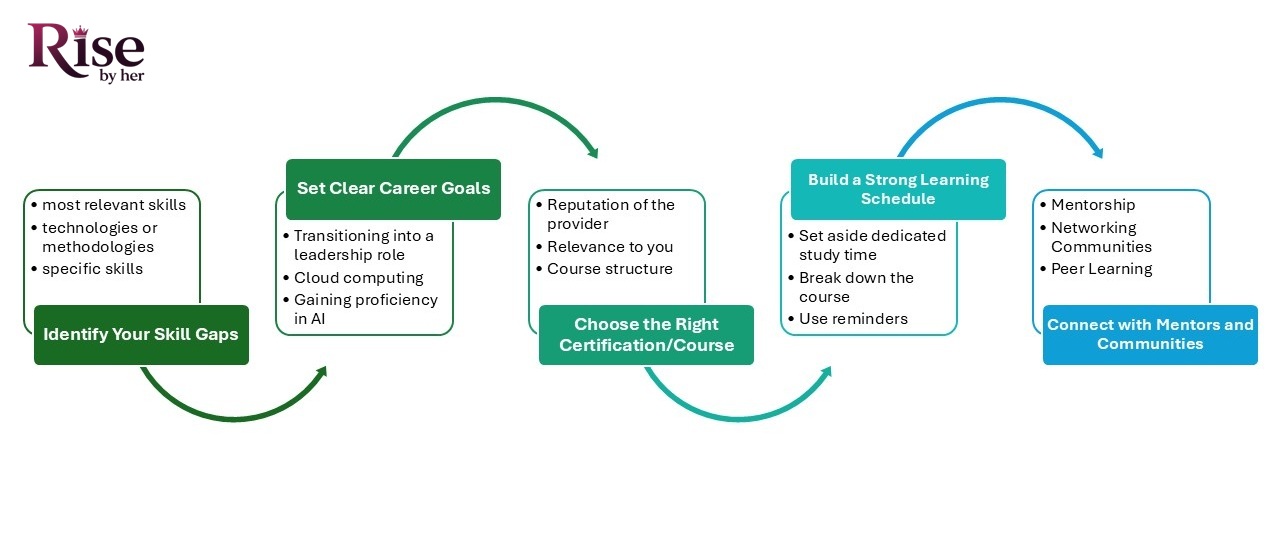
Step 1: Identify Your Skill Gaps
Before you can begin reskilling, it’s crucial to assess your current skills and identify areas where you need improvement or further development. Start by asking yourself the following questions:
- Which skills are most relevant in your current or desired job?
- What new technologies or methodologies are becoming important in your field?
- Are there specific skills that your colleagues or industry leaders have that you lack?
Tools like self-assessments and skills gap analyses can be valuable in determining what you need to learn next. By identifying these gaps, you can align your reskilling efforts with both personal interests and industry demands.
Step 2: Set Clear Career Goals
Once you have a clear understanding of your skill gaps, the next step is to define your career goals. Whether you’re aiming for a promotion, a career change, or simply improving your technical knowledge, setting specific, measurable, attainable, relevant, and time-bound (SMART) goals will keep you focused and motivated.
Examples of clear career goals include:
- Transitioning into a leadership role in data science within the next 18 months.
- Mastering cloud computing to move into a cloud architecture role.
- Gaining proficiency in AI and machine learning for a future career in tech.
By setting clear goals, you ensure that each reskilling step you take is purposeful and in line with your broader career aspirations.
Step 3: Choose the Right Certification/Course
With so many online courses and certifications available, it’s essential to select those that are aligned with your career goals and skill gaps. Keep these factors in mind when choosing the right certification:
- Reputation of the provider: Opt for well-known platforms such as Coursera, edX, or LinkedIn Learning. Ensure the certifications are recognized by employers.
- Relevance to your career goals: If your goal is to work in cybersecurity, choose certifications like CompTIA Security+ or Certified Ethical Hacker (CEH). For those interested in AI, certifications in machine learning or data science are ideal.
- Course structure: Some certifications may offer self-paced learning or structured timelines, choose one that best suits your learning style and availability.
Step 4: Build a Strong Learning Schedule
With a full-time job, family commitments, or other responsibilities, balancing learning with life can be tricky. However, a well-organized learning schedule can ensure steady progress toward your goals. Here’s how to build one:
- Set aside dedicated study time: Allocate specific hours each week for learning. Whether it’s an hour in the morning before work or an hour in the evening, consistency is key.
- Break down the course: Divide your certification into manageable chunks and set mini-deadlines. This way, you’ll avoid feeling overwhelmed and track your progress.
- Use reminders and tools: Use digital tools like Google Calendar or Trello to set reminders and keep track of milestones.
Step 5: Connect with Mentors and Communities
Mentorship and community support are invaluable as you reskill. Here’s how you can connect with others in your field:
- Mentorship: Seek out mentors who have already followed a similar career path. Their advice and insights can guide you through challenges, recommend useful resources, and give you a sense of direction. Platforms like LinkedIn or Women Who Code offer mentorship programs specifically designed for women in STEM.
- Networking Communities: Join online forums, social media groups, and professional communities like Women in Tech, Women Who Code, or #BlackandTech. These communities offer opportunities for networking, learning from peers, and getting feedback on your progress.
- Peer Learning: Participate in study groups, discussion boards, and forums. Sharing your experiences and learning from others is a great way to stay motivated and gain deeper insights into your courses.
The Future of Women in STEM: Building Confidence, Leadership, and Success
In today’s fast-changing world, reskilling is no longer optional, it’s essential. For women in STEM, it’s the key to staying competitive, building confidence, and unlocking leadership opportunities.
Reskilling helps women:
- Learn in-demand technical skills
- Transition into new career paths
- Grow into higher roles and leadership positions
- Break barriers and close the gender gap in STEM
The future of STEM belongs to those who never stop learning, and women are ready to lead the way.
So, what skill will you focus on this year: data science, cloud computing, cybersecurity, or leadership? Share your reskilling goal in the comments.
If you’re switching fields, this guide will help you plan your next move: How to Transition Into a Tech Career as a Woman (Step-by-Step 2026 Guide).

By Aveline Lowell
Founder & Editor-in-Chief, RisebyHer
Aveline Lowell is the Founder and Editor-in-Chief of Rise by Her, where she publishes research-driven content focused on women’s entrepreneurship, financial independence, and scalable income strategies. Her work covers profitable business models, grant opportunities, digital income growth, and strategic career advancement for modern women building sustainable wealth.
She is committed to providing structured, practical guidance that helps women make informed financial and business decisions.