

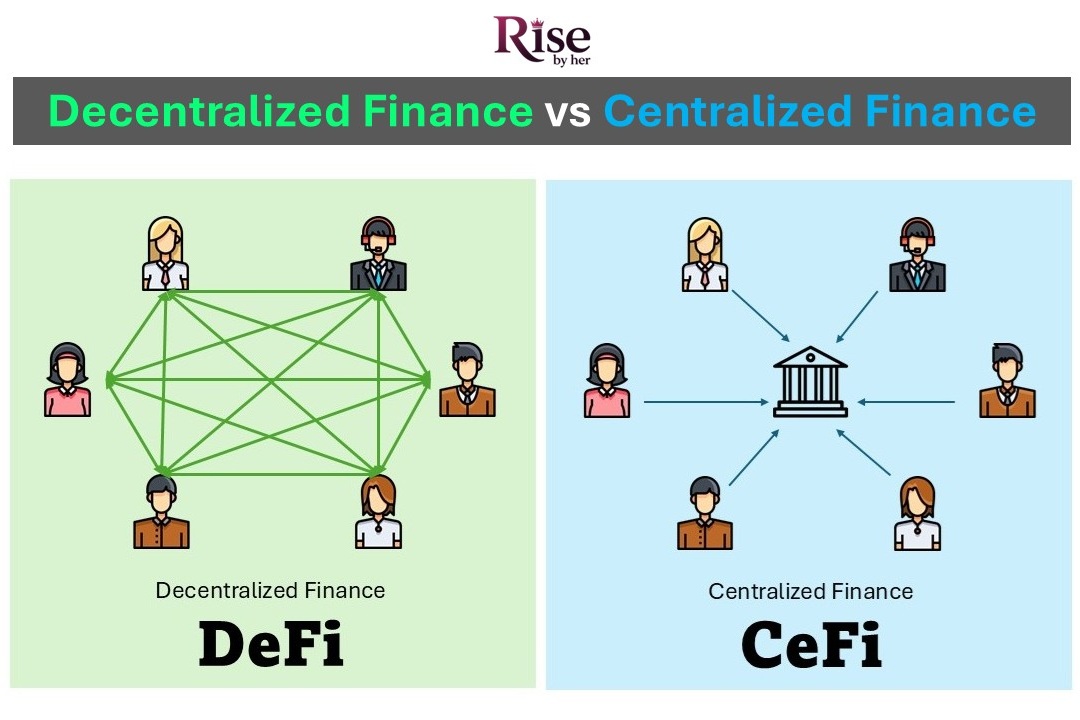
What Is Decentralized Finance (DeFi) and Why It Matters for Women
DeFi (Decentralized Finance) is a way to save, invest, borrow, and earn money online without using a traditional bank. Instead of relying on a financial institution to hold your funds or approve your transactions, DeFi uses blockchain technology and smart contracts to let you manage your money directly through a crypto wallet.
In simple terms, DeFi gives you access to financial services that work 24/7, often with fewer restrictions, and with full control over your assets.
1. DeFi vs Traditional Banking (What’s the Difference?)
The biggest difference between DeFi and traditional banking is control. With a bank, your money is stored and managed by the institution. With DeFi, your money stays in your personal wallet, and you decide exactly how it’s used.
Banks require applications, approvals, and sometimes credit scores. DeFi platforms are typically open to anyone with internet access, making them attractive for women who want more independence, flexibility, and access to global opportunities.
Here’s a clear comparison:
| Feature | Traditional Banking | DeFi |
|---|---|---|
| Who controls your money | The bank | You |
| Access requirements | Approval, ID, credit history | Wallet + internet |
| Availability | Business hours | 24/7 worldwide |
| Fees | Often high | Often lower |
| Interest rates | Usually low | Can be higher |
| Transfers | Can take days | Often minutes |
| Protection | Government insurance (in some countries) | No built-in insurance |
DeFi can offer better earning opportunities than a traditional savings account, but it also requires more personal responsibility. If you lose access to your wallet or fall for a scam, there is no bank to reverse the transaction.
2. What Are Smart Contracts and Why They Matter?
Smart contracts are the technology that makes DeFi work. A smart contract is a piece of code stored on a blockchain that automatically executes financial actions when conditions are met.
Think of it like an automated financial system that follows rules without needing a human manager or a bank employee.
For example, if you lend stablecoins on a DeFi platform, a smart contract automatically:
- accepts your deposit
- calculates your interest
- pays you earnings
- allows you to withdraw anytime (depending on the platform)
Smart contracts matter because they remove the middleman. Instead of trusting a bank to handle your money, you rely on transparent code that anyone can verify.
However, smart contracts are not perfect. If the code has bugs or security flaws, hackers may exploit it. That’s why using trusted DeFi platforms is essential.
3. Is DeFi Safe for Beginners? (Quick Answer)
DeFi can be safe for beginners if you start slowly, use reputable platforms, and focus on low-risk strategies like stablecoin lending or staking on well-known networks.
The biggest danger in DeFi is not always market volatility, it’s scams and poor security habits. Unlike a bank account, DeFi is not insured, and transactions cannot be reversed. If you send money to the wrong address or connect your wallet to a fake website, your funds can be lost permanently.
The safest beginner approach is to start with a small amount, use trusted wallets, and avoid high-risk yield farming until you fully understand what you’re doing.
4. Why DeFi Is Growing Fast in 2026
DeFi is growing rapidly in 2026 because more people are looking for financial freedom, global access, and better ways to earn money without relying on traditional banks.
One major reason is inflation. Many people are frustrated with savings accounts that offer low interest while the cost of living continues to rise. DeFi platforms often provide higher earning potential, especially through lending, staking, and stablecoin-based strategies.
DeFi is also becoming easier to use. Wallet apps are more beginner-friendly, mobile access is improving, and blockchains like Polygon, Arbitrum, and Solana have reduced transaction fees, making DeFi more accessible to everyday users.
For women, DeFi is especially attractive because it offers financial independence without gatekeepers. You can build wealth, earn passive income, and access investment tools without needing approval from a bank, a credit score, or a financial advisor.
As technology becomes more secure and user-friendly, DeFi is becoming less of a niche crypto trend and more of a real alternative to traditional finance.
Why DeFi Matters for Women (Financial Freedom Without Gatekeepers)
Imagine a financial world where you don’t need a credit score to get a loan, pay zero bank fees, and can earn interest just by holding your assets, all from your smartphone. That’s exactly what Decentralized Finance (DeFi) offers, and it’s transforming how women approach money.
1. Access to Global Finance Without Credit Scores
Traditional finance often depends on your credit score, employment history, location, and banking background. If your credit is limited, your income is irregular, or you live in a country with fewer financial opportunities, getting approved for loans or investment products can be difficult.
DeFi doesn’t work that way. Most DeFi platforms are open-access, meaning anyone can participate without submitting documents or waiting for approval. You don’t need a perfect credit score to start earning interest or investing. You simply connect your wallet and choose the financial product that fits your goals.
For many women, especially those rebuilding finances after life changes or living in countries with restricted banking systems, this creates new opportunities to participate in global wealth-building.
If you’re working on improving your financial health, this guide on Boost Your Credit Score Quick: A Woman’s Guide can help you take practical steps to see results faster.
2. Earn Interest Without Asking Permission
One of the most attractive parts of DeFi is the ability to earn interest without relying on a bank. In traditional finance, savings accounts often pay extremely low interest, and some banks require minimum balances or special conditions.
With DeFi, you can earn yield by lending crypto or stablecoins through decentralized lending platforms. Instead of the bank profiting from your deposits, you earn directly from the system.
This gives women the ability to grow savings faster, build passive income streams, and create financial stability on their own terms. Whether you are saving for emergencies, future investments, or long-term goals, DeFi provides tools that can outperform traditional options when used responsibly.
3. Build Wealth Even With Small Amounts
A common myth about investing is that you need a large amount of money to start. DeFi makes wealth-building more accessible because many platforms allow you to start with small deposits.
Even if you only have $20, $50, or $100, you can begin learning how DeFi works, earn interest, and develop consistent financial habits. Over time, small contributions can grow into meaningful savings, especially if you reinvest your earnings.
This is especially helpful for women who are budgeting carefully, paying off debt, or starting from scratch. DeFi removes the idea that investing is only for the wealthy. It creates a system where consistent action matters more than a high starting balance.
4. Financial Independence for Women Entrepreneurs & Freelancers
Women entrepreneurs and freelancers often deal with inconsistent income, delayed client payments, and limited access to traditional business funding. Many banks still require a long financial history, stable employment, or collateral, which makes it harder to qualify for loans, credit lines, or business support.
DeFi offers flexible alternatives that can help women take control of their financial systems and build stability faster.
With DeFi, women business owners can:
- Earn passive income on idle cash instead of leaving it in low-interest bank accounts
- Store income in stablecoins (like USDC or USDT) to protect value and reduce currency risk
- Receive global payments faster, without waiting days for bank transfers
- Manage cash flow more efficiently, especially during slow months
- Diversify savings beyond traditional accounts and local banking limitations
- Access decentralized lending tools, depending on the platform and collateral options
For women building online businesses, DeFi can act like a powerful financial toolkit that supports flexibility, growth, and independence. It provides more ways to protect your income, build reserves, and grow wealth outside systems that often weren’t designed to support female entrepreneurs.
DeFi is not just an investment trend. For many women, it is a real pathway toward long-term financial control and freedom.
How to Start DeFi Safely (Step-by-Step Beginner Setup)
Starting DeFi can feel intimidating at first, but the process is simple once you break it down into steps. The key is to begin slowly, use trusted platforms, and focus on security from day one. Unlike traditional banking, DeFi gives you full control over your money, which also means you are responsible for protecting it.
Here’s the safest beginner-friendly way to start using DeFi in 2026.
Step 1: Choose a Wallet (MetaMask vs Trust Wallet vs Coinbase Wallet)
A crypto wallet is the tool that allows you to access DeFi. It stores your digital assets and gives you a secure way to connect to DeFi apps.
Most beginners start with one of these wallets:
- MetaMask: the most popular DeFi wallet (best for Ethereum and Layer 2 networks)
- Trust Wallet: mobile-friendly and easy to use (good for beginners)
- Coinbase Wallet: separate from Coinbase exchange, simple interface and strong support
When choosing a wallet, focus on these basics:
- Easy recovery system (seed phrase)
- Strong security reputation
- Compatible with major DeFi platforms
- Available as a mobile app or browser extension
Once you create your wallet, you will receive a seed phrase (usually 12 or 24 words). This phrase is the master key to your funds.
Never screenshot it, store it online, or share it with anyone.
Step 2: Buy Crypto Safely (Best Beginner Method)
To use DeFi, you need crypto in your wallet. The easiest and safest way to buy crypto is through a regulated exchange.
Most beginners buy:
- ETH (Ethereum) for gas fees and DeFi activity
- USDC or USDT (stablecoins) for safer investing and earning interest
The safest method is:
- Buy crypto on a trusted exchange
- Enable two-factor authentication (2FA)
- Withdraw the funds to your personal wallet
For beginners, stablecoins are often the best place to start because they are designed to stay close to the value of the US dollar. This reduces volatility and makes DeFi feel more like traditional saving and investing.
Step 3: Add Funds to Your Wallet (Transfer + Gas Fees Explained)
Once you buy crypto, you need to transfer it from the exchange to your wallet. This is where many beginners make mistakes, so slow down and double-check everything.
To transfer safely:
- Copy your wallet address carefully
- Always confirm you are using the correct blockchain network
- Send a small test amount first if you are unsure
You will also see something called gas fees.
Gas fees are transaction fees paid to blockchain validators. They are required for actions like:
- sending crypto
- swapping tokens
- lending or staking
- interacting with DeFi platforms
Ethereum gas fees can sometimes be expensive, which is why many beginners prefer using cheaper networks like Polygon or Arbitrum.
A simple rule: always keep a small amount of ETH (or the network’s native coin) in your wallet to pay for fees.
Step 4: Choose the Right Blockchain (Ethereum vs Polygon vs Arbitrum)
DeFi doesn’t exist on just one blockchain. Different networks offer different costs, speeds, and platform options.
Here’s a beginner-friendly comparison:
- Ethereum: most trusted and widely used, but gas fees can be higher
- Polygon: very low fees, fast transactions, great for beginners
- Arbitrum: built on Ethereum but cheaper and faster, popular in 2026
If you are just starting out, Polygon or Arbitrum can be a smarter choice because you can practice DeFi actions without paying high transaction fees.
Ethereum is still considered the “main” DeFi ecosystem, but beginners often feel more comfortable learning on lower-cost networks first.
Step 5: Do Your First Swap on a DEX
A DEX (Decentralized Exchange) is where you can swap crypto directly from your wallet, without using a bank or centralized exchange.
Popular DEX platforms include:
- Uniswap
- SushiSwap
- 1inch
A beginner-friendly first swap might look like:
- swapping ETH into USDC
- swapping USDC into another token
- converting a small amount to test how the process works
To swap safely:
- confirm the token contract address (fake tokens exist)
- avoid random tokens trending on social media
- check slippage and transaction fees before confirming
- start with a small amount until you feel confident
After your swap is complete, your tokens will appear in your wallet, and you are officially using DeFi.
At this stage, you can explore lending platforms, staking opportunities, and stablecoin strategies, while still keeping your risk low and your security strong.
Beginner-Friendly DeFi Tools Every Woman Should Know
Getting started with Decentralized Finance (DeFi) doesn’t have to be intimidating. In fact, with the right tools, any woman can dive into DeFi, even with zero technical background. Here are some of the best DeFi apps for beginners that are user-friendly, secure, and mobile-ready to help you start taking control of your finances.
1. Best DeFi Wallets (MetaMask + Alternatives)
A DeFi wallet is where you store your crypto and connect to decentralized apps (DApps). It’s the most important tool you’ll use in DeFi, so choosing the right one matters.
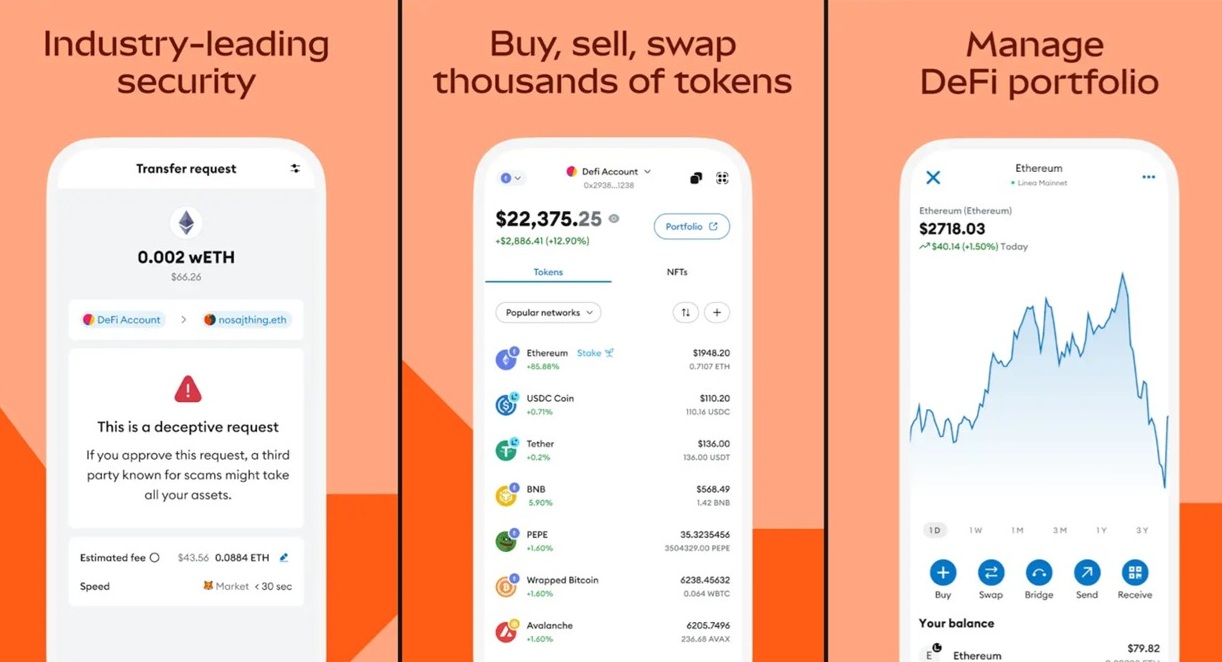
Top DeFi wallets in 2026 include:
- MetaMask (best overall for DeFi and Ethereum networks)
- Trust Wallet (best for mobile beginners)
- Coinbase Wallet (best for simple setup and easy navigation)
- Rabby Wallet (best for extra security warnings and transaction previews)
For higher security, especially if you plan to invest larger amounts, a hardware wallet like Ledger is often the safest long-term option.
2. Best Lending Platforms (Aave, Compound, Morpho)
DeFi lending platforms allow you to earn interest by lending crypto or borrow against your assets without using a traditional bank. In 2026, the most trusted and widely used lending protocols include:
- Aave (best overall, beginner-friendly, strong reputation)
- Compound (popular and reliable for lending and borrowing)
- Morpho (optimized lending rates, growing fast in DeFi)
These platforms are commonly used to earn passive income with stablecoins like USDC or to access liquidity without selling long-term investments.
3. Best Swap Platforms (Uniswap, SushiSwap, 1inch)
Swap platforms, also called decentralized exchanges (DEXs), let you trade crypto directly from your wallet without using a bank or centralized exchange. They are one of the most important tools in DeFi because they give you full control over your assets while enabling fast, global trading.
The most trusted swap platforms in 2026 include:
- Uniswap (most popular DEX, best liquidity, widely used in DeFi)
- SushiSwap (multi-chain platform with additional DeFi features)
- 1inch (aggregator that finds the best prices across multiple DEXs)
These platforms allow you to swap tokens like ETH, USDC, and other cryptocurrencies instantly, but it’s important to always check token accuracy and fees before confirming any transaction.
4. Best Portfolio Trackers (Zerion, DeBank, CoinStats)
Portfolio trackers help you see and manage all your DeFi investments in one place. Instead of checking multiple wallets and platforms separately, these tools give you a clear overview of your balances, earnings, and transaction history across different networks.
The most popular portfolio trackers in 2026 include:
- Zerion (clean interface, great for DeFi portfolio tracking and wallet connection)
- DeBank (deep DeFi analytics and multi-chain visibility)
- CoinStats (combines DeFi, crypto exchanges, and price tracking in one app)
These tools are especially useful for beginners who want to stay organized, track performance, and understand how their DeFi positions are growing over time.
5. Best Bridges for Beginners (If You Move Funds Across Chains)
Crypto bridges let you transfer assets between different blockchains, such as moving tokens from Ethereum to Polygon or Arbitrum. This is important in DeFi because different networks offer different fees, speeds, and opportunities.
The most beginner-friendly bridges in 2026 include:
- Polygon Bridge (simple and widely used for moving assets to Polygon)
- Arbitrum Bridge (official bridge for Ethereum to Arbitrum transfers)
- Hop Protocol (fast transfers between major Layer 2 networks)
Bridges can be useful for lowering transaction costs and accessing better DeFi opportunities, but they require extra care. Always double-check the network, token, and address before confirming any transfer, since bridge transactions are irreversible.
DeFi Risks Every Woman Must Understand Before Investing
DeFi opens exciting opportunities for women to gain financial freedom, but just like with any investment or new technology, it comes with its risks. Being aware of these risks will help you move smarter, protect your money, and avoid common pitfalls in 2026 and beyond.

1. Crypto Volatility and Why It Matters
One of the first things to understand is that crypto prices can change rapidly, sometimes by double-digit percentages in a single day. That means if you’re investing in tokens or providing liquidity, your returns might go up… or down. This is called market volatility, and it’s very common in DeFi.
- Tip: Start with stablecoins (like USDC or DAI), which are designed to stay pegged to the US dollar, for lower-risk entry.
- Mindset: Don’t invest more than you’re willing to lose and always plan long-term.
2. Smart Contract Hacks (The #1 DeFi Risk)
DeFi platforms run on smart contracts, which are pieces of code that automate financial transactions. If there is a bug or vulnerability in the code, hackers can exploit it to drain funds from the protocol.
Unlike traditional banks, there is no customer support team that can reverse transactions in DeFi. Once funds are lost due to a hack, they are often unrecoverable. This is why using well-established platforms with strong security records is critical.
3. Rug Pulls and Fake Projects (How to Spot Them Fast)
A rug pull happens when developers create a token or DeFi project, attract investor funds, and then suddenly disappear with the money.
Common warning signs include:
- Unrealistic promises of extremely high returns
- Anonymous or unverified development teams
- No clear product or real use case
- Sudden hype on social media without long-term credibility
Learning to recognize these patterns early is one of the most important skills in DeFi safety.
4. Phishing Scams and Wallet Drainers (Most Common Beginner Mistake)
Phishing scams are one of the most common ways beginners lose funds. These scams trick users into connecting their wallet to fake websites or approving malicious transactions.
Wallet drainers can automatically steal assets once permission is granted, often without the user realizing it until it is too late.
To reduce risk, users should always:
- Double-check website URLs
- Avoid clicking random links from social media or messages
- Never share seed phrases under any circumstances
- Be cautious when connecting wallets to new platforms
5. Hidden Fees, Gas Fees, and Slippage
DeFi transactions often come with multiple types of fees that can reduce profits if not understood properly.
- Gas fees are network costs required to process transactions on the blockchain
- Slippage refers to price changes that occur between initiating and completing a trade
- Some platforms may also include hidden protocol fees that affect overall returns
These costs can vary depending on network congestion and platform usage, so it is important to review all transaction details before confirming any action in DeFi.
How Women Can Earn Passive Income with DeFi (Real Strategies)
Imagine your money working for you; even while you sleep. That’s the promise of passive income, and with Decentralized Finance (DeFi), it’s more accessible than ever for women in 2026. Whether you’re looking to grow your savings, supplement your income, or invest for the future, DeFi offers powerful tools to earn without needing a full-time financial background.
Let’s break it down.
1. Earn Interest With Stablecoins (USDC, USDT Explained)
Stablecoins like USDC and USDT are cryptocurrencies designed to maintain a stable value, usually pegged to the US dollar. This makes them less volatile compared to other crypto assets.
One of the most popular DeFi strategies is to deposit stablecoins into lending platforms to earn interest over time. Instead of keeping money in a traditional savings account with low returns, users can earn yield directly from DeFi protocols.
This approach is often considered one of the simplest entry points into passive income in crypto because it focuses on stability rather than price speculation.
2. Lending vs Staking: What’s Safer?
Lending and staking are two common ways to earn rewards in DeFi, but they work differently.
- Lending means you provide your crypto to borrowers and earn interest in return
- Staking means you lock your crypto to help secure a blockchain network and earn rewards
In general, stablecoin lending is often considered more predictable, while staking depends on the price movement of the token you are staking. Both carry risks, but they are usually safer than high-risk strategies like yield farming.
3. Staking Crypto for Beginners (Low Risk Option)
Staking is one of the most beginner-friendly ways to earn passive income in DeFi. It involves locking certain cryptocurrencies to support network operations, and in return, you receive rewards.
Many platforms allow flexible or locked staking options depending on how long you want to commit your funds.
Staking is often chosen by beginners because:
- It is relatively simple to understand
- It does not require active trading
- It provides more predictable returns compared to advanced DeFi strategies
However, rewards vary depending on the token and network conditions.
4. Liquidity Provision: Earn Fees Like a Bank
Liquidity provision allows you to deposit pairs of tokens into a trading pool used by decentralized exchanges. In return, you earn a share of the transaction fees generated when other users trade those tokens.
This is similar to how banks earn money by facilitating transactions and providing liquidity in traditional finance systems.
While it can generate consistent fees, it also comes with risks such as price fluctuations between paired assets.
5. Yield Farming Explained (High Reward, High Risk)
Yield farming is an advanced DeFi strategy where users move their funds across different protocols to maximize returns. It often involves staking or providing liquidity in exchange for additional rewards or token incentives.
While yield farming can offer higher returns compared to other methods, it is also more complex and carries higher risks, including smart contract vulnerabilities and sudden changes in reward rates.
Because of its complexity, yield farming is generally recommended only after gaining experience with simpler DeFi strategies.
6. Best DeFi Platforms With Low Entry Barriers (Beginner Friendly)
Some DeFi platforms are designed to be more accessible for beginners, offering simple interfaces and lower entry requirements.
These platforms typically focus on:
- Easy wallet connection
- Stablecoin deposits
- Clear earning dashboards
- Lower minimum investment requirements
Using beginner-friendly platforms allows new users to explore DeFi income strategies without dealing with overly complex tools or high technical barriers.
How to Protect Your Money in DeFi (Security Checklist)
Security is the most important part of using DeFi because, unlike banks, there is no customer support to recover lost funds. In DeFi, protecting your wallet, approvals, and private keys is entirely your responsibility. Following a strong security routine can significantly reduce risk and help you invest with confidence.
1. Use Hardware Wallets (Ledger/Trezor for Long-Term Wealth)
Hardware wallets are physical devices that store your crypto offline, making them one of the safest ways to protect digital assets from hacks and phishing attacks.
Popular options include:
- Ledger
- Trezor
These wallets are especially useful for long-term savings or larger investments because they keep your private keys disconnected from the internet, reducing exposure to online threats.
2. Never Share Your Seed Phrase (Common Scam Examples)
Your seed phrase is the master key to your wallet. Anyone who has it can access and steal your funds instantly.
Common scam tactics include:
- Fake support messages asking for your seed phrase
- Websites pretending to “verify” your wallet
- Emails or DMs claiming your account is locked
No legitimate DeFi platform, wallet provider, or support team will ever ask for your seed phrase. If someone does, it is always a scam.
3. Use 2 Wallet Strategy (Spending Wallet vs Savings Wallet)
A simple but powerful security method is separating your funds into two wallets.
- Spending wallet: used for daily DeFi activity like swaps, testing platforms, and small transactions
- Savings wallet: used for long-term holdings and larger amounts, ideally stored in a hardware wallet
This strategy limits your exposure if a wallet is compromised and helps you manage risk more effectively.
4. Best Security Tools: Revoke.cash, Wallet Guard, Fire Extension
Security tools help you monitor and control what your wallet is connected to and what permissions you have granted.
Useful tools include:
- Revoke.cash: helps remove unwanted token approvals
- Wallet Guard: detects risky transactions and phishing attempts
- Fire Extension: provides real-time warnings before signing suspicious contracts
Using these tools regularly helps prevent wallet drainers and reduces the risk of unknowingly approving malicious access.
5. How to Check If a DeFi Platform Is Legit
Before using any DeFi platform, it is important to verify its legitimacy to avoid scams and fake protocols.
Key checks include:
- The platform has a well-known reputation and active community
- The smart contracts have been audited by reputable security firms
- The project has transparent documentation and clear use cases
- Liquidity and trading activity appear consistent and organic
- The website and social media accounts are official and verified
If a platform promises extremely high returns with little explanation, it is usually a warning sign. In DeFi, safety should always come before yield.
DeFi vs Traditional Savings Accounts (Which Builds Wealth Faster?)
Choosing between DeFi and traditional savings accounts comes down to one key question: do you prioritize safety and stability, or higher potential returns with more responsibility? In 2026, both options serve different financial goals, especially for women building wealth, saving for the future, or generating passive income.
1. DeFi Interest Rates vs Bank APY in 2026
Traditional savings accounts offered by banks typically provide very low annual percentage yields (APY), often below inflation in many regions. This means your money grows slowly and may lose purchasing power over time.
In contrast, DeFi platforms can offer significantly higher yields, especially through:
- stablecoin lending
- staking
- liquidity provision
However, these returns are not guaranteed and can vary depending on market conditions, platform usage, and risk level. Higher potential returns in DeFi always come with higher exposure to technical and market risks.
2. Is DeFi Better Than a High-Yield Savings Account?
DeFi is not automatically better or worse than a high-yield savings account; it depends on your financial goals and risk tolerance.
- High-yield savings accounts are designed for capital preservation, offering predictable but modest returns with strong protections in many regulated banking systems
- DeFi platforms offer higher earning potential but require users to manage security, understand platforms, and accept the possibility of loss or volatility
For some investors, DeFi can outperform traditional savings in terms of returns. For others, especially those prioritizing safety, regulated banking products remain more appropriate.
3. Best Option for Conservative Women Investors
For conservative investors, the safest approach is not choosing one over the other, but combining both strategies.
A balanced approach often includes:
- keeping emergency savings in a traditional savings account for security and liquidity
- using stablecoins or low-risk DeFi lending for a portion of capital to earn additional yield
- avoiding high-risk strategies like yield farming or speculative token exposure
This hybrid approach allows women to benefit from DeFi opportunities while maintaining a strong safety foundation in traditional finance.
If you’re looking for simple financial wins, these tips in 5 Quick Ways Women Can Save Money Today can help you start saving right away without overcomplicating your budget.
Best DeFi Strategies for Women (Based on Risk Level)
DeFi is not a one-size-fits-all system. Different strategies carry different levels of risk and reward, and the best approach depends on your financial goals, experience, and comfort with volatility. A smart way to start is by understanding strategies based on risk level and building a balanced approach over time.
1. Low Risk Strategy (Stablecoins + Lending)
This is the safest entry point into DeFi and is ideal for beginners or conservative investors.
It focuses on:
- using stablecoins like USDC or USDT
- lending them on established DeFi platforms
- earning predictable interest over time
This strategy is popular because it minimizes price volatility while still allowing you to generate passive income. It is often used as an alternative to traditional savings accounts with higher potential yields.
2. Medium Risk Strategy (Staking + Blue Chip Tokens)
This strategy involves slightly more exposure to market fluctuations but offers higher earning potential.
It typically includes:
- staking established cryptocurrencies to earn rewards
- holding “blue chip” tokens with strong long-term adoption
- reinvesting staking rewards for compounding growth
This approach balances stability and growth, making it suitable for users who already understand basic DeFi concepts and are comfortable with some volatility.
3. High Risk Strategy (Yield Farming + LP Pools)
High-risk strategies aim for maximum returns but come with significantly higher uncertainty.
They include:
- yield farming across multiple DeFi protocols
- providing liquidity to trading pools (LP tokens)
- chasing incentive rewards and bonus token emissions
While returns can be attractive, risks include smart contract vulnerabilities, impermanent loss, and rapidly changing reward structures. This strategy requires experience and active monitoring.
4. Smart Diversification Rule for Beginners
A key principle in DeFi is diversification, which helps reduce risk while still allowing growth.
A simple beginner-friendly allocation could look like:
- majority in low-risk stablecoin strategies
- smaller portion in staking for growth
- very limited exposure to high-risk farming strategies
The goal is not to maximize returns immediately, but to build consistent experience while protecting your capital. Over time, as knowledge and confidence grow, allocations can be adjusted based on personal goals and risk tolerance.
Best DeFi Education Platforms to Learn Confidently
Getting started with Decentralized Finance (DeFi) can feel intimidating, but it doesn’t have to be. Today, there are more resources than ever designed specifically for women who want to learn DeFi, understand Web3, and build financial confidence in 2026 and beyond.
Whether you’re a total beginner or looking to deepen your knowledge, these DeFi education platforms for women can help you level up at your own pace.

1. Best Beginner Courses to Learn DeFi (Free + Paid)
a. SheFi: Empowering Women in Web3
SheFi is one of the leading DeFi education communities for women, founded by Maggie Love. It offers structured cohorts, masterclasses, and an inclusive community where women can learn about crypto, DeFi, and investing.
- Beginner-friendly, supportive space
- Hands-on lessons on wallets, staking, NFTs, and DAOs
- Great for networking with women already in the industry
b. DeFi University
DeFi University is a comprehensive learning hub that explains DeFi tools and protocols step-by-step. Ideal for those who want to understand the mechanics behind platforms like Aave, Curve, and Uniswap.
- Tutorials, articles, and roadmap-style courses
- No tech background required
- Visual, easy-to-understand formats
2. Best YouTube Channels Explaining DeFi Simply
YouTube is packed with free DeFi education. Here are some creators that simplify complex topics, including a few who speak directly to women in finance:
- CryptoWendyO: Covers crypto and DeFi trends with a relatable tone
- Girl Gone Crypto: Explains DeFi and blockchain in a fun, approachable way
- Finematics: Visual breakdowns of DeFi concepts like liquidity pools and staking
3. Best Newsletters and Blogs for Women in Web3
- Bankless: Great for intermediate-level DeFi insights and trends
- Women in Blockchain Newsletter: Updates and interviews with female leaders in crypto
- Coindesk Learn: Educational guides on DeFi, NFTs, and crypto security
Tip: Subscribe to newsletters to stay updated without feeling overwhelmed.
4. Best Communities (Discord + Twitter + Reddit + Women DAOs)
Learning is easier when you’re not alone. Join these inclusive spaces where you can ask questions, share tips, and get inspired:
- SheFi Discord: Connect with women actively learning and investing in DeFi
- Rabbithole Discord: Earn NFTs and crypto while learning hands-on
- Stacker Chats: Community for women and non-binary folks in tech and Web3
Bonus: Follow hashtags like #WomenInWeb3 and #CryptoForWomen on X (formerly Twitter) for daily tips and role models.
DeFi FAQs for Women (2026)
This section answers the most common beginner questions about DeFi, especially for women who are exploring financial independence, passive income, and alternative investing for the first time.
Is DeFi safe for beginners?
DeFi can be safe for beginners if you start with small amounts, use well-known platforms, and focus on low-risk strategies like stablecoin lending or staking. However, it is not risk-free. Unlike banks, there is no insurance or customer support to recover lost funds, so security and education are ess
How much money do I need to start DeFi?
You can start DeFi with a very small amount, sometimes as little as $10 to $50 depending on the platform and network fees. However, starting with a slightly higher amount can make transactions more practical and help you understand fees, staking, and lending more clearly.
What is the safest crypto for DeFi income?
Stablecoins like USDC and USDT are generally considered the safest for DeFi income because their value is designed to stay stable relative to the US dollar. They are commonly used in lending and savings strategies to reduce exposure to market volatility.
Can I lose money lending stablecoins?
Yes, although stablecoin lending is considered low risk compared to other DeFi strategies, losses are still possible. Risks include platform hacks, smart contract vulnerabilities, or rare cases where a stablecoin loses its peg. This is why using reputable platforms and diversifying strategies is important.
What wallet is best for beginners?
For beginners, popular wallets include MetaMask, Trust Wallet, and Coinbase Wallet. The best choice depends on your preference for simplicity, mobile use, or DeFi access. Regardless of the wallet, securing your seed phrase is the most important step.
How do taxes work with DeFi income?
DeFi income is generally considered taxable in many countries. Earnings from staking, lending, or trading may be subject to income tax or capital gains tax depending on local regulations. It is important to track transactions and consult local tax guidelines or a professional if needed.
What is the difference between staking and lending?
Staking involves locking crypto to help secure a blockchain network and earn rewards in return. Lending involves providing your crypto to borrowers through DeFi platforms and earning interest. Both generate passive income, but they work in different ways and carry different risk profiles.
Is DeFi halal?
Whether DeFi is considered halal depends on interpretation and the specific financial activity involved. Some scholars may view certain DeFi activities as permissible, especially those based on real asset backing and transparent transactions, while others may raise concerns depending on interest (riba) and speculation. It is often recommended to seek guidance based on personal beliefs.
Can I use DeFi without buying Bitcoin?
Yes, you do not need to buy Bitcoin to use DeFi. Many users start directly with stablecoins like USDC or USDT, or use Ethereum (ETH) for transaction fees. DeFi works across many blockchains and does not require holding Bitcoin specifically.
Conclusion: DeFi Can Help Women Build Wealth (If You Stay Smart)
Decentralized Finance isn’t just a tech trend, it’s a tool for transformation. For women ready to take ownership of their finances in 2026, DeFi offers real freedom: the freedom to earn, invest, save, and grow on your own terms.
You don’t need permission from a bank. You don’t need perfect credit. You don’t even need to be a tech expert. All you need is curiosity, courage, and a willingness to start small.
The DeFi space is still evolving, which means you’re not late, you’re early. That’s where the opportunity lies. Whether you’re building wealth, launching a business, or just exploring new ways to manage money, DeFi gives women the power to lead the future of finance.
So, go ahead, set up your first wallet, try out a beginner-friendly platform, and join a supportive community. Your journey to financial independence starts now.
Because when women take control of money, they change the world.
By Aveline Lowell
Founder & Editor-in-Chief, RiseByHer
Aveline Lowell writes research-driven content covering women’s finance, entrepreneurship, STEM, technology, and career growth. Her work focuses on practical, well-researched information that helps women make informed decisions.
Editorial & Disclaimer: RiseByHer aims to provide accurate, well-researched, and up-to-date information. Articles are reviewed and updated when necessary and are intended for general informational and educational purposes, not personalized financial, legal, tax, or professional advice.