
Imagine a world where your daughter, student, or niece looks at a groundbreaking lab and thinks, “That’s exactly where I belong.” For decades, women have been quietly (and not so quietly) shattering glass ceilings across physics, biotechnology, and space exploration. Yet even today, young girls looking at STEM fields often ask a heavy question: Where are the women who look like me?
They are right here.
While the gender gap in science is still a reality, a powerful shift is happening. From historic pioneers who altered the course of human history to the modern trailblazers redefining AI and gene editing, female scientists are rewriting the rules. Introducing girls to these powerhouses doesn’t just spark curiosity—it completely changes what they believe is possible.
Whether you are a parent looking to inspire your child, an educator building an inclusive classroom, or a young girl ready to change the world, this guide is for you. Let’s dive into the current state of women in STEM, meet 10 incredible role models every girl should know, and uncover the exact resources you need to fuel the next generation of genius.
What Is the Current State of Women in Science in 2026?
Data shows that while the doors to laboratory rooms and tech hubs are swinging open wider than ever before, the playing field is still far from level. In 2026, understanding where women thrive—and where systemic roadblocks still stand—is critical if we want to effectively pave the way for the next generation of girls in STEM.
Let’s look directly at the hard facts, the shifting trends, and the real-world data shaping the scientific community today.
Women’s Representation Across Modern Science Fields
Globally, women account for roughly 35% of all STEM graduates, a number that has seen a steady, hard-won climb over the last decade. However, a major disconnect occurs when transitioning from graduation day to the actual workforce.
While women make up approximately 48% of the total workforce, they represent only 35% of the active STEM workforce. The distribution across disciplines is starkly uneven:
| Scientific Discipline | Percentage of Female Representation |
|---|---|
| Social Sciences | 65% |
| Life Sciences & Health Careers | 48% – 75% |
| Mathematics & Data Analytics | 27% |
| Computer Sciences | 26% |
| Engineering | 16% |
While medicine, biology, and health sciences enjoy near-parity (and in some healthcare sectors, a distinct female majority), the technical and physical infrastructure of our world is still largely built by men.
The Specific STEM Fields Where Gender Gaps Persist
The most severe gaps are concentrated in the industries that are actively defining our global future: Artificial Intelligence (AI), quantum computing, and engineering. * The AI & Quantum Bottleneck: Women hold a meager 22% of global artificial intelligence roles, and fewer than 2% of job applicants in the cutting-edge quantum computing sector are female.
- The “Broken Rung” & Retention Crisis: Getting women into entry-level roles is no longer the only challenge; keeping them there is the real battle. Data reveals that up to 40% of women leave tech and science fields within 5 to 7 years of entry.
- The Leadership Ceiling: The drop-off becomes a cliff at the executive level. Only 12% of C-suite roles in heavy STEM industries are held by women, and only 20% of national scientific academies across the globe are presided over by a female scientist.
This drop-off is driven less by a lack of interest, and more by acute workplace culture friction, a lack of historical female mentorship networks, and a persistent gender pay gap (averaging 10% to 13% in engineering and science fields).
Positive Trends and Emerging Triumphs in 2026
Despite the hurdles, 2026 is witnessing historic, positive disruptions.
“We must ensure that every girl can imagine a future in STEM, and that every woman can thrive in her scientific career.” — UN Secretary-General António Guterres, 2026
- The Rise of Sub-Saharan Africa: Regions like sub-Saharan Africa are showing incredible upward mobility, with the proportion of female researchers climbing steadily past 33.6%. Central Asia leads the entire world, remarkably achieving gender parity with 50.8% of its research workforce being women.
- Intentional Inclusion in Global Research: Major international bodies are refusing to treat diversity as an afterthought. For instance, top-tier global health forums, such as the 2026 H3D Foundation Symposium on drug discovery, now actively mandate a 50/50 split among expert speakers.
- Closing the Early Math Gap: In early education, intentional intervention is working. The historic gender gap in standardized secondary school mathematics scores has narrowed significantly over the last several years, proving that when structural biases are stripped away, girls achieve equal excellence.
Why Closing the STEM Gender Gap Matters Globally Now
This isn’t just an issue of workplace fairness; it is a global necessity. When women are excluded from scientific innovation, the science itself becomes flawed and incomplete.
- Fixing Deficient AI Models: Artificial intelligence algorithms learn from historical data. Without women building and auditing these systems, AI risks hardcoding historical biases directly into medical diagnostics, automated hiring, and financial screening toolsets.
- Saving Women’s Lives via Medical Accuracy: In 2026, medical communities like the European Society for Dermatological Research (ESDR) are loudly sounding the alarm on how the historical exclusion of female clinical trial data directly hurts patient outcomes. Hormonal changes, biological sex variations, and gender-specific disease markers drastically alter how drugs act in the human body. Better female representation in the lab guarantees safer, more accurate medical treatments for everyone.
- Economic Prosperity: You cannot solve generational crises like climate change, cyberwarfare, or global pandemics while leaving half of the world’s sharpest minds sitting on the sidelines. Including girls in science unlocks the missing half of our collective human potential.
Who Are 10 Inspiring Women Scientists Every Girl Should Know?
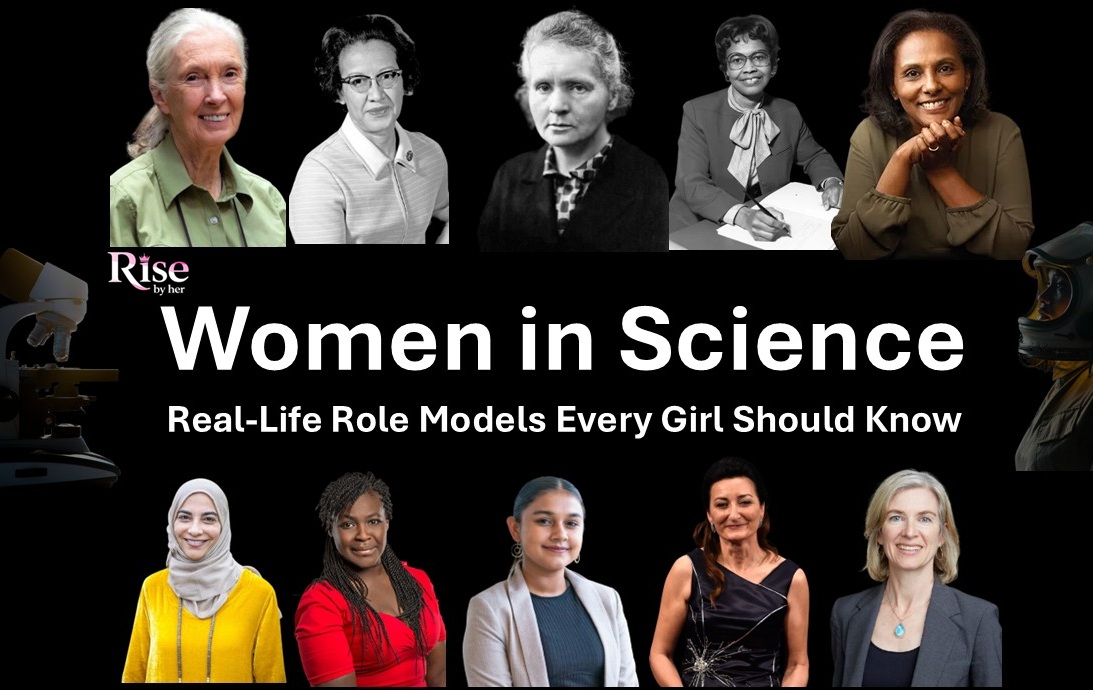
You cannot be what you cannot see. When young girls look at the history books, the narrative often focuses on a narrow cast of characters, but the true story of scientific progress is packed with brilliant, defiant women who changed how we understand our universe. From calculating moon landings to mapping the human brain, these ten icons prove that a girl with a microscope, a math equation, or a notebook can change the world.
Here are the ten incredible female role models every young scientist should have on her radar today.
1. Marie Curie: Physics and Chemistry Pioneer (PL/FR)
Marie Curie remains the ultimate icon of scientific determination. Not only was she the first woman to win a Nobel Prize, but she is also the only person in history to win Nobel Prizes in two different scientific fields: Physics (1903) and Chemistry (1911).
- The Breakthrough: She discovered two elements (polonium and radium) and coined the term radioactivity.
- The Lesson for Girls: Despite facing intense institutional sexism in France, her relentless work ethic revolutionized medicine, giving us the foundational tech for cancer treatments and X-rays.
2. Katherine Johnson: Trailblazing NASA Mathematician
Before supercomputers existed, NASA relied on human calculations—and Katherine Johnson was the sharpest mind in the room. A brilliant Black mathematician working during the Jim Crow era, she broke through both racial and gender barriers to chart the course for humanity’s earliest space flights.
- The Breakthrough: She calculated the precise trajectories for America’s first human spaceflight and the historic 1969 Apollo 11 moon landing.
- The Lesson for Girls: When digital computers were first introduced, astronaut John Glenn famously refused to fly unless Katherine personally verified the machine’s math. Your precision is your power.
3. Dr. Hayat Sindi: Innovator in Biotechnology (KSA)
As one of the first women from the Arab world to earn a PhD in biotechnology from the University of Cambridge, Dr. Sindi is a living testament to global innovation.
- The Breakthrough: She co-founded Diagnostics for All, creating low-cost, paper-based diagnostic tools that require only a single drop of blood or urine to detect diseases in remote, low-resource regions.
- The Lesson for Girls: Science isn’t just about laboratory prestige; it’s about solving real-world healthcare crises and ensuring medical care reaches the most vulnerable populations.
4. Dr. Jane Goodall: Renowned Primatologist (UK)
Dr. Jane Goodall completely redefined what it means to study the natural world. Setting out into the forests of Tanzania in her twenties with little more than a pair of binoculars and a notebook, she upended decades of established scientific dogma.
- The Breakthrough: She discovered that chimpanzees make and use tools—a trait previously thought to belong exclusively to humans.
- The Lesson for Girls: You don’t need to fit into a traditional academic box to make a historic breakthrough; patience, acute observation, and deep empathy are powerful scientific tools.
5. Dr. Gitanjali Rao: Young Innovator and Inventor (USA)
Proof that you don’t need a PhD to make a massive impact, Dr. Gitanjali Rao was named Time magazine’s first-ever “Kid of the Year” and continues to dominate the innovation space as an advocate for Gen Z problem-solvers.
- The Breakthrough: At just 11 years old, she invented Tethys, a portable device that uses carbon nanotubes to detect lead contamination in drinking water instantly.
- The Lesson for Girls: Age is not a barrier to innovation. If you see a problem in your community today, you have the capacity to build the solution.
6. Dr. Gladys West: Mathematician Who Created the GPS
Every time you open Google Maps or check a location on your phone, you are relying directly on the mathematical models built by Dr. Gladys West.
- The Breakthrough: Working as a programmer for the US military, she analyzed vast streams of satellite data to calculate an incredibly precise mathematical model of the Earth’s shape (the geoid). This exact work formed the foundational architecture of Global Positioning System (GPS) technology.
- The Lesson for Girls: Some of the most foundational, world-changing technical contributions happen quietly behind computer screens.
7. Dr. Jennifer Doudna: Gene Editing Pioneer (CRISPR)
Dr. Jennifer Doudna won the 2020 Nobel Prize in Chemistry for co-developing CRISPR-Cas9, a groundbreaking biotechnology tool that allows scientists to rewrite the very code of life with absolute precision.
- The Breakthrough: CRISPR functions like a pair of molecular scissors, giving researchers the power to edit DNA to potentially cure genetic diseases, design climate-resilient crops, and eradicate malaria.
- The Lesson for Girls: Modern biology is a fast-evolving frontier. Mastering gene editing means holding the keys to solving future global medical crises.
8. Dr. Maggie Aderin-Pocock: Space Science Leader (UK)
A celebrated space scientist and science communicator, Dr. Maggie Aderin-Pocock overcame severe childhood dyslexia to become one of the UK’s most prominent space experts.
- The Breakthrough: She has spent her career designing bespoke optical instruments and satellite subsystems, including critical components for the James Webb Space Telescope.
- The Lesson for Girls: Learning differences do not define your analytical capacity. Her contagious enthusiasm proves that space science is an open playground for curious minds.
9. Dr. May-Britt Moser: Neuroscience Nobel Laureate
How does your brain actually know where you are, and how do you navigate from point A to point B? Norwegian neuroscientist Dr. May-Britt Moser won the 2014 Nobel Prize in Medicine for answering that exact mystery.
- The Breakthrough: She discovered “grid cells” in the brain, which essentially function as an internal positioning and mapping mechanism—an inner GPS built right into our neural wiring.
- The Lesson for Girls: The human brain is the most complex frontier in the universe, and uncovering its secrets holds the key to treating conditions like Alzheimer’s disease.
10. Dr. Segenet Kelemu: Top Plant Pathologist (Ethiopia)
Growing up in a rural village in Ethiopia where women were expected to handle traditional farm labor, Dr. Segenet Kelemu defied expectations to become a world-renowned molecular plant pathologist. Her leadership has earned her top global honors, including being elected a Fellow of the Royal Society.
- The Breakthrough: Her extensive research focuses on how microbes can actually help forage grasses survive extreme environmental stress, directly helping millions of small-scale farmers in Africa grow healthier crops and fight food insecurity.
- The Lesson for Girls: Agricultural science is a vital cornerstone of global survival. By studying plant biology, you can build a more food-secure, climate-resilient planet.
How Are Women Role Models Inspiring the Next Generation of Girls in Science?
Inspiration isn’t just a warm feeling—it is a measurable catalyst for academic and economic change. When young girls are exposed to visible, successful female scientists, it shatters the subconscious belief that STEM fields are an exclusive boys’ club. By moving women from the margins of history textbooks to the center of media, education, and mentorship, we are actively reshaping the global talent pipeline.
Here is exactly how representation is transforming inspiration into real-world impact right now.
Role Models Are Being Integrated into Education Media
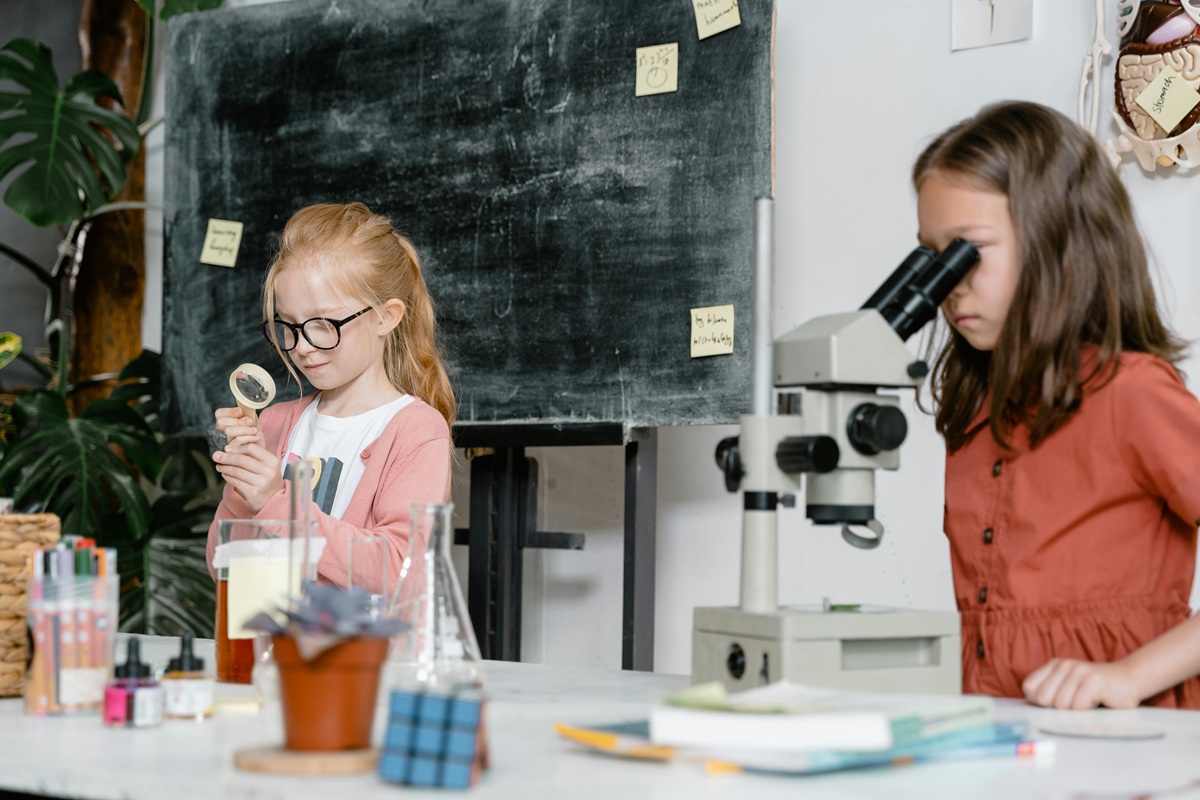
For decades, classroom curriculum heavily favored a male-centric history of science. Today, modern education media is undergoing a massive rewrite. Publishers, curriculum developers, and digital platforms are intentionally weaving the stories of diverse female scientists into mainstream K-12 coursework.
Rather than relegating women to a single “Women’s History Month” sidebar, modern lesson plans integrate figures like Dr. Jennifer Doudna directly into biology units on gene editing, or Katherine Johnson into physics modules on orbital mechanics. This normalization ensures that boys and girls alike grow up viewing scientific authority as entirely gender-neutral.
Real Girls, Real Impact: Success Stories from Today
The ripple effect of this representation is already visible in Gen Z and Gen Alpha. When girls see young innovators making waves, they step into their own problem-solving power much earlier.
- Community-Led Water Testing: Inspired by young inventors like Gitanjali Rao, groups of middle-school girls across North America have launched independent civic science initiatives, utilizing open-source tools to test local tap water for heavy metals.
- The Surge in Youth Tech Fairs: Global science competitions, such as the Regeneron International Science and Engineering Fair (ISEF), have seen a massive surge in projects led by teenage girls targeting environmental sustainability, microplastics, and machine learning models.
These aren’t just student projects; they are early-stage scientific contributions proving that early exposure breeds immediate execution.
Top Organizations That Amplify Female Scientists’ Work
Grassroots and global organizations are doing the heavy lifting to bridge the visibility gap, creating platforms where female scientists can be seen and heard by millions.
- The Million Women Mentors (MWM) Network: An international movement that has successfully facilitated over one million mentoring relationships between STEM professionals and young women, significantly boosting retention in technical tracks.
- Girls Who Code: By highlighting historical and contemporary female programmers, this organization has built a global community of half a million girls, closing the gender gap in new tech disciplines.
- If/Then She Can: A sweeping initiative by the Lyda Hill Philanthropic foundation that created 120 life-sized, 3D-printed statues of contemporary women STEM innovators, placing them in public spaces to spark interactive learning and career curiosity.
Joining communities and support networks can accelerate your growth, and this guide to Best 15 Organizations for Women in Tech Careers highlights some of the strongest options available this year.
Mentorship and Media Representation Go Hand-in-Hand
Media hooks the attention, but mentorship seals the commitment. While seeing a scientist on a television show or a YouTube channel sparks initial interest, sustained mentorship provides the practical roadmap to navigate a career.
Biomedical data shows that girls who have access to high-quality female mentors report significantly higher levels of STEM confidence and are twice as likely to pursue a technical major in college. Media representation provides the initial spark (“I want to do that”), while active mentorship creates the psychological safety net (“I can survive and thrive here”).
The Ripple Effect: Long-Term Career and Economic Gains
Closing the gender gap in science isn’t just a matter of social equity; it’s a massive economic driver. When we empower girls to enter STEM, we set off a powerful macroeconomic chain reaction.
- Higher Earning Potential: STEM careers offer some of the highest entry-level salaries in the global economy. Funneling more women into these fields directly combats the systemic gender wage gap and accelerates female financial independence.
- A Boost to Global GDP: Studies indicate that narrowing the gender gap in technical workforces could inject up to $12 trillion into global GDP by optimizing labor market efficiency.
- Better, Safer Solutions: Diverse engineering and medical teams develop more comprehensive solutions. From creating automotive safety features designed for female body types to training unbiased AI healthcare models, a balanced scientific community literally saves lives.
What Resources Help Girls Learn About Women in Science?
Inspiration strikes when curiosity meets the right medium. If a young girl shows a spark of interest in biology, coding, or stargazing, handing her the right book, podcast, or interactive platform can turn a passing phase into a lifelong passion. The digital age offers a wealth of incredible, multimedia tools designed to bring the triumphs of female scientists right to her fingertips.
Here is a vetted, expert-curated list of the absolute best resources to fuel her scientific journey, broken down by age and media type.
Engaging Picture Books and Inspiring Early Readers
For younger children (ages 3 to 8), visual storytelling is the most effective way to build a strong foundational interest in STEM.
- Ada Twist, Scientist by Andrea Beaty: A charming, rhyming tale of a young Black girl whose endless curiosity leads her to conduct neighborhood science experiments.
- Shark Lady by Ann McGovern: The inspiring true story of Eugenie Clark, a pioneering ichthyologist who proved to the world that sharks should be studied and protected, not feared.
- Counting on Katherine by Helaine Becker: A beautifully illustrated introduction to Katherine Johnson’s life, showing how her childhood love of counting led her all the way to NASA.
Middle Grade Books and Creative Young Adult Novels
As reading skills mature (ages 9 to 14+), girls can handle deeper narratives regarding the real-world obstacles and triumphs of women in STEM.
- Women in Science: 50 Fearless Pioneers Who Changed the World by Rachel Ignotofsky: A brilliantly illustrated, infographic-heavy collection that profiles both famous and unheralded female scientists throughout history.
- The Radium Girls (Young Readers Edition) by Kate Moore: A thrilling, historical account of the young women who fought for workplace safety and scientific accountability in the early 20th century.
- Girls Who Code: Learn to Code and Change the World by Reshma Saujani: Part graphic novel, part coding manual, this book perfectly blends a relatable friendship story with actual programming fundamentals.
Captivating Documentaries and Inspiring STEM Movies
Family movie nights can double as powerful career inspiration when you stream the right stories.
- Hidden Figures (PG): The critically acclaimed, must-watch biographical drama that shines a brilliant light on Katherine Johnson, Dorothy Vaughan, and Mary Jackson—the brilliant Black minds behind NASA’s space race victory.
- Jane (PG): A breathtaking National Geographic documentary utilizing never-before-seen archival footage to detail Jane Goodall’s early, groundbreaking years in Gombe.
- Mercury 13 (Netflix): A captivating documentary telling the true story of the women pilots who underwent rigorous testing in 1961 to prove that women were completely capable of space travel long before they were officially allowed to fly.
Powerful TED Talks Delivered by Top Female Scientists
For bite-sized, intellectually stimulating content, TED Talks allow girls to hear directly from contemporary experts solving global crises.
- “How I’m using LEGO to teach Arabic” by Dr. Rana Dajani: A molecular biologist shares how she uses creative literacy to spark scientific thinking in children across refugee camps.
- “Meet the dazzling flying machines of the future” by Raffaello D’Andrea: An incredible look at autonomous drone technology, co-developed and demonstrated by leading female roboticists.
- “Everyday inventions inspired by nature” by Janine Benyus: An eye-opening talk on biomimicry—how female engineers are studying nature’s designs to build better solar panels, trains, and medical tech.
Educational Podcasts for Curious Future Scientists
Podcasts are perfect for screen-free learning during car rides, chores, or wind-down time.
- Smash Boom Best: A fast-paced debate podcast for kids that frequently pits scientific concepts against one another (e.g., Deep Sea vs. Outer Space), regularly featuring expert female judges.
- Tumble: A science podcast specifically for kids, co-hosted by a science journalist and a teacher, that regularly interviews real, living female scientists about how they make their discoveries.
- Fierce girls (ABC): An Australian podcast dedicated to telling the spectacular stories of adventurous, world-changing girls, with several episodes dedicated to marine biologists, codebreakers, and aviators.
Engaging YouTube Channels Focused on Girls in STEM
High-yield, visually dynamic digital content that makes scientific experimentation feel entirely accessible.
- The Physics Girl (Dianna Cowern): A massive, highly engaging channel filled with DIY physical science experiments, mind-bending space discussions, and explanations of everyday phenomena.
- SciShow Kids: Co-hosted by Jessi Knudsen Castañeda, this channel breaks down complex scientific mysteries into fun, animated, and easily digestible explanations for younger viewers.
- The Brain Scoop (Emily Graslie): Hosted by a charismatic chief curiosity correspondent, this channel takes viewers deep inside the behind-the-scenes research labs and collections of natural history museums.
Interactive Learning Platforms and Virtual Museums
Hands-on digital exploration allows girls to move from passive consumers of science to active participants.
- The Smithsonian National Air and Space Museum (Virtual Tours): Offers highly immersive, 360-degree online exhibits highlighting the specific contributions of female astronauts, pilots, and astrophysicists.
- NASA’s “Women at NASA” Interactive Hub: A brilliant digital platform featuring videos, profiles, and interactive career maps detailing the daily lives of contemporary women engineers, flight directors, and astrobiologists.
- Code.org (Hour of Code): A gamified, interactive platform where girls can learn the logic of computer engineering alongside popular characters, building immediate technical confidence.
How Can You Actively Support Girls Inspired by Science?
Inspiration gets a girl to the starting line, but consistent support is what keeps her in the race. When a young girl shows an interest in science, the adults in her life play a pivotal role in determining whether that spark catches fire or fizzles out. You don’t need a degree in biochemistry to cultivate a future scientist—you simply need to provide the right environment, tools, and encouragement to let her curiosity run wild.
Here is an expert-backed guide on how parents, guardians, and educators can actively champion the next generation of women in STEM.
For Parents: Encouragement and Activities at Home
The home is a child’s first laboratory. To foster a lifelong love for scientific discovery, parents must shift the narrative from finding the “right” answer to embracing the trial-and-error process of learning.
- Reframe the Language of Failure: When an experiment fails or a math problem gets tough, avoid saying, “It’s okay, I was never good at math either.” Instead, treat it as a puzzle: “That didn’t work out how we expected. What variable can we change next time?” This builds a vital psychological trait known as a growth mindset.
- Turn Chores into Chemistry: Cooking and baking are foundational lessons in chemical reactions, states of matter, and ratios. Standard gardening teaches botany, soil ecology, and environmental science.
- Normalize Scientific Inquiry: Actively encourage questions. When your child asks why the sky is blue or how a microwave works, resist giving an immediate answer. Instead, say, “That’s an amazing question. Let’s look up the data together and find out.”
For Educators: How to Create Inclusive Classrooms
Teachers hold the keys to dismantling the subtle, subconscious gender biases that can inadvertently alienate girls from technical subjects as early as elementary school.
- Audit Your Classroom Micro-Signals: Ensure that the visual layout of your classroom displays diverse scientists. When calling on students, be intentionally mindful of gender dynamics. Studies show boys are frequently called on for abstract problem-solving, while girls are often asked to handle administrative tasks like note-taking or clean-up. Rotate these roles systematically.
- Implement Collaborative, Real-World Problem Solving: Research indicates that girls show significantly higher engagement in STEM when the material is tied to a prosocial mission—such as engineering a clean-water filtration system or programming an app to help local elderly residents.
- Highlight the Process, Not Just the Genius: Teach students about the messy, collaborative reality of scientific history. When introducing concepts, explicitly highlight the grit and perseverance of female researchers to show that mastery is earned, not innate.
High-Quality Hands-on Science Kits and Platforms
Tangible, tactical exploration strips away the intimidation factor of complex sciences. Investing in top-tier educational kits can demystify abstract concepts.
- KiwiCo (Kiwi Crate & Tinker Crate): Exceptional, age-stratified monthly subscription boxes that deliver high-yield engineering and science projects directly to your door, allowing girls to build everything from working hydraulic claws to walking robots.
- LittleBits by Sphero: An award-winning system of electronic building blocks that snap together magnetically. It provides an incredibly intuitive, frustration-free introduction to electrical engineering, circuitry, and hardware design.
- Kano Computer Kits: A step-by-step framework that allows kids to build their own functioning computer from scratch and instantly learn the foundational python and block-coding languages required to run it.
Impactful After-School and STEM Mentorship Programs
Structured extracurricular programs offer girls a safe space to take intellectual risks without the fear of social grading or peer judgment.
- Local Robotics Clubs (FIRST Robotics): Participating in competitive robotics teams introduces girls to structural engineering, mechanical design, and real-time software debugging, all while embedding them in a highly collaborative team environment.
- Girls Inc. STEM Initiatives: A nationwide program specifically structured to provide girls with hands-on economic, literacy, and scientific training, matching them directly with local female corporate leaders and researchers.
- TechGirlz: A non-profit organization that hosts free, interactive workshops designed to show middle-school girls that a career in technology can encompass anything from game design and digital mapping to cybersecurity and data analytics.
Frequently Asked Questions About Women in Modern STEM
When it comes to bridging the gender gap in science, certain questions come up time and time again. Addressing these core topics with data-backed, straightforward answers is essential for dismantling myths and providing clear guidance for the future.
Here are the expert answers to the most frequently asked questions about women in STEM, engineering, and early scientific history.
Who was the first famous woman scientist in history?
While women have engaged in scientific inquiry for millennia, Hypatia of Alexandria (born c. 350–370 AD) is widely recognized as the first well-documented famous woman scientist in history. She was a leading mathematician, astronomer, and philosopher who taught at the Neoplatonic school in Egypt, editing foundational texts on geometry and astronomy.
If we look further back into ancient history, Merit-Ptah (c. 2700 BCE) of ancient Egypt is traditionally celebrated as the earliest named woman in science and medicine, recorded as a “Chief Physician,” though historians continue to study her exact lineage.
Why is there a shortage of women in engineering?
The shortage of women in engineering is not a matter of capability; it is the result of a compounding series of structural and cultural barriers often referred to as the “leaky pipeline.” * Early Social Conditioning: From a young age, toy marketing and media representation frequently steer girls away from spatial, mechanical, and building-focused play.
- The “Stereotype Threat”: Subconscious cultural biases can lead girls to believe they are naturally less capable at mathematics, causing a drop in confidence during middle and high school despite achieving equal grades.
- Workplace Culture & Isolation: In the professional world, many engineering sectors suffer from a lack of historic female mentorship networks, a persistent gender pay gap, and systemic workplace culture friction, which causes up to 40% of women to leave the field within 7 years.
How can I support my daughter’s interest in STEM?
The most effective way to protect her curiosity is to normalize exploration, critical thinking, and trial-and-error at home.
- Encourage Structural Play: Introduce building blocks, logic puzzles, coding games, and hands-on science kits early on.
- Praise the Process, Not Perfection: When she encounters a difficult problem, focus on her grit and strategy rather than her innate intelligence. Say, “I love how hard you worked to solve that puzzle,” rather than, “You’re just naturally smart.”
- Expose Her to Real-World Role Models: Watch documentaries like Hidden Figures, read biographical anthologies together, and introduce her to local female professionals working in medicine, tech, or environmental science.
What percentage of STEM jobs are held by women?
Globally, women occupy approximately 35% of the active STEM workforce. However, this number can be highly misleading without context, as representation varies drastically by specific discipline. While women hold a distinct majority in life sciences, psychology, and healthcare sectors, they comprise roughly 26% of computer science professionals and a mere 16% of the global engineering workforce.
At what age do girls typically lose interest in STEM?
Comprehensive educational data indicates that girls typically begin losing interest in STEM subjects between the ages of 11 and 15 (the middle school years).
During this developmental window, conformity to peer social dynamics, a lack of visible female mentorship, and the sudden internalization of gender stereotypes combine to create a sharp decline in STEM confidence, even among girls who previously excelled in mathematics and science. This makes early intervention during middle school absolutely critical.
What is the retention rate for women in technical fields?
Retention is currently one of the greatest challenges facing heavy tech industries. Studies reveal that women leave technical tracks at a rate twice as high as men, with roughly 40% of female engineers and tech workers either pivoting to non-technical business management roles or exiting the STEM workforce entirely within a decade of entry. This retention crisis is primarily driven by unequal advancement opportunities, exclusionary workplace cultures, and rigid corporate structures that conflict with family planning.
Conclusion
The future of scientific discovery isn’t just about faster processors, deeper space telescopes, or more precise gene editing—it is about who sits at the lab table to design them. As we look at the landscape of science in 2026, it is clear that while progress has been hard-won, the job is far from finished. Leaving half of the world’s sharpest minds out of the equation means leaving half of our collective potential on the sidelines.
When we introduce young girls to powerful female role models, hand them their first science kits, or intentionally champion their curiosity in the classroom, we aren’t just supporting a hobby. We are closing global economic gaps, fixing biased technology, and unlocking the unique perspectives required to solve generational challenges like climate change and global health crises.
By continuing to share the stories of historical trailblazers and contemporary innovators alike, we send an undeniable message to every girl with a passion for discovery: Your curiosity is valid, your intellect is needed, and the future of science belongs to you.
What’s Your Next Step?
- If you are a parent: Pick up one of our recommended STEM picture books or subscribe to a monthly hands-on engineering crate this weekend.
- If you are an educator: Audit your classroom visuals and rotation dynamics to ensure every student feels represented in your next lab assignment.
- If you are a creator or advocate: Share this guide to amplify the stories of these 10 incredible women and keep the momentum going.
By Aveline Lowell
Founder & Editor-in-Chief, RiseByHer
Aveline Lowell writes research-driven content covering women’s finance, entrepreneurship, STEM, technology, and career growth. Her work focuses on practical, well-researched information that helps women make informed decisions.
Editorial & Disclaimer: RiseByHer aims to provide accurate, well-researched, and up-to-date information. Articles are reviewed and updated when necessary and are intended for general informational and educational purposes, not personalized financial, legal, tax, or professional advice.